
A teacup is a small thing, and that is why it suits a quiet morning. It holds only a few sips, so it asks you to sit down, and it cools quickly, so it asks you to drink it while it is still warm.
A cup can still go wrong quietly: the tea cools, the cup feels too big, or the morning rushes past while it sits untouched. A calm morning comes from a cup that fits the hand, water ready first, and ten minutes set aside on purpose.
This guide follows the cup from shelf to saucer: choosing, warming, filling, and washing it when the morning is done. It is gentle general information about a pleasant habit, promising nothing for health; a health question belongs with a doctor.
Key Takeaways
- A teacup is a small, delicate cup with a saucer, made for slow sipping.
- Drink a glass of plain water first, before the tea.
- Warm the cup with hot water so the tea stays warm longer.
- Fill the cup only two-thirds full, so it never spills.
- A calm morning needs one cup, one saucer, and ten quiet minutes.
What a Teacup Is
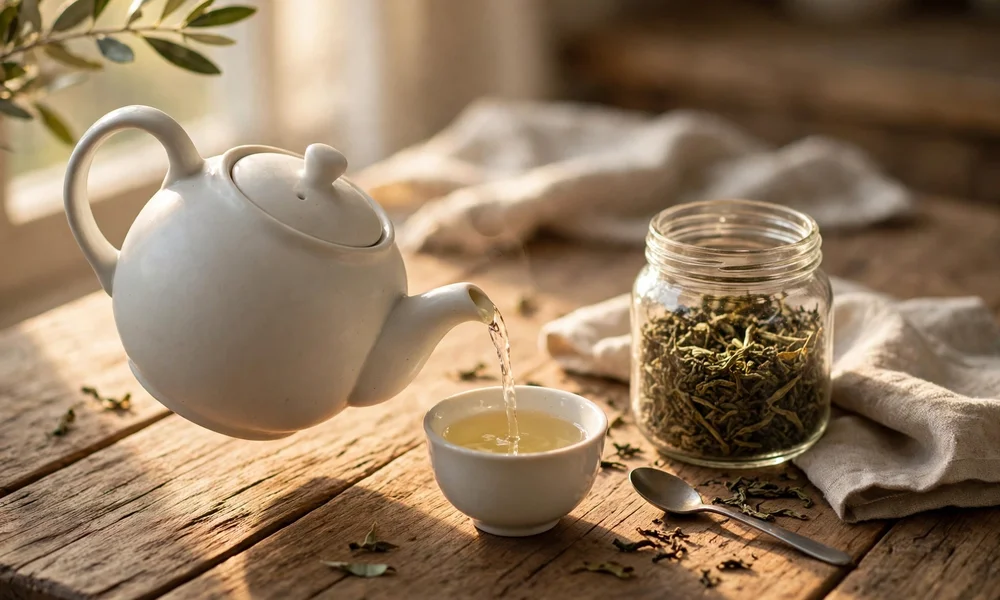
A teacup is a small cup, holding about half as much as a mug, with a thin rim, a small handle, and a saucer underneath. The thin rim lets the tea touch the lips gently, so each sip feels light, and the small size means the tea is finished while it is still warm.
The saucer is part of the cup, not an extra: it catches drips, holds the spoon, and lets you carry the cup without burning your fingers.

Picking a Teacup You Will Reach For
The best teacup is the one your hand reaches for without thinking, so start by holding it. Lift it by the handle: light but steady, never fragile-thin, never wrist-tiring heavy.
Check the rim next: run a finger around it for smoothness, with no rough edge and no tiny chip. A chipped rim catches the lip with every sip, and a chipped cup belongs in the garden as a plant pot. Choose a pale inside, white or cream, so the tea's colour shows truly. One cup is enough to start.
Warming the Cup Before the Tea
A cold cup steals the heat from hot tea in the first minute, the most common reason a morning cup goes lukewarm. The fix takes less than a minute: pour a little boiling water into the empty cup, let it sit while the tea brews, then tip it away and fill the cup at once.
A warmed cup holds the tea at drinking temperature much longer, and the first sip tastes as it should. It is the one habit that keeps a cup warm past the second sip. In a cold kitchen, warm the saucer too.
Water First, Then Tea
Before the tea is poured, drink a glass of plain water slowly, by the window or at the table. The water comes first because the night is long and the body wakes thirsty. It takes two minutes, and it changes how the tea tastes afterwards, since a dry mouth cannot taste tea properly.
Keep the glass beside the cup on the same tray, drunk in one quiet sitting. The water is not part of the tea, and the tea cannot replace it: one wakes the mouth, the other warms it.
A Calm Morning, Step by Step
The kettle goes on first, while the kitchen is still half asleep. While the water heats, set the tray on the table with the cup and saucer, and fill a glass with cool water. Nothing else belongs on the tray.
When the kettle clicks off, splash hot water into the cup to warm it, and brew the tea. Tip the warming water away, pour the tea two-thirds full, and carry the tray to the chair by the window. Drink the water first, slowly, then lift the cup with both hands while the street is still quiet.
Teacup at a Glance
| Small delicate cup | Warm it first | Sip it slowly |
|---|---|---|
| Water before tea | Two-thirds full | Saucer underneath |
| Pale inside shows | Ten quiet minutes | Wash it gently |
| One cup suffices | Cool water nearby | Morning stays calm |
Water and a Teapot
Water and a teapot for a simple guide to warm rituals follows a vessel built for brewing: a round body, a spout, a handle and a lid, made to hold hot water and leaves and pour a thin steady stream. Its work begins where the kettle's ends.
This guide holds the other end of the same pour. The teapot brews and the teacup receives, and the two never swap jobs: a teapot is too big to sip from, and a teacup too small to brew in. One makes the tea, the other is where it is drunk.
Water and a Ceramic Mug
Water and a ceramic mug for seven ways to enjoy it describes plain water drunk from a sturdy glazed mug, held with both hands, hidden from view, and finished slowly. The mug is heavy and thick-walled, and its charm is that it slows the drinker down.
A teacup slows the drinker differently. The mug hides the water and holds a lot, while the teacup shows the tea through its pale inside and holds only a little, so the drinker watches the level fall and stops when it is gone. A mug suits a long drink of water; a teacup suits a short warm drink of tea, finished before it cools.
Water and a Morning Tea
A morning tea with a simple fresh ritual keeps the tea itself at the centre of the morning, with the cup as one part of a wider ritual of waking gently. Its subject is the drink and the hour around it.
This guide narrows the view to the cup alone: its size, rim, handle, saucer, and the small habits that keep it warm and clean. The morning tea guide tells you when to drink; this one tells you what to drink from, and how to look after it.
Nine Neighbours in This Batch of Guides
The teacup does not stand alone in this batch: nine other guides keep it company, five about water and four about stones. Among the water guides, the cold frame guide shows how glass and water shelter young plants from the cold, the seedling guide gives seven ways to help a small plant grow, the salad spinner guide dries leaves with a spin, and the colander guide drains things well.
The stone guides bring a different quiet: cowrie is a smooth white shell for calm shell days, tagua a soft cream seed for quiet days, anatase a deep blue stone asked about for bright days, and amblygonite a soft yellow stone to know before buying. Basalt, the deep black stone of this batch, sits beside the water glass as a dark, steady companion. The teacup is the only one of the ten lifted to the lips.
Stones That Must Never Touch Water
A teacup holds tea, a glass holds water, and nothing else belongs in either. Some stones look lovely beside a cup, yet they must never be dropped into a drink, because water can spoil them or carry something unwanted into the mouth. Apatite is one: a soak takes the shine off its polish, and the gloss does not return when the stone dries.
Lepidolite needs the same distance, for a sharper reason: its flakes carry lithium, which has no place near any cup or tap. Pyrite turns dark and dull when it stays damp, angelite swells and loses its smooth face, and amber, hardened tree resin rather than stone, goes cloudy and milky after a soak. Keep all five on a dry shelf or a tray beside the glass, and let the teacup hold only tea.
Washing and Drying the Cup
A teacup washes best by hand, in warm water with a drop of mild soap and a soft cloth that cannot scratch the glaze. The cup is thin, so keep it out of a crowded sink where a heavier pan can knock it, and never leave it in hot water long.
Rinse it in clean warm water, turn it upside down on its saucer over a folded towel, and let the air dry it. A tea towel rubbed inside leaves lint on the rim, so the cloth stays under the cup. Once dry, it goes back on the shelf rim-up, saucer beneath.
Your Calm Morning Checklist
- Fill a glass with cool water and drink it slowly before the tea.
- Warm the teacup with a splash of hot water, then tip it away.
- Brew the tea, pour the cup two-thirds full, and carry it on its saucer.
- Sit by the window and sip slowly, with nothing else in your hands.
- Wash the cup by hand in warm soapy water and dry it upside down.
- If a new tea upsets your stomach or your skin, stop it and ask a doctor — a morning cup is a pleasure, not a remedy.

Frequently Asked Questions
How much tea should I pour into a teacup?
Fill it about two-thirds full, so it lifts without spilling; a full cup slops over the saucer, and a half-empty one cools too fast.
Why warm the teacup before pouring the tea?
A cold cup pulls the heat out of hot tea within a minute. A splash of boiling water warms the porcelain, and the tea then stays warm much longer.
Can I drink water from a teacup instead of a glass?
You can, but the glass suits water better, since a teacup is small and would need refilling often. Keep the glass beside the cup.
How do I remove tea stains from inside a teacup?
Rub it gently with a paste of baking soda and a little water on a soft cloth, then rinse well. Harsh scouring pads scratch the glaze, and scratched glaze stains faster.
Is a chipped teacup safe to keep using?
A small chip on the outside is harmless, but a chip on the rim should end the cup's table life, since it catches the lip. Retire it to the garden as a tiny plant pot.
What is the difference between a teacup and a mug?
A teacup is smaller, thinner, and always comes with a saucer, while a mug is larger, thicker, and stands alone. The teacup suits a short warm drink; the mug suits a long one.

The Bottom Line
Water and a teacup make a calm morning when the water comes first, the cup is warmed, the tea is poured two-thirds full, and the ten minutes are kept free.
A Note for Calm Mornings
One small cup, one glass of water, and a window with the morning in it — that is all a calm morning ever asks for.


