
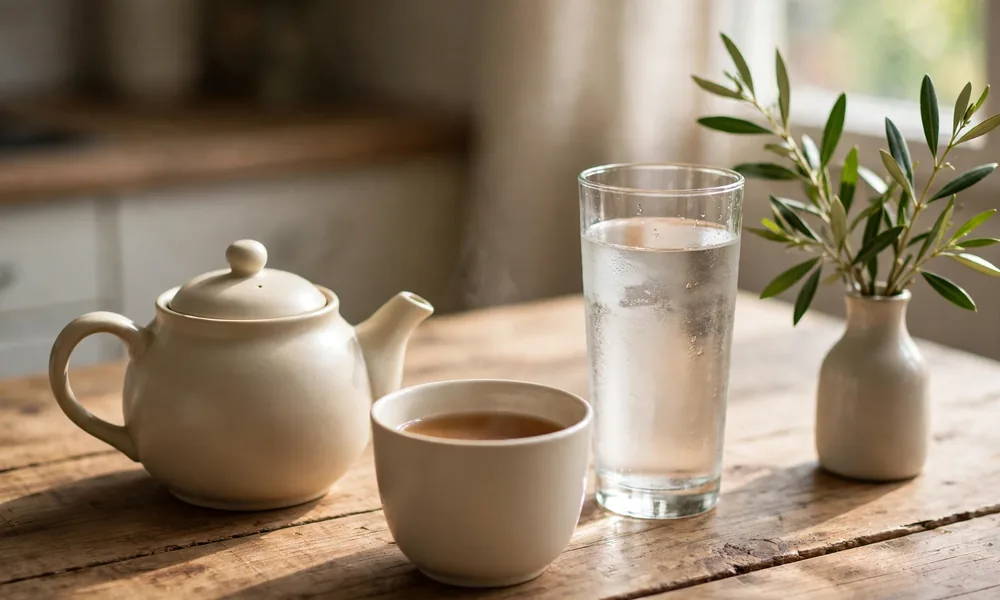
The kettle clicks off, the kitchen is still cool, and the day has not yet made any demands. Those first minutes are the easiest part of the day to waste and the easiest to enjoy. A plain cup of tea, poured slowly beside a glass of water, gives those minutes a shape without turning them into a project.
Water and morning tea is nothing grander than that. One glass of plain water, drunk first, then one cup of ordinary tea, drunk slowly, both on the same tray by the window. No powders, no stones in the cup, no promises attached to either drink.
Below is the whole ritual, step by step: the water, the tea, and the tray. It is gentle general information only, and it claims nothing for your health; a cup of tea is a pleasure, not a remedy.
Key Takeaways
- Water and morning tea means one glass of water, then one plain cup of tea.
- The water comes first, drunk slowly, before the tea is poured.
- The tea is a drink only; it heals nothing and promises nothing.
- No stone, powder, or herb goes into the water or the tea.
- Ten quiet minutes by the window are enough for the whole ritual.
What Morning Tea Is
Morning tea is a plain cup of tea at the start of the day, nothing more and nothing less. It might be black tea, green tea, or a mild herbal cup, brewed in a pot or a single mug, and drunk while the house is still quiet. The cup sits beside a tall glass of water on the same tray, and the two drinks take turns: water first, tea second.
Tea here is a drink, in the ordinary sense of the word. It warms your hands and gives you a reason to sit still. It is not a treatment, not a cleanse, and not a cure for anything, and this guide will never pretend otherwise.
Why a Plain Cup Suits the Start of the Day
Mornings go wrong when they start at full speed. The phone lights up, the news loads, and the day is suddenly loud before you have finished waking. A plain cup slows that opening down, because tea cannot be rushed: the water must boil, the leaves must steep, and the cup must cool enough to hold.
That small wait is the point. While the tea steeps, you drink your water, watch the light come through the window, and let the day arrive one minute at a time. By the time the cup is ready, you are awake more gently.
Choosing a Morning Tea
Start with a tea you already like, not one a label told you to buy. Black tea suits mornings that feel cold and slow, green tea suits mornings that feel bright and clear, and a mild herbal cup suits mornings when you want something soft and caffeine-free. Any of the three works, because the ritual is the sitting, not the leaf.
Buy loose leaf or simple bags from a shop you trust, and keep the box somewhere dry and cool, away from strong smells. Fresh tea smells clean and leafy; stale tea smells of dust.

Pouring the Water First
Fill a tall glass with fresh water the moment you reach the kitchen, before the kettle goes on. Drink it in slow sips, standing by the window, while the kettle heats. The water wakes your mouth and throat after the night, and it sets the pace for everything that follows.
Refill the glass once the tea is poured.
Brewing a Simple Cup
Boil fresh water and pour it over the tea, then let it steep for three to five minutes. Black tea likes water just off the boil; green tea likes it a little cooler, so let the kettle rest for a minute first. Lift the bag out or pour the pot through a strainer, and let the cup sit until it is warm enough to hold without wincing.
Drink it slowly, in small sips. If the tea tastes bitter, it steeped too long; next time, take the bag out a minute earlier.
Water and Morning Tea at a Glance
| Water first | Tea second | Ten minutes |
|---|---|---|
| Tall glass, slow | Plain cup, small | Tray, window, quiet |
| Fresh, cool, plain | Steep three minutes | Sit, sip, breathe |
| Refill once more | No extras added | Then start day |

Morning Tea and the Other Tea Rituals
This site already keeps several tea rituals, and morning tea sits apart from each of them by its hour and its simplicity. Afternoon tea belongs to the slow hour after lunch, live post 3304, when the morning work is done. Bedtime tea belongs to the last hour of the day, live post 1565, a small caffeine-free cup in a dim room.
Tea blends, live post 1284, mix two or three gentle teas in one pot for calm afternoons, while the quiet evening tea of live post 780 pairs a cup with a stone. The tea ceremony of live post 5212 takes half an hour and follows a slow, deliberate order, and green tea water, live post 284, is a face rinse, not a drink at all. Herbal rinses, live post 4108, and the green tea rinse of live post 1080 are for hair, and tea tree, live post 1793, is a skin oil, never a cup. Morning tea is none of those: it is one plain cup, drunk at dawn, beside water.
Morning Tea, Citrus Morning, Herbal Tea and Iced Tea
Three companion pieces in this batch circle the same tray from different sides. Citrus morning, article 769, is a bright start built around citrus and water, sharp and sunny where morning tea is plain and warm. Herbal tea, article 773, is a cup of herbs rather than tea leaves, for an hour that wants something softer still.
Iced tea, article 775, is the cold version, poured over ice for a warm day, where morning tea is always hot and always at dawn. The four belong together as a small set, and morning tea is the plainest of them: hot water, tea leaves, a glass beside the cup.
Morning Tea and the Other Mornings
Morning tea also stands apart from the other morning guides on this site, because it is a tea ritual first and a morning routine second. The golden morning of live post 5104 follows a whole slow first hour, with washing, breakfast, and sitting by the window. The lazy morning of live post 5080 has no plan at all, only a glass beside the bed and unhurried hours.
The water-first morning routine of live post 768 builds the first hour around plain water alone, with no cup of tea in it. Lukewarm water morning skin, live post 110, is a washing guide, about the temperature of the water on your face. Morning tea borrows the slow start and adds a hot cup of tea.
A Slow First Hour with Tea and Water
Set the tray by the window the night before, with the cup, the glass, and the teapot already in place, so the morning asks nothing of you but the kettle. When you wake, pour the water, drink it slowly, and put the kettle on. While the tea steeps, open the notebook and write three lines: one thing to do, one thing to look forward to, and one thing to let go of.
Drink the tea while the lines dry on the page. When the cup is empty, wash it and let the day begin. The whole hour takes less time than scrolling the news, and it leaves you steadier.
Keeping the Ritual Simple and Safe
A morning ritual should be the safest part of the day, and keeping it safe takes almost no effort. Use fresh water for the tea, and never reuse leaves that sat in the pot overnight. Let the cup cool before you drink.
No stone, powder, or herb goes into the water or the tea, and no crystal sits in the cup: stones stay on the shelf, and the cup holds only tea. If a health concern lingers, or a new drink upsets your stomach, talk to a doctor; a morning cup answers nothing medical at all.
Your Morning Tea Checklist
- Set the tray by the window the night before.
- Pour a tall glass of water first, and drink it slowly.
- Brew one plain cup and steep it three minutes.
- Keep the cup warm in both hands, away from screens.
- Wash the cup straight away when it is empty.
- When a health concern lingers, consult a doctor; tea answers nothing at all.

Frequently Asked Questions
What is water and morning tea?
Water and morning tea is a simple ritual: one tall glass of fresh water, drunk first, then one plain cup of hot tea, drunk slowly by the window at the start of the day.
Should I drink the water or the tea first?
Drink the water first, in slow sips, while the kettle heats. The tea follows once it has steeped, so the two drinks take turns instead of competing.
Which tea is best in the morning?
The tea you already enjoy is best. Black tea suits cold, slow mornings, green tea suits bright ones, and a mild herbal cup suits mornings when you want something caffeine-free.
How long should morning tea steep?
Steep black tea for three to five minutes, and green tea for about three minutes in slightly cooler water. If the cup tastes bitter, shorten the steep next time.
Can I add anything to the tea or water?
Keep both plain. No stone, powder, or herb goes into either drink, and no crystal sits in the cup; the tray holds the cup and the glass, nothing more.
Is morning tea a health treatment?
No, it is a drink and a quiet habit only. It heals nothing and treats nothing, and any health concern belongs with a doctor, not with a cup.
The Bottom Line
Water and morning tea gives the day a gentle opening: one glass of water, one plain cup of tea, ten quiet minutes by the window, and nothing else asked of the morning.
A Note for Fresh Mornings
Keep the kettle slow and the cup plain. One glass of water, one cup of tea, and a few unhurried minutes are all a fresh morning needs.


