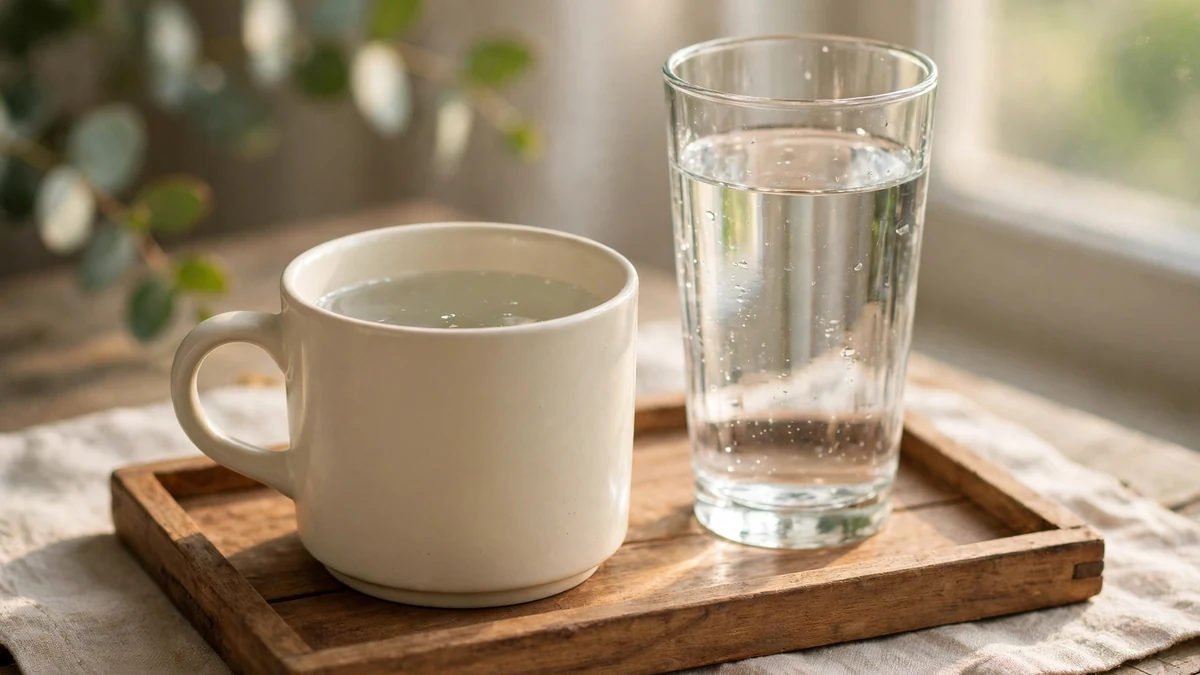
A glass of water is a clear, honest thing, and most days it is all anyone needs. Yet a ceramic mug gives the same water a different feeling. The mug is heavier in the hand and warmer to hold, and it hides the water from view.
That weight is the whole point. A mug asks you to hold it with both hands, to slow down for a minute, and to treat plain water as something worth a proper vessel. A favourite mug becomes part of the day's rhythm, the way a favourite chair or a worn pair of slippers does.
This guide follows the ritual in order: the mug, the water, the seven ways to enjoy it, and the small care that keeps the mug safe. What follows is gentle general information, not medical advice, and any question about your diet or health is one for a doctor.
Key Takeaways
- Water and a ceramic mug means plain water drunk from a sturdy glazed mug.
- The water comes first, sipped slowly, before anything else is poured.
- A ceramic mug is a vessel for a small daily pause, not a recipe and not a cure.
- The water is drunk for pleasure alone; it heals nothing and promises nothing.
- Ten quiet minutes with the mug finish the whole ritual.
What a Ceramic Mug Is
A ceramic mug is a cup with a handle, made from fired clay and covered inside with glaze. Most are thick-walled stoneware or earthenware; some are thinner porcelain. The glaze makes the inside smooth and watertight, so the mug holds water without soaking it up.
The handle is what sets a mug apart from a tumbler or a glass. It lets you carry hot water without burning your fingers, and it gives your hand something to wrap around on a cold morning. A good mug holds about one full glass of water and sits flat without rocking.
Why a Mug Changes Plain Water
Water from a glass is quick. You see how much is left, you finish it in a few gulps, and the glass goes back on the tray. Water from a mug is slower, because you cannot see inside and the weight asks for smaller sips. That slowness is not a flaw; it is the reason the mug earns its place.
The warmth matters too. A ceramic wall holds heat, so warm water stays warm in a mug far longer than in a thin glass. Plain water tastes the same from any vessel, yet the mug makes drinking it feel like a pause rather than a chore.
Water and a Ceramic Mug Together
A ceramic mug and a glass of water suit one tray, and the order matters. Start with the plain glass, drunk first in slow sips, and fill the mug only after, so the ritual gains a beginning and a middle.
Nothing but water goes into the mug: no stone, no powder, no herb, and the water stays plain. Wash your hands before you pour, and wash the mug well once you finish. A clean mug, a clear glass, and ten quiet minutes at the table are all it takes.
Seven Ways to Enjoy Water from a Ceramic Mug
- First thing in the morning, fill the mug with cool water and drink it slowly by the window.
- Keep the mug on your desk while you work, refilling it each hour so water is always within reach.
- On a cold evening, fill it with warm water and hold it with both hands while the house settles.
- On a hot afternoon, fill it with iced water and set it on a folded cloth.
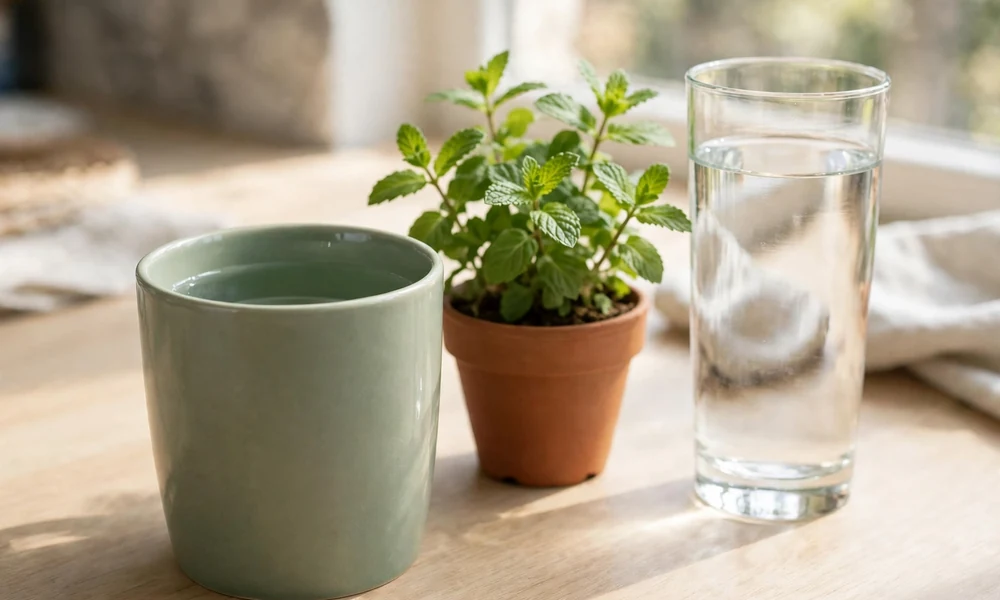
- Set a sprig of mint beside the mug, so its scent sits near the water.
- Make a shared tray with two mugs, one for you and one for a guest, and sit together for ten minutes.
- At bedtime, place a filled mug on the nightstand beside a glass of water.
Choosing a Ceramic Mug
Pick a ceramic mug by holding it, never from a photograph alone. Lift it and judge the weight in your palm: it ought to feel solid rather than flimsy, and two fingers should slip under the handle without pinching. Peer inside for an even, smooth glaze without cracks, and set it down to see that the base sits flat.
Start with a single mug rather than a set, and live with it for a week before you decide about more. Where the glaze is handmade or unmarked, ask the seller if it is food safe, and give a new mug a day of plain water before it becomes your daily one.
A Fresh Morning with a Ceramic Mug
A fresh morning with a ceramic mug starts with the tray, not the tap. Set the tray on the table by the window, put the empty mug on one side and a glass of plain water on the other. Drink the water first, in slow sips, then fill the mug and set it back on the tray.
Sit down with the mug and sip it slowly, a little at a time, as morning light fills the window. One glass of water, one ceramic mug, and ten quiet minutes at the table.

A Ceramic Mug at a Glance
| Glazed ceramic mug | Desk, tray, table | Wash daily |
|---|---|---|
| Holds heat well | Mornings, slow evenings | Handle with care |
| One favourite mug | One glass beside it | Rinse and dry |
| Plain water inside | Kitchen, bedroom, desk | Keep it clean |
Water and a Ceramic Mug vs a Smoothie Glass
Water and a smoothie glass: a simple fresh ritual follows a tall, sturdy glass made for thick drinks. The drink inside is a smoothie, not plain water.
A ceramic mug is the opposite kind of vessel. It is opaque where the glass is clear, heavy where the glass is light, and it holds plain water rather than a blended drink. The smoothie glass shows off the colour of its drink; the mug hides the water and asks you to trust the weight in your hand. Both rituals start with a glass of plain water, yet the vessels could hardly be more different.
Water and a Ceramic Mug vs Golden Milk
Water and golden milk: a simple warm ritual follows a warm drink made by stirring ground turmeric into warm milk until it turns a soft golden yellow. The water comes first, in a tall glass, before the milk is poured.
The ceramic mug ritual shares the mug and the evening hour, yet the drink is different: plain water, not spiced milk. Golden milk is made in a small pan with turmeric, pepper and honey, while the mug here holds nothing but water, warmed or cooled as you like it. One ritual is about a recipe; the other is about the vessel itself.
Water and a Ceramic Mug vs a Kettle
Water and a kettle: a simple fresh ritual follows the pot that boils the water, a plain steel kettle that pours a thin, steady stream into a mug or a pan. The kettle's job is to heat and pour, and its spout is shaped for that one task.
The mug is where the water ends up. The kettle stays on the stove, while the mug travels to the table, the desk and the bedside, and it is the mug you hold, not the kettle. The two belong together, yet they do different work.
Where a Ceramic Mug Lives at Home
Give the mug a shelf that is easy to reach but safe from knocks: a kitchen shelf at shoulder height, or a hook beside the kettle where it dries between uses. Keep it away from the edge of the counter, where an elbow could send it to the floor.
Wash it daily with warm water and a soft sponge, dry it upside down on a rack, and retire any mug whose glaze has crazed or chipped. This batch also holds a window box for plants, a clay bowl for beginners, a hair clip for a fresh look, and a wide tooth comb for gentle detangling.
Keeping a Ceramic Mug Clean and Safe
A ceramic mug is simple to care for, and simple care is enough. Wash it after every use with warm water and a little soap, rinse it well, and dry it with a clean cloth rather than leaving it to drip. Never use a harsh scouring pad on the glaze, since scratches give stains a place to settle.
If a mug has metallic trim, keep it out of the microwave, and if the glaze is old or unmarked, ask the maker whether it is food safe before it becomes your daily cup. Let a doctor guide any health question rather than guessing. A plain, well-made mug asks for nothing more than soap, water and a dry shelf.
Your Fresh Ritual Checklist
- Fill the glass first, then the mug, both on one tray.
- Sip the water slowly, one small mouthful after another.
- Hold the mug with both hands and feel its warmth.
- Wash the mug after use and dry it upside down.
- Choose a mug whose glaze is smooth, with no cracks or chips.
- If a health question comes up, ask a doctor — a mug holds water, not answers.
A tray, a glass, a cloth and one favourite mug — that is the whole of it.

Frequently Asked Questions
Which mug is best for drinking water?
A thick stoneware mug with a smooth food-safe glaze suits water best.
Can I put warm water in a ceramic mug?
Yes, warm water is what a ceramic mug is made for, as long as the glaze is sound and the mug has no cracks, and you hold it by the handle.
How do I clean a ceramic mug properly?
Wash it after every use with warm water and a little soap, rinse it well, and dry it upside down.
Is a chipped mug safe to drink from?
No, retire a chipped or crazed mug, since cracks can hold stains and germs.
Can I use a ceramic mug for iced water?
Yes, a sturdy mug holds iced water well, and setting it on a folded cloth keeps the cold from wetting the table.
Where should a ceramic mug live at home?
Give it a kitchen shelf at shoulder height or a hook beside the kettle, easy to reach and dry between uses.

The Bottom Line
One favourite mug, filled with plain water, and ten quiet minutes at the table: that is all a fresh ritual asks of a ceramic mug.
A Note for Fresh Days
A mug of clear water, a glass standing beside it, and the morning moving at its own pace — that is the whole of it.


