Tagua looks like ivory, feels like ivory, and has been carved like ivory for generations, yet it never came from an animal. It is the seed of a palm tree, dried hard and polished smooth, carrying the warmth of something grown rather than mined. On a quiet day, that matters: the piece in your hand began as a fruit.
The pleasure of tagua is a slow one. It does not sparkle, and it asks for nothing more than a dry cloth and a safe place to rest. What it gives back is a soft cream surface that grows warmer with wear, and a calm weight for unhurried hours.
This guide takes tagua as it is: what the seed is, where it grows, how to tell the real thing, how to choose a piece, and how to keep it well. It is general information only.
Key Takeaways
- Tagua is a palm seed, often called plant ivory, not a stone.
- Real tagua is smooth, creamy, and cool, with fine natural grain.
- Keep tagua dry: never soak it, and keep it away from water.
- Wipe it with a soft dry cloth, and store it in a pouch.
- Enjoy it slowly: tagua suits quiet days, not busy ones.
What Tagua Is
Tagua is the nut of the tagua palm, a tree that grows in the rainforests of South America. When the nut dries, its inside turns hard and pale, almost like ivory, and carvers have shaped it into beads, buttons, and small figures for well over a hundred years. It is sometimes sold as vegetable ivory, a name that describes its look rather than its nature.
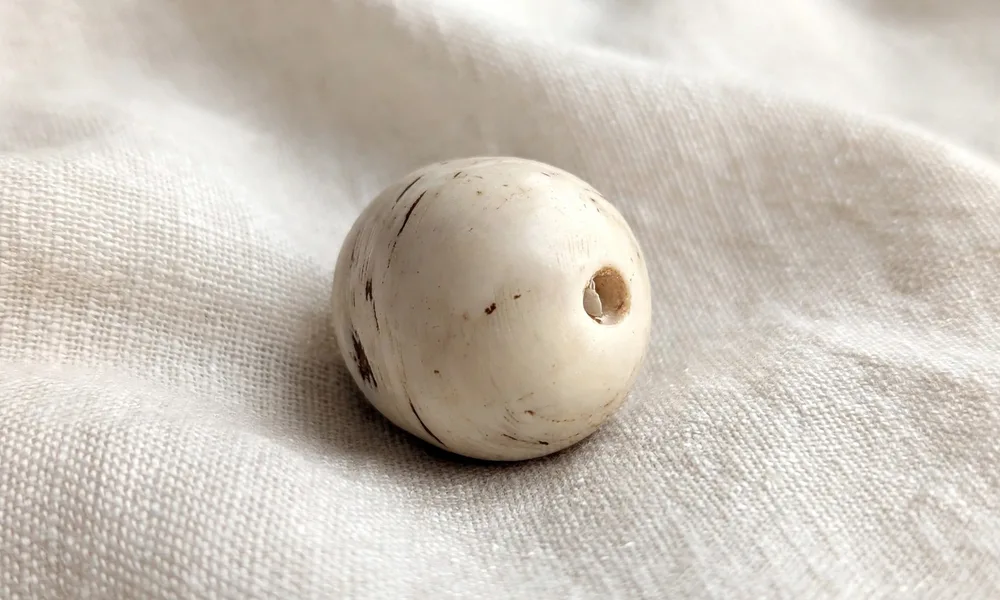
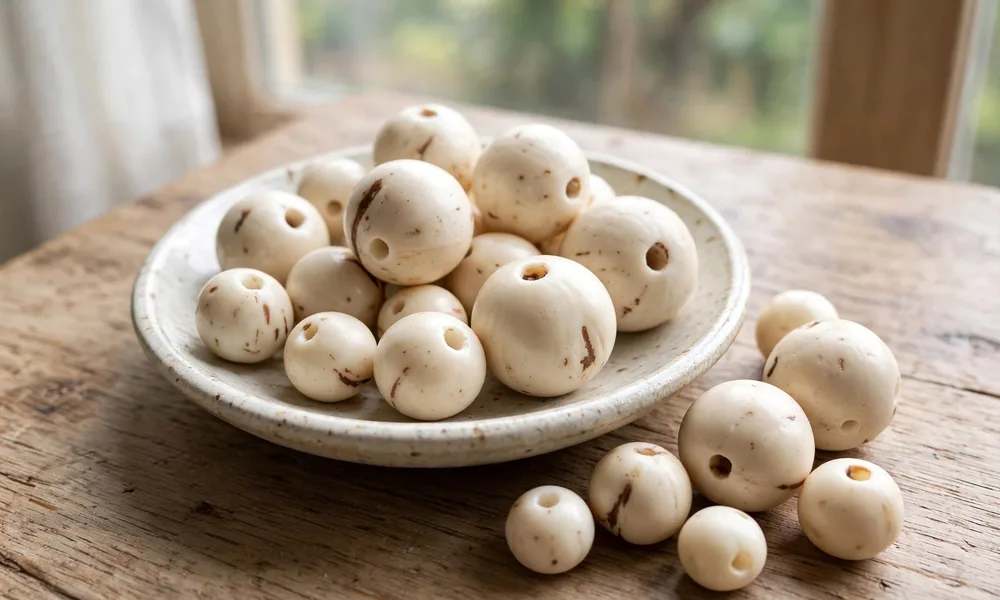
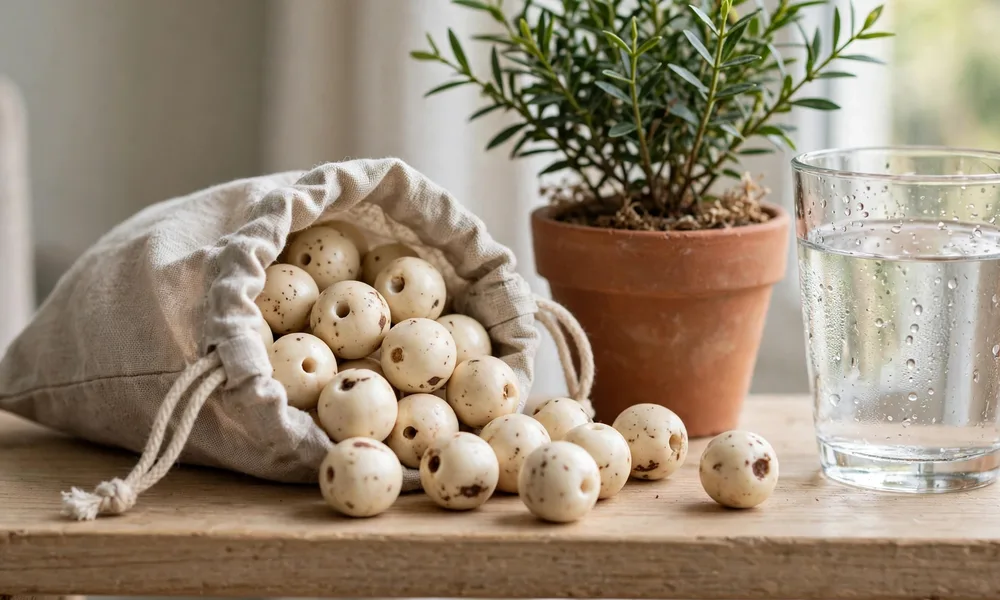
A finished bead is smooth and cool at first, warming quickly in the hand. The colour is a soft cream, sometimes almost white, sometimes warming toward honey, and no two beads are exactly alike. Fine lines run through the surface, like the grain of pale wood, and they are the surest sign of the real thing.
Where Tagua Comes From
The tagua palm grows in the lowland forests of Ecuador, Colombia, Peru, and Panama, where its large fruits fall to the forest floor and are gathered by hand. The nuts dry for weeks, sometimes months, until the kernel inside turns hard enough to carve. Nothing is cut down for the harvest: the palm keeps growing, and the nuts keep falling year after year.
That slow harvest is part of tagua's quiet appeal. The bead you hold may have waited months to harden, and the tree it came from may stand for decades. Buying tagua supports the gatherers who walk the forest floor, rather than a mine.
How to Tell Real Tagua
Real tagua gives itself away in three small ways, all checked in daylight with the piece in your own hand. First, look at the surface: genuine tagua shows fine, uneven grain lines, like pale wood, while a plastic copy looks flat and perfect, with no grain at all.
Second, feel the weight and the temperature. Tagua is cool when first picked up and warms in the hand, lighter than stone and heavier than plastic. Third, look at the drill hole: a real bead shows a clean hole with faint rings around it, where the carver's tool passed through.
Choosing a Piece You Will Love
Choose tagua the way you would choose a quiet companion: slowly, and in good light. Hold the piece and turn it over, looking for an even cream colour with no grey patches and no cracks at the edges. A small dark speck or a faint line is natural in a seed; a deep crack or a flaking surface is a fault, and the piece should stay on the shelf.
Think about how you will wear it. A necklace of smooth round beads suits a quiet day at home, while a single carved bead on a cord is easier to carry. Try the length against your neck, check that the cord feels strong, and pick the piece you keep returning to — that is the one to take home.
Keeping Tagua Clean and Dry
Tagua is a seed, and a seed does not like water. A soaking can swell the surface, dull the polish, and in time open fine cracks. Keep the piece away from sinks, showers, and rain, and take it off before washing your hands.
Cleaning is simple: wipe the beads with a soft, dry cloth after wearing, and let them rest in open air before they go away. If a bead picks up dust, a barely damp cloth will do, followed at once by a dry one. Perfume, lotion, and hair spray should never touch tagua: spray first, dress, and put the beads on last.
A Quiet Morning with Tagua, Step by Step
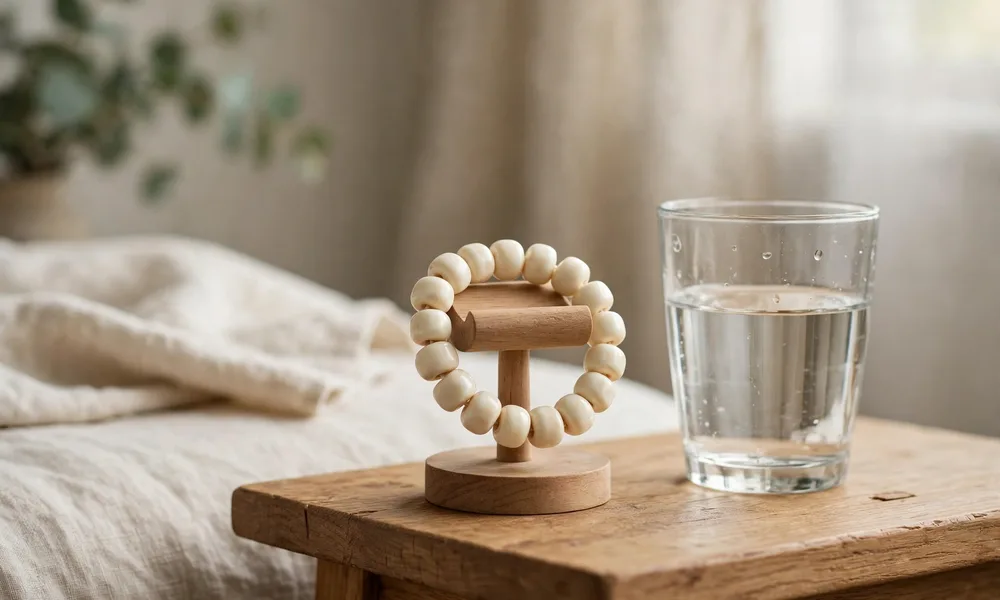
Begin with the tray, not the beads. Set a small wooden tray on the table by the window, pour a glass of water, and put the glass at the far side, where it cannot spill onto anything. The tagua stays on the near side, dry and separate, and the water is for drinking only.
Lift the beads from their pouch and lay them in a loose coil on the tray. Look at them for a minute in the morning light — the grain, the cream, the way each bead differs from the next. Then put the piece on and sit with it for a while before the day begins. When the morning is done, wipe the beads, coil them back into the pouch, and set the tray aside.
Tagua at a Glance
| Palm seed, not stone | Soft cream colour | Keep it dry |
|---|---|---|
| Plant ivory name | Fine natural grain | Dry cloth only |
| South America grown | Cool, then warm | Pouch storage |
| Carved like ivory | No two alike | Water never touches |
Tagua and White Coral
White coral: soft white classic days is the nearest soft-white companion to tagua, a pale branch polished smooth and kept as a display piece for classic days. Its shade is a gentle white, at times creamy, at times near ivory, with neither pink nor grey.
The two look like cousins on a tray, and that is where the likeness ends. White coral comes from the sea, while tagua comes from a palm seed on a forest floor. One is mineral, the other is grown; one is kept on display, the other is made to be worn.
Tagua and Common Opal
Common opal: soft white quiet days is another pale companion, a milky stone with a gentle, waxy shine rather than a sharp sparkle. Its white leans toward cream or pale ivory, sometimes with a faint hint of grey, and it suits quiet days in the same soft way tagua does.
The difference is in the hand. Common opal is cool stone, smooth and still, while tagua is a seed that warms quickly and carries fine grain lines a stone never has. Both belong on a dry tray beside water, and neither should be soaked.
Tagua and Mutton-Fat Jade
Mutton-fat jade: soft white classic days is a pale nephrite of the finest kind, firm and heavy, cream-white with a shine at its thinnest rims, a piece made for a shelf rather than a pocket. Carvers have chased that warm ivory tone for hundreds of years.
Tagua wears the same colour, and it is easy to see why the two are confused at a glance. The jade is stone, hard and heavy; the tagua is seed, light and grained, grown on a palm. Colour alone never tells the story — the grain, the weight, and the warmth in the hand do.
Nine Neighbours in This Batch of Guides
Five stone guides keep tagua company in this batch, each with its own colour and temper: amblygonite in soft yellow, anatase in deep blue, basalt in deep black, and cowrie in soft white — four stones that sit dry beside water, just as tagua does.
Five water guides share the batch too: the colander drains well, the salad spinner dries leaves, the cold frame shelters plants, the seedling grows from a small pot, and the teacup pours calm mornings. Tagua is the only one of the ten that grew on a palm, and that makes it the warmest one here.
Stones That Must Never Touch Water
Keep the glass for drinking, and keep stones that dislike water far from it: a soak can spoil a piece that took years to form. Lepidolite is the one to watch first — its fine flakes hold lithium, so it never belongs near a cup, a tap, or a bath.
Pyrite turns dark and dull when it stays damp, and angelite swells and loses its glow after a single long soak. Amber, tree resin rather than stone, clouds to milky white in water, and apatite loses its polished shine the same way. Tagua joins them on the dry shelf: a seed, a resin, and four stones, all kept away from water.
Your Quiet Days Checklist
- Pick tagua with even cream colour, fine grain, and no cracks.
- Keep it dry: off before washing hands, away from rain and sinks.
- Wipe beads with a soft dry cloth after wearing.
- Store the piece in a cloth pouch, away from sun and perfume.
- Lay it on a tray beside water, never in it.
- If a bead or cord irritates your skin, take it off and speak to a doctor; tagua is a pleasure, not a remedy.
Frequently Asked Questions
What exactly is tagua?
Tagua is the dried nut of the tagua palm, a tree from South American rainforests. Its hard, creamy kernel is carved into beads and figures, and it is often called plant ivory because it looks like ivory.
Is tagua real ivory?
No, tagua is not animal ivory at all. It comes from a palm seed, not from an animal, and it is the plant-based alternative that carvers have used for generations.
Can tagua get wet?
Tagua should stay dry. A quick splash can be wiped off at once, but soaking can swell the surface, dull the polish, and open fine cracks.
How do I clean tagua beads?
Wipe them with a soft, dry cloth after wearing. If a bead is dusty, use a barely damp cloth, then dry it at once with a second cloth before storing.
Does tagua change colour over time?
Yes, tagua often warms a little with wear, moving from pale cream toward a soft honey tone. The change is slow and even, and part of the seed's character.
How should I store tagua?
Store tagua in a soft cloth pouch, away from sun, perfume, and damp. Keep it separate from harder stones, so the beads are not scratched in the drawer.
The Bottom Line
Tagua is a palm seed that looks like ivory, feels warm in the hand, and asks only to be kept dry and worn slowly on quiet days.
A Note for Quiet Days
A cream bead, a dry tray, a glass of water set well apart — and an unhurried morning to enjoy them.