Every kitchen has one object that waits patiently for its hour, sitting on the shelf through the morning rush until someone lifts it down, fills it with hot water, and gives the day its first slow pause. A teapot is that object: a simple vessel that turns hot water and leaves into a warm ritual.
A teapot asks for very little — fresh water, a few leaves, and ten unhurried minutes — and it gives back a small ceremony that fits any hour of the day.
Below, the teapot gets a full look from every side: the pot, the water, the brewing, the pouring, and the tidy shelf afterwards. What follows is general information of a gentle kind, not medical advice, and health questions belong with a doctor.
Key Takeaways
- A teapot is a vessel for brewing and pouring tea, with a spout, a handle, and a lid.
- Drink a glass of cool water slowly before the tea.
- The teapot brews the tea; the kettle only boils the water.
- Tea is a drink only, never a medicine.
- A warm ritual needs little: a clean pot, fresh water, a cup, and a slow hour.
What a Teapot Is
A teapot is a vessel made for brewing tea and pouring it, and little else. The usual shape is a round body with a spout, a handle, and a lid, built to hold hot water and leaves, then pour a thin steady stream into a cup.
A jug holds cold water or juice and pours it fast, while a teapot holds hot water and leaves, and its spout is shaped to pour slowly, so the cup fills without splashing. A good teapot feels steady, pours without dripping, and has a lid that sits flat.
Why a Teapot Suits Warm Rituals
Warmth is the teapot's whole gift: the pot holds heat, the cup warms your hands, and the steam rises slowly while the tea cools. A warm drink suits a slow hour because it asks you to sit down and wait a minute before the first sip.
Teapot and Kettle: Boiling Is Not Brewing
Water and a kettle for a simple fresh ritual follows the first small job of the morning: a clean kettle, filled with fresh water, boiled fast. A kettle and a teapot work side by side, yet their jobs never overlap. The kettle boils water and nothing else, and its work ends the moment it clicks off, while the teapot brews tea, and its work begins where the kettle's ends.
A kettle has a wide body built for heat, a spout made for a fast pour, and a switch or a whistle that tells you the water is ready. A teapot has a round body built for steeping, a spout made for a slow pour, and a lid that comes off.
The kettle guide itself notes that a teapot guide was planned for a later batch, so it keeps to the kettle alone. This guide is that later one: the kettle boils the water, and the teapot takes it from there.
Choosing a Teapot
Start by picking the teapot up: how it balances in your hand tells you most of what you need to know. A good pot has a reassuring weight without feeling heavy, a handle shaped to your grip that stays cool enough to hold, and a lid that rests flat and comes off with ease.
A pot of around a litre suits most kitchens, roomy enough for tea for two yet light enough to lift when full. Choose a seller who names the material plainly and can explain how the pot should be cleaned.
A Warm Morning with the Teapot
The whole habit fits inside one morning hour. First, drink a tall glass of cool water slowly at the counter, a little at a time. Then fill the kettle, let it boil, and pour hot water into the empty teapot to warm it, swirling once before tipping it away.
Now add the leaves, cover them with fresh hot water, and set the lid in place. Give green tea two minutes, black tea three or four, herbal leaves a little longer. Fill the cup in a slow stream, leave it a minute to cool a little, then carry it to your chair and drink it slowly.
Water First, Then the Pot
In this ritual the water leads and the teapot follows, ahead of the leaves and ahead of the pour. Fill a tall glass with cool water and drink it unhurriedly, a little at a time, standing at the counter by the window. One slow drink before the kettle goes on sets a steady rhythm for the whole morning.
Use fresh water from the tap or a filter, changed every day, and tip away any water left in the kettle from yesterday before you fill it again. Rainwater is not for drinking or for skin, so it never goes in the pot.
Teapot at a Glance
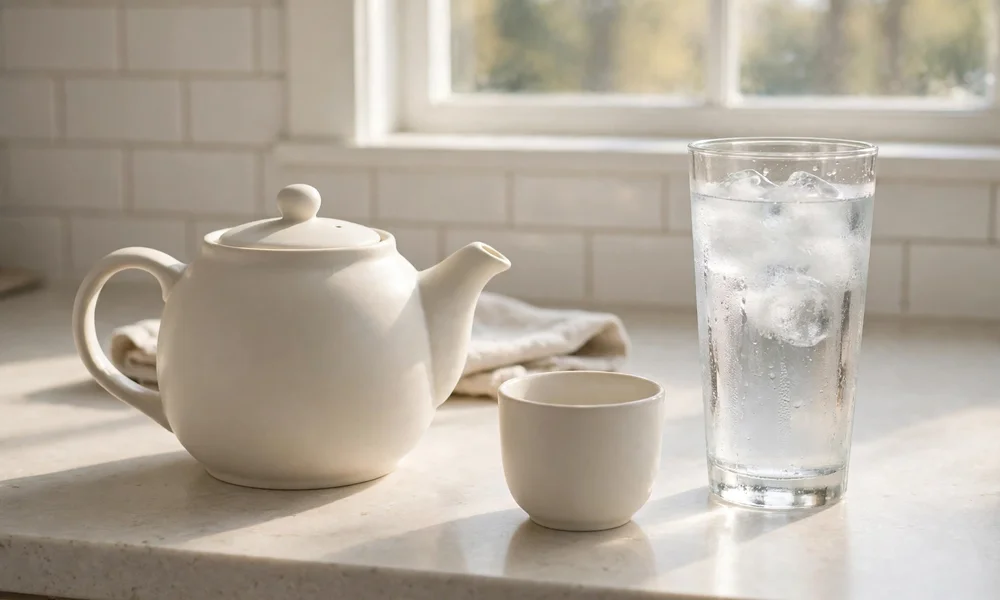
| White ceramic pot | Fresh water daily | Pour with care |
|---|---|---|
| Spout pours clean | One pot, plain tea | Let tea cool |
| Lid lifts easy | Warm pot first | Wash and dry |
| Handle stays cool | Glass drunk slow | Shelf, airy spot |
Teapot and the Tea Ceremony
Water and a tea ceremony for a simple calm ritual follows a slow, step-by-step ritual with a small teapot, two tiny cups, and a bowl of clear water, over about half an hour. A ceremony and a teapot ritual share the same pot, yet they are different hours: a ceremony is deliberate, with every step in a set order — warm the pot, rinse the cups, pour the water, wait for the leaves, and pour into tiny cups one slow pour at a time.
A teapot ritual asks for none of that order: one pot, one or two cups, no bowl of water on the tray, and no half hour set aside — just a warm drink made slowly in an ordinary day. The ceremony suits a calm hour with room in it, while the teapot suits any hour at all.
Teapot and Morning Tea
Water and morning tea for a simple fresh ritual follows the first hour of the day: a tray set by the window the night before, with the cup, glass, and teapot already in place, so the morning asks nothing of you but the kettle. Morning tea and the teapot belong together, yet they are not the same thing: morning tea is the drink and the hour, while the teapot is the vessel that makes it, used again all day.
Morning tea focuses on the first hour and on drinking a glass of water before the tea. This guide focuses on the pot itself: how to pick one, how to brew in it, and how to keep it clean. The morning cup is one chapter of the teapot's day, not the whole story.
The Teapot and Its Batch Companions
Four more water rituals share this batch with the teapot, and each one sets water a different task. A table setting ritual pairs water with a laid table and a shared meal, where the teapot pairs water with leaves and a quiet cup. A toothbrush ritual pairs water with a brush and a clean mouth, quick and practical, while the teapot asks for slow minutes. A vision board ritual pairs water with pictures and plans, while the teapot stays in the present. A compost bin ritual pairs water with soil and scraps, while the teapot stays in the warm kitchen.
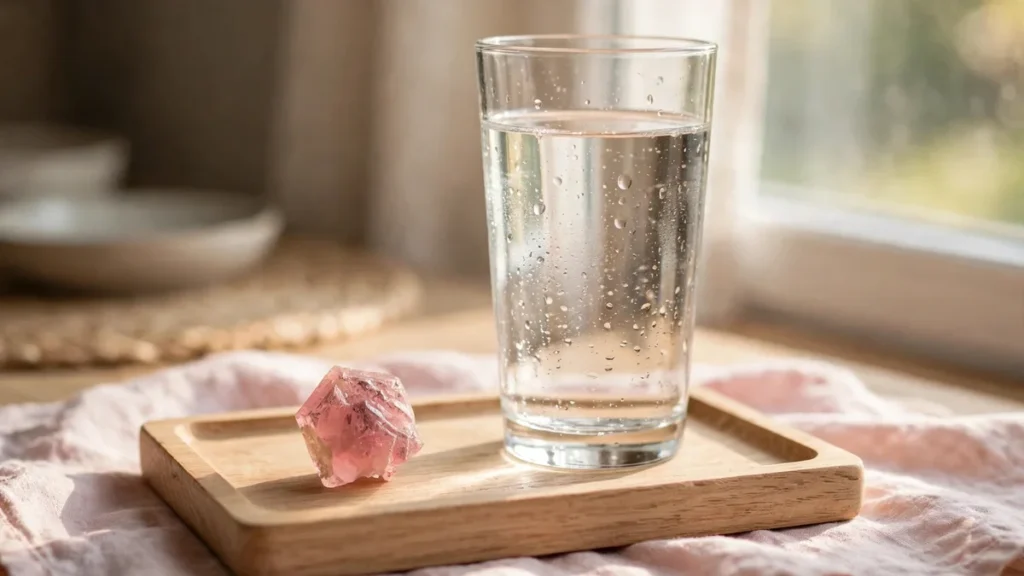
Pezzottaite, the pink stone in this batch, can rest on the same tray as the teapot, a small raspberry-pink crystal beside the glass of water, kept dry.
Where the Teapot Lives at Home
Pick a shelf the household reaches easily but never knocks into — a low kitchen shelf, a worktop end, or a dining room dresser — clear of steam and little hands. The pot should sit with its lid ajar, so it dries fully between uses.
When the pot travels, wrap it in a soft cloth and set it in a box of its own.

Keeping the Teapot Clean and Safe
A clean pot makes better tea. Rinse it with hot water after every use, tip it upside down, and leave it open to dry. Once a week, wash it with warm water and mild soap. Never use harsh scourers on a glazed pot, and never leave tea sitting in it overnight.
Tea is a drink only, never a medicine. Cooled green tea water is a face rinse only, never a drink made with anything else, and it should be patch-tested on a small area of skin first, then rinsed off with plain water. If a health worry hangs on, ask a doctor — a teapot cannot answer it.
Your Warm Rituals Checklist
- Drink a tall glass of cool water slowly before the kettle goes on.
- Warm the empty pot with hot water, then tip it away.
- Put the leaves in, pour in hot water, and wait.
- Pour slowly and let it cool a little.
- Rinse the pot, dry it, and leave the lid ajar.
- If a health worry hangs on, ask a doctor — a teapot cannot answer it.
A pot, a cup, a glass of water, and ten slow minutes: that is the whole warm ritual.
Frequently Asked Questions
What exactly is a teapot?
A teapot is a vessel for brewing and pouring tea, with a round body, a spout, a handle, and a lid, built to hold hot water and leaves, then pour a steady stream into a cup.
How is a teapot different from a kettle?
A kettle boils water fast and its work ends when it clicks off, while a teapot brews tea with that hot water and pours it slowly.
Can I use rainwater in my teapot?
No. Rainwater is not for drinking or for skin, so use fresh tap or filtered water, and tip away any water left from yesterday.
How do I pick a good teapot?
Lift it first: a good pot feels solid without being heavy, with a handle that fits your grip and a spout that pours without dripping.
Is green tea water safe on skin?
Cooled green tea water is a face rinse only. Patch-test it on a small area first, rinse it off with plain water, and stop if your skin feels sore.
Where should a teapot live at home?
Keep it on a low shelf or a worktop end, lid ajar so it dries fully, clear of steam and little hands.

The Bottom Line
For a warm hour, a teapot is enough: one clean pot, fresh water, and time to pour slowly.
A Note for Warm Rituals
A pot on the shelf, water in the glass, tea poured slowly — a warm hour asks for little more.