There is a small moment most of us know: opening the shoe rack, lifting out a favourite pair, and finding them duller than we remember. Dust, mud, rain and daily wear settle on shoes a little at a time, until the pair looks tired.
Water and shoes is one of the simplest fresh routines there is: a bowl of plain water, a soft brush, a clean cloth and some fresh air. This guide shows how to rinse and brush shoes gently, dry them in the air, and keep them fresh week after week.
It is a cleaning habit, not a treatment, and it asks for no harsh chemicals at all.
Key Takeaways
- Shoes dull slowly from dust, mud, rain and daily wear.
- Plain lukewarm water and a soft brush suit most shoes.
- Never use harsh chemicals, bleach or strong detergents on shoes.
- Air dry shoes in the shade, never on a radiator or in strong heat.
- A short weekly routine beats a rare deep clean.
What a Fresh Shoe Routine Is
A fresh shoe routine is a short, gentle habit: a few minutes with plain water, a soft brush and a clean cloth, done often enough that dirt never settles in. It is not a deep clean or a repair, just the small weekly care that keeps shoes looking new.
The routine works because fresh dirt lifts easily: mud from today wipes away with a damp cloth, while mud dried for a week needs scrubbing.
Most shoes suit the same simple steps: knock off loose dirt, wipe with a damp cloth, brush gently where needed, and dry in the air. Different materials need small changes, but the heart never changes: plain water, a gentle hand, and fresh air.
What You Need
You need very little, and you probably have it already. A small bowl of plain lukewarm water is the heart of the routine. A soft brush or cloth does the cleaning, and a second clean cloth does the drying.
Add shoe trees or balls of clean newspaper to hold the shape of the shoes while they dry. A shaded balcony is the drying place, and a shoe rack by the door is where the clean pair lives afterwards.
What you do not need matters just as much: no bleach, no strong detergent, no harsh chemical sprays, and no stiff wire brush. Those can stain, weaken or scratch shoes, and plain water does the job better.

Rinsing Shoes with Plain Water
Start by taking the laces out and knocking the shoes together gently outside, soles down, so loose dirt falls away. Brush off anything dry first, because dry dirt lifts easily and wet dirt smears.
Then dampen a soft cloth in plain lukewarm water, wring it out well, and wipe the shoes in slow, even strokes, rinsing the cloth often. For canvas shoes, a damp cloth is usually enough for the weekly clean.
Never hold shoes under a running tap or dunk them in a basin. Most shoes only need a damp cloth, and less water is always safer than more.
Brushing Gently
Some marks need a brush, and a soft brush is the right tool. Wet it lightly, shake off the extra drops, and brush the marked area in small, gentle circles. Do not press hard: pressure pushes dirt deeper into fabric and can scuff leather.
For soles, a slightly stiffer brush is fine. For uppers, stay soft, and for suede or nubuck, use a brush made for that material, with no water at all. An old toothbrush reaches the seams, where dirt likes to hide.
Brush a little, wipe with a damp cloth, and look at the shoe in good light. When the mark is gone, stop.

Drying in the Air
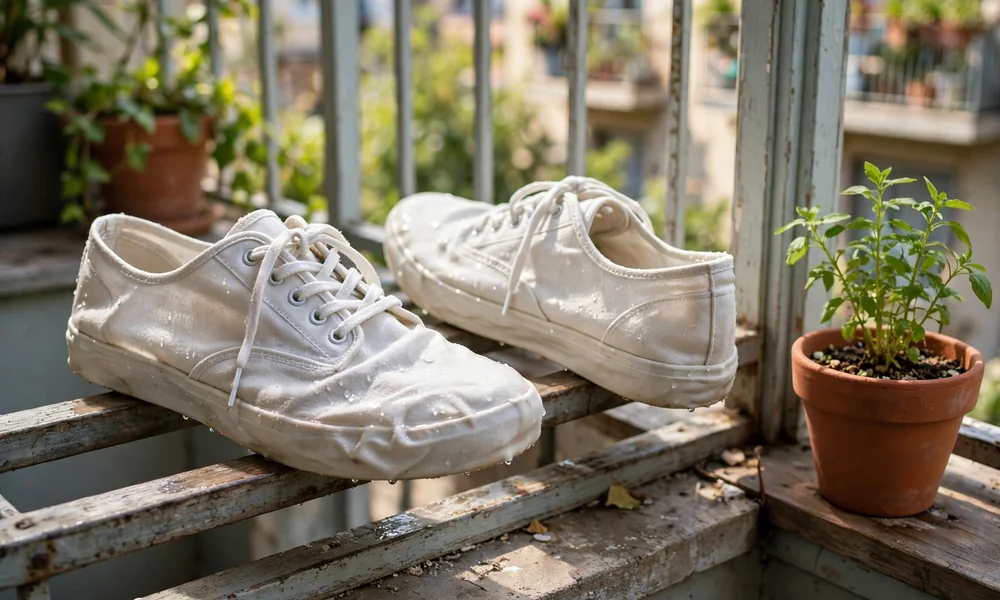
Drying matters as much as washing, and air is the kindest way. Stuff each shoe loosely with clean newspaper or shoe trees to hold its shape, then set the pair in a shaded, airy place.
Never dry shoes on a radiator, near a heater, or in strong direct sun. Heat can crack leather, warp soles and shrink fabric. Most shoes need a full day to dry right through, and canvas pairs can need longer.
Change the newspaper once if it feels damp, and do not wear the shoes until they are fully dry inside. A shoe worn damp will smell stale quickly, while one dried fully in fresh air smells clean.
Shoes at a Glance
| Plain water wash | Soft brush | Air dry |
|---|---|---|
| Lukewarm, damp cloth | Gentle, small circles | Shade, fresh air |
| Rinse cloth often | Soles can take more | Full day to dry |
| No harsh chemicals | Stop when clean | Never use heat |
Shoes and Tired Feet
Shoes and tired feet belong together, because a clean shoe is kinder to a tired foot. Dust and grit inside a shoe can rub and irritate, and a damp shoe can leave feet cold and sore by evening. A fresh pair, brushed clean and dried fully, feels lighter on the foot.
After a long day, clean the shoes, then rest the feet. Water for tired feet is a comfort habit for feet themselves: a basin of lukewarm water, a towel and fifteen quiet minutes.
This guide is about the shoes, not the feet. Clean the pair, dry it fully, and let the feet rest afterwards.
Shoes and Ankles
Ankles work quietly all day, bending with every step and pressing into shoes until evening. A shoe that rubs at the ankle can leave it stiff and sore, and grit makes the rubbing worse. Keeping shoes clean and dry is a small kindness to ankles too.
Check the inside of each shoe when you clean it: feel along the heel and ankle edge for rough seams, grit or damp lining. Wipe the inside with a barely damp cloth, then let it dry fully.
Water and ankles is a simple care routine for ankles themselves: washing them gently, drying them well, and resting them raised. Clean shoes and cared-for ankles go together.
Shoes and Cashmere Care
Shoes and cashmere care share one rule: gentle wins. Cashmere asks for plain water, a gentle hand and no harsh chemicals, and shoes ask for the same. Neither likes to be scrubbed hard, soaked for long, or dried with heat.
Water and cashmere care is a soft wash guide for a delicate knit: plain water, gentle handling, and air drying flat in the shade. The shoe routine follows the same spirit, with a damp cloth instead of a basin.
The lesson travels both ways: gentle care is one habit, not two.
Shoes and Jewellery Care
Shoes and jewellery care look similar at first: both use plain water and ask for no harsh chemicals. Yet they are different jobs. Jewellery is cleaned with a drop of mild soap and a soft cloth, polished to a shine, and put away in a box. Shoes are brushed with water, dried in the air, and worn out into the world again.
Jewellery dulls from skin oils, creams and dust, while shoes dull from mud, rain and hard ground. A soft cloth suits both, but a brush suits only shoes. Keep the routines apart, and each will work better.
This guide is about shoes alone: water, a brush, a cloth and fresh air. Just a clean pair, ready for the next walk.
Shoes That Need Extra Care
Some shoes need a little more thought than canvas trainers. Leather shoes suit a barely damp cloth, wiped gently over the surface, then dried in the air away from heat. Do not soak leather, do not scrub it, and do not use oils, conditioners or creams in this routine: this guide is about cleaning with water, not conditioning leather.
Suede and nubuck need a different touch: no water at all, just a brush made for suede, used gently in one direction. White shoes need a little more patience, since every mark shows, but the same steps apply.
Sports shoes with mesh uppers can take a little more water than leather, but they still need a full day to dry. Whatever the material, the rule holds: gentle, little water, fresh air.

Shoes That Must Never Be Soaked
Not every shoe can be washed the same way. Suede, nubuck and most leather shoes must never be soaked, because soaking can stain, stiffen and warp them. Shoes with glued soles or delicate trims should never be dunked either, since water can loosen glue and fade colour.
Shoes with lights or heated insoles must stay dry inside, wiped only on the outside with a barely damp cloth. If unsure, test a small hidden spot first, and wait to see how it dries.
When in doubt, use less water, not more. A damp cloth and a soft brush can freshen almost any shoe, while a full soak can ruin a good pair. Keep the water in the bowl, not in the shoe.
Your Fresh Routine Checklist
- Knock off loose dirt outside, then brush the shoes dry before any water.
- Wipe with a damp cloth in plain lukewarm water, rinsing the cloth often.
- Brush gently in small circles where marks remain, and stop when clean.
- Stuff shoes with newspaper and air dry in the shade for a full day.
- Never use harsh chemicals, bleach, or heat from a radiator or strong sun.
- Keep the routine weekly, and see a cobbler for damage, not a home remedy.
Frequently Asked Questions
How often should I clean my shoes?
Once a week is enough, with a quick wipe after muddy or rainy days.
Can I wash my shoes in a washing machine?
Some canvas trainers can take a gentle machine wash, but leather, suede and glued shoes should never go in one. A damp cloth and a soft brush are safer for almost every pair.
What water should I use on shoes?
Plain lukewarm water is best: it lifts dirt a little more easily than cold water. Never use hot water, which can warp soles and shrink fabric.
How do I dry shoes quickly without damage?
You cannot rush drying safely. Air dry in the shade with newspaper inside. Never use a radiator, a heater, or strong direct sun.
Can I use soap on my shoes?
A drop of mild soap can help on sturdy canvas, rinsed well afterwards. For leather and delicate shoes, plain water alone is safer.
How do I stop shoes from smelling stale?
Dry them fully in fresh air after every clean, and never wear damp shoes.
The Bottom Line
Water and shoes is a simple fresh routine: plain lukewarm water, a soft brush, a clean cloth and a day of air drying. Keep it gentle, keep it weekly, and keep harsh chemicals away.
A Note for Fresh Steps
Keep it simple, keep it gentle, keep it fresh. A clean pair, dried in the air, is ready for the next day.