Hair has a habit of waking up untidy. The front falls over the eyes, one side sticks out, and a full wash is more effort than a normal morning deserves. The answer is often sitting in a drawer: a small clip, pressed onto damp hair in one move, pinning the stray strands back while the rest falls as it pleases.
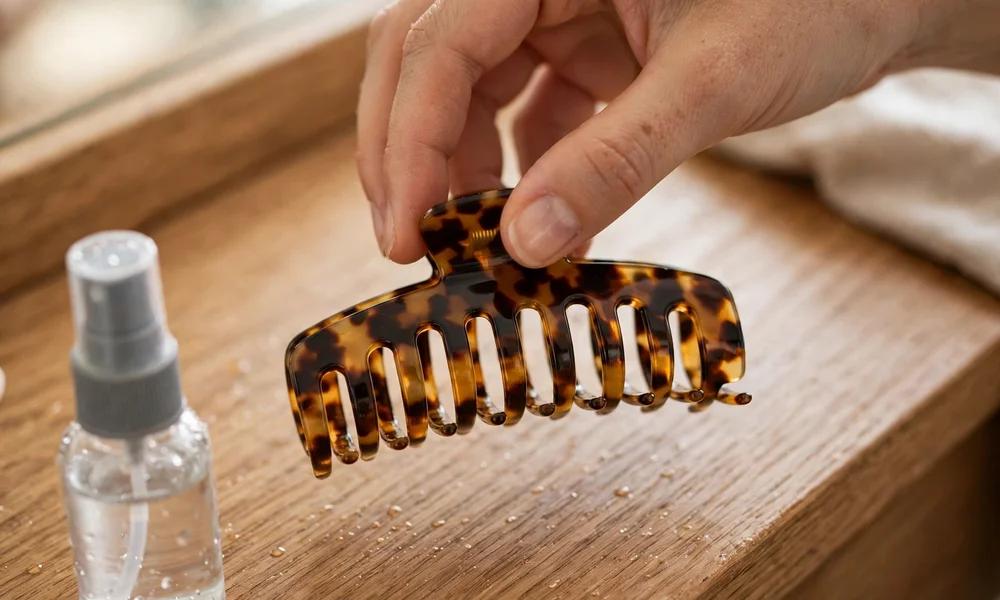
Water is what makes it work. Hair that is a little wet will bend and keep a shape, but hair that is fully dry slips out of a clip and springs loose. Two or three sprays over the front, or palms dampened and smoothed through the fringe, give the clip enough grip to hold for hours.
This guide walks through the look: what a hair clip does, how water and a clip work together, how to choose clips that suit your hair, three simple ways to wear one, and how to look after the clips and the hair beneath. Everything here is gentle general information, not personal advice. If your hair or scalp keeps troubling you, please see a doctor.
Key Takeaways
- A hair clip pins back a section of hair in seconds, with no heat.
- Mist the hair lightly with plain water before clipping it.
- Small flat clips suit fine hair; strong claw clips suit thick hair.
- A clip grips one section, unlike a band across the head.
- Patch-test new clips and products, and see a doctor for scalp worries.
What a Hair Clip Look Is
A hair clip look is hair held in place, not covered up. A clip grips a section of hair and keeps it where you want it: the fringe swept back, one side pinned flat, or the front strands lifted off the face. The rest of the hair stays open and free, falling past the shoulders or curling at the ends.
It suits almost any length. Short hair tucks neatly behind a small clip, and long hair can be swept up and held with a larger claw. It is a look for ordinary days: the school run, the market, the garden, the office. It asks for no heat, no pins and no long routine. One clip, a little water, and a minute are enough.
Water and Damp Hair
Think of the water as the helper and the clip as the holder. Wet strands are pliable, so they take the shape you press them into; dry strands resist and slide free. The best moment to clip is just after washing, when the hair is still cool to the touch, or after a few sprays across the front. Damp, not dripping, is the aim.
Leave the clip where it is until the hair has dried, and the shape stays. Once the clip comes out, the fringe should fall in a gentle curve rather than sticking up. If the hair dried too quickly, spray it lightly once more and clip it again. Nothing but plain water is needed.
Choosing a Hair Clip
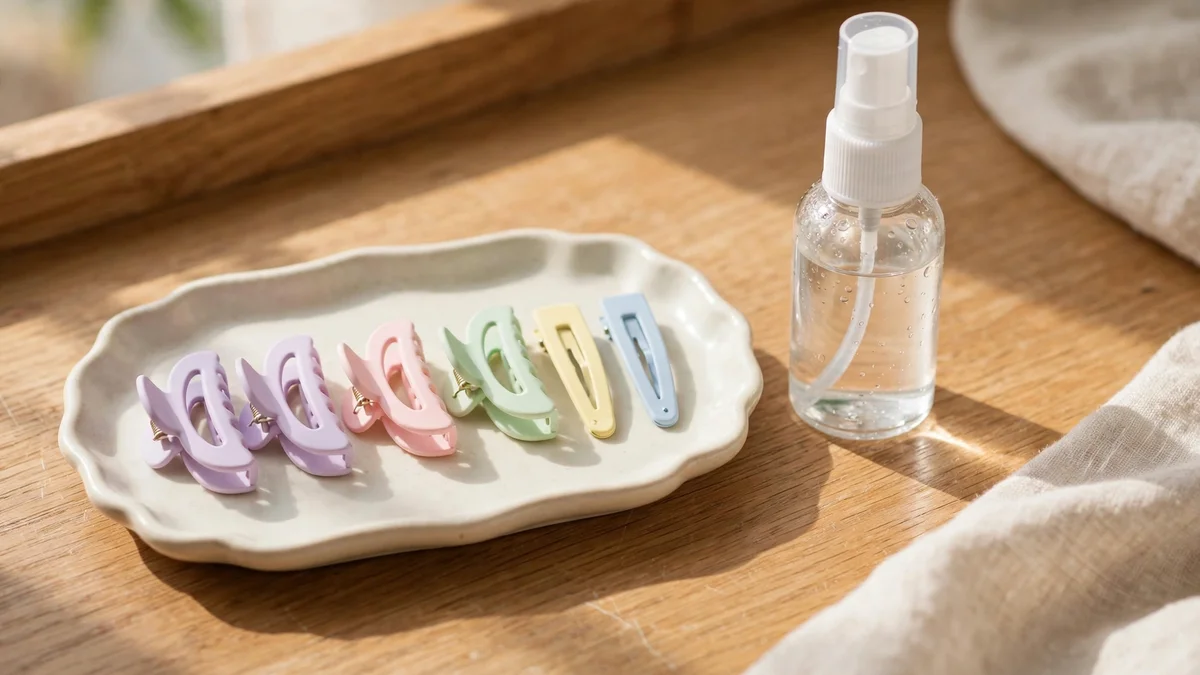
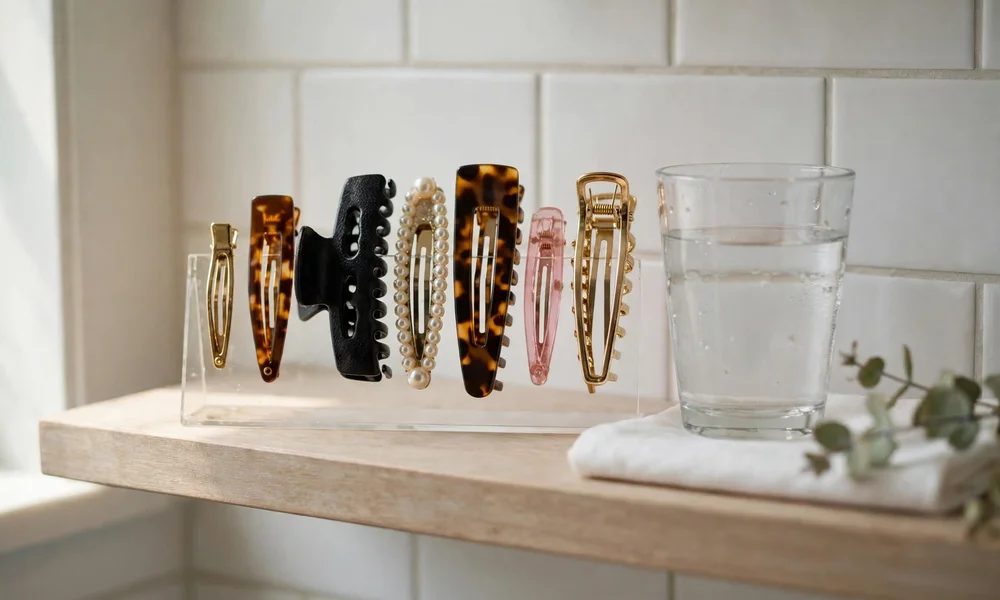
Pick a clip that feels smooth in your hand, with no sharp edges and no rough metal to catch a strand. Flat snap clips suit fine hair and small sections, holding a thin sweep of fringe without slipping. Claw clips suit thick hair, gripping a larger bunch with their teeth, while barrettes suit medium hair and add a little shine.
If the shop lets you, test a clip on your own hair first. It ought to shut with a firm snap yet never pinch, and stay put when you give your head a gentle shake. One that creeps forward will want fixing all day, while one that bites too hard leaves a mark. Begin with two or three plain ones, and buy fancier clips once you know which size fits.
A Fresh Morning with a Hair Clip
Put a glass of water on the dressing table first, and drink it at your own pace. Then spray the front strands, run a brush through them once, and gather the fringe with your fingers. Smooth it back with a damp palm and fasten the clip where the hair lies flat.
It takes under a minute. Leave the clip in while you dress, so the hair dries in place. By the time you leave, the front should look tidy and the sides smooth. A strand that escapes can be tucked back and clipped again.
Three Simple Ways to Wear a Hair Clip
The classic way is the simplest: sweep the fringe back from the forehead, press a flat clip on at the side, and let the rest fall loose. It suits every day and takes seconds. Smooth the front strands first, then clip them back.
The second way is the half-up twist: gather the top half of the hair, twist it once, and hold it with a claw clip at the back of the crown. The third way is the side pin: take a small section above one ear, twist it back, and fasten it with a pearl barrette, leaving the rest of the hair open on both sides.
Hair Clips at a Glance
| Flat snap clip | Mist, smooth, press | Fine hair, fringe |
|---|---|---|
| Claw clip | Gather, twist, hold | Thick hair, half-up |
| Pearl barrette | Side section, pin | Medium hair, outings |
| Plain water only | Cool and slightly damp | No heat, no pins |
Hair Clips and a Headband
Water and a headband is the closest cousin of this look in the journal. A headband is a band of soft cloth that sits across the head, just behind the hairline, holding the fringe back and framing the face. The hair beneath stays open, and the band does its work by pressing gently all the way around.
A hair clip works differently: it grips one small section and leaves the rest of the head untouched. A band suits days when the whole front needs holding back, while a clip suits days when only one stubborn section needs taming. Many people keep both in the same drawer.
Hair Clips and a Scrunchie
Water and a scrunchie is the gathered-hair look in this journal. A scrunchie is a fabric-covered elastic ring that pulls the hair together into a tail and holds it without pinching. It lifts the hair up and off the neck, and the tail falls freely behind the head.
A hair clip does not gather the hair at all. It pins one section flat or holds a twist at the crown, while the rest of the hair stays down. A scrunchie suits days when the hair needs to be up and out of the way, while a clip suits days when the hair stays down and only the front needs help. The two tools sit happily side by side.
Hair Clips and a Shower Cap
Water and a shower cap covers a different job altogether: keeping the hair dry while you wash. A shower cap is a waterproof cover that sits over the whole head, holding every strand out of the water while you stand under the spray. It is for the shower, not for going out.
A hair clip is the opposite in one sense: it is used with damp hair, not against water. You mist the hair first, then clip it, and the clip stays in while the hair dries into shape. The cap keeps water out; the clip uses a little water to make the look hold. Both belong in the bathroom.
Looking After Your Hair Clips
Keep your clips in a small bowl or on a tray, where you can see them. A tangled pile in a drawer bends the teeth of claw clips and scratches barrettes, so give each clip its own little space if you can.
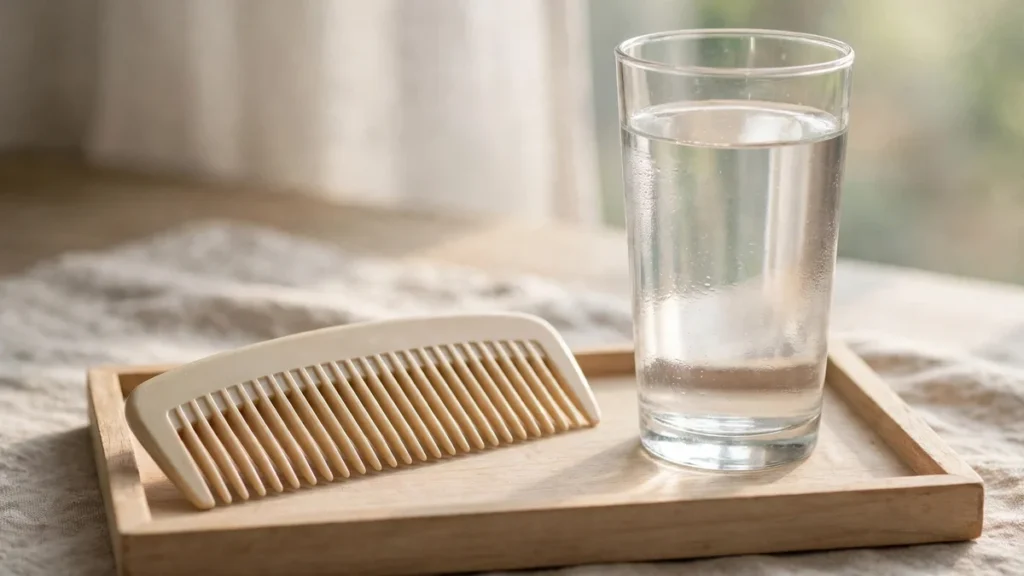
Wipe metal clips with a dry cloth weekly, wash fabric ones in warm soapy water and dry them fully, and throw away any clip with a broken tooth or a sharp edge. The batch's water guides are a window box, a clay bowl, a ceramic mug, and a wide tooth comb — plants, table, drink, hair.
Hair Clips for Different Days
A busy morning calls for the simplest clip you own: one flat snap, pressed on in seconds, holding the fringe while you get on with the day. A bright day out suits a pearl barrette or a tortoiseshell claw, something with a little shine that catches the light.
Cooler days suit a larger claw clip holding a half-up twist, tidy under a scarf or coat collar. For a long day at home, a loose side pin is enough, holding one section back while the rest stays loose. The rule is simple: the busier the day, the plainer the clip, and the slower the day, the prettier it can be.
Your Fresh Look Checklist
- Mist the front strands lightly, then brush them once.
- Press the clip on where the hair lies flat and smooth.
- Check the clip in the mirror, then smooth any stray strands.
- Let the hair dry with the clip in place before taking it out.
- Wipe the clip clean and put it back on its tray.
- If your scalp feels sore or itchy, take the clip out and see a doctor.
Tray, spray bottle, brush and one small clip — nothing else is needed.

Frequently Asked Questions
What does a hair clip do?
A hair clip grips a section of hair and holds it in place, keeping the fringe or one side back while the rest of the hair stays open and free.
Should I clip wet hair or dry hair?
Clip hair that is lightly damp, misted with plain water. Damp hair bends easily and holds the shape, while dry hair slips and springs loose.
Which clip suits thick hair best?
A strong claw clip suits thick hair best, since its teeth grip a larger bunch. Flat snap clips suit fine hair and small sections.
Can a hair clip damage my hair?
A smooth, whole clip used gently should not damage hair. Throw away clips with broken teeth or sharp edges, and never pull one out roughly.
How do I keep my clips clean?
Wipe metal clips with a dry cloth once a week, and wash fabric-covered clips in warm soapy water, drying them fully first.
Where should I keep my hair clips?
Keep them in a small bowl or on a tray, where you can see them all at once, away from damp and out of a tangled drawer.

The Bottom Line
One small clip, a light mist of water, and a minute in the morning: that is all a fresh look needs from water and a hair clip.
A Note for Fresh Looks
A clip pressed on neatly, hair drying into a soft shape, and the day starting tidy — that is the whole of it.