Your feet carry you through every day, and they rarely get thanked for it. They stand in queues, walk across hard floors, and squeeze into shoes that feel worse by the afternoon. By evening they feel heavy, warm, and tired.
Water for tired feet is one of the simplest comforts there is. A basin of lukewarm water, a towel, and fifteen quiet minutes are the whole list.
This article is a gentle guide to water for tired feet after long days: how to rinse and soak them well, how to rest and lift them, and how to build a short evening routine around water. It is a comfort habit, not a treatment.
Key Takeaways
- Water for tired feet means plain lukewarm water, rest, and elevation at the end of a long day.
- Always use lukewarm water, never hot, and test the temperature with your hand first.
- A short soak of ten to fifteen minutes is enough; longer soaks leave the skin soft and wrinkly.
- Dry your feet gently afterwards, moisturise lightly, and put on clean cotton socks.
- Skip the soak if the skin is broken or sore, and see a doctor for swollen, painful, or persistent problems.
Why Long Days Tire Your Feet
Feet get tired in a particular way. They bear your whole weight, all day, inside shoes that press and rub. By evening they feel hot and heavy, and the skin on the heels feels dry and tight. The day asks a lot of them, and it shows.
Standing still can tire feet as much as walking does. On hard floors, the same small muscles hold you upright hour after hour, and shoes that fit well in the morning can feel tight by the afternoon.
The First Step: A Cool Rinse
The first water your feet meet in the evening should be a simple rinse. Stand at the basin or the shower and run lukewarm water over your feet for a minute or two, washing away the dust and sweat of the day. Use plain water and a little gentle soap, and rinse it all away.
A rinse is not a soak: it is a quick wash, and it sets the evening up well. Clean feet feel lighter at once, and the water washes the day off before the rest begins. Dry them with a soft towel, pressing rather than rubbing, and dry carefully between each toe.
A Lukewarm Soak, Step by Step
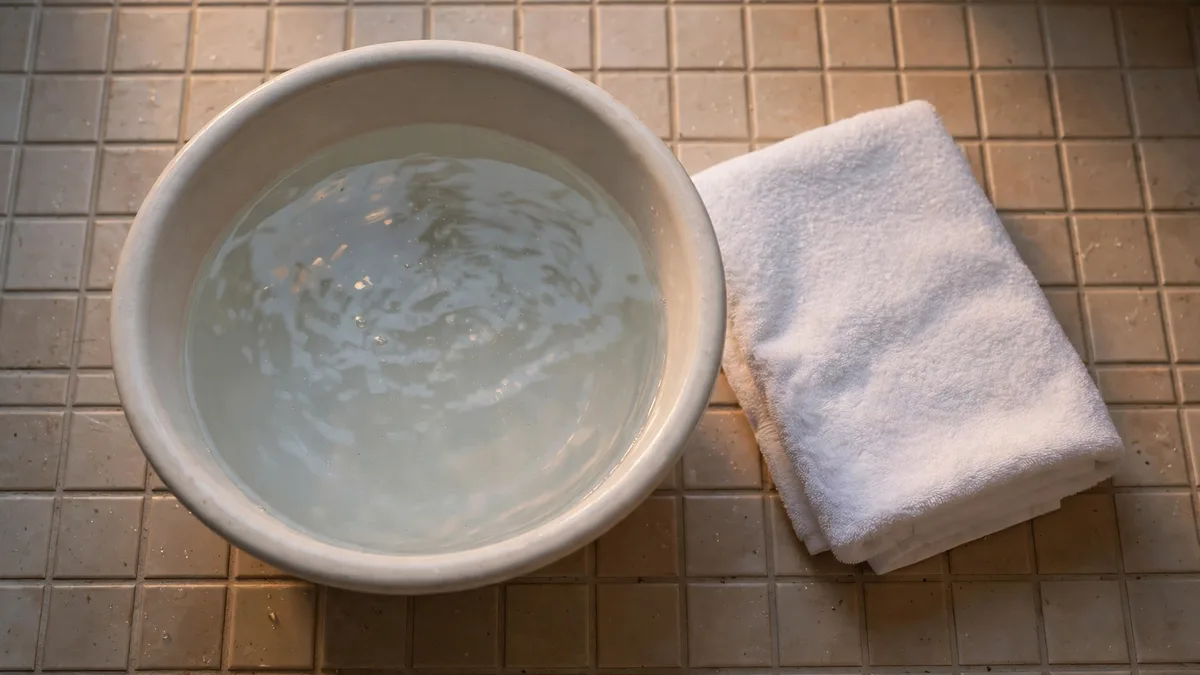
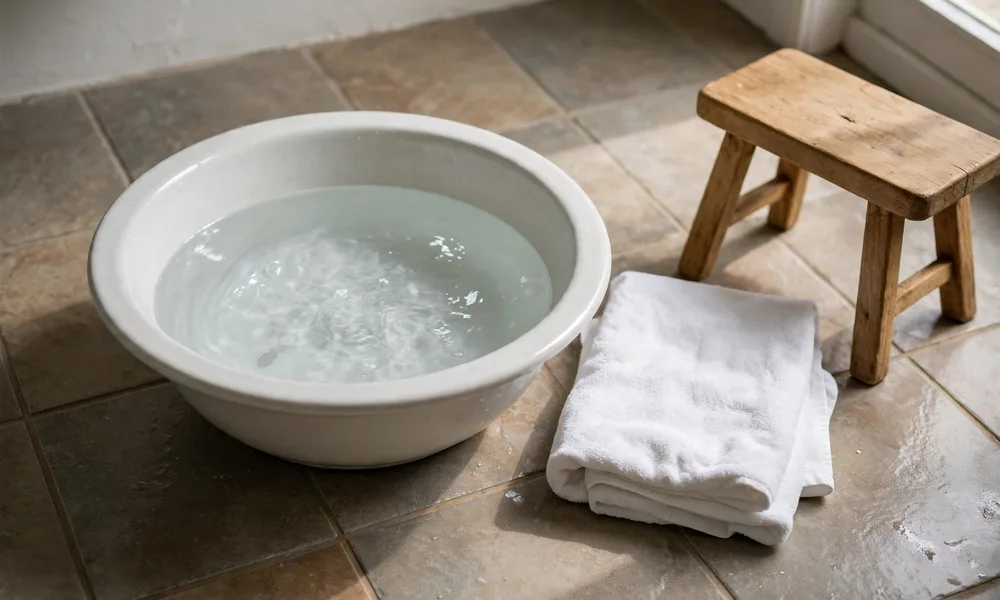
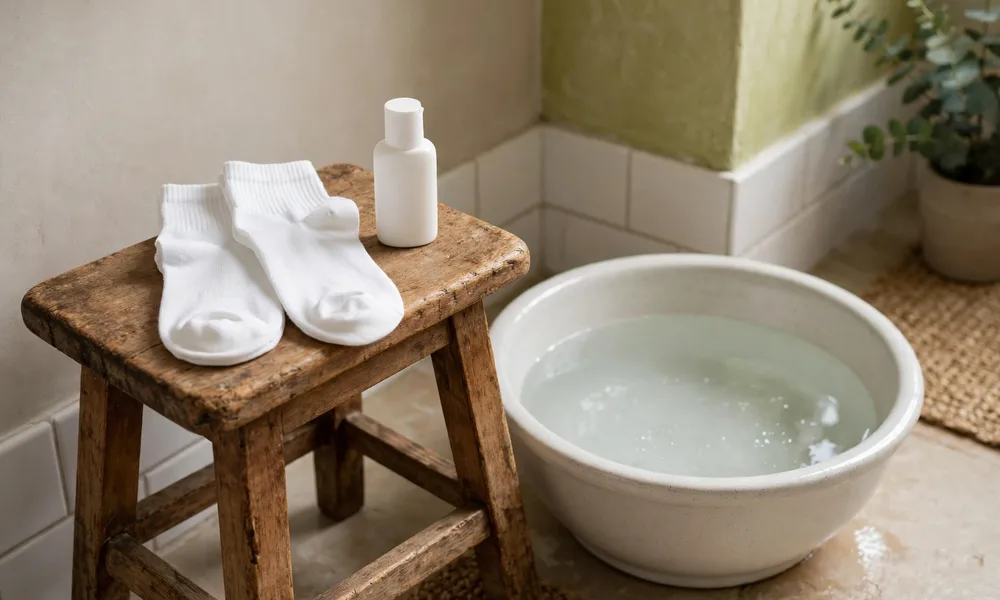
A good soak starts before the water does. Gather everything first, so that once your feet are in the basin you do not have to get up again: a basin large enough for both feet, lukewarm water, a clean towel, and a little plain moisturiser. A towel under the basin protects the floor.
Fill the basin with lukewarm water, never hot, and test it with your hand first: comfortably warm, not sharp or stinging. The water should reach just above the ankles. Sit down and lower your feet in slowly, letting them adjust to the warmth for a few seconds before settling them flat on the bottom.
How Long to Soak, and When to Stop
Stay in for ten to fifteen minutes: long enough for your feet to feel properly rested, and short enough that the skin does not go soft and wrinkly. If the water cools, lift your feet out, add a little more warm water, and settle back in.
If your feet feel uncomfortably warm, lift them out for a minute: a soak should feel soothing, never scorching. There is no benefit in staying in for half an hour, and long soaks leave the skin soft, pale, and wrinkly. A book or a cup of tea fits a soak beautifully.
A Cool Compress for Hot Feet
Some evenings, feet feel hot rather than just tired. A cool compress is the gentlest answer. Soak a clean cloth in cool water, wring it out, and lay it across the tops of your feet for a few minutes while you sit.
The cloth should feel cool, not cold, and it should never be ice. Lift it off after a few minutes, let the skin breathe, and lay it on again if you like. A cool compress is a small kindness, and it pairs well with the rest that follows.
Rest and Elevation After the Soak
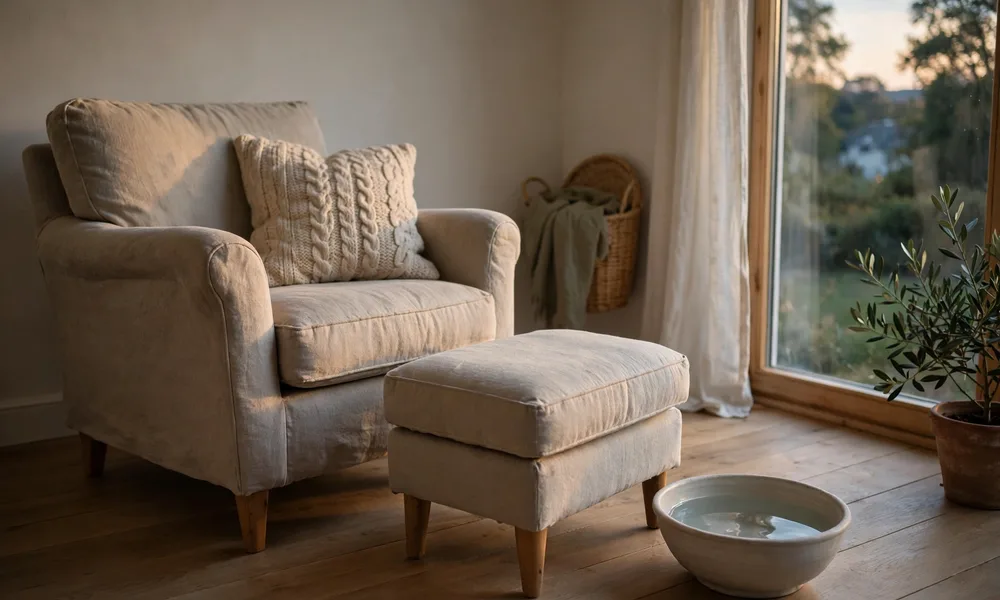
What you do after the water matters as much as the water itself. Sit down, put your feet up on a footrest or a pile of cushions, and let them rest for ten or fifteen minutes. Lifted feet feel lighter at once, because the weight is off them at last.
This is the part of the evening where the day finally loosens its grip, and it asks nothing of you at all. The same gentle idea runs through lukewarm water for morning skin, where plain water and a slow start make the whole morning kinder.
Drying and Care After Water
Wet skin left damp, especially between the toes, stays soft and uncomfortable, so pat your feet dry gently with a clean towel, pressing rather than rubbing, and dry carefully between each toe. Once your feet are dry, smooth on a little plain, unscented moisturiser.
The skin on the feet, especially the heels and soles, tends to be dry, and warm water can leave it drier still, so a light layer while the skin is still slightly damp helps it stay soft. Then put on clean cotton socks to keep your feet warm.
Gentle Stretching for Tired Feet
After the water and the rest, a little gentle movement helps. Sit down and roll each foot slowly over a small ball, or curl and spread your toes a few times. Move slowly, and stop if anything hurts.
Stretching is not exercise: it is a slow loosening, and it should feel easy. A few minutes is enough. If a stretch feels sharp or sore, stop at once and rest instead.
Shoes, Socks, and the Next Morning
The morning decides how the evening will feel. Shoes that fit well in the morning, with room for the toes and a low heel, ask less of your feet all day. Clean cotton socks, changed daily, keep feet dry and comfortable, and a second pair in your bag is a small kindness on a long day.
At the end of the day, air your shoes out and let them dry before the next morning. Tired feet recover better when the next day starts kindly, and good shoes are the simplest way to make that happen. The same care applies to the skin itself, as in keeping skin hydrated in dry weather, where plain water and gentle habits protect the skin through the seasons.
How Often, and When to Keep It Short
Two or three times a week suits most people: often enough to feel like a real ritual, and not so often that it becomes a chore. After a long day on your feet, an extra soak is a reasonable kindness.
Keep the soak short, though. Ten to fifteen minutes is the sweet spot, and a plain-water rinse on the other evenings is enough. If you want a salt-water soak instead, the salt version has its own guide, as in foot soaks with salt water, where plain sea salt makes the water feel a little softer.
What Water Will Not Do
Be honest about what water can and cannot do. A soak will not treat any foot condition, heal cracked heels, clear a fungal infection, or fix sore joints. It will not improve circulation, draw out toxins, or cure tiredness. It will not replace proper footwear, rest, or medical care.
What it will do is simpler: warmer, softer, more rested feet for an evening, and fifteen quiet minutes. Be careful if the skin on your feet is broken, cut, blistered, or irritated: skip the soak until the skin has healed. If you have any condition that affects feeling in your feet, or any health concern that makes you unsure, ask a clinician first.
| Evening step | Water beside | Foot care |
|---|---|---|
| Rinse feet clean | Lukewarm water first | Dry between toes |
| Soak ten minutes | Test hand first | Moisturise lightly |
| Rest feet up | Cool compress next | Clean cotton socks |
| Stretch feet gently | Plain water only | Air shoes out |
Your Water for Tired Feet Checklist
- Fill a basin with lukewarm water, never hot, and test it with your hand first.
- Rinse your feet clean, then soak for ten to fifteen minutes, no longer.
- Lift your feet out if the water feels too warm, and let the skin breathe.
- Pat your feet dry, drying carefully between each toe, then moisturise lightly.
- Rest with your feet up on cushions for ten or fifteen minutes after the soak.
- Put on clean cotton socks, air your shoes out, and see a doctor for persistent problems.

Frequently Asked Questions
How warm should the water be?
Lukewarm, never hot. Test it with your hand first: comfortably warm, not sharp or stinging. Feet feel heat less sharply than hands, so the hand test is the safe way to judge.
How long should I soak my feet?
Ten to fifteen minutes is the sweet spot: long enough to feel rested, and short enough to keep the skin from going soft and wrinkly. There is no benefit in staying in for half an hour.
Can I soak my feet every day?
Two or three times a week suits most people. On the other evenings, a plain-water rinse is enough. Always moisturise afterwards, since warm water can dry the skin.
Should I soak my feet if the skin is broken or sore?
No. Skip the soak until the skin has healed, because water on broken skin can sting and slow healing. If you are unsure, ask a clinician first.
Can I use a cool compress instead of a soak?
Yes. A cloth soaked in cool water and laid across the tops of your feet for a few minutes is a gentle alternative, especially when your feet feel hot rather than just tired.
When should I see a doctor about tired feet?
See a doctor if your feet are swollen, painful, or numb, if the tiredness does not ease with rest, or if any problem keeps coming back. A soak is a comfort, never a treatment.
The Bottom Line
Water for tired feet is lukewarm water, a short soak, and feet up on cushions at the end of a long day.
Fill the basin tonight, and let your feet rest at last.
A Note for Long Days
Keep it lukewarm, keep it short, keep your feet up. The quiet evening can still belong to you.