A cashmere sweater is a quiet luxury. It is soft against the skin, warm without weight, and it asks for very little in return: cool water, a gentle hand, and patience while it dries. Treat it kindly and a good cashmere piece can last for years, growing softer with each careful wash.
Most cashmere is ruined by hurry, not by wear. Hot water shrinks it, rough handling stretches it, and a tumble dryer can turn a favourite sweater into a felted scrap in a single cycle. The whole wash takes about fifteen minutes, and every step in it is simple.
This guide explains water and cashmere care from start to finish: what cashmere is, why it needs soft water, the gentle wash step by step, flat drying, pilling, and storage between wears. It is gentle general care information only, never a treatment for skin or health.
Key Takeaways
- Cashmere is a soft, fine wool from goats, warm without weight, and it needs gentle water.
- Wash cashmere by hand in cool or lukewarm water with a drop of mild soap.
- Never wring cashmere, never use hot water, and never dry it in a tumble dryer.
- Dry cashmere flat on a towel, in shade, and reshape it gently while it is damp.
- Store cashmere clean, folded, and dry, with cedar or lavender to keep moths away.
What Cashmere Is
Cashmere is a fine, soft wool that comes from the soft undercoat of cashmere goats, combed out each spring when the animals shed their winter coats. The fibres are very fine and very light, which is why cashmere feels so soft and keeps you warm without the bulk of ordinary wool. A good cashmere sweater feels like a cloud that holds its shape.
The best cashmere has long fibres, and long fibres pill less and last longer. Short fibres, found in cheaper pieces, work loose more easily and form the small balls of fluff called pills. Check the label before you buy: it should say 100 percent cashmere, and a good maker will name the fibre length or the grade.
Why Cashmere Needs Soft Water
Cashmere needs soft water because its fibres are delicate when wet. Cool or lukewarm water cleans cashmere well, lifting light dust and the faint marks of wear without harming the fibres. Hot water is the risk: it can shrink cashmere badly, felting the fibres together so the sweater comes out smaller, stiffer, and past saving.
Harsh soap is the second risk. Strong detergents and bleach can strip the natural softness from cashmere and leave it rough or spotted. A drop of mild soap, or a soap made for wool and delicates, is all cashmere needs. Soft water, a little soap, and a gentle hand are the whole secret, and the same gentle idea runs through water and silk care, a gentle wash guide, where another delicate fibre is washed the same slow way.
The Soft Wash, Step by Step
The soft wash is simple, and it takes about fifteen minutes. First read the care label in the side seam: if it says dry clean only, believe it, especially for lined jackets, beaded pieces, or brightly dyed cashmere that may bleed colour in water.
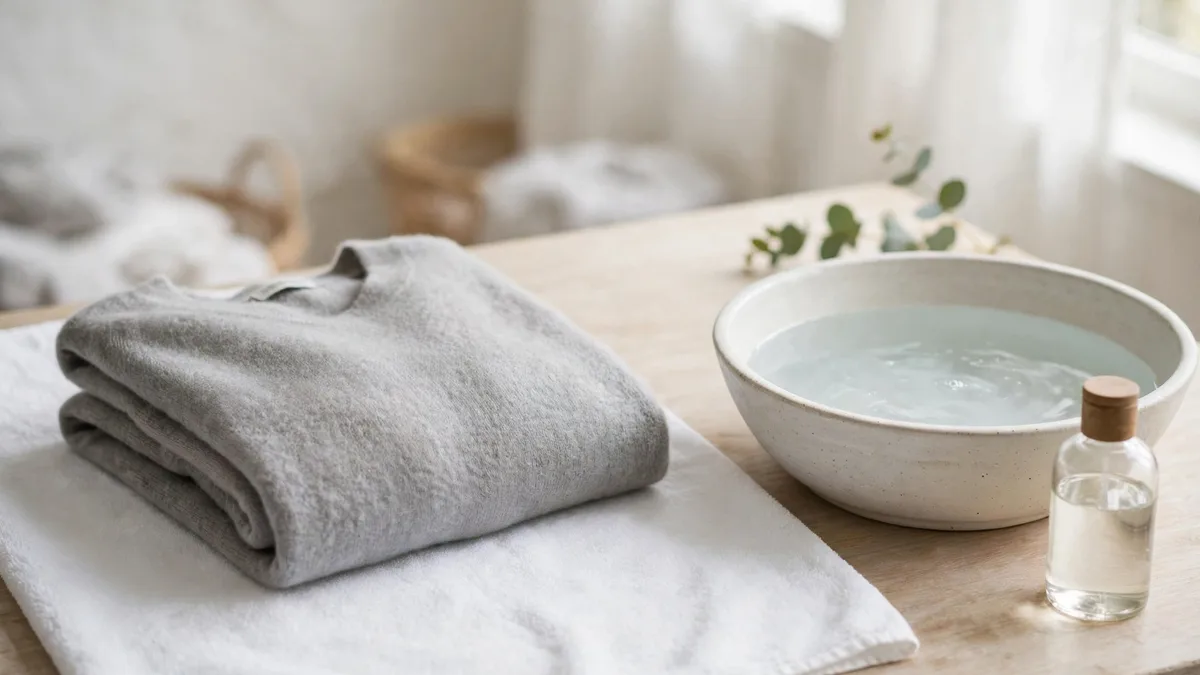
The soft wash is simple, and it takes about fifteen minutes. Fill a clean basin with cool or lukewarm water, about the temperature of your hand, and add a drop of mild soap, stirring it in so the water is evenly soapy. Turn the sweater inside out, so the outer face is protected, and lower it gently into the water.
Press the sweater softly under the water and let it soak for ten minutes, then swish it slowly through the water, lifting it and letting it fall back. Press it softly against the side of the basin to work the soapy water through the knit, but never rub, twist, or scrub, because rough handling while the fibres are wet can stretch the sweater out of shape.

Rinsing and Pressing Out Water
Rinsing is where the soap leaves and the softness returns. Lift the sweater out in a loose bundle, empty the basin, and refill it with fresh cool water. Lower the sweater back in, press it gently, and lift it out again. Rinse twice, until the water runs clear.
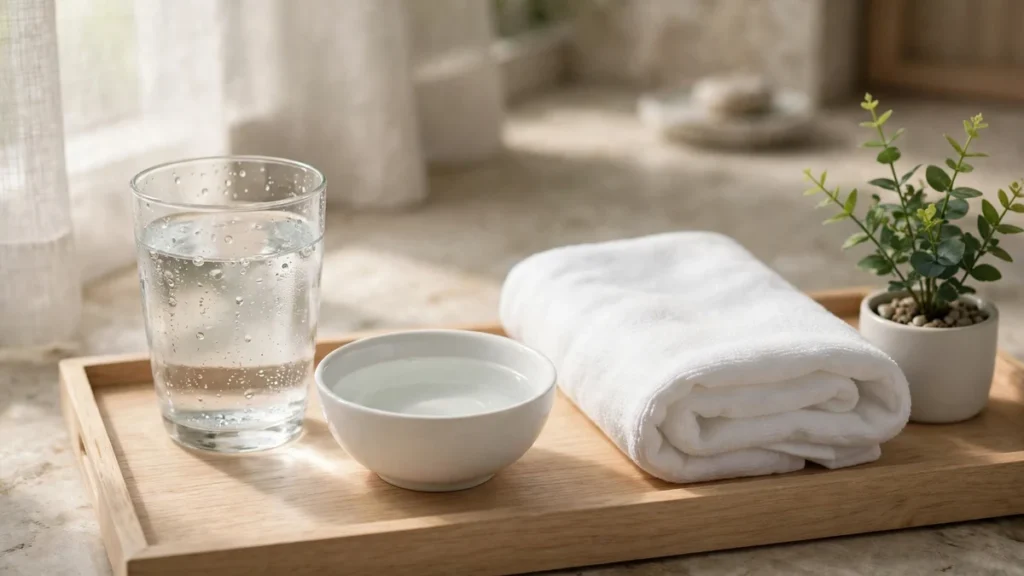
Never wring cashmere. Wringing twists the wet fibres, stretches the knit, and can leave a sweater misshapen for good. Instead, lay the wet sweater on a clean white towel, roll the towel up gently, and press it once: the towel takes the water, and the sweater is never wrung. Unroll the towel, and the sweater will be damp but no longer dripping, ready to be dried flat.
Drying Cashmere Flat
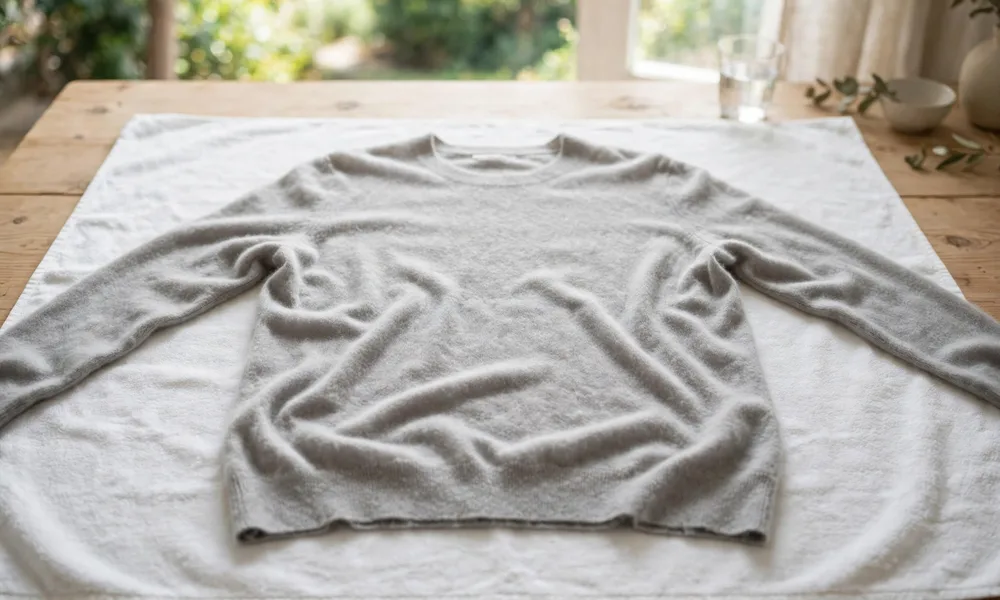
Drying cashmere is where most damage happens, so take it slowly. Lay the sweater flat on a fresh dry towel, smooth it gently into shape, and leave it in the shade with air moving around it, because cashmere dries in the shape you leave it in.
Never hang wet cashmere on a line, because the weight of the water pulls the knit out of shape and leaves marks where the pegs grip it. Never use a tumble dryer, because the heat and the tumbling can shrink cashmere and felt the fibres in a single cycle. Never dry cashmere in direct sun, because strong sunlight fades colour and weakens the fibres over time.
Dealing with Pills
Pills are the small balls of fluff that form on cashmere where the fabric rubs, under the arms, at the sides, and where a bag strap sits. They are normal, not a sign of bad cashmere, and every cashmere piece pills a little, especially in its first season. The fibres work loose, tangle, and form tiny knots on the surface.
Remove pills with a small fabric comb or a cashmere comb, laid flat on a table, stroking gently in one direction. Never pull pills off by hand, because pulling tugs the fibres out of the knit and makes the pilling worse. Comb the sweater once a month in the season you wear it, and it will look smooth again.
Storing Cashmere Between Wears
Store cashmere clean, folded, and dry, because a dirty or damp piece stored away will attract moths and mildew. Moths love cashmere, and they love it most when it is dirty, so never put a worn sweater away unwashed at the end of the season. Wash it first, dry it flat, and fold it loosely, without sharp creases.
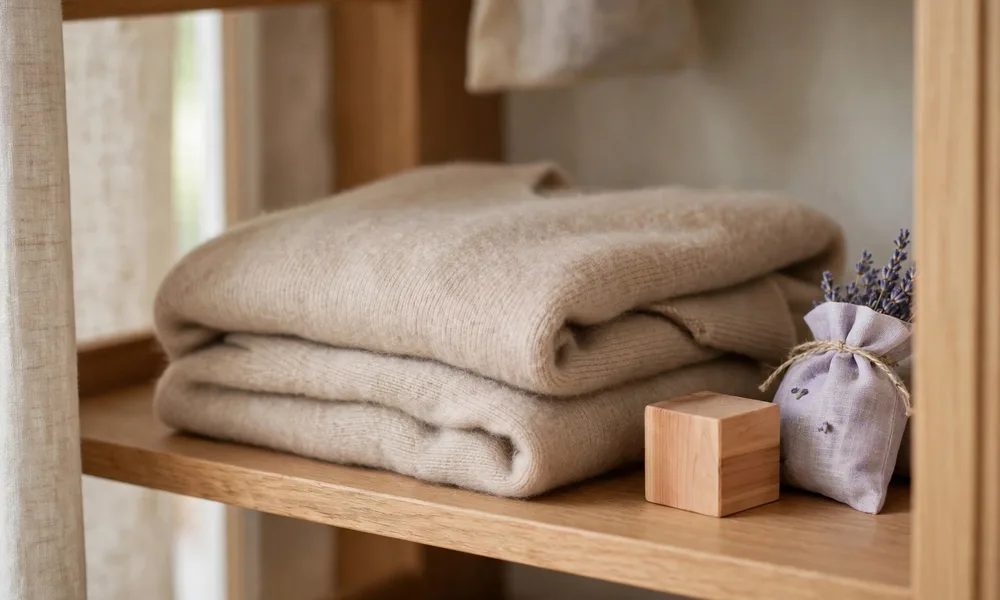
Keep cashmere in a drawer or a breathable cotton bag, with a little space around it so the cloth can breathe. A cedar block or a lavender sachet in the drawer helps keep moths away. Never hang cashmere on a hanger, because the weight of the knit stretches the shoulders out of shape over time. Folded, clean, and dry is the whole rule, and a sweater stored this way is ready to wear the moment the cold comes back.
When to Ask a Professional
Some cashmere jobs belong to a professional cleaner, and knowing which ones saves a good sweater. Take the piece to a cleaner if it has a dark stain, a wine mark, or anything you cannot name, because a wrong wash can set a stain for good. Take it in if the label says dry clean only, if the piece is lined or beaded, or if the colour is bright and you fear it may bleed. When the sweater is precious and the risk is real, a cleaner is the kind choice, and it costs far less than a new cashmere piece. Travel makes this harder, and a few simple habits keep knitwear fresh on the road, as described in water travel laundry for fresh clothes, where a small wash kit and a flat dry keep clothes fresh away from home.
Cashmere at a Glance
| Soft wool | Gentle wash | Dry and store |
|---|---|---|
| Fine goat fibre | Cool water only | Dry flat shaded |
| Warm light knit | Mild soap drop | Reshape while damp |
| Pills a little | Never wring out | Fold, never hang |
| Long fibres last | Ten minute soak | Cedar keeps moths |
Your Cashmere Soft Wash Checklist
- Read the care label first, and believe it if it says dry clean only.
- Fill a clean basin with cool water and a drop of mild soap.
- Soak the sweater for ten minutes, swish gently, never rub or twist.
- Rinse twice in fresh cool water, then press the water out in a towel.
- Dry the sweater flat on a towel in shade, reshaped while damp.
- Store it clean, folded, and dry, with cedar or lavender against moths.
Frequently Asked Questions
Can I wash cashmere in a machine?
No, not unless the label says so, and most cashmere labels say hand wash only. A machine twists and tumbles the wet fibres, and even a gentle cycle can shrink or felt a cashmere sweater. Hand washing takes fifteen minutes, and it is the safe way.
What water temperature is best for cashmere?
Cool or lukewarm water, about the temperature of your hand. Hot water is the danger: it can shrink cashmere badly, felting the fibres together so the sweater comes out smaller and stiffer.
How often should I wash cashmere?
Wash cashmere after three or four wears, or sooner if it is marked or smells stale. Cashmere does not need washing after every wear. Washing less often keeps the fibres soft for longer.
Why does my cashmere pill?
Pilling is normal for cashmere, especially in its first season. Short fibres work loose where the fabric rubs, tangle, and form tiny knots on the surface. Comb the pills off gently with a fabric comb.
Can I use regular detergent on cashmere?
No. Strong detergents and bleach can strip the natural softness from cashmere and leave it rough or spotted. Use a drop of mild soap, or a soap made for wool and delicates. Cotton is more forgiving, as described in water and cotton care, a gentle wash, where plain cotton takes a mild soap and cool water.
How do I keep moths away from cashmere?
Store cashmere clean, folded, and dry, because moths love dirty wool most of all. Keep a cedar block or a lavender sachet in the drawer, and check the drawer once a month in summer.

The Bottom Line
Cashmere is a soft wool that asks for very little: cool water, a little soap, a gentle hand, and patience while it dries.
Wash it softly, dry it flat, fold it clean, and it will keep you warm for years.
A Note for Soft Sweaters
Keep it cool, keep it flat, keep it folded. Softness lasts when care is gentle.