Hair rarely behaves on a busy morning. Overnight it knots at the ends and sticks up where it should lie flat, and a full wash before breakfast is more effort than the hour allows. The answer is usually already in the drawer.
A wide tooth comb is the kindest tool for damp hair. Its teeth stand far apart, so they pass through tangles one at a time, and a little dampness softens the hair just enough for the comb to glide.
Here is the whole guide: what a wide tooth comb is, why damp hair behaves better under it, how to choose one, how to comb from the ends upward, and how to wash and store the comb itself. Everything here is gentle general information. Ongoing hair or scalp trouble is a matter for a doctor, not for a comb.
Key Takeaways
- A wide tooth comb has teeth set far apart, made for gentle damp detangling.
- Damp hair combs more easily than dry hair, yet wet hair is weaker, so go slowly.
- Always start at the ends and work upward, never drag from the roots down.
- A smooth, seamless comb with rounded teeth is kindest to hair and scalp.
- One comb, a glass of water, and a soft towel are enough for a fresh morning.
What a Wide Tooth Comb Is
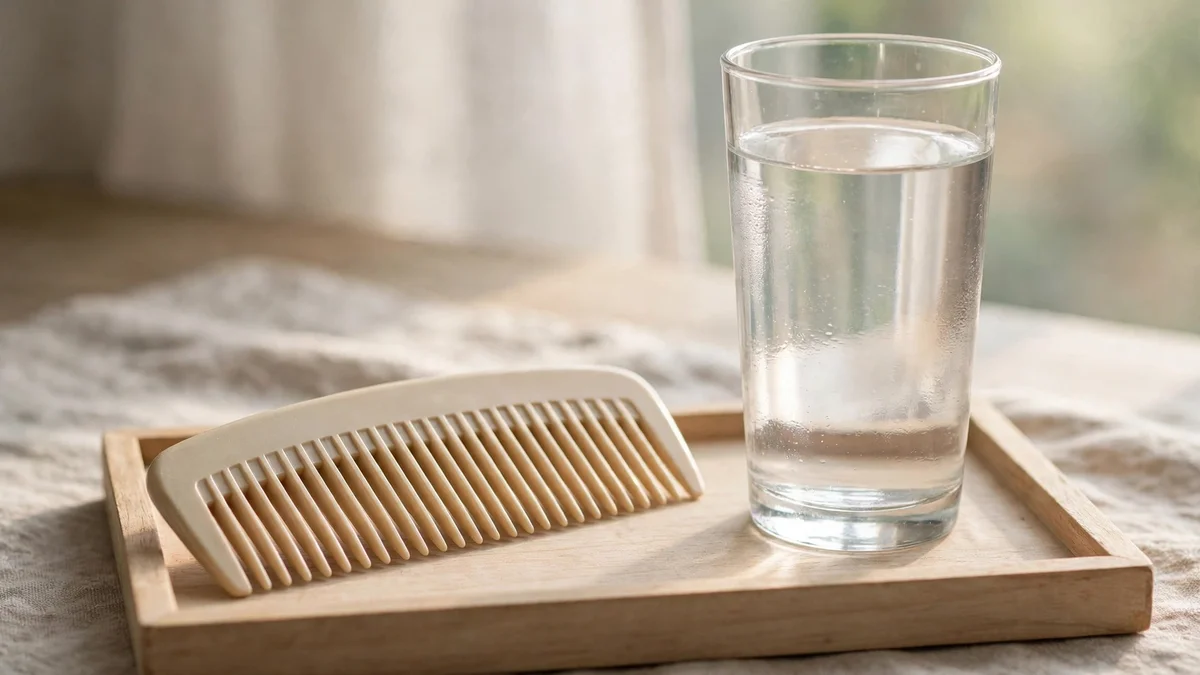
A wide tooth comb is a comb whose teeth stand well apart, with clear gaps between them, unlike a fine comb whose teeth sit close together. The teeth are usually long, smooth, and rounded at the tips. It may be made of wood, horn, or smooth plastic, and it often has no handle at all.
The gaps are the whole point. A fine comb catches on every knot and pulls, while a wide tooth comb lets most of the hair pass through and meets only the tangles, one at a time.
A wide tooth comb will not style hair into a neat shape the way a brush can. Its job is simpler: to undo knots without breaking the hair, and to spread conditioner or oil evenly through the lengths.
Why Water and a Wide Tooth Comb Work Together
Hair changes when it gets wet. Each strand swells a little and stretches more easily, which is why damp hair feels smoother under a comb — and also why it breaks more easily.
A light mist or a rinse is enough. Press out the drips with a soft towel, and comb while the hair is damp, not dripping. Damp is the middle ground, and the comb was made for it.
The glass of water on the tray is part of the ritual too. Drink it slowly while the hair dries.
A Wide Tooth Comb and a Brush: Different Tools, Different Jobs
A brush and a wide tooth comb are not rivals; they do different work at different times. A brush, with its many bristles, smooths dry hair and shapes a finished style. It is the tool for the end of the routine, when the hair is dry.
A wide tooth comb is the tool for the middle of the routine, when the hair is damp and tangled. Its few smooth teeth undo knots without snapping strands, while a brush on wet hair pulls and breaks far more. Use the comb first, and the brush later, when the hair is dry.
If you own only one of the two, choose the comb for wash days and the brush for dry days. Many people keep both, and reach for each at its own hour.
Choosing a Wide Tooth Comb
Look at a comb before you buy it, and run a fingertip along its teeth. A good comb feels smooth all over, with no rough seam, no sharp tooth tip, and no crack in the spine. Rough edges catch hair and snap it, so a comb that snags your finger will snag your hair too.
Pick a comb about the length of your hand, with teeth long enough to reach through your hair in one pass. Wood feels warm and suits thick hair well, while smooth plastic is light, easy to wash, and kind to fine hair.
Step away from any comb that promises to repair damage or stop hair loss. No comb can do that.
A Fresh Morning with a Wide Tooth Comb
The first hour shapes the day, so let the comb have a small part in it. Lay a folded white towel on the bathroom shelf, place the wide tooth comb on it, and stand a small glass of water beside it.
Wash the hair with lukewarm water and a small amount of mild shampoo, then press the lengths gently with the towel instead of rubbing. Comb while the hair is damp, starting at the ends.
Water and a Wide Tooth Comb, Step by Step
Begin with clean hands and a clean comb, and a glass of fresh water within reach. Wet the hair fully, then press out the drips with a soft towel, never wringing or rubbing.
Take the comb and start at the very ends, working through the last few inches first. When those move freely, move a little higher, and keep going upward until you reach the roots. If a knot resists, hold the hair above it and tease it apart, instead of pulling down through it.

Water and a Wide Tooth Comb at a Glance
| Wide spaced teeth | Damp hair only | Ends upward first |
|---|---|---|
| Smooth rounded tips | Lukewarm water wash | Never drag roots |
| Wood or plastic | One gentle comb | Rinse comb weekly |
| Hand-sized comb | Towel, glass, comb | Air-dry hair softly |
A Wide Tooth Comb and a Scrunchie: Detangle First, Tie Second
Water and a scrunchie: a simple fresh look is about a ring of soft gathered fabric that gathers the hair into a loose tail. It grips gently, leaves no dent behind, and does its job in under a minute.
The two tools belong together in one order: comb first, scrunchie second. Detangle the damp hair with the comb, starting at the ends, and only then gather it into a loose tail with the scrunchie.
A scrunchie suits the finished look; a wide tooth comb suits the work before it.
A Wide Tooth Comb and a Hair Towel: Press, Never Rub
Water and a hair towel: a simple fresh ritual follows a soft towel pressed against damp hair, taking the water without roughing the strands. The towel and the comb agree on the hands: fingertips for washing, a comb for damp detangling, and no hard rubbing.
Where they part is the job: the towel takes water away, while the comb takes knots away. Press the towel against the hair first, until the drips stop, and then pick up the comb.
Keep both tools clean and dry between uses. Hang the towel open and stand the comb teeth-up to dry.
A Wide Tooth Comb Among the Other Water Rituals in This Batch
Four other water guides share this batch with the comb, and each one spends its water differently: a window box keeps plants fresh on a sill, a clay bowl opens a beginner's ritual, a ceramic mug offers seven ways to enjoy a drink, and a hair clip finishes a fresh look. The comb is the batch's one hair tool, the piece that actually touches the hair.
The nearest hair articles are the scrunchie, the hair towel, and the curly hair guide, all gentle routines for damp hair.
Where a Wide Tooth Comb Rests at Home
Give the comb a dry place it always returns to: a small ceramic tray on the bathroom shelf, a hook by the mirror, or the top drawer of a dressing table.
Keep it apart from brushes with stiff bristles, which can nick its teeth, and out of reach of little hands.
Keeping a Wide Tooth Comb Clean and Dry
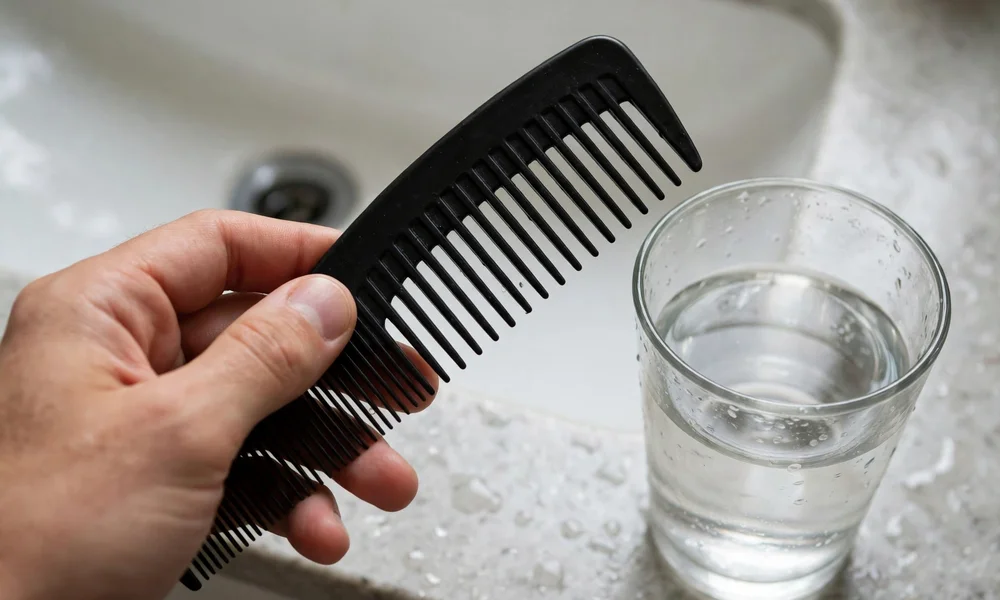
A comb gathers more than knots: it collects oil, dust, and loose strands, so wash it once a week. Rinse it under lukewarm water with a drop of mild soap, work the soap between the teeth, and rinse it clear. Shake off the drips and stand it teeth-up until it is fully dry.
Never soak a wooden comb for long, since wood swells and cracks. Pull the loose hairs out after every use, and look for a bent or chipped tooth now and then.
If a tooth breaks, do not keep using the comb. A broken tooth leaves a sharp edge that catches and snaps strands, so replace it.
Your Fresh Hair Checklist
- Lay the comb on a dry towel, with a glass of water close by.
- Wash with lukewarm water and a small amount of mild shampoo.
- Press the hair dry with the towel, never rubbing or wringing.
- Comb from the ends upward, in short sections, holding knots gently.
- Gather the hair loosely, then let it air-dry when you can.
- If your scalp keeps troubling you, speak to a doctor — no comb can settle it.
Comb, towel, glass, and a few unhurried minutes: the whole arrangement, nothing more.

Frequently Asked Questions
When should I use a wide tooth comb?
Use it on damp hair, after washing and gently pressing out the drips, when the strands are soft enough to glide yet not so wet that they stretch and snap.
How do I comb without breaking my hair?
Start at the very ends and work upward in short sections, holding any knot with one hand while you tease it apart, instead of dragging down from the roots.
Can I use a wide tooth comb on dry hair?
Yes, you can, and it suits thick or curly hair even when dry, yet it meets more resistance, so go slowly.
How is a wide tooth comb different from a brush?
A brush smooths dry hair and shapes a finished style, while a wide tooth comb undoes knots in damp hair, so use the comb first and the brush later, when the hair is dry.
How often should I wash my comb?
Wash it once a week with lukewarm water and a drop of mild soap, rinse it clear, and stand it teeth-up to dry.
Which comb material is best for my hair?
Smooth wood suits thick hair and feels warm in the hand, while smooth plastic is light, easy to wash, and kind to fine hair — either works, as long as the teeth are smooth and rounded.

The Bottom Line
Damp hair, a smooth wide tooth comb, and short strokes from the ends upward: that is all a fresh morning needs from water and a comb.
A Note for Fresh Mornings
Comb, towel, glass, and a few quiet minutes — a fresh morning asks for little more than that.