
Your ankles work quietly all day, and they rarely get thanked for it. They bend with every step, carry your weight through every queue and staircase, and press into your shoes until evening. By the end of the day they can feel stiff, heavy, and a little puffy.
Water and ankles is one of the simplest kindnesses there is. A basin of lukewarm water, a clean towel, a few slow ankle circles, and fifteen quiet minutes are the whole list.
This guide is a simple care routine for your ankles: how to wash them gently, dry them well, rest them raised, and look after them with clean socks and fitting shoes. It is gentle general information only, not a treatment, and it will not cure anything.
Key Takeaways
- Water and ankles means plain lukewarm water, gentle washing, and rest for the ankle joint.
- Always use lukewarm water, never hot, and test the temperature with your hand first.
- Dry your ankles gently afterwards, especially around the joint and between the toes.
- Rest your ankles raised for ten or fifteen minutes, and move them slowly.
- See a doctor for ankle pain, swelling that does not settle, or skin that is broken or sore.
What Your Ankles Do All Day
Your ankle is the joint where your leg meets your foot, and it does more work than it looks like it does. Every step bends it, every staircase asks it to lift and lower your whole weight, and every uneven pavement asks it to steady you without a thought.
Standing still can tire ankles as much as walking does.
That is why ankles deserve their own little routine: washed, dried, rested, and moved gently.
Why Ankles Feel Heavy by Evening
Ankles feel heavy by evening for a simple reason: they have been working since morning without a rest. The joint bends with every step, the muscles around it hold you steady, and the skin around it stays pressed inside shoes and socks all day long.
Heat makes ankles feel heavier still, and shoes that fit in the morning can feel tight by the afternoon.
Lukewarm water washes the day off, and a short rest with the ankles raised lets the weight come off at last.
A Simple Ankle Care Routine
A simple ankle care routine takes about fifteen minutes, and it starts before the water does. Gather everything first: a basin, lukewarm water, a clean towel, a little plain moisturiser, and clean cotton socks.
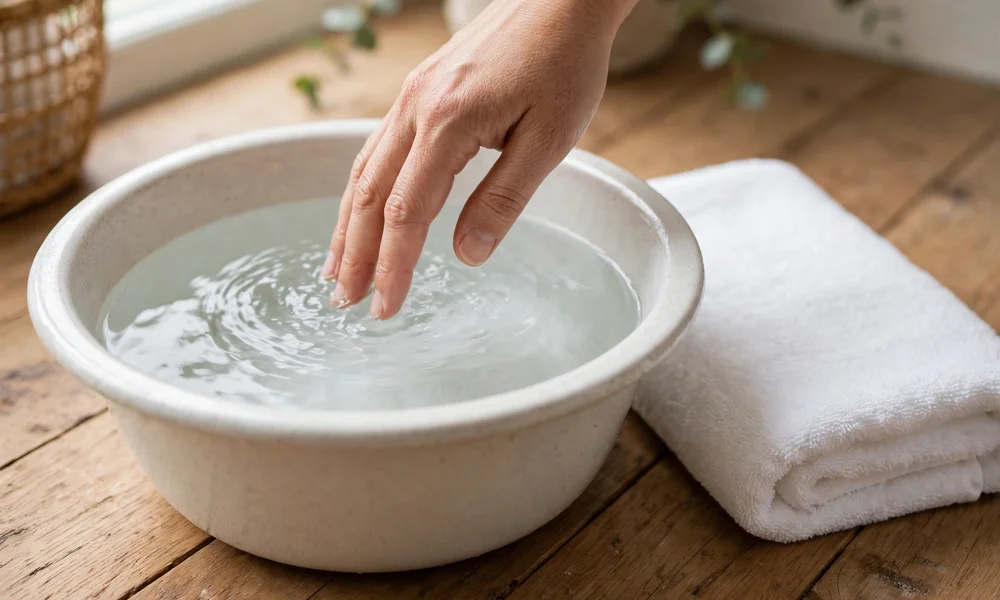
Fill the basin with lukewarm water, never hot, and test it with your hand first. The water should reach just above the ankles.
Sit down, lower your feet in slowly, and let your ankles adjust to the warmth for a few seconds before settling your feet flat on the bottom. Stay in for ten to fifteen minutes, then lift your feet out, pat them dry, and rest them raised.

Washing Ankles with Lukewarm Water
The first water your ankles meet in the evening should be a simple wash. Run lukewarm water over your ankles and feet for a minute or two, washing away the dust and sweat of the day. Use plain water and a little gentle soap, and rinse it all away.
Wash around the whole joint, front and back. The skin around the ankle is thin, so wash it with your hands, never scrub it.
A wash is not a soak: it is a quick clean, and it sets the evening up well. Clean ankles feel lighter at once, and the water washes the day off before the rest begins.
Drying Ankles Well
What you do after the water matters as much as the water itself. Wet skin left damp around the ankle joint stays soft and uncomfortable, so pat your ankles dry gently with a clean towel, pressing rather than rubbing.
Dry carefully around the ankle bones and between each toe, where water likes to hide. Once your ankles are dry, smooth on a little plain, unscented moisturiser. The skin around the ankle tends to be dry, and warm water can leave it drier still, so a light layer while the skin is still slightly damp helps it stay soft. Then put on clean cotton socks to keep your ankles warm.
Water and Ankles at a Glance
| Lukewarm water | Ankle joint | Gentle care |
|---|---|---|
| Test with hand | Wash, dry, rest | Never hot water |
| Ten to fifteen minutes | Raise and move slow | Patch-test first |
| Plain water only | Clean socks, shoes | See a doctor |
Water and Ankles and Water for Tired Feet
Water and ankles and water for tired feet are close cousins, but they care for different things. Water for tired feet is a comfort routine for the whole foot after a long day: a basin of lukewarm water, a towel, and fifteen quiet minutes for feet that feel heavy, warm, and tired.
Water and ankles is narrower than that: it is a care routine for the ankle joint itself — washing around the joint, drying it well, resting it raised, and moving it slowly. Where water for tired feet after long days rests the whole tired foot, this guide looks after the ankle joint in the middle.
Water and Ankles and Foot Soaks
Water and ankles and foot soaks share a basin of warm water, but they are different routines. A foot soak is warm water with a little dissolved salt, just for the feet, for ten to fifteen minutes, and the salt makes the water feel a little softer.
Water and ankles uses plain water only, no salt, and the point is the ankle joint itself. Where foot soaks salt water, a gentle guide for tired feet soaks the feet in salt water, this guide washes the ankles in plain lukewarm water and looks after the joint itself.
Water and Ankles and Cracked Heels
Water and ankles and cracked heels both belong to gentle foot care, but they look after different places. Cracked heels are dry, split heel skin, and the routine there is a short lukewarm soak, patting dry, plain moisturiser, and clean cotton socks to soften the heel.
Water and ankles looks after the joint above the heel: the bones, the skin, and the way it bends and rests. Where water and cracked heels, a gentle routine softens dry heel skin, this guide washes, dries, rests, and moves the ankle joint — a different area, a different routine.
Socks and Shoes for Ankles
The morning decides how the evening will feel for your ankles. Shoes that fit well in the morning, with room for the toes and a low heel, ask less of the ankle joint all day. Shoes that pinch around the ankle bone leave their mark by evening, and a tight ankle strap can rub the skin sore.
Clean cotton socks, changed daily, keep ankles dry and comfortable, and a second pair in your bag is a small kindness on a long day. Socks that are too tight leave a deep ring around the ankle; socks that are loose enough to sit flat are kinder to the joint.
At the end of the day, air your shoes out and let them dry before the next morning.
Gentle Movement for Ankles
After the water and the rest, a little gentle movement helps. Sit down and turn each ankle in slow circles, first one way and then the other, ten times each way. Then point your toes away from you and pull them back toward you, slowly, a few times.
Move slowly, and stop if anything hurts. This is not exercise: it is a slow loosening, and it should feel easy. A few minutes is enough, and the circles should feel smooth, never sharp or sore.
If a movement feels sharp, stop at once and rest instead.

When to Rest and When to See a Doctor
Rest is the simplest part of ankle care, and it asks nothing of you at all. After the wash, sit down, put your feet up on a footrest or a pile of cushions, and let your ankles rest for ten or fifteen minutes. Lifted ankles feel lighter at once, because the weight is off them at last.
Two or three times a week suits most people, and an extra wash and rest after a long day is a reasonable kindness.
See a doctor if your ankle hurts, if swelling does not settle after rest, if the skin around the ankle is broken, sore, or red, or if a problem keeps coming back. This routine is gentle general information only: it will not treat an ankle problem, and a doctor is the right person for pain or swelling that does not settle.
Your Ankle Care Checklist
- Fill a basin with lukewarm water and test it with your hand first.
- Wash around the whole ankle joint with plain water and gentle soap.
- Pat your ankles dry gently, especially around the bones and toes.
- Rest your ankles raised for ten or fifteen minutes after washing.
- Put on clean cotton socks and shoes that fit around the ankle.
- See a doctor for ankle pain, swelling that does not settle, or broken skin.

Frequently Asked Questions
How long should I wash my ankles?
Ten to fifteen minutes in lukewarm water is enough; longer washes leave the skin soft and wrinkly.
Should the water be hot or lukewarm?
Always lukewarm, never hot. Test the water with your hand first: it should feel comfortably warm, not sharp or stinging. If it feels hot to your hand, it is too hot for your ankles.
Can I use salt in the water for my ankles?
This routine uses plain water only, with no salt. Salt water is a different routine, for soaking tired feet.
How do I dry my ankles properly?
Pat them dry gently with a clean towel, pressing rather than rubbing, and dry carefully around the ankle bones and between each toe, where water likes to hide.
How often should I do this ankle routine?
Two or three times a week suits most people, and the routine should never feel like a chore.
When should I see a doctor about my ankles?
See a doctor if your ankle hurts, if swelling does not settle after rest, if the skin is broken, sore, or red, or if a problem keeps coming back. This routine is general information only, not a treatment.
The Bottom Line
Water and ankles is a simple care routine: lukewarm water, a gentle wash, a careful dry, a short rest raised, and clean socks with fitting shoes. Small, slow, and kind to the joint.
A Note for Easy Ankles
Keep it lukewarm, keep it gentle, keep it raised. A basin of water, a clean towel, and a few slow circles can carry your ankles through the evening.


