Some mornings the hair wakes up before you do: flat on one side, bent on the other, and the brush alone cannot persuade it back into shape. A full wash feels like too much work for a Tuesday, and leaving the house with damp hair is no better, because damp hair picks up every crease from a collar.
A blow dry is the middle path: not a treatment, just a short routine — wash with lukewarm water, squeeze the wetness out gently, dry with low heat while the dryer keeps moving, and finish with cool air. Ten unhurried minutes, and the hair lies smooth and dry.
This guide walks through that routine step by step, from the first splash of water to the last cool blast. Everything here is gentle general information only, never a treatment. If your scalp is sore or your hair is breaking badly, ask a doctor. Patch-test any new product on a small spot first, and keep the heat low.
Key Takeaways
- A blow dry is a short routine: wash, towel-dry, gentle heat, cool finish.
- Lukewarm water and a soft towel do most of the work before the dryer starts.
- Low heat, a moving dryer and a safe distance keep the routine gentle.
- A cool finish helps the hair lie smooth and hold its shape.
- This is general information only; patch-test products and ask a doctor about scalp worries.
What a Blow Dry Is
A blow dry is simply hair dried with warm air from a dryer, shaped a little as it dries. It is not a haircut, not a colour and not a treatment. The dryer does two jobs at once: it takes the water out, and it lets you guide the hair into the shape you want while it is still soft.
The routine has four plain steps, always in the same order: the wash, with lukewarm water and a small amount of mild shampoo; the towel, pressed gently, never rubbed hard; the dryer, on low heat, kept moving and held at arm's length; and the cool finish, a short blast of cool air that settles the hair. Keep the order and the hair behaves.
Why Water Comes First
Every blow dry starts with water, because water makes hair soft enough to shape. Dry hair holds the shape it already has. Wet hair is bendable, and warm air sets the bend as the water leaves. That is why the wash matters more than the dryer.
Lukewarm water is the right temperature. Hot water feels pleasant, but it strips the hair bare and leaves it rough, and very hot water can sting a sensitive scalp. Cool water will not rinse shampoo away properly. Lukewarm cleans without scolding, and leaves the hair smooth enough to dry well.
Washing Before the Dryer
Wet the hair fully under lukewarm water, then work a small amount of mild shampoo through the roots. The lengths need far less shampoo, because the rinse carries the lather down as it flows. Scrubbing hard tangles the lengths, so keep your hands gentle.
Rinse until the water runs clear. Leftover shampoo makes hair dull and sticky, and no drying will fix that.
Towel-Drying Without Roughness
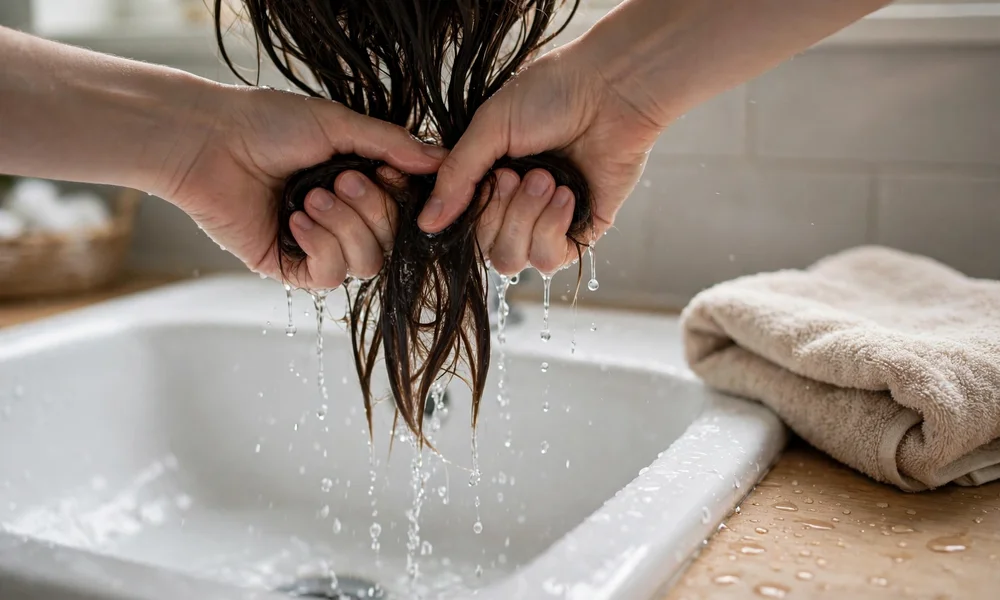
Lift the hair in sections and press the towel around each one, squeezing gently. The hair should feel damp, not dripping, before the dryer ever switches on.
Never rub the hair hard with a towel. Rubbing roughs up the surface of each strand, and roughed-up hair dries frizzy, however careful the drying is. A soft cotton towel, or an old cotton shirt, is kinder than a rough bath towel. Wrap the towel loosely for a few minutes, then unwrap and let the hair breathe.
Low Heat and a Moving Dryer
Set the dryer to its lowest warm setting. High heat dries faster, but it also dries the hair out, and hot air held in one place can sting the scalp. Low heat takes a little longer, and the hair stays softer for it.
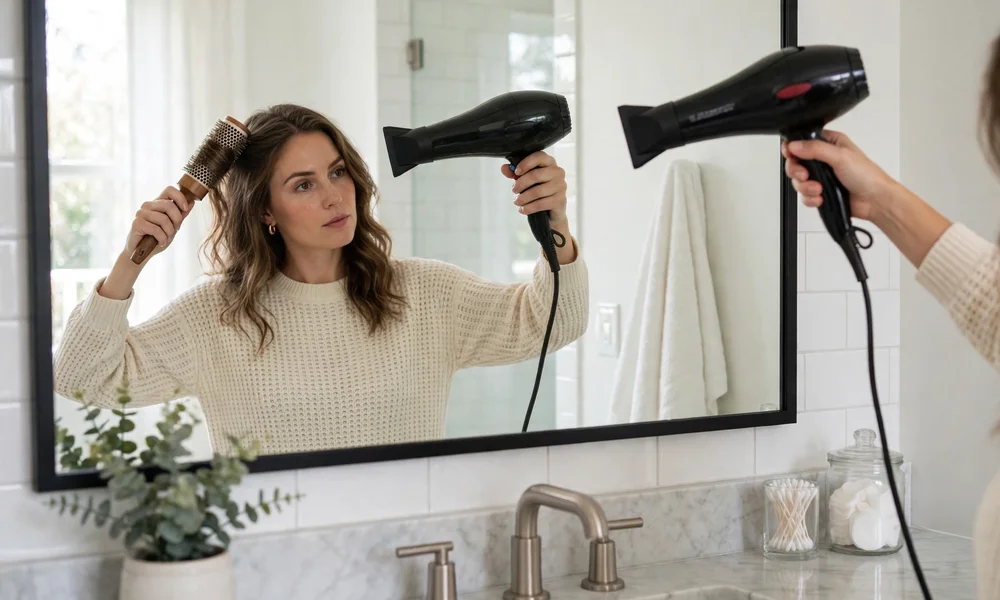
Hold the dryer at arm's length from the hair, and keep it moving all the time. Work through the hair in sections, from roots down, and never let the nozzle rest on one spot. If a section feels hot, the dryer is too close. Move it back.
The Cool Finish
When the hair feels almost dry, switch the dryer to cool and give the hair a short blast. The cool air settles the shape, and hair that cools in place holds its shape far longer than hair left warm.
Brush through gently once the hair is cool, from the ends upward. The result should be hair that lies smooth, without stiffness or frizz.

Blow Dries at a Glance
| Wash, towel, heat | Low heat, moving | Cool finish last |
|---|---|---|
| Lukewarm water first | Arm's length away | Shape holds longer |
| Press, never rub | Never one spot | Brush ends upward |
| Damp, not dripping | Patience over speed | Soft, smooth hair |
Blow Dries and Curly Hair
Curly hair care is the nearest live guide to this routine, and it is worth knowing where the two part ways. Curls loop in soft spirals, and their wash-day guide keeps those spirals separate, detangling only while the hair is wet. A blow dry treats curls differently: the warm air and the brush pull the curls straighter, so a full blow dry loosens the curl for the day, rather than keeping it.
If you love your curls, dry them with the diffuser on the lowest setting, and stop while they are still slightly damp. If you want a smoother day, brush through gently as you dry. Either way, the wash and towel steps are the same as the curl guide's, and the low heat rule matters even more for curls, which dry out faster than straight hair.
Blow Dries and the Other Hair Guides
The other live hair guides each cover one kind of hair, and none of them is a drying routine. Wavy hair care wakes up soft S-shaped waves with plain water and a gentle wash, then lets the waves dry on their own. Coily hair winds into tight springs, and its guide keeps those springs soft and defined. Damaged hair needs a gentle repair routine, because its ends are already rough and tangled. Oily hair needs a light wash routine, because heavy creams and hot water only make the roots glossier.
Hard water hair is a different problem again: a thin mineral film from the tap leaves the hair dull, and the fix is a filter and a longer rinse. None of these guides is about the dryer itself. This guide is the drying step they all point toward, and it works alongside them.
Blow Dries and Hair Masks, Spray and Serum
Three small helpers sit around the blow dry, each doing a different job. Hair masks are a weekly pause: a thick cream smoothed through the lengths, left to rest, then rinsed away. A mask day is a good day to skip the dryer and let the hair rest. Hair spray on this site is plain water in a spray bottle, misted lightly to soften the hair and smooth it back into place, with no product and no heat.
Hair serum is a few drops of light, water-based serum on damp hair after washing, which helps the hair look smooth and catch the light. A little serum before the dryer can help the lengths lie flat, but too much makes the hair look greasy, and no serum can rescue hair dried on high heat.
Blow Dries, Haircuts and the Queued Looks
Haircuts, topic 799, is queued in the same batch, and it is the cut itself, not the drying. A good cut gives the hair its shape, and a blow dry shows that shape off; the two are partners. A fresh cut dries more easily, because the ends are even, and a careful blow dry makes a fresh cut look its best.
Three more looks are queued beside it. Buns, topic 803, gather the hair up into a knot, ponytails, topic 805, tie it back, and headscarves, topic 807, cover it. All three are styles you wear after the hair is dry, and all three are easier on hair dried gently, because smooth dry hair gathers and ties without snagging. This guide is the step before the style.
Keeping the Dryer Gentle
A dryer is a hot tool, and gentle habits keep it safe. Check the cord now and then, and never use a dryer with a cracked case or a frayed cord. Keep the dryer away from the sink, the bath and any standing water. Dry hair only, never skin, and keep the nozzle away from your face and ears.
If your scalp feels sore or itchy, or your hair is breaking in handfuls, put the dryer aside and ask a doctor. Patch-test any new shampoo, serum or spray on a small patch of skin first. A blow dry is a small pleasure, and it should never hurt.
A Fresh Routine Checklist
- Wash with lukewarm water and a small amount of mild shampoo.
- Press the towel gently and leave the hair damp, not dripping.
- Dry on low heat, moving the dryer and holding it at arm's length.
- Finish with cool air, then brush gently from the ends upward.
- Patch-test any new product on a small spot before a full wash.
- If your scalp stays sore or your hair keeps breaking, ask a doctor.

Frequently Asked Questions
What is a blow dry?
A blow dry is hair dried with warm air from a dryer, shaped a little as it dries: wash, towel-dry, gentle heat and a cool finish, always in that order.
Should I use hot or lukewarm water before a blow dry?
Lukewarm water is best. Hot water strips the hair and leaves it rough, while lukewarm water cleans well and leaves the hair smooth enough to dry.
How do I towel-dry without frizz?
Press the towel around the hair in sections and squeeze gently, never rubbing hard. Rubbing roughs up each strand, and roughed-up hair dries frizzy.
How close should I hold the dryer?
Hold it at arm's length from the hair. Keep it moving all the time, and never let the nozzle rest on one spot.
What does the cool finish do?
The cool finish settles the shape, so the hair holds its style longer than hair left warm.
Can I blow dry curly hair?
Yes, with care. Use the diffuser on the lowest setting and stop while the curls are still slightly damp, or brush through gently for a smoother look.
The Bottom Line
A blow dry is a short, gentle routine: lukewarm water, a soft towel, low heat that keeps moving, and a cool finish.
A Note for Fresh Mornings
Keep the water lukewarm, the heat low and the morning slow. Ten quiet minutes, and the hair is dry, smooth and ready.