Wavy hair has a shape of its own, and water is what wakes that shape up. It does not fall straight, and it does not loop into curls: it bends in soft S-shaped waves, and how it is washed decides whether it dries soft and wavy or rough and flat.
A rushed wash, hot water and a hard towel can pull every wave apart before the day has even begun. A simple care guide changes that, and it asks for very little: plain water, a mild shampoo, gentle hands and a soft towel.
This guide walks through wavy hair care step by step, from wetting the hair to letting it dry. Everything here is gentle general information only, never a treatment. If your hair or scalp troubles you, see a doctor or dermatologist.
Key Takeaways
- Wavy hair bends in soft S-shaped waves, between straight hair and curly hair.
- Lukewarm water is kindest; hot water roughens waves and dries the scalp.
- Wash gently with fingertips, rinse longer than you think, and detangle wet with a wide-tooth comb.
- Dry softly: press with a towel, never rub, and air-dry when you can.
- This is care, not a cure: it will not change your wave pattern or fix a scalp problem.
What Wavy Hair Is
Wavy hair grows in soft bends instead of falling straight or looping into curls. The shape comes from the follicle, the tiny pocket in the scalp each strand grows from: a gently curved follicle grows hair that bends as it grows.
Some waves are loose and barely bend, and some are deeper and almost curl at the ends. Each bend is a weak point where the strand can snap, so wavy hair needs gentle handling.
The scalp's natural oils travel slowly down a bending strand, so the ends of wavy hair are often drier than the roots. That is why the rinse matters so much.
Why Water Matters for Wavy Hair
Water decides how each wave sets as it dries. Wet hair is soft and heavy, so the waves hang in their natural shape, and they firm up as the water leaves. Warm water lifts the cuticle, the tiny overlapping scales on each strand, which helps shampoo clean away oil and dirt.
Cooler water helps the scales lie flat, so the waves dry smooth instead of fuzzy. Very hot water strips the scalp's natural oils, so waves dry rough and undefined.
Lukewarm First, Cooler Last
The most useful water habit for wavy hair is also the simplest: wash lukewarm, rinse cooler. Lukewarm means water around body temperature, comfortable on the inside of your wrist.
Start by wetting the hair fully with lukewarm water, for a full minute if it is long, so every wave is wet through before any shampoo touches it. Wash as usual, and rinse until the water runs clear.
For the final rinse, turn the temperature down a notch, to cool rather than cold, and run it over the lengths for thirty seconds, so the waves dry defined instead of fuzzy.
Keep the same water habit every wash, and the waves will learn the routine. A steady temperature, a full wetting and a cooler finish are small habits, but they are the habits that keep wavy hair soft from one wash to the next, without any extra products or tools.
A Simple Wash Day, Step by Step
A wash day is not a long routine; it is the same short routine, done the same way, every time. Before you wash, comb the hair gently with a wide-tooth comb, working from the ends upward.
Put a clean towel nearby, set out a small amount of mild shampoo, and check the water on your wrist. Wet the hair for a full minute, wash the scalp only with soft fingertips, and rinse until the water runs clear, then a little longer.

Washing and Rinsing Wavy Hair Gently
Gentle washing begins before the water is even on, with a wide-tooth comb loosening tangles from the ends upward. Wet hair is weaker than dry hair, so everything after this point should be softer.
Use a small amount of mild shampoo, about a coin-sized drop for shoulder-length hair. Rub it between your palms first, then work it into the scalp with your fingertips, not your nails. The lengths need very little shampoo at all.
Let the rinse carry the shampoo down the lengths. Wash with your hands moving down the hair, from root to tip. Two gentle washes a week suit most wavy hair.
Rinsing is the step most people rush. Shampoo left behind weighs waves down, dulls their shine, and leaves the scalp feeling coated.
Rinse with lukewarm water until the water runs clear, then keep rinsing for a little longer, lifting the hair in sections so the water reaches the scalp and the underneath layers.
Detangling Wavy Hair Gently
Detangle wavy hair while it is still wet, never when it is dry and full of waves. Dry combing pulls the waves apart, leaves the hair fuzzy, and snaps the strands.
Use a wide-tooth comb, and start at the ends, working upward in short strokes. Hold each section gently above the tangle, so the comb pulls on your hand, not the scalp.

Drying Wavy Hair Softly
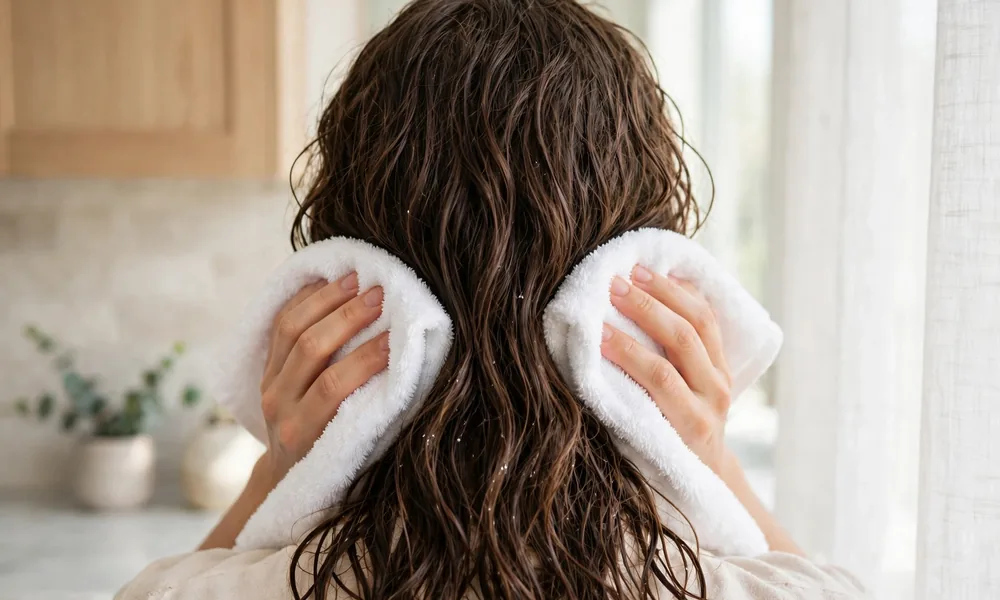
Drying softly is where wavy hair is won or lost. Squeeze the water out gently with your hands first, then press the lengths with a soft towel, never rub them. Rubbing lifts the hair surface and pulls the waves apart.
Pressing keeps the waves together, so they dry in their natural shape. After pressing, let the hair air-dry when you can, combed once and then left alone. Touching it while it dries breaks the waves.
Wavy Hair at a Glance
| Soft waves | Gentle wash | Air-dry soft |
|---|---|---|
| S-shaped bends | Lukewarm water | Press, never rub |
| Between straight, curly | Fingertips only | Wide-tooth comb |
| Ends drier | Rinse fully | Cooler last rinse |
Wavy Hair and Curls
Wavy hair and curls are close neighbours, but they are not the same hair. Curls grow in loops and spirals, bending tightly and springing back, and they need a wash day built around definition.
Wavy hair bends in soft S-shapes, loose at the roots and gentle at the ends, and it needs a simpler wash: lukewarm water, gentle fingertips, a full rinse and soft pressing. Where water and curls a simple wash day keeps loops defined with gentle scrunching, this guide keeps soft waves whole with gentle pressing.
Wavy Hair and Straight Hair
Wavy hair and straight hair look alike when they are wet, but they dry very differently. Straight hair grows in a smooth, flat line from root to tip, and it shines when each strand lies flat and smooth.
Wavy hair bends, so it never lies perfectly flat, and its shine is softer. Where water and straight hair a simple shine guide keeps flat strands smooth and light for shine, this guide keeps soft waves whole and defined.
Wavy Hair and Fine or Thick Hair
Wavy hair and fine hair are different things, and they can overlap in one head of hair. Fine hair means thin individual strands, light and easily weighed down, and it needs a light wash with very little shampoo.
Wavy hair means the shape of the strands, soft S-bends that need gentle handling. Where water and fine hair a light wash routine is about thin strands and lightness, this guide is about the wave itself.
Wavy hair and thick hair are also different things, and they can overlap too. Thick hair means there is a lot of it, and it takes longer to wet, wash and rinse, because the water has to travel through layers of hair.
Wavy hair can be fine or thick, short or long, and the wash stays the same at its heart: lukewarm water, gentle fingertips, a full rinse and soft drying. Thick wavy hair simply needs more time at each step, especially wetting and rinsing.
Keeping Waves Soft Between Washes
Waves stay softest when they are left alone between washes. Sleep with the hair loose or in a soft, loose braid, never pulled tight, and use a soft pillowcase.
In the morning, wet the waves lightly with plain water from your hands, press them gently into shape, and let them dry again without combing. A little water wakes the waves up without a full wash, and a soft press is all the shaping they need before the day begins.
Patch-test every new product first: a small amount on the inside of your wrist, once a day for three days, and stop at the first sign of redness or itching.
Your Wavy Hair Checklist
- Wet the hair fully with lukewarm water before any shampoo.
- Wash the scalp only with soft fingertips, never nails.
- Rinse until the water runs clear, then rinse a little longer.
- Finish with a cooler rinse over the lengths for thirty seconds.
- Press the hair dry with a soft towel, never rub it.
- Patch-test new products first, and see a doctor for scalp problems.

Frequently Asked Questions
How often should I wash wavy hair?
Two gentle washes a week suit most wavy hair. Wash the scalp with lukewarm water and a small amount of mild shampoo.
Is lukewarm water best for wavy hair?
Yes. Lukewarm water cleans gently without stripping the scalp's natural oils. Hot water roughens waves and dries the scalp.
Should I comb wavy hair when it is dry?
No. Dry combing pulls the waves apart and leaves the hair fuzzy. Detangle while the hair is wet, with a wide-tooth comb.
How do I dry wavy hair without frizz?
Press the hair gently with a soft towel, never rub it, and let it air-dry, combed once and then left alone. Touching it while it dries breaks the waves and brings back the frizz, so leave it alone until it is dry.
Will this routine change my wave pattern?
No. This routine will not change your wave pattern. It is gentle general care, not a treatment.
When should I see a doctor about my scalp?
See a doctor or dermatologist if a scalp problem does not settle, if it hurts, or keeps coming back. Real scalp problems belong with a doctor.
The Bottom Line
Water and wavy hair work best together gently: lukewarm water, a small amount of mild shampoo, a full rinse, a cooler finish, and soft pressing to dry. Keep the waves whole, and let them dry soft.
A Note for Soft Waves
Keep it lukewarm, keep it gentle, keep it soft. A little water, a soft towel, and a few quiet minutes can carry wavy hair through the week.