
A calm day needs no reason. The kettle boils, the washing dries, and nothing on the list is urgent. There is time to sit by the window, watch the street wake up, and drink a glass of water slowly instead of gulping it between jobs.
On a day like that, a pale blue stone fits. Blue obsidian is a soft blue glass pebble, smooth and cool, the colour of a clear sky just after sunrise. It is not loud; it simply sits there, blue and still, like quiet weather brought indoors.
This guide looks closely at blue obsidian: what it really is, how to pick a good piece, how it stands apart from the other obsidians on this site, and how to keep it dry beside a glass of water. One honest point comes first: most blue obsidian sold in shops is man-made glass, coloured blue in a furnace. It is a lovely thing to look at and to hold, and that is all it is; it will not heal anything.
Key Takeaways
- Most blue obsidian is glass coloured blue in a furnace, not lava glass from a volcano.
- Its soft blue fits slow mornings, hushed rooms and hours with nowhere to rush to.
- Keep it as something to look at and hold; it heals nothing and cures nothing.
- It rests next to your drinking glass, out of the water, and stays dry.
- A single smooth pebble that fits your closed hand is plenty for one calm day.
What Blue Obsidian Is
Blue obsidian is smooth blue glass, polished into pebbles and palm stones. The blue runs from pale sky blue to deeper sea blue, with no bands, spots or swirls.
The obsidian family is volcanic glass, made when lava cools so fast crystals have no time to grow, and the black, brown and speckled obsidians here are that natural glass. Blue obsidian is different. True natural blue obsidian is vanishingly rare, and almost every soft blue piece in a shop is slag glass, melted and coloured in a furnace, then tumbled smooth. That does not make it ugly as a display piece, but a seller who calls it rare natural volcanic glass is not telling the truth.
Why Soft Blue Fits Calm Days
Blue is the colour of things that ask nothing of you: a clear sky, a still pond, clean blue sheets. None of them hurries you or demands a decision. A calm day works the same way, built from small jobs done slowly, and it suits a stone that stays quiet.
A bright flashing stone would argue with that mood, and a very dark stone would feel too heavy. Soft blue does neither. It cools the room a little, and it looks good in thin morning light and late afternoon light.
Picking a Blue Obsidian Piece
Stand by a window and turn the stone in daylight. A good piece shows a clear, even blue with no cloudy patches, no grey wash and no rough chips, feels smooth all over, and sits flat without rocking.
Ask the seller what the stone is made of; a straight answer is that it is man-made glass. Walk away from a piece priced like a rare gem, from blue that looks painted on rather than running through the glass, and from anyone who claims it will improve your health.
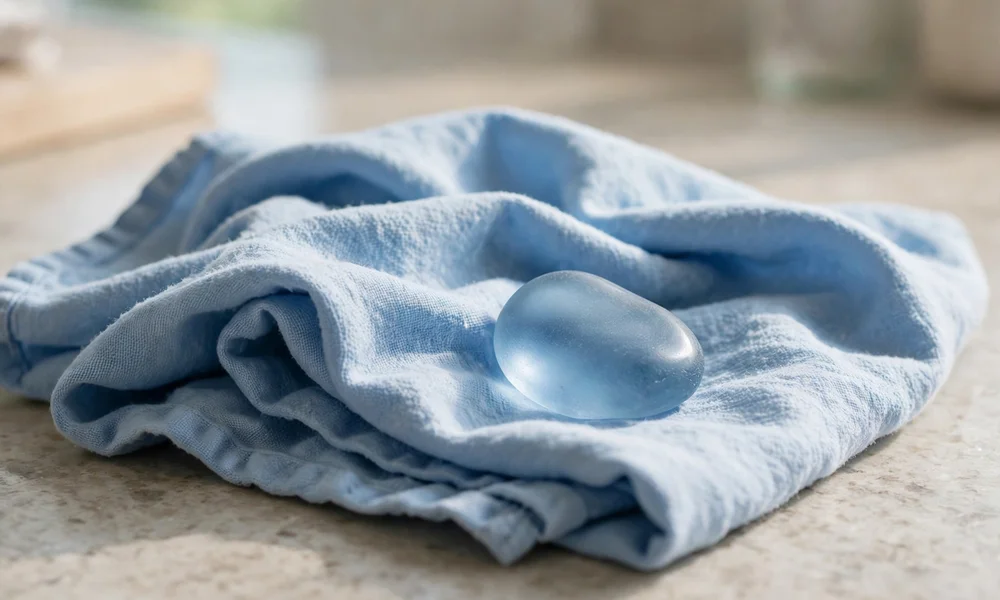
A Calm Day with Blue Obsidian
Put a pale wooden tray by the window, the blue pebble on one side and a tall glass of cold drinking water on the other, with plain wood showing between them. Sip slowly and let your gaze settle on the blue.
Nothing here needs finishing; tray, glass and pebble are the entire plan. Turn a few pages, fold the dry laundry, or watch sunlight travel across the floorboards until your glass runs dry.
Blue Obsidian Beside Water
Water and blue obsidian look happy together, yet need their own space. Put the tumbler on one side of the tray and the pebble on the other, so the open wood between them keeps your drink untouched and the glass unmarked. A tray is for showing things, not for soaking them.
Soap your hands once the pebble is in place, before you lift the glass to drink. The pebble never drops into a glass, a jug or a tub, and if water spills, pick the stone up straight away and pat it dry with a soft cloth.
Blue Obsidian at a Glance
| Pale blue glass | Tray, sill, shelf | Look, hold, enjoy |
|---|---|---|
| Smooth, cool feel | Daylight, quiet rooms | Hands washed after |
| Small pebble size | Calm, slow mornings | Dry, never soaked |
| Even colour throughout | Glass kept separate | Not for drinking |
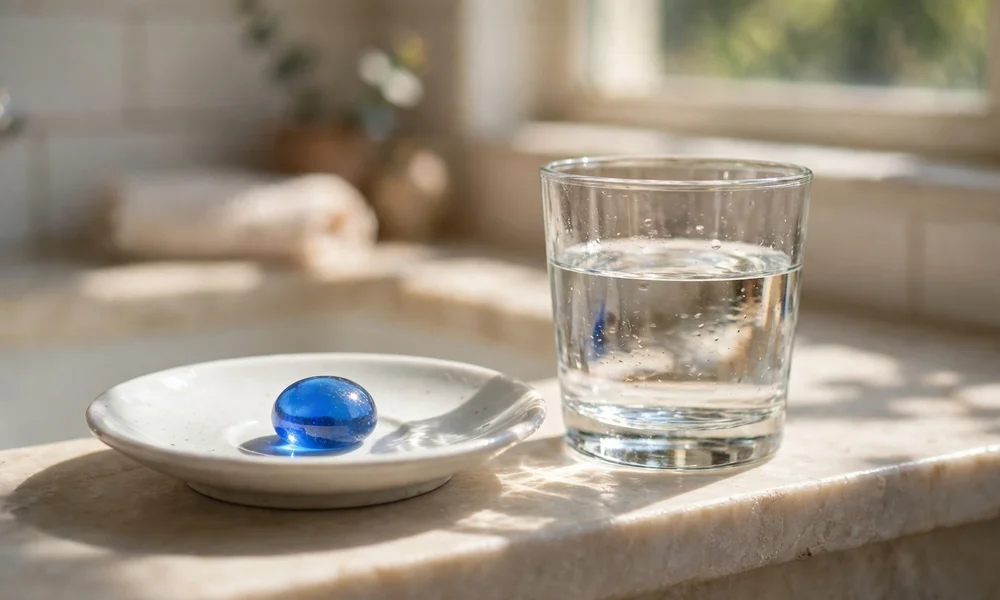
Blue Obsidian and Silver Sheen Obsidian
Silver sheen obsidian for quiet days is the closest cousin to this stone in mood: black volcanic glass with a soft silver-grey shine that moves across its face as you turn it. Blue obsidian is soft blue all the way through, with no black in it.
The two stones suit different hours. Silver sheen belongs in dimmer light, where its silver glow shows best. Blue obsidian belongs in brighter daylight, where its blue glows at the edges. Silver sheen is natural volcanic glass; blue obsidian, in almost every shop, is man-made glass, and that difference is worth knowing before you buy.
Blue Obsidian and the Other Obsidians
The rest of the obsidian family holds more colours, none of them the soft blue of this guide. Gold sheen obsidian for bold days is black volcanic glass with a warm golden shine, bright and eager, for days with plans. Rainbow obsidian is dark black glass that flashes with bands of colour as you turn it. Mahogany obsidian is warm brown all through, with soft reddish-brown swirls like grain in polished wood.
Black obsidian for busy weeks is plain and glossy, one deep black from edge to edge, with no bands and no spots. Snowflake obsidian is black glass marked with soft white spots, kept for new routines. Every one of these is natural volcanic glass. Blue obsidian stands apart twice over: soft blue, and, in almost every case, glass made by people rather than by a volcano.
Blue Obsidian and Its Queued Siblings
Two more obsidians are queued to join this site in the same batch, and neither is live yet. Green obsidian, topic 802, will be a fresh green stone for calm days, sharing this guide's calm mood. Where blue obsidian is the colour of sky and shallow water, green obsidian will be the colour of leaves.
Peanut obsidian, topic 804, will be a warm patterned stone for bright days, speckled and swirled like its namesake, for brighter hours than the soft blue here. Blue obsidian has no speckles and no swirls; it is one even blue, and it stays the quiet one of the three.
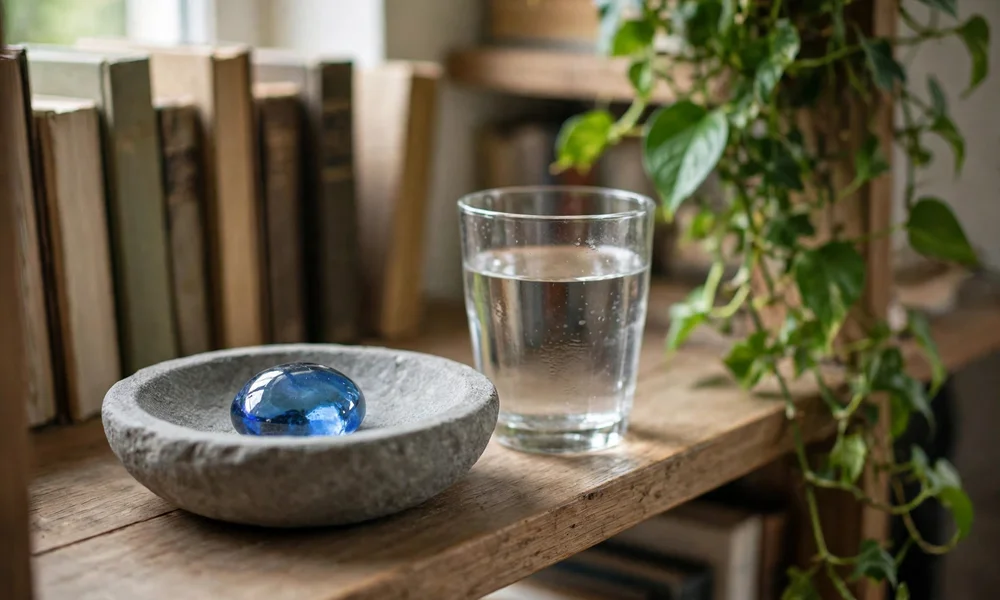
Where Blue Obsidian Lives at Home
A blue pebble earns its keep in a place your eyes cross daily. Try the top shelf of a bookcase, a corner of the sideboard, or the window ledge in the hall — anywhere it catches your eye yet cannot be brushed off. Gentle morning sun brings out its colour best.
Pick somewhere clear of the bathroom, where steam hangs in the air, and high enough that little hands cannot grab it. A pebble you can see gets noticed and enjoyed; one tucked in a drawer is forgotten by the weekend.
Looking After Blue Obsidian
Glass stays bright with very little fuss. Give the pebble a wipe with a dry cloth each week when you dust. Leave soap, polish and sprays in the cupboard — cleaners can take the shine off glass instead of adding to it.
Between displays, slip the pebble into a soft cloth bag of its own, kept apart from keys, coins and harder stones that might nick it — a nicked glass edge can cut. Months of hard sun can wash the blue out, so a shady shelf suits it more than a window that faces the sun all day.
Stones That Must Stay Away from Water
Some stones are harmed by water, and a few carry things inside that should never reach a drink. Amber is old tree resin rather than rock, and a long soak dulls and softens its surface. Pyrite turns dull and rusty when it stays wet, and the rust can stain. Angelite is soft, and water wears its surface away.
Other stones hide something inside that must never reach a mouth. Malachite holds copper in its green bands, so it must never go in water or in elixirs. Lepidolite holds lithium in its pale flakes, hematite rusts if it stays damp, and apatite is too soft for soaking, so none of them belongs in drinking water. Blue obsidian keeps the same rule: it sits next to the glass, never inside it.
Your Calm Days Checklist
- Put the blue pebble on a dry tray next to a full glass of water.
- Sip your water slowly as the daylight builds.
- Ask the seller plainly whether the piece is man-made glass.
- Keep the pebble dry, cool and out of small hands' reach.
- Soap your hands once the pebble is back on its tray.
- If a health worry lingers, talk to a doctor — stones heal nothing.
Frequently Asked Questions
What is blue obsidian?
Blue obsidian is a soft blue glass, polished into smooth pebbles. Almost every piece sold is man-made glass, coloured blue in a furnace.
Is blue obsidian natural volcanic glass?
Almost never. True natural blue obsidian is extremely rare, and nearly all shop pieces are man-made slag glass.
How is blue obsidian different from silver sheen obsidian?
Silver sheen obsidian is black volcanic glass with a soft silver-grey shine that moves as you turn it. Blue obsidian is soft blue throughout, with no black and no moving shine.
How is blue obsidian different from black obsidian?
Black obsidian is plain glossy black volcanic glass, kept for busy weeks. Blue obsidian is soft blue, usually man-made glass, and it suits calm days.
Is blue obsidian safe to hold?
Yes — a short hold is fine for most people. Put it back on its tray after, wash your hands with soap, and keep it somewhere children cannot reach.
Where should I keep blue obsidian at home?
Choose a dry, peaceful spot — a bookshelf top or a window ledge — where the glass can sit close by yet apart, and the pebble cannot be knocked or splashed.
The Bottom Line
Blue obsidian lends calm days a soft blue friend: a single smooth glass pebble in daylight, resting on a tray with a glass of water close by.
A Note for Calm Days
Keep the hours unhurried and the pebble dry. One blue stone, one glass of water, and a morning that asks nothing of you.


