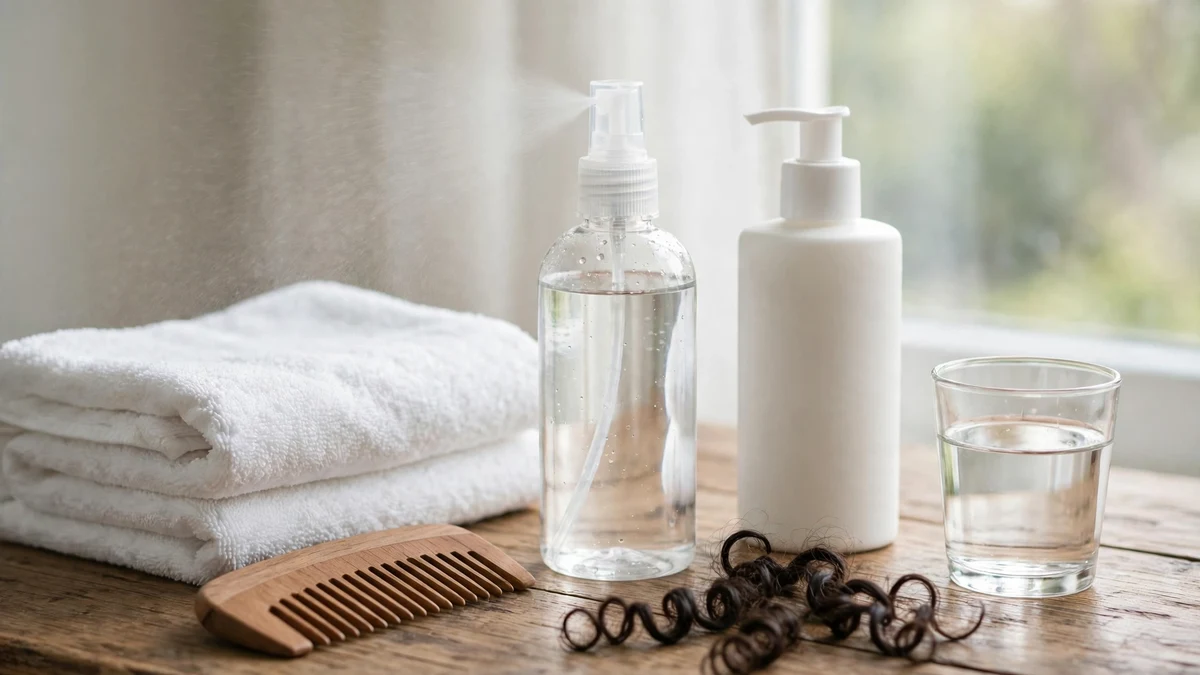
Wash day for curly hair starts long before the water runs. The towel is already on the hook, the comb is waiting on the shelf, and the conditioner bottle stands where it always stands, because curls reward a little planning and punish a rush. Get the order right and the curls dry in soft, separate spirals; hurry it and the same hair knots up.
Curls sit in the middle of the hair family. They loop more tightly than waves, which only bend, and more loosely than coils, which wind into tight springs. That middle place gives curls their own water routine: lukewarm water, a gentle rinse, detangling only while damp, and drying that pats rather than rubs.
This guide walks through that routine step by step, from the first wetting to the last pat dry, and through the days between washes. Everything here is gentle general information only, never a treatment. If your hair or scalp troubles you, see a doctor or dermatologist.
Key Takeaways
- Curls loop in soft spirals, tighter than waves and looser than coils.
- Lukewarm water is kindest; hot water roughens curls and dries the scalp.
- Detangle only while the hair is damp, with fingers or a wide-tooth comb.
- Dry by patting with a soft towel, never by rubbing or harsh brushing.
- Patch-test any new product first, and see a doctor for scalp worries.
What Curly Hair Is
Curly hair grows in loops and spirals, each strand curving back on itself as it falls. The loops can be wide and loose, like ribbon curls, or tighter and springier, like a corkscrew, and one head often holds several kinds at once. Because the strand bends so often, the natural oils from the scalp travel slowly down its length, so the ends tend to feel drier than the roots.
That shape is what makes water so important. A curl with enough moisture holds its loop and falls in a neat spiral; a dry curl loses its shape, puffs out and tangles at the first touch. Keep the curls damp while you work with them, and let them dry in their own shape.
Why Curls Love Water
Water is the one thing that wakes a curl up. A dry curl sits flat and shapeless, but a damp one springs back into its loop. Plain water does most of the work here: it softens the strand, loosens the tangles and lets the curl settle into its natural pattern.
That is why the order of wash day matters. Wet the hair fully first, then wash, then rinse, then detangle while the curls are still damp. Skipping the first wetting leaves the curls half dry, and half-dry curls are the ones that knot.
Lukewarm First, Cool Last
The temperature of the water matters as much as the water itself. Lukewarm water, warm enough to feel pleasant on the wrist, lets the shampoo do its job without stripping the scalp. Hot water feels good for a moment, but it roughens the curls and dries the scalp, and the curls pay for it later with frizz.
A cooler rinse at the end is a small kindness worth keeping. Run the water a little cooler for the last rinse and the curls lie flatter and shinier, with less puff once they dry. Test the temperature on your wrist first.
A Simple Wash Day, Step by Step
Start by wetting the hair right through, from roots to ends, with lukewarm water. Work a small amount of mild shampoo into the scalp with your fingertips, in slow circles, and let the lather run down the lengths as you rinse.
Rinse until the water runs clear, then smooth conditioner through the mid-lengths and ends, where curls dry out first, and leave it for a few minutes. Rinse the conditioner out with lukewarm water, then finish with a cooler splash, and the washing is done.

Rinsing Curls Well
A good rinse is slow and thorough, and it is the step most people rush. Shampoo left behind makes the scalp itch and the curls feel sticky, while conditioner left behind weighs the loops down and leaves them flat. Let the water run through the hair for longer than feels necessary.
Check the rinse by feel rather than by sight. When the hair feels clean and smooth, with no soapy slickness left, the rinse is done. If it still feels coated, rinse again.
Curly Hair at a Glance
| Springy curl loops | Lukewarm water, cool finish | Rinse fully |
|---|---|---|
| Damp, gentle combing | Soft towel, no rubbing | Pat dry |
| Light moisture after | Wash day, then rest | Hands off |
| Palm of conditioner | Between washes, mist | Patch test first |

Detangling Curls While Damp
Detangling is where most curl damage happens, and the rule is simple: never detangle dry curls. Work while the hair is damp and full of conditioner, starting at the ends and moving slowly upward. Fingers are the gentlest tool; a wide-tooth comb comes next, and a fine comb or a brush should stay in the drawer.
When you meet a knot, stop and work it apart with your fingers instead of pulling through it. Pulling snaps the strand and leaves a frayed end that tangles again tomorrow. A little patience here saves an hour later, and the curls keep their shape.
Drying Curls Softly
How curls dry decides how they look for the rest of the day. Press a soft towel or an old cotton shirt against the hair and squeeze gently, section by section, letting the cloth take the water out. Rubbing twists the curls into a fuzz, and wringing squeezes the shape out of them.
Once the worst of the water is out, leave the curls alone. Air drying keeps the loops neat, and if you use a dryer, keep it on its lowest heat with a diffuser, moving it slowly. Touch the hair as little as possible while it dries.
Moisture After the Wash
Curls need moisture after the wash as well as during it, because their ends dry out first. Smooth a small amount of leave-in conditioner or a light curl cream through the damp lengths with your palms, then scrunch gently upward to encourage the loops. Start with a pea-sized amount; add more only if the ends still feel dry.
Less is more with curly hair. Too much product weighs the loops down and leaves them sticky, while a light touch lets the curls move freely.
Curls and Waves
Water and wavy hair is the closest neighbour to this guide, and the two routines share a lot: lukewarm water, gentle hands and a soft towel. The difference sits in the shape of the hair. Waves bend in soft S-shaped curves, between straight hair and curly hair, and they need less moisture.
Curls loop fully where waves only bend, so curls dry out faster at the ends and tangle more easily. A wavy routine can leave curls under-moisturised and frizzy, which is why curls get their own guide, with damp detangling and moisture after the wash as the central steps.
Curls and Coils
Water and coily hair sits on the other side of curls, and the two guides share the same gentle spirit: plain water, a mild shampoo, gentle hands and a soft towel, with extra moisture at every step. The difference is how tightly the hair winds: coils wind closely, spring after spring, and dry faster at the ends than any other hair type.
Curls sit between waves and coils, looping more loosely than coils and holding moisture a little longer. A coily routine, with its heavy moisture at every step, can weigh curls down and leave them flat, while a curly routine can leave coils thirsty. Water and textured hair covers the wider family of textured hair.
Keeping Curls Soft Between Washes
Curls do not need washing every day; most do better with a day or two between washes. On the mornings in between, mist the hair lightly with water from a spray bottle, smooth a little leave-in conditioner over the lengths, and scrunch gently to wake the loops up.
Sleep helps too. A loose pineapple on top of the head, or a silk or satin pillowcase, keeps the curls from flattening and tangling overnight. In the morning, shake the curls out gently with your fingers rather than brushing them.
Your Simple Care Checklist
- Wet the curls fully with lukewarm water before washing.
- Detangle only while damp, with fingers or a wide-tooth comb.
- Keep rinsing till the water runs clear and curls feel clean.
- Blot curls dry with a soft towel, never twist them.
- Try each new product on one small spot first.
- If a scalp worry does not settle, see a doctor or dermatologist.

Frequently Asked Questions
How often should I wash curly hair?
Most curly hair does well washed two or three times a week, with a light mist and a little leave-in conditioner on the days between. Washing every day can dry the curls out, while waiting too long lets tangles build.
Should I brush curly hair?
A brush is the wrong tool for curls, because it pulls the loops apart and turns them into frizz. Detangle while the hair is damp, with your fingers or a wide-tooth comb, starting at the ends.
Is hot water bad for curly hair?
Hot water roughens the curls and dries the scalp, which leaves the hair frizzy once it dries. Lukewarm water for washing and a cooler rinse at the end keep the curls smoother.
How is curly hair different from wavy hair?
Wavy hair bends in soft S-shaped curves, while curly hair loops fully into spirals. Curls need more moisture than waves and tangle more easily, so they get a routine with damp detangling and moisture after washing.
How is curly hair different from coily hair?
Coily hair winds into tight springs that dry faster at the ends than any other hair type. Curly hair loops more loosely than coils and holds moisture a little longer, so it needs less heavy moisture.
What should I do if my scalp itches or flakes?
Rinse well first, since leftover shampoo often causes itching, and patch-test any new product before using it fully. If the itching or flaking does not settle, see a doctor or dermatologist.
The Bottom Line
Water and curly hair go together gently: lukewarm water, damp detangling, a soft pat dry and a little moisture after, with no harsh brushing and no hurry.
A Note for Curly Hair
Let the curls dry in their own shape. One wash day, one soft towel, and a little patience will do.