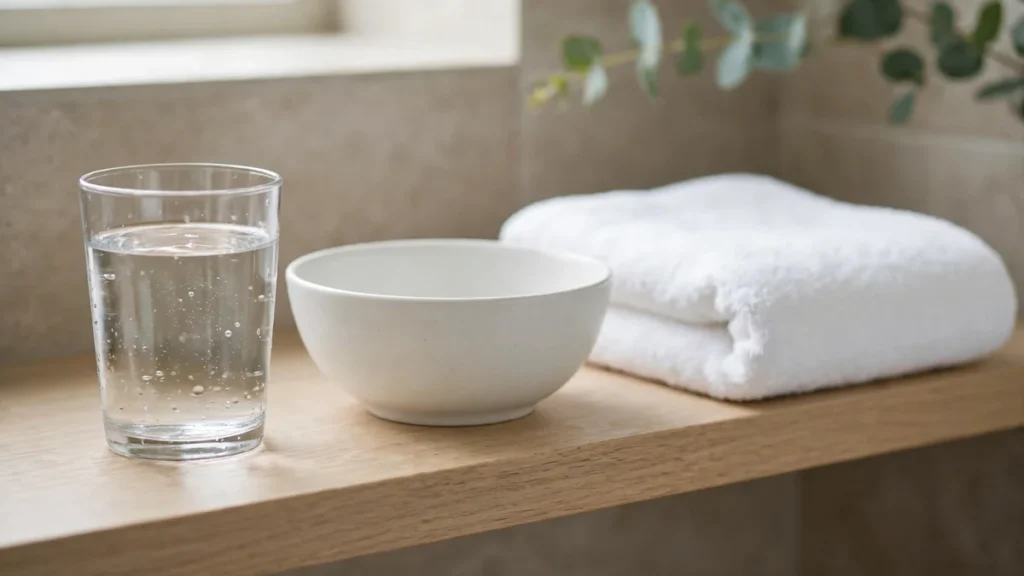
Some weeks ask for very little, and give back a lot. A quiet evening, a clean bowl, a spoonful of creamy mask and a jug of clear water: that is all a hair mask needs. You smooth it through the lengths, rest a little while, and rinse it away.
A hair mask is a weekly pause for your hair, not a daily chore. It is thicker than conditioner, slower than a wash, and kinder than new products.
This guide explains what a hair mask is, how to choose one, how to build a simple weekly ritual around it, and how to rinse it off well. Everything here is gentle general information only, never a treatment. Patch-test first, and see a doctor or dermatologist for real hair or scalp problems.
Key Takeaways
- A hair mask is a thick cream, smoothed through the lengths once a week.
- Water wakes the hair up first, so the mask spreads evenly.
- A hair mask rests for a little while, then rinses away cleanly.
- A hair mask is not a face mask, and not a daily hair wash.
- Patch-test every new mask first, and see a doctor for scalp problems.
What a Hair Mask Is
A hair mask is a thick, creamy treatment for the lengths of your hair. It looks like a rich conditioner, but it is heavier and slower: where conditioner is rinsed off in a minute, a mask is smoothed through the hair and left to rest for ten or twenty minutes.
Most masks come in a tub or a jar, and a little goes a long way. A spoonful is enough for most hair, smoothed from the middle of the lengths to the ends, where the hair is oldest and driest. The scalp needs none of it: the mask is for the lengths, not the roots. Plain water wets the hair first, and plain water rinses the mask away at the end.
Why a Weekly Ritual Works
A weekly ritual works because hair does not need help every day. A daily wash cleans the hair, and that is enough for most days. Once a week, though, the lengths ask for a little more: the ends are the oldest part of every strand, and they dry out first and look tired first.
One slow evening a week is enough to give them that little more. The mask rests while you rest, the rinse runs clear, and the hair feels soft for days after. A weekly rhythm is easy to keep: one mask, one evening, one quiet hour.
Choosing a Hair Mask
Choosing a hair mask is mostly a matter of knowing your hair and reading the label. Dry ends like a rich, creamy mask, and fine hair likes a lighter one, because a heavy mask can flatten thin strands. Look for a short, plain list of ingredients, and a mask made for your hair type.
Patch-test first: smooth a little mask on the inside of your wrist, wait a day, and watch for any redness or itching. If your skin objects, do not use it. Buy from a trusted seller, never one who promises the mask will cure hair loss.
Your Weekly Ritual, Step by Step
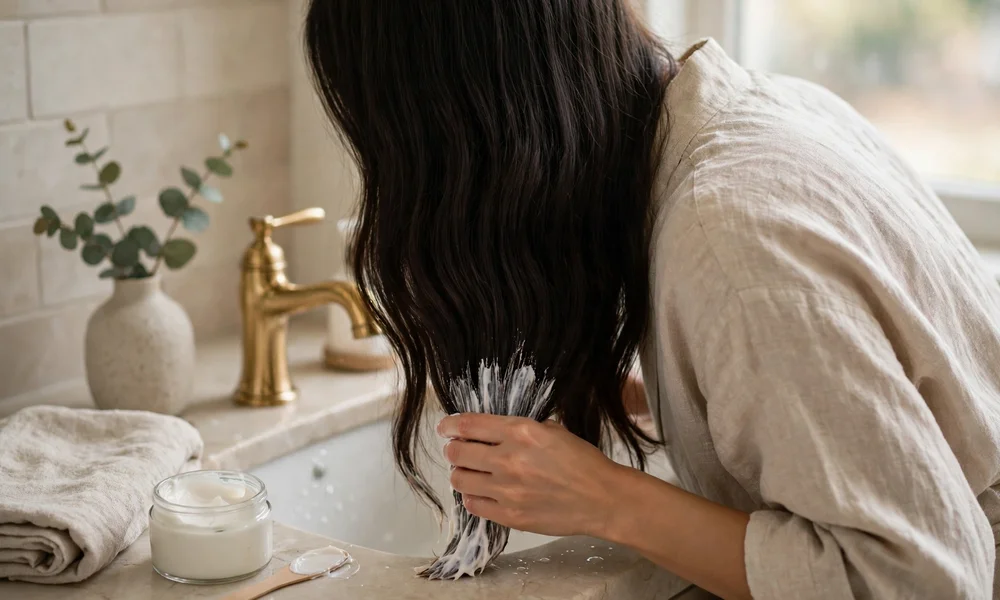
Your weekly ritual takes about half an hour, and most of it is waiting. Pick a quiet evening, and lay out what you need first: the mask, a wide-tooth comb, a towel, and a glass of fresh water to drink while you wait. Wash the hair first with lukewarm water and a mild shampoo.
Squeeze the water gently from the lengths, so the hair is damp, not dripping. Smooth the mask through the middle and the ends, comb it through once, and then rest. Drink your water, and let the mask sit for the time on the label, usually ten to twenty minutes.
Applying the Mask Well
Applying the mask well is a slow, gentle job. Take a spoonful at a time, warm it between your palms, and smooth it down the lengths with flat hands, from the middle of the hair to the ends. Work in small sections, and keep the mask away from the scalp and the roots.
The ends need the most, because they are the oldest and driest part of every strand. If the hair is long, twist each section loosely after you smooth the mask in, so the mask stays where you put it. Let the lengths hang, and let the mask rest.
Rinsing and Drying Gently
Rinsing well matters as much as applying well. Rinse with lukewarm water, longer than you think, until the water runs clear and the hair feels clean, not coated. Finish with a cooler rinse, which helps the surface lie flat while the hair dries.
Squeeze the water out gently with your hands, then pat the lengths with a soft towel, never rub or twist. Let the hair dry on its own if you can, and comb it only when it is nearly dry, starting at the ends and working up slowly.

Hair Masks at a Glance
| Weekly mask | Lukewarm rinse | Patch-test first |
|---|---|---|
| Lengths and ends | Rinse until clear | Wait one day |
| Rest ten minutes | Finish cooler | Stop if red |
| Soft towel dry | Comb ends first | Doctor for scalp |
Hair Masks and a Wash Day
A hair mask and a wash day belong together, but they are not the same thing. A wash day is the wash itself: wetting the hair, washing with a mild shampoo, rinsing, and letting it dry. For curls, the wash day is everything, and how it is done decides whether curls dry soft and defined or rough and cloud-like.
A hair mask comes after the wash, once a week, on clean damp hair. Where water and curls a simple wash day keeps a wash-day routine for curls, this guide keeps a weekly mask ritual. One is the wash; the other is the weekly rest that follows it.
Hair Masks and Hair Oil
A hair mask and hair oil both make hair shine, but they work in different ways. Hair oil is a light oil routine: water cleans the hair, and a little oil helps the surface stay smooth while it dries. Oil goes on before washing, and a little oil on damp ends finishes the shine.
A hair mask is a thick cream, smoothed through the lengths once a week, left to rest, then rinsed away. Where water and hair oil a simple shine routine keeps a light oil routine for shine, this guide keeps a weekly mask ritual. One is oil, light and quick; the other is a cream, slow and weekly.
Hair Masks and Clay Masks
A hair mask and a clay mask share a word, a bowl and a weekly rhythm, but they are made for different places. A clay mask is a face mask: fine earth dried to a soft powder, mixed fresh with water into a smooth, cool paste, smoothed onto the face, and rinsed off with lukewarm water.
A hair mask is for the hair, never the face: a thick cream smoothed through the lengths, left to rest, then rinsed away. Where water and clay masks a gentle weekly ritual keeps a weekly face ritual, this guide keeps a weekly hair ritual.
Hair Masks and Face Masks
A hair mask is not a face mask, and the two should never be swapped. A sheet mask is a single-use cloth, pre-soaked in liquid, laid over the face for fifteen quiet minutes, and it belongs on the skin, not on the hair. A clay mask is a paste for the face, and it belongs on the skin too.
A hair mask belongs on the lengths of the hair, from the middle to the ends, and nowhere else. Hair serum is a few drops on damp hair after washing, hair spray is plain water misted for styling, braids are a care routine for braided hair, and henna is a colour ritual — all different again from a weekly mask. Coloured hair, our queued sibling topic, is a simple care routine for coloured hair, and a different guide from this one.
Patch-Test First, Always
Patch-test first, always, before any new mask touches your hair. Smooth a little mask on the inside of your wrist, wait a day, and watch for redness, itching or swelling. If your skin objects, wash it off and do not use the mask.
This guide is gentle general information only, never a treatment, and it will not cure hair loss or scalp problems. If your hair or scalp troubles you and it does not settle, see a doctor or dermatologist.
Your Weekly Checklist
- Wash the hair first with lukewarm water and a mild shampoo.
- Smooth the mask through the lengths and ends, not the scalp.
- Let the mask rest for ten to twenty minutes, then rinse well.
- Finish with a cooler rinse, and pat dry with a soft towel.
- Patch-test every new mask first, and stop if your skin objects.
- See a doctor for scalp problems; a mask will not cure them.

Frequently Asked Questions
What is a hair mask?
A hair mask is a thick, creamy treatment smoothed through the lengths of the hair once a week, left to rest, then rinsed away with lukewarm water.
How often should I use a hair mask?
Once a week is enough for most hair. A weekly rhythm keeps the lengths soft without weighing the hair down or asking for time every day.
Should I put a hair mask on my scalp?
No. A hair mask is for the lengths and ends, from the middle of the hair down. Keep it away from the scalp and the roots.
How long should a hair mask stay on?
Most masks rest for ten to twenty minutes. Follow the time on the label, and rinse well with lukewarm water until the water runs clear.
Can I use a face mask on my hair?
No. Face masks, like sheet masks and clay masks, are made for the skin, not the hair. Use a mask made for hair, and patch-test it first.
Will a hair mask cure hair loss?
No. A hair mask will not cure hair loss or scalp problems. It is a gentle weekly ritual for softness, and real hair problems belong with a doctor.
The Bottom Line
A hair mask is a simple weekly ritual: wash gently, smooth the mask through the lengths, rest a little while, and rinse well. Patch-test first, keep it off the scalp, and see a doctor for real problems.
A Note for Wash Days
Keep it weekly, keep it gentle, keep it simple. One mask, one quiet evening, and a little water can carry your hair well.