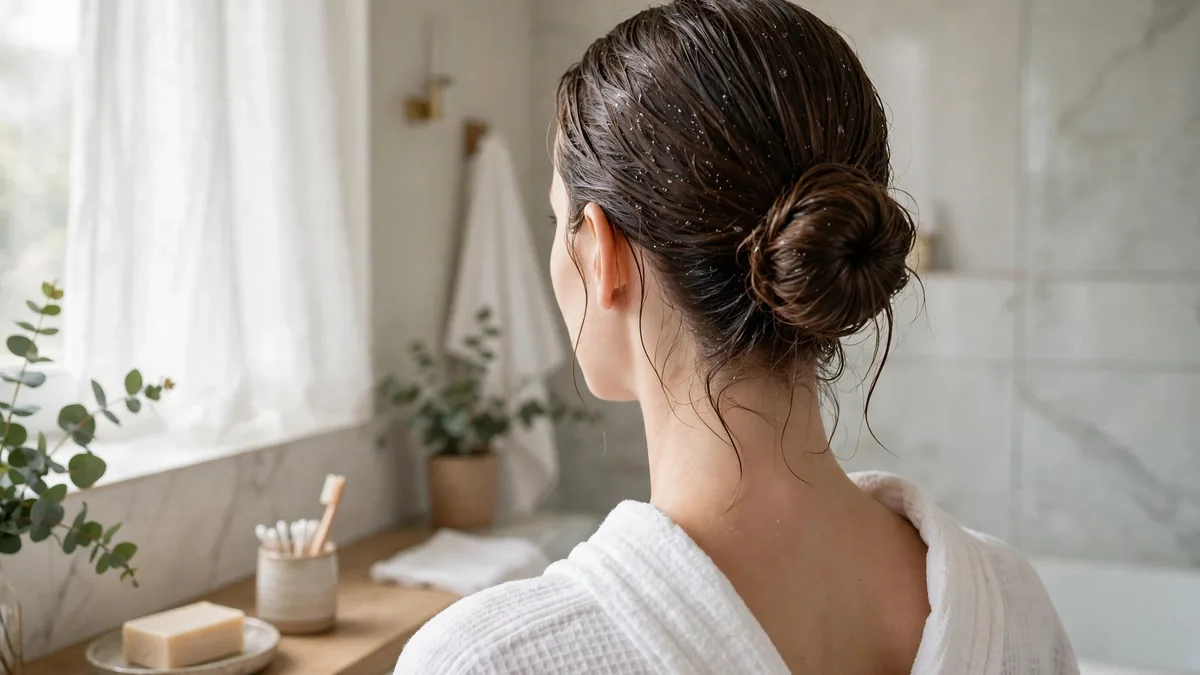
Some mornings ask for very little. The hair is still damp from the shower, the day ahead is ordinary, and there is no time for a long routine in front of the mirror. A brush, a soft tie and a minute of patience are enough.
A bun is the answer on mornings like that. The hair is gathered, twisted and pinned into one neat shape, out of the face and off the neck, and it stays put while the day goes on. It suits a school run, a desk, a market trip and a quiet evening equally well.
This guide is about water and buns: how damp hair makes a bun easier to shape, how to make a low bun, a high bun and a messy bun, and how to keep the look soft and comfortable all day. Nothing here is medical advice or a treatment of any kind. If your hair or scalp is troubling you, please see a doctor or dermatologist.
Key Takeaways
- A bun gathers damp hair into one neat shape, out of the face.
- Water makes hair bendable, so a bun shapes best while hair is damp.
- A low bun suits quiet days, a high bun suits busy ones, a messy bun suits both.
- Use a soft tie, loose pins and gentle hands, never a hard pull.
- Patch-test any new product first, and ask a doctor about scalp worries.
What a Water Bun Is
A water bun is a bun shaped while the hair is still damp from washing or from a light mist. The water does the quiet work: damp strands bend easily, lie flat against each other and hold a twist without fighting back, while dry hair slips, puffs and springs loose.
The bun itself is simple. The hair is gathered into one place, twisted around itself into a coil, and held with a soft tie and a few pins. When the hair dries inside the bun, it keeps the shape, and when the bun comes down later, the lengths fall in soft waves.
Why Buns Suit Fresh Days
A fresh day starts clean and unhurried, and a bun matches that feeling. The hair is out of the way, the neck feels cool, and there is nothing to keep pushing back behind the ears. The look is tidy without being stiff.
A bun also suits days when the hair will not behave. On a damp morning, loose hair can frizz and tangle before the front door is even shut. Gathered into a bun, the same hair is calm.
The Low Bun
The low bun sits at the nape of the neck, and it is the calmest of the three. Brush the damp hair back smoothly, gather it low, and twist it into a small coil. Wrap the coil around its own base, tuck the ends under, and hold it with a soft tie and two pins.
Keep the pull gentle. The hair should feel held, not tugged, and the scalp should feel easy, not tight. A low bun suits quiet days, long reads and slow evenings, and it pairs well with a scarf or a soft collar.
The High Bun
The high bun sits on top of the head, and it is the busiest of the three. Tip the head forward, brush the damp hair up and gather it high, then twist it into a coil and wrap it round. One soft tie holds the base, and a few pins keep the coil from sliding.
A high bun lifts the hair right off the neck, which suits warm days and long chores. Check in the mirror that the bun sits straight, then leave it alone; fussing with it only loosens the twist.

The Messy Bun
The messy bun is the forgiving one, and it suits days when nothing needs to be perfect. Gather the damp hair loosely, twist it without smoothing every strand, and pin it where it lands. A few soft strands can fall free around the face and the neck.
The trick is to stop early. A messy bun looks best when it is made in under a minute and then left alone. If a strand falls out later, let it fall; tucking it back in only makes the bun tighter than it should be.
Damp Styling with Water
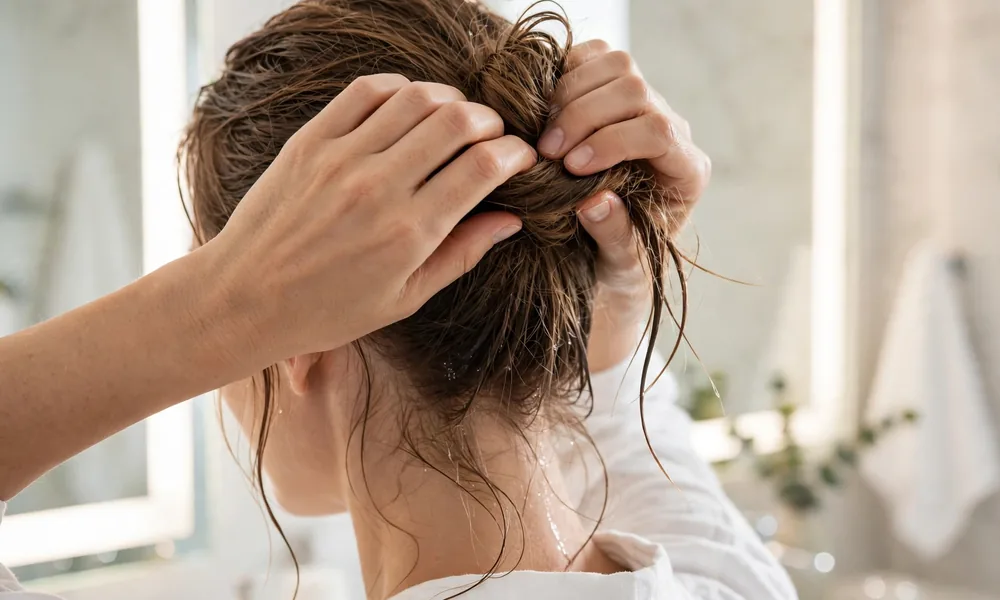
Damp hair is the whole secret of a good bun, and the water should be plain and fresh. Wash as usual, press the lengths gently with a soft towel, and shape the bun while the hair is still damp, not dripping and not dry. If the hair has dried already, a light mist from a spray bottle will dampen it again.
Never shape a bun on soaking hair. Heavy wet hair pulls at the roots and takes hours to dry inside the coil. Squeeze the water out first, wait a few minutes, and only then gather the hair up.
A bun should feel like nothing by midday. If it pulls, it is too tight, and it should be taken down and remade more loosely. A soft fabric tie spreads the pressure, while a thin elastic band can dig in and leave a mark.
Take the bun down before bed, brush the hair gently, and let it rest loose overnight. A bun worn day after day without a break can wear the same strands thin, so give the hair a loose day between bun days.
Water Buns at a Glance
| Low bun, nape | Quiet days | Soft tie, pins |
|---|---|---|
| High bun, crown | Busy warm days | Gentle, loose hold |
| Messy bun, free | Easy days | Stop after one minute |
| Damp, not dripping | Fresh look | Patch-test new products |
Water Buns and Curly Hair
Water and curly hair is a care guide for curls, and it teaches the habits a bun can borrow. Curls loop in soft spirals, tighter than waves and looser than coils, and they dry best when they are left in their own shape. A bun made from damp curls should be loose, so the loops are not crushed flat.
Gather curly hair gently with fingers rather than a hard brush, and twist it only once or twice before pinning. A low bun suits curls best, and the curls spring back softly when the bun comes down.
Water Buns and Wavy Hair
Water and wavy hair is a care guide for waves, and it teaches the same damp habit in a gentler key. Wavy hair bends in soft S-shaped waves, between straight hair and curly hair, and it sets as it dries. A bun made while the waves are damp will hold a soft bend when it comes down.
Brush wavy hair lightly, gather it without pulling the waves straight, and let the bun sit loosely. When the hair dries inside the coil, the waves keep their shape.
Water Buns and Hair Spray
Water hair spray is a small bottle of plain water with a fine nozzle, used to dampen the hair lightly before styling. It is the simplest helper a bun can have, and it costs almost nothing.
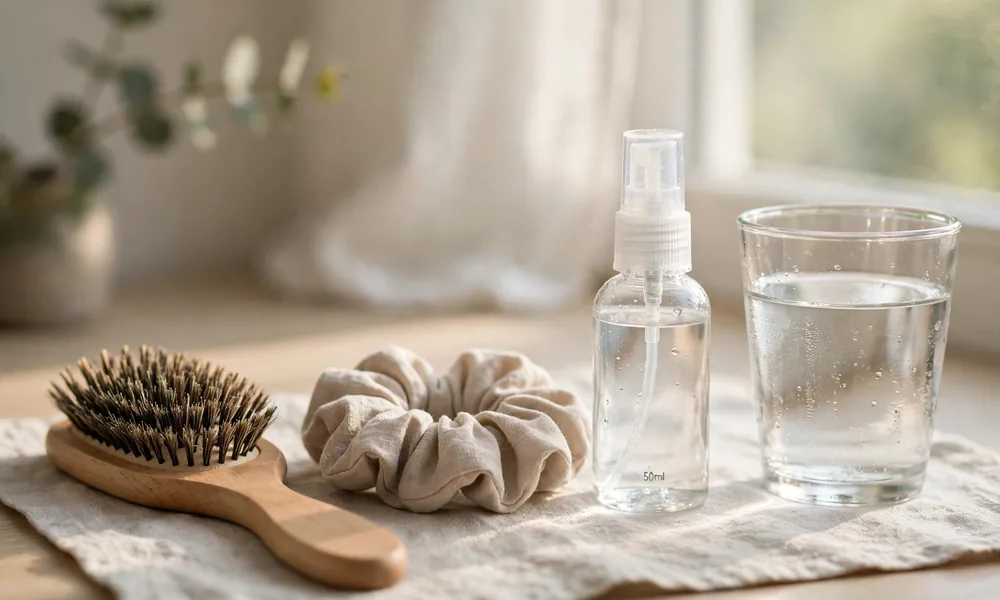
Hold the bottle well away from your head, press the nozzle two or three times over the lengths, wait a minute, and then gather the hair. The light dampness softens the strands just enough to shape them without pulling. Fill the bottle with clean, fresh water only, and keep the mist light, never soaking wet.
Buns, Ponytails, Haircuts and Blow Dries
A bun is one tied-up look among several. Ponytails, topic 805 in this same batch, are another tied-up look, but a ponytail lets the lengths hang free and swing, while a bun coils them away entirely. A ponytail suits a run or a quick errand; a bun suits a day when the hair should stay out of the way completely.
Haircuts, topic 799, and blow dries, topic 801, are also queued in this batch, and both are different kinds of guides. A haircut changes the length and shape of the hair itself, and a blow dry shapes loose hair with warm air. A bun does neither: it works with the hair as it is, gathers it up with water and a soft tie, and lets it down again unchanged.
Headscarves and Other Fresh Looks
Headscarves, topic 807, are another Batch 81 hair sibling, queued and not live yet. A headscarf wraps the hair in cloth, which suits days when the hair should be covered rather than gathered, and it pairs well with a low bun tucked underneath.
The two looks are cousins, not rivals. A bun keeps the hair in its own shape, while a scarf adds a layer over it. On a bright day, either one gives a fresh look.

Your Fresh Look Checklist
- Wash, press gently with a towel, and shape while damp.
- Choose a low, high or messy bun for the day ahead.
- Use a soft tie and loose pins, never a hard pull.
- Mist lightly if the hair has dried already.
- Patch-test any new product before it touches your hair.
- If the bun pulls or your scalp worries you, take it down and ask a doctor.
Frequently Asked Questions
What is a water bun?
A water bun is a bun shaped while the hair is still damp from washing or from a light mist. The damp strands bend easily, hold a twist, and dry into a soft shape.
Is a bun better on damp or dry hair?
Damp hair shapes best, because damp strands bend easily and lie flat against each other. Dry hair slips and springs loose, so mist it lightly first if it has dried.
How do I make a low bun?
Brush the damp hair back smoothly, gather it low at the nape, twist it into a small coil, wrap it round its own base, and hold it with a soft tie and two pins.
How do I make a messy bun?
Gather the damp hair loosely, twist it without smoothing every strand, and pin it where it lands. Stop after under a minute and leave a few soft strands free.
Can a bun damage my hair?
A loose bun made with a soft tie and gentle hands is kind to hair. A tight bun pulled hard every day can wear strands thin, so keep the hold loose and take it down at night.
Should I use hair spray on a bun?
Plain water in a spray bottle is enough for most buns. Mist lightly, wait a minute, and then gather the hair; keep the spray light and never soaking wet.
The Bottom Line
Water and buns give fresh days a simple look: damp hair, a soft tie, and one neat coil that stays out of the way until evening.
A Note for Fresh Days
Let the morning be simple and the bun loose. One mist of water, one soft tie, and hair that stays fresh all day.