
A watering can is the quietest tool in the garden. It does not roar like a hose, it does not flood a bed in seconds, and it never throws water where it is not wanted. It pours a thin, gentle stream exactly where the roots are, and it gives you time to look at each plant as the water sinks in.
Most plants die from too much water, not too little, and the can is the best defence against that. A hose tempts you to keep going; a can runs out, and the walk back to the tap is a natural pause that lets the soil drink before you decide whether more is needed.
This guide is gentle general information for anyone with a few pots or a small bed: how to pick a can, when to water, where to aim the spout, and the small habits that keep plants and cans in good shape. If your skin reacts to garden water or soil, wash it off and ask a doctor.
Key Takeaways
- Water and a watering can means a slow pour at the soil.
- Check the soil with a finger before you water, every single time.
- Morning is the kindest time to water, while the air is still cool.
- A rose spout spreads the stream, and a bare spout aims it deep.
- Empty the can after use, rinse it, and store it dry and shaded.
What Water and a Watering Can Means
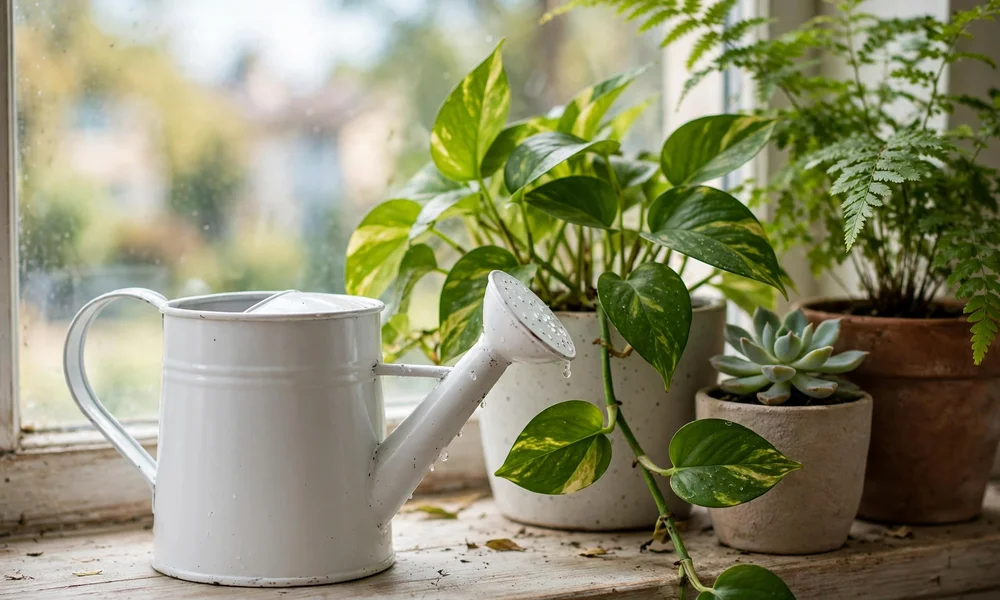
Water and a watering can means plain water, carried by hand, poured slowly at the base of a plant until the soil is damp. The can is a simple container with a handle and a spout, and the best ones have a detachable rose, the flat head with small holes that breaks the stream into soft rain.
The point of the can is control. A litre poured slowly does more good than five litres thrown in a hurry, because slow water soaks down to the roots instead of running off the surface.
Why Plants Like a Gentle Pour
Roots drink slowly. Soil is full of tiny gaps, and water needs time to travel down through them, so a hard jet only wets the top crust and then runs away. A gentle pour gives the soil time to take the water down where the roots can reach it.
Leaves prefer to stay dry. Wet leaves in hot sun can scorch, and wet leaves overnight invite mildew, so the spout belongs at the soil, low and steady. A rose head helps: it spreads the water into a soft shower that lands without pounding the soil flat.
Watering Can and Gardening: Plants, Not Hands
Water and Gardening: Hands That Stay Soft is a guide about the gardener, not the garden. It covers sore hands after digging, the wash before you start and after you finish, and the gloves and cream that guard the skin.
This guide turns the other way. It is about the plants and the can, about soil, roots and timing, and it says nothing about creams or gloves beyond a reminder to wash your hands when the watering is done.
Choosing a Watering Can
Pick the can up empty and feel its balance first, because a full can is heavy and a badly balanced one pulls at the wrist. A one-litre can suits a windowsill of herbs, a five-litre can suits a row of pots, and anything bigger suits a large bed. Metal lasts for years, while plastic is light and easy to carry when full.
Look for a rose that comes off, a spout that reaches low without tipping the can, and a handle that lets you pour with one hand. Fill it at the tap, and set it down gently.
A Watering Morning, Step by Step
Begin before the sun is high, while the air is still cool. Press a finger into the soil of the first pot: if the top inch is dry, that pot needs water, and if it is damp, skip it and move on.
Pour slowly at the base of each thirsty plant, keeping the spout low and the stream thin, until a little water appears in the saucer below. Stop there, tip the extra away, and walk to the next plant with the same unhurried pace.

Watering Can and Soup Pot: Plants, Not Dinner
A soup pot simmers food on a stove, and a watering can feeds plants in a garden, and the two should never be mixed up. The pot holds stock, vegetables and heat, while the can holds plain water and cool air. A pot of soup poured on a plant would scald it, and a can of garden water poured into dinner would be unfit to drink.
The difference runs the other way too. A soup pot is judged by how evenly it heats and how slowly it simmers, while a watering can is judged by how gently it pours and how precisely it aims. One belongs in the kitchen, the other by the back door.
Water and a Watering Can at a Glance
| Metal can, rose spout | Pots, beds, trays | Soil, not leaves |
|---|---|---|
| Thin stream, slow pour | Morning, cool air | Check soil first |
| One litre, small plants | Two litres, big pots | Empty after use |
| Rinse, dry, store | Shade, dry shelf | Hands washed after |
Pots, Beds, Trays and Windowsills: Where the Can Goes
Pots dry out fastest, because a small amount of soil in a terracotta pot loses water through its walls as well as its surface. Water them in the morning, check them again in the evening on hot days, and let the saucer drain so the roots are not left standing in water.
Beds hold water longer, so a deep pour once or twice a week beats a daily sprinkle. Seed trays are the opposite: their tiny cells dry in hours, and they need a rose head held high so the shower falls like soft rain. Windowsill herbs sit between the two, thirsty in sun and happy with a small can beside them, and Water and Houseplants: A Simple Care Ritual covers the indoor side of that watering in more detail.
Watering in Hot Weather and in Rain
Hot weather changes the rules. Water early, before the sun climbs, and give thirsty pots a second drink in the cool of the evening if the soil has dried again. A layer of mulch, bark or pebbles on the soil slows the drying.
Rain does not always do the job for you. A light shower wets the leaves and barely touches the soil, and pots under a roof or a leafy tree may stay dry through a whole storm, as Water and a Fresh Garden: Simple Rituals shows in its own garden walk. Check the soil after rain, and water any pot that is still dry underneath.
Water and a Watering Can Among the Other Guides in This Batch
Nine other guides share this batch, and each one keeps to its own subject. A swimming pool waits for a hot afternoon, an aquarium holds fish behind glass, a rain barrel gathers the sky, and a soup pot simmers on the stove. The stones of the batch are just as separate: afghanite is a soft blue stone for calm days, vivianite a deep blue one that fades in light, beryllonite a clear white stone for bright days, enhydro quartz a clear crystal with water sealed inside, and faden quartz a clear quartz with a thread-like line through it.
This guide is the only one of the ten that picks up a can and walks to the plants. Nothing else in the batch is about pouring water on soil, and nothing else tells you when to stop.
Where the Watering Can Lives
When the watering is done, tip the can upside down to drain it, then stand it on a dry shelf in the shade, out of the sun and away from frost. A can left full in winter can split if the water freezes, and a can left in strong sun grows green slime inside within days.
Keep it by the back door, near the tap, where you will reach for it every morning. A hook holds a small can, and a large can sits on a low shelf where it cannot be knocked over.

Keeping the Can Clean and Safe
Rinse the can out every week with plain water, scrub the inside with a brush if green slime appears, and leave the rose off while it dries. Never mix plant food or garden chemicals in a can you also use for herbs you will eat, and never drink from the can itself.
Try any new habit on one plant first, and watch its leaves for a day before watering the rest the same way. If garden water or soil irritates your skin, wash the area with soap and water, and ask a doctor if it lingers.
Your Plant Watering Checklist
- Press a finger into the soil before watering, and skip any pot that is still damp.
- Pour slowly at the base of the plant, keeping the spout low and the leaves dry.
- Stop when a little water shows in the saucer, then tip the extra away.
- Water in the cool morning, and check thirsty pots again in the evening.
- Empty the can after use, rinse it, and store it dry in the shade.
- If your skin reacts to garden water or soil, wash it off and ask a doctor — this guide is general information, not medical advice.

Frequently Asked Questions
How do I know when a plant needs water?
Press a finger an inch into the soil, and water only if it feels dry at that depth, because the surface can look dry while the roots below are damp.
Is morning really the best time to water?
Yes, morning is best: the air is cool, the water soaks down before the sun climbs, and the leaves dry through the day.
Should I water the leaves or the soil?
Water the soil, not the leaves, because roots drink and wet leaves in sun can scorch, while wet leaves overnight invite mildew.
How much water does a pot plant need?
Pour slowly until a little water appears in the saucer, then stop, because more water than that only drowns the roots.
Can I use tap water in a watering can?
Yes, ordinary tap water is fine for most plants, and leaving a filled can to stand overnight lets it reach air temperature before you pour.
Where should I keep my watering can?
Keep it empty, rinsed and dry on a shaded shelf near the tap, out of strong sun and frost.
The Bottom Line
Check the soil, pour slowly at the roots, and stop when the saucer shows water — the can does the rest.
A Note for Plant Days
A full can, a cool morning, and plants that drink slowly: the watering can asks for little.


