
A fresh garden starts at the soil, not at the shelf. Step outside in the morning, and the garden tells you what it needs: dry soil at the roots, leaves that look a little tired, a pot that has gone light in your hand. A can of plain water, used slowly in the right place, does more for a garden than any shelf of products.
Water and a fresh garden go together because both are about steady, gentle care. The plants drink at their roots, the soil stays soft and dark, and the person watering gets a few quiet minutes outside.
This guide looks at simple garden rituals with plain water: watering at the roots, caring for pots and beds, keeping the patio corner fresh, and sitting down at the end with a glass of water of your own. The advice here is general and gentle, never about harsh chemicals, and it keeps plants and pets safe.
Key Takeaways
- A fresh garden starts at the soil, with plain water at the roots.
- Water plants in the morning, slowly, at the base — never a hard blast.
- Pots, beds and the patio corner each need their own small ritual.
- Keep cleaning water away from plants and pets, and use no harsh chemicals.
- A glass of water for yourself is part of the garden ritual too.
What a Fresh Garden Means
A fresh garden is not a perfect garden. It is a garden where the soil is damp at the roots, the leaves look clean and green, the paths are clear, and the patio corner is a pleasant place to sit. A few pots, one bed, and a chair in the sun are enough.
Freshness outdoors comes from water used well. A plant watered at its roots drinks deeply and stands up straight; a plant splashed only on its leaves dries out by noon. Dark, soft soil means watered; pale, dusty soil means thirsty. Learning to read the soil takes only a few mornings.
Starting with Water at the Roots
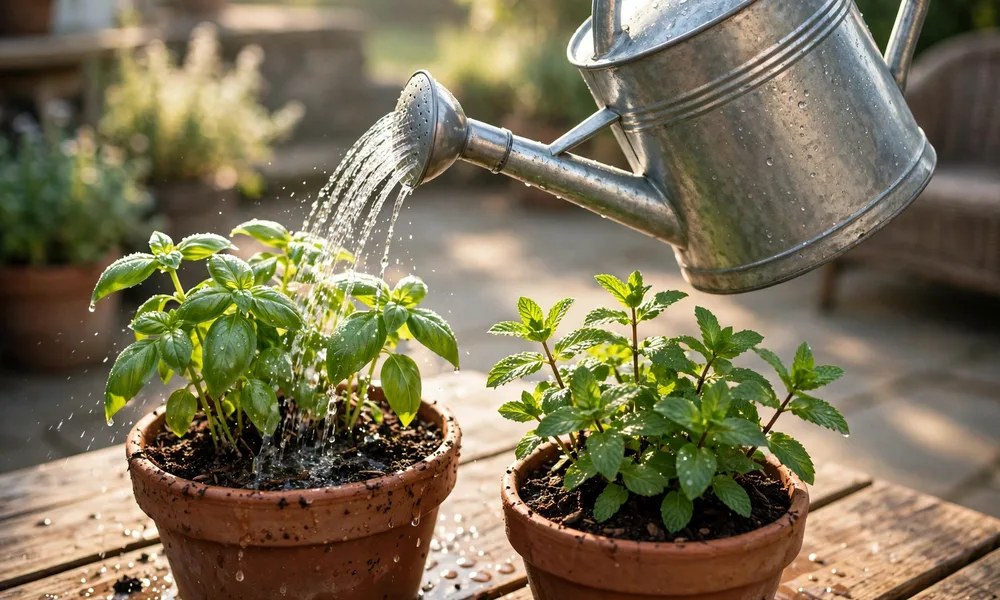
The roots are where the plant drinks, so the water goes there. Fill the can and pour slowly at the base of each plant, letting the water sink in rather than run away. A slow pour is better than a fast one: the soil takes it in, and the roots get a proper drink.
Water in the morning when you can, while the air is still cool, so the leaves dry quickly and the soil holds the moisture through the day. A plant watered at noon in hot sun loses much of the water to the air.
Check the soil with a finger first. Push it in up to the first knuckle: if it feels damp, wait; if it feels dry, water. That one check stops the most common garden mistake — watering a plant that is already wet.
Watering Pots on the Patio
Pots dry out faster than beds, because they hold so little soil, and a pot in full sun can be thirsty by midday. Lift the pot before you water: a light pot needs water, a heavy one does not.
Pour slowly until a little water runs from the drainage hole, then stop: the whole root ball is wet, not just the top. Empty the saucer after a few minutes, because a pot left standing in water can rot at the roots.
Herbs love this kind of care. Basil, mint and parsley in pots on a patio table only ask for a morning drink and a little sun, and they give back fresh leaves all summer. Water them at the soil, not over the leaves.
The Hose, the Can and the Bucket
The watering can is the gentlest: a thin stream at the roots, perfect for pots, seedlings and herbs. The hose is for the big jobs, the beds and the lawn edges, but it needs a soft spray, never a hard jet.
The bucket is the quiet helper. Fill it, let it stand in the sun for an hour, and the water warms to the air, which tender plants prefer to cold water straight from the tap. A bucket is also the tool for the patio: a cloth wrung out in plain water wipes the table and chairs clean without any soap.
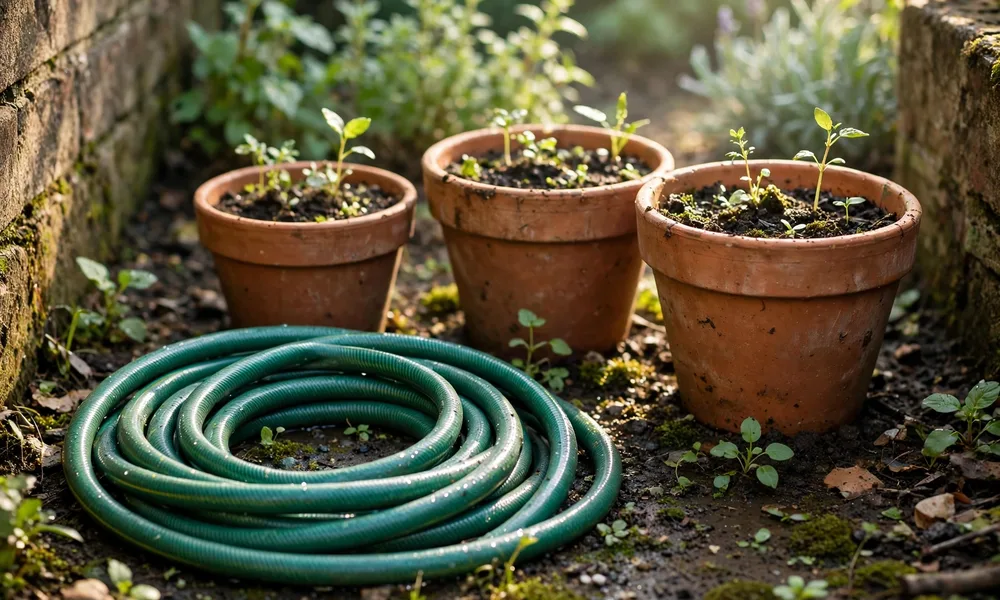
Keep the hose coiled neatly when you finish, out of the path, so nobody trips over it.
A Fresh Garden at a Glance
| Morning, at roots | Pots and beds | Plain water only |
|---|---|---|
| Slow pour, cool air | Lift pot, check soil | No harsh chemicals |
| Water base, not leaves | Drain, empty saucer | Pets away from wash |
| Glass for yourself | Chair, shade, pause | Keep it simple |
A Fresh Garden and a Fresh Kitchen
A fresh garden and a fresh kitchen share one thing: plain water and a clean cloth do most of the work. In the kitchen, a jug of fresh water, a damp cloth and a window opened to the air keep one room fresh without fuss.
The garden is the same idea taken outside. The can replaces the jug, the soil replaces the counter, and the open sky replaces the window. Water and a fresh kitchen keeps one indoor room fresh with water and a cloth; this guide keeps an outdoor garden fresh with water at the roots.
A Fresh Garden and a Fresh Bathroom
A fresh garden and a fresh bathroom both start with water, but they use it in opposite ways. In the bathroom, a jug of fresh water, a clean cloth and a few calm minutes keep one small room fresh.
In the garden, the damp is the point: the soil should stay moist at the roots, and the air outside does the drying. Water and a fresh bathroom keeps a small indoor room fresh and dry; this guide keeps an outdoor garden fresh and watered.
A Fresh Garden and Soft Hands
A fresh garden and soft hands belong together, because the hands do most of the garden work. They dig, they plant, they pull weeds, and they head back indoors with the garden still fresh on their hands.
The garden guide on this site is about those hands: how they get dirty and dry out in the soil, and how plain water and gentle care keep them soft. Water and gardening for soft hands looks after the hands that work the garden; this guide looks after the garden itself — the watering, the pots, the beds and the patio corner.
Keeping Plants and Pets Safe
A fresh garden is a safe garden, and safety starts with what never goes near the plants. Use no harsh chemicals, and never pour cleaning water, soapy water or mop water onto the soil or the plants. Cleaning water belongs down the drain, never in a bed.
Keep pets away from water you use for washing tools or furniture, and keep the pets' own drinking bowl filled with fresh clean water in the shade. If a pet knocks a pot over, pick up the soil and replant gently, then water at the roots.
Wash your hands after garden work, before eating or touching your face, and rinse any cuts straight away with clean water.
Caring for the Patio Corner
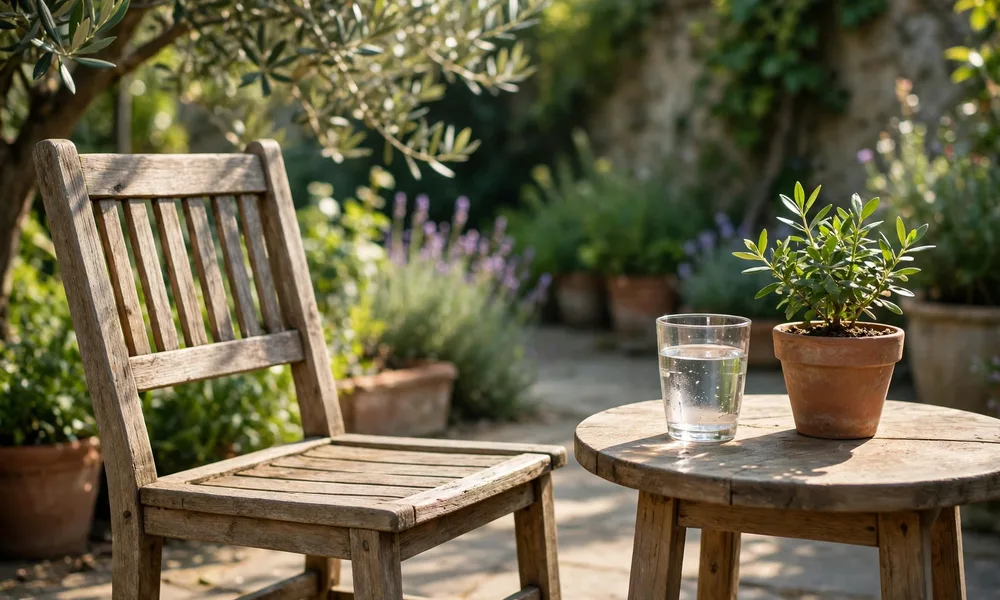
The patio corner is where the garden becomes a place to sit, and it needs its own small ritual. Once a week, sweep the leaves off the stones, wipe the table and chairs with a cloth wrung out in plain water, and shake out the cushion. No soap is needed for a weekly wipe.
Keep one pot on the table, something green and simple, and water it when you water the rest. A small plant on the table makes the whole corner feel alive.
In the evening, the patio is at its best: the stones have cooled, the plants smell green, and the chair is waiting. A fresh garden is not finished until somebody sits in it.
A Fresh Garden Through the Week
A garden stays fresh with small daily habits, not one big weekend effort. Monday, water the pots and check the beds. Wednesday, pull the few weeds and sweep the patio. Friday, wipe the table and chairs and water anything that looks thirsty.
Saturday is the sitting day: a glass of water, a chair in the shade, and a few quiet minutes looking at what has grown. Sunday, leave the garden alone and let it rest, the way you rest.
This little rhythm keeps the work small and the garden fresh, and it never asks for more than a few minutes a day. A garden that asks too much gets left alone, and a garden left alone is never fresh.
Your Fresh Garden Checklist
- Water plants in the morning, slowly, at the roots — never a hard blast.
- Lift each pot first: a light pot needs water, a heavy one does not.
- Empty saucers after watering so roots never stand in water.
- Use plain water only; keep cleaning water away from plants and pets.
- Wipe the patio table and chairs weekly with a cloth wrung out in plain water.
- Sit down at the end with a glass of fresh water and enjoy the garden.
Frequently Asked Questions
When is the best time to water a garden?
In the morning, while the air is still cool. The water sinks to the roots, the leaves dry quickly, and the soil holds the moisture.
Should I water the leaves or the roots?
The roots. Pour slowly at the base so the water sinks into the soil. Wet leaves dry out fast and can scorch in hot sun.
How do I know if a pot needs water?
Lift it. A light pot needs water, a heavy one does not. Or push a finger into the soil: dry to the first knuckle means water.
Can I pour cleaning water on my plants?
No. Never pour soapy water, mop water or any cleaning water onto soil or plants, and keep pets away from it.
Do I need chemicals to keep a garden fresh?
No. Plain water, a little weeding and a weekly wipe of the patio are enough. Harsh chemicals have no place near plants, pets or people.
How much time does a fresh garden take?
A few minutes a day. Water in the morning, a quick weed and sweep midweek, and a sit-down on Saturday are all a small garden needs.
The Bottom Line
A fresh garden is plain water used well: morning watering at the roots, pots checked by hand, a patio wiped clean, and a chair in the shade with a glass of water. Keep it simple and keep it outdoors.
A Note for Fresh Gardens
Keep it watered, keep it simple, keep it outside. A can of plain water, a few green plants, and a quiet morning can keep a garden fresh.


