A houseplant has a quiet kind of life. Leaves turn toward the window, new shoots appear overnight, and the room feels softer just because something green is growing in it. A plant on the sill asks for very little, and what it asks for most is plain water, given at the right time and in the right amount.
The trouble is that most houseplants do not die from too little water. They die from too much of it, given too often, by hands that only want to help. A plant sitting in wet soil cannot breathe, and its roots soon turn soft and dark.
This guide explains what houseplants need, how to tell when the soil is truly dry, how much plain water to give, and how to build a short, simple watering ritual. It is plain-water care only, with no chemicals, and a simple home habit, not a treatment.
Key Takeaways
- Houseplants need plain water only, given when the soil is dry, never on a fixed schedule.
- Most houseplants suffer from overwatering, not from too little water.
- The finger test tells you when to water: dry soil an inch down means water now.
- Always let extra water drain away, and never leave a pot sitting in water.
- Water is simple home care, not a treatment, and sick plants may need a gardener.
What Houseplants Need Most
Houseplants need three simple things, and they need them every week: plain water, gentle light and air that can move. A potted plant has no garden soil to draw from, so it drinks only what you pour, and anything that blocks its roots shortens its life by weeks. It also needs a pot with a hole in the bottom, so extra water can escape.
They need gentle light and a steady spot, too: a bright room suits most houseplants, but a hot windowsill dries the leaves. Keep each plant where you can see it, in soft light with room to breathe, and it will grow steadily.
Why Plain Water Suits Houseplants
Plain water suits houseplants because it is all they need to drink. Fresh tap water left standing overnight is fine for most indoor plants, and it asks for nothing special: no powders, no drops, no mixing. The plant takes the water through its roots and leaves the rest behind in the soil.
Plain water is also the safest choice: chemicals and feeds can burn tender roots when used too strongly. Keep the ritual simple — plain water, given slowly — and the plant stays safe.
The Finger Test Before You Water
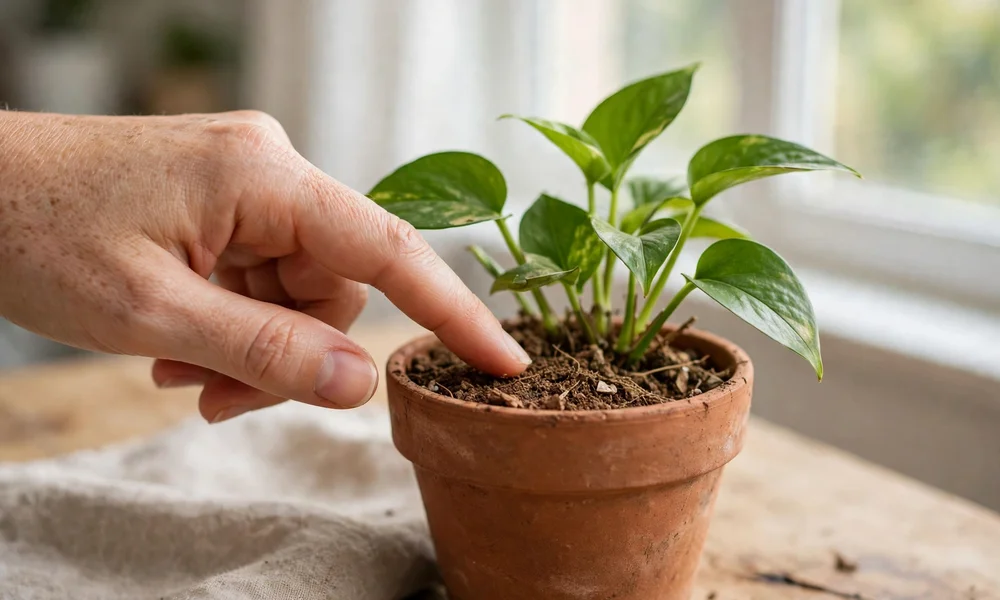
The finger test is the simplest way to know when a houseplant needs water, and it takes only a few seconds. Push one fingertip into the soil, about an inch deep, beside the stem. If the soil feels dry at that depth, the plant is ready for water. If it still feels cool and damp, wait a few more days and test again.
Do not water just because the top looks dry: the top dries first while the roots below may still be damp. Do not water on a fixed day each week: a plant drinks faster in warm, bright weather and slower in cool weeks. The finger, not the calendar, decides.
A Simple Weekly Watering Ritual
A simple watering ritual takes only a few minutes, and it works best on the same morning each week. Start by walking past your plants and looking at each one: are the leaves firm and upright, or soft and drooping? Then test the soil with your finger, one pot at a time, and water only the pots that feel dry an inch down.
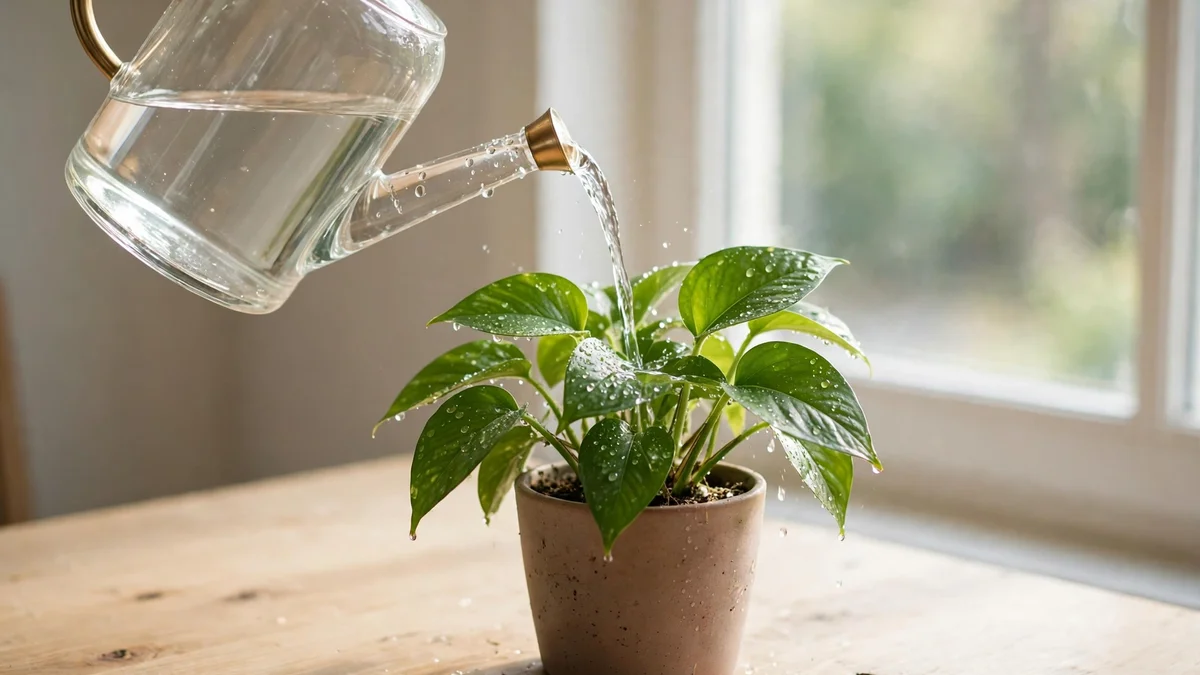
Water slowly, in a thin stream around the base, until a little water runs out of the hole at the bottom. Let the pot drain fully and tip the saucer away. The ritual is simply look, test, water, drain.
How Much Water Is Enough
How much water is enough depends on the size of the pot, and the answer is simpler than most people think. Water until you see a little water run out of the drainage hole at the bottom, then stop. That small run tells you the whole root ball is wet, from the top of the soil to the bottom of the pot.
A small pot may need only half a glass, while a large pot may need a full jug. Never give a tiny splash every day, because a splash wets only the top and leaves the deep roots dry.
Draining Away the Extra Water
Draining away the extra water matters as much as the watering itself, because roots that sit in water cannot breathe. After you water, wait ten minutes, then lift the pot and tip away every drop that has gathered in the saucer. If the saucer is still wet the next morning, tip it again and let the pot dry.
Never leave a pot standing in a saucer full of water. A plant that stands in water for days will droop, its leaves will yellow, and its roots will turn soft and dark.
Houseplants at a Glance
| Plain water only | Test soil first | Drain it away |
|---|---|---|
| Finger test weekly | Dry inch down | Tip saucer dry |
| Slow thin stream | Water till it runs | Never stand in water |
| Bright soft light | Look, test, water | No fixed schedule |
Light, Air and a Good Spot
Light, air and a good spot make watering work better, because a plant in the right place drinks steadily and dries out between waterings. Most houseplants like bright, soft light: near a window, but not pressed against hot glass. A plant that gets a little morning sun and shade at noon is usually happy.
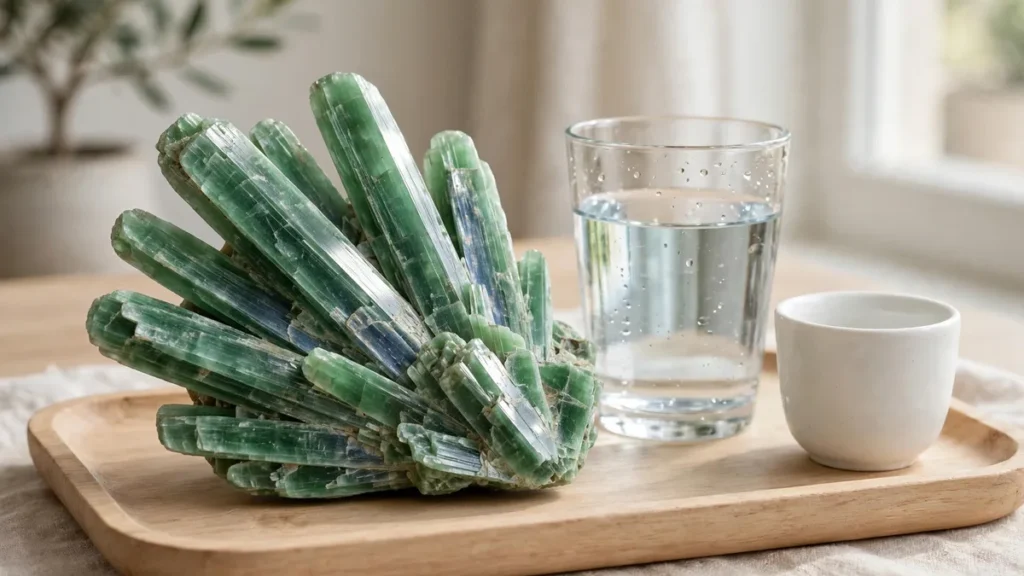
Air matters, too: a stuffy corner keeps soil wet for too long. Keep pots a little apart, so air can move between the leaves. A small green stone beside the pots adds a quiet touch, and moss agate green calm plants keeps such a stone among pots and leaves — a decoration beside the plant, never in the soil or the water.
Houseplants and Fresh Flowers
Houseplants and fresh flowers both need fresh water, but they need it in different ways. A houseplant is a living plant with roots in soil, and it drinks slowly over days, so it needs water only when the soil dries. Fresh flowers are cut stems in a vase, with no roots at all, and they drink only through the stem end, so they need fresh water every day.
Where water fresh flowers simple care keeps cut flowers bright with a clean vase, trimmed stems and daily water changes, this guide keeps potted plants alive with the finger test and slow watering. Same fresh water, different habit.
Houseplants and the Garden
Houseplants and the garden share the same green pleasure, but they live in different worlds. A garden plant has deep soil, rain and sun, and it can drink when it likes. A houseplant has only a small pot of soil, a windowsill, and whatever water you bring it, so it depends on you completely.
Where water gardening soft hands cares for the hands that dig, plant and weed outdoors, this guide cares for the plants themselves, indoors, one pot at a time.
When Leaves Tell You Something
Leaves tell you what the roots cannot say, and they are worth reading. Yellow leaves that feel soft often mean too much water, while brown, crisp leaf edges often mean too little water or air that is too dry. Drooping leaves in the morning usually mean thirst, and drooping leaves in wet soil usually mean the roots are drowning.
Look at the whole plant, not one leaf: a plant that grows new leaves while losing one old leaf at the bottom is simply growing. Check the soil, check the light, and change one thing at a time.
The Overwatering Warning
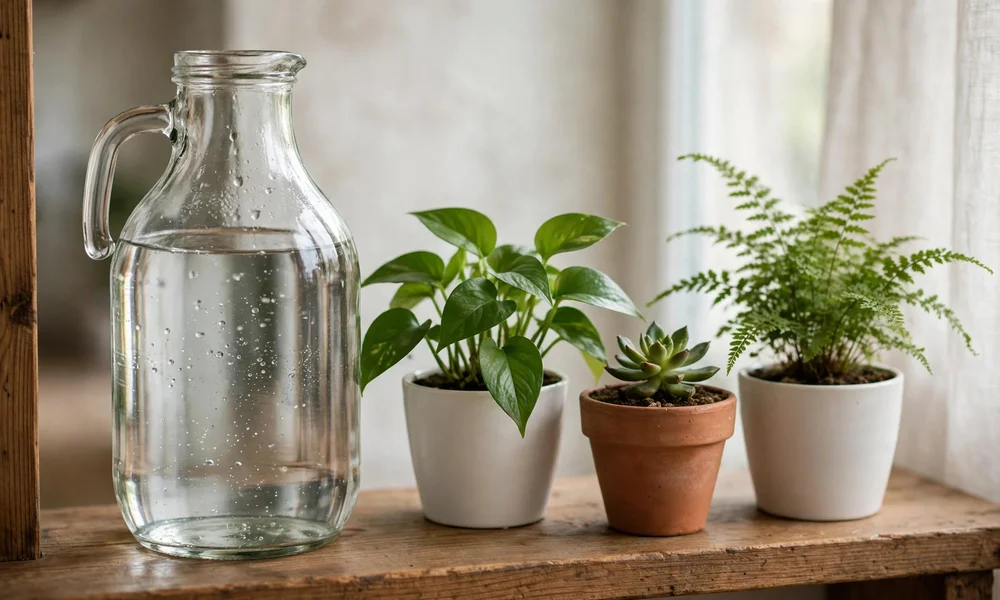
Overwatering is the most common way houseplants are harmed, and it is worth saying plainly: more water is not more care. A plant in wet soil cannot breathe, and its roots turn soft, dark and smelly. Once the roots rot, the plant cannot drink at all, however much water you pour.
If you think you have overwatered, stop watering at once and let the soil dry out fully. Tip the saucer dry, move the pot to bright, airy light, and wait. Do not water it again until the soil feels dry an inch down.
Your Houseplant Care Checklist
- Test the soil with your finger before you water any plant.
- Water only the pots that feel dry an inch down.
- Water slowly until a little runs out of the drainage hole.
- Tip the saucer dry ten minutes after watering.
- Keep plants in bright, soft light with air between the pots.
- Never overwater: wet soil harms roots, and patience helps more than water.

Frequently Asked Questions
How often should I water my houseplants?
There is no fixed schedule: test the soil with your finger once a week, and water only the pots that feel dry an inch down. Warm, bright weeks need more water; cool, cloudy weeks need less.
What water is best for houseplants?
Plain fresh water is best. Tap water left standing overnight is fine for most indoor plants, and it needs nothing added to it.
How do I know if I am overwatering?
Soft yellow leaves, drooping leaves in wet soil, and a sour smell from the pot all point to overwatering. Stop watering, tip the saucer dry, and let the soil dry out fully.
Should I mist my houseplants?
A light mist can help plants that like humid air, but it never replaces watering the soil. Mist the leaves only, never soak them.
Do houseplants need drainage holes?
Yes. A pot with a drainage hole lets extra water escape, so the roots never stand in water.
Where should I keep my houseplants?
Keep them in bright, soft light near a window, with air moving between the pots — a windowsill, a shelf or a table by the window works well, as long as the spot is not hot or dark.

The Bottom Line
Water and houseplants ask for very little: plain water, a finger test, a slow pour, and a saucer tipped dry. Water only when the soil is dry, and let the plant breathe between drinks.
A Note for Green Corners
Keep it simple, keep it plain, keep it patient. A little water at the right time, and a few quiet minutes each week, can keep a green corner alive and well.