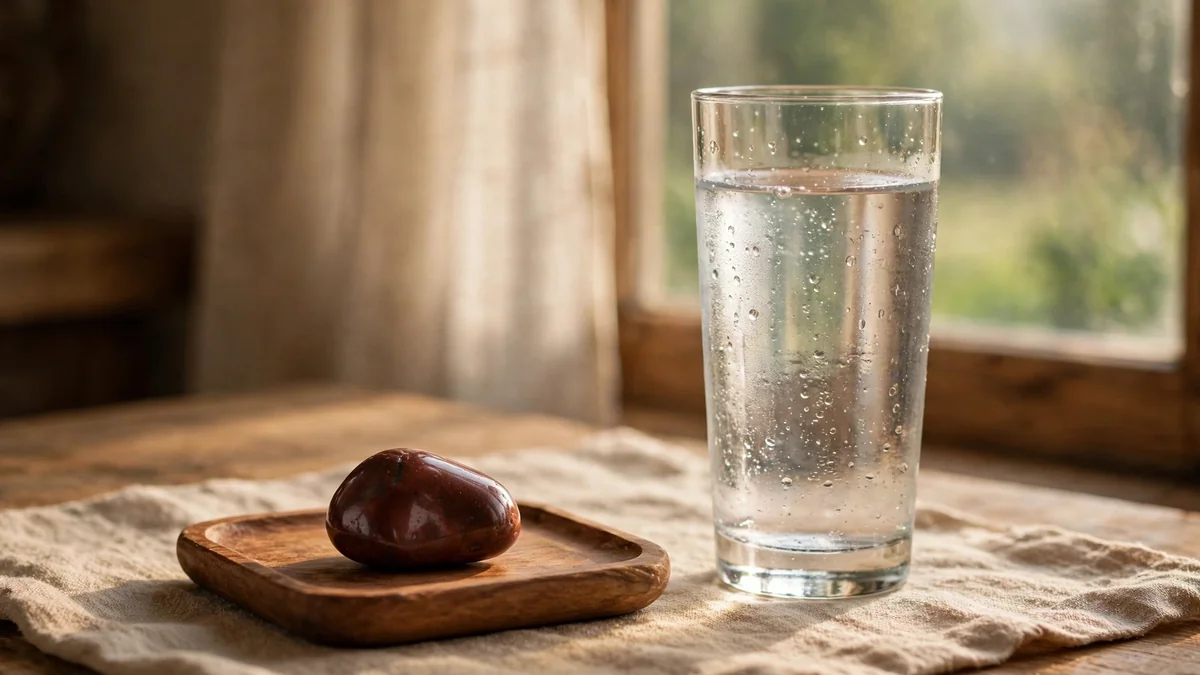
Some stones are bright, and some are plain, and sard is plain in the best sense. It is a deep red-brown chalcedony, one even colour from edge to edge, with no bands, no sparkle and no pattern. It looks like dark earth polished smooth, and that is its charm.
Sard is also one of the oldest stones a person can buy. Long before it sat on a tray beside a glass of water, it was cut into seals and signet rings, pressed into warm wax to mark a name. Its history is longer than most stones in this journal, and its colour deeper than its nearest cousins.
This guide takes sard as it is: what it is made of, how it differs from carnelian and sardonyx, how to pick a good piece, and how to keep it dry. It is a beautiful stone to display and hold briefly, and it heals nothing.
Key Takeaways
- Sard is a solid deep red-brown chalcedony, with no bands.
- It is darker than carnelian, and plainer than banded sardonyx.
- Its colour comes from tiny traces of iron oxide held in the stone.
- Sard is hard, 6.5 to 7 on the Mohs scale, and takes a fine polish.
- It is for display and handling only, and it heals nothing at all.
What Sard Is
Sard belongs to the chalcedony family, quartz that grows in grains too fine for the eye to pick out one by one. Its deep, even red-brown is iron oxide, spread in tiny flecks through the stone while it was forming. Held to strong light, a good piece glows blood-red at the edges; in ordinary light it looks dark and warm, like old wood. It is sold as smooth tumbled pieces or cabochons, waxy and cool to hold.
Sard is named for Sardis in Lydia, where Pliny the Elder recorded it was first traded. It was cut for thousands of years into Assyrian cylinder seals, Egyptian scarabs and Roman signet rings, because hot wax does not stick to it. The sardius of the old texts, first among the twelve in the high priest's breastplate, is most likely sard.
Sard and Carnelian
Carnelian energy water for slow days follows a warm orange stone beside a glass of water, a gentle start for slow mornings. Carnelian is the warm orange variety of chalcedony, coloured by the same iron that colours sard.
Sard is carnelian's darker brother. Where carnelian glows orange, from pale apricot to deep rust, sard sits deeper and browner, almost brown in a dim room. The line between them is a matter of judgement, not a sharp edge. Orange in daylight means carnelian; brown-red that needs strong light to show its red means sard.
Sard and Sardonyx
Sardonyx warm bands for steady days follows a warm banded chalcedony, straight layers of deep red-brown, rusty orange and creamy white, for steady days. Sardonyx is built from sard itself: its dark bands are sard, laid down in straight layers with creamy white onyx between them.
That is the whole difference: sardonyx is sard in bands; sard is sard alone, one solid colour, no layers. A sardonyx piece shows its character at a glance, with stripes you can follow across the stone, while a sard piece shows only its own deep colour. One is patterned and warm, the other plain and deep.
Sard on a Morning Walk
Carnelian orange energy for morning walks follows a warm orange stone in a pocket on a twenty-minute walk, a small warm weight that rides along. The walk there is the point, and the stone is company for it.
Sard suits a different walk: a shorter, bolder one, for a day that needs a firm start. Slip a small sard into your pocket, and it rides along quietly, a cool, dark weight. Where the carnelian walk keeps orange for a slow morning, a sard walk keeps deep red-brown for a day that asks for resolve. Drink your water before you go, the stone beside the glass.
Why Deep Red Suits Bold Days
Deep red suits bold days because it is a colour that does not ask for permission. It is the colour of old brick and dark earth, of embers burned to a steady glow, grounded rather than bright. A bold day is not a loud day; it is a day when a few things must be done well, and a deep red stone on the tray is a quiet reminder.
The Safety Rule First: Beside Water Only
Sard stays beside the water: never in a drink, never soaked, never in any elixir. Keep the glass on one side of the tray and the stone on the other. If a piece ever falls into a glass, pour the water away, wash the glass, and wash your hands too.
No stone belongs in a drink, ever. A wet stone slides from a hand, and even a hard stone can chip on tile. Keep it dry, keep it on its tray, and wash your hands after holding it.
How to Choose a Sard Piece
Look at the piece in daylight by a window before you pay. A good sard shows a deep, even red-brown, with no pale patches and no flat, painted look. Hold it to the light: the edges should glow dark blood-red, the face staying brown-red. The polish should be smooth and waxy, with no sharp edges.
Be careful with stones that look almost black, or bright red with no brown at all. Real sard is brown-red, not black and not bright red, and a stone that looks dyed is one to leave behind. Buy from a seller who shows you the actual piece, not a stock photograph, and walk away from anyone who promises it will change your health.

A Bold Day with Sard
A bold day starts the night before, tray set out and glass washed. Leave the stone where morning light will find it, and write a short list of three tasks on a single page. In the morning, pour a glass of fresh water, set it beside the stone, and drink slowly while you read the list.
Pick the stone up once, feel its cool weight, and set it back down. Begin with the first task and no other. When the glass is empty, leave the stone where it lies and carry on. A bold day is built the way sard is built: one colour, one piece, no fuss, and a steady pace.
Sard at a Glance
| Deep red brown | Bold days | Dust it dry |
|---|---|---|
| Smooth polish | Tray near light | Hands washed after |
| Iron oxide colour | One small stone | Keep it dry |
| Hard, six to seven | Glass kept apart | Shade from harsh sun |
Sard Among the Other Stones in This Batch
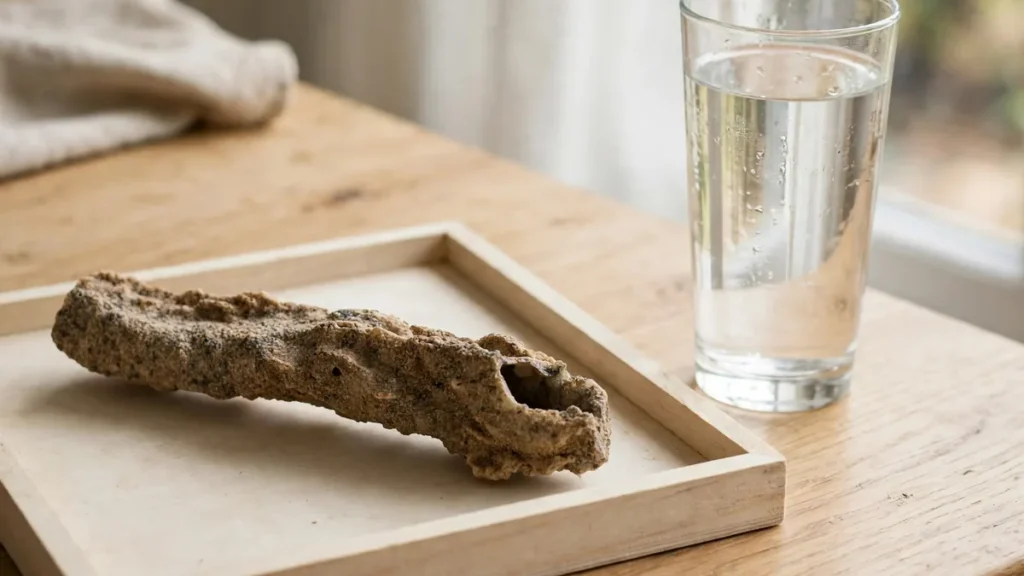
Four companions share this batch with sard, and each takes a different road. A trilobite is not a stone at all but a fossil, an ancient sea creature turned to rock, for a display case rather than a tray. Hydrozincite is a pale zinc mineral that must stay dry, a quiet stone for looking at, not for holding often.
Five water guides share this batch with sard too: a lemon slice in a glass, a trowel in the soil, a wheelbarrow, a bread box and a cake stand. Stibnite is dark needles and cymophane a moving eye, while sard closes the batch plain: no bands, no needles, no light, just red-brown, hard and old.
Where Sard Sits at Home
Set the stone where it will be seen but never knocked: a dresser end, a high shelf in a dry room, or a bookcase top far from taps and kettles. Keep it away from windows that steam up in winter, because damp air is no friend to a polished stone.
Small hands and paws should not reach it, nor hard midday sun fall on it for hours. For travel, wrap it in tissue inside a small rigid box, so it cannot knock against keys or harder stones. At home, the tray is its place: one stone, one tray, one glass kept apart.

Stones That Must Never Touch Water
Not every stone can meet water, and a few should never come near a glass, so they live on dry shelves. Amber is tree resin, not stone, and a soak clouds it for good. Angelite takes in water and stays dull. Pyrite darkens where dampness reaches it, and the shine never comes back.
Apatite loses its polish in a bath, for good. Lepidolite holds lithium in its flakes, which is why it never goes near water. The sard on your tray needs only dry care: a soft cloth, clean hands, and no water at all.
Your Bold Days Checklist
- Pick a sard piece in daylight, deep red-brown, smooth and waxy.
- Set it on its tray, the glass of water well away.
- Drink slowly, and begin with the first task only.
- Dust the stone with a soft, dry cloth, never water.
- Keep it in its own box when it travels, away from keys.
- Remember the stone is a beautiful object, not a remedy — a doctor is the one to ask about health.

Frequently Asked Questions
What is sard, in plain words?
Sard is a solid deep red-brown chalcedony, coloured by tiny traces of iron oxide, with no bands and no pattern: the plain stone sardonyx is made from.
How can I tell sard from carnelian?
Carnelian is warm orange, pale apricot to deep rust; sard is darker and browner, needing strong light to show its red. The boundary is judgement, not a sharp line.
How is sard different from sardonyx?
Sardonyx is banded, straight layers of sard and creamy white onyx; sard is one solid colour, no layers. Sardonyx shows stripes; sard only its deep colour.
Is sard the same as the sardius of old texts?
Most likely, yes. The sardius, first of the twelve in the high priest's breastplate, is usually taken to be sard.
Can I hold sard in my hand?
Yes, briefly: lift it with dry hands, feel its cool weight, and set it back. Wash your hands after, and never let the stone near your glass.
Where is the best place to keep sard?
Give it a tray on a high shelf in a dry room, away from taps, steam and strong sun, out of reach of small hands and paws. For travel, wrap it in tissue in a rigid box.

The Bottom Line
Sard is a deep red-brown stone, water in its own glass, and a bold day that asks for a few things done well.
A Note for Bold Days
Keep it dark, keep it dry, keep it steady. A plain stone, a full glass and a short list can carry a bold day further than a bright one.