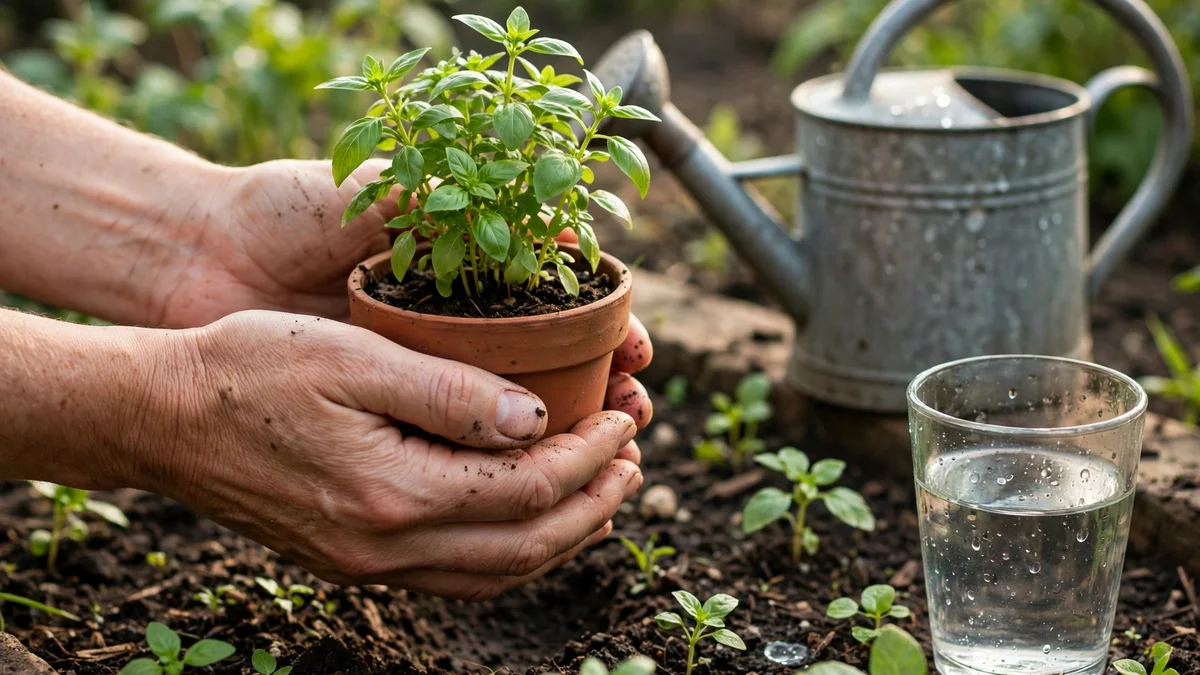
A garden is a kind place to spend an hour. The soil is cool under the fingers, the leaves smell green and fresh, and the work is slow enough to let the mind rest. Hands do most of the work out there: they dig, they plant, they pull weeds, and they come back inside carrying the garden with them, under the nails and in the lines of the skin.
That is the honest trade of gardening. The hands get dirty, and a little dry, and a little rough, and that is normal. But rough does not have to mean sore, and a few gentle habits with water can keep gardening hands soft.
This article is a gentle guide to water and gardening for your hands: why soil dries the skin, how to wash before and after the garden, how gloves and plain cream help, and when a hand problem needs a doctor. It is general information only, never medical advice, and it is about hands and skin care while gardening, not the plants themselves.
Key Takeaways
- Water and gardening means gentle hand care before, during and after time in the soil.
- Soil, sun and wind dry the hands, and hot water and harsh soap make it worse.
- Lukewarm water, a soft towel and plain cream keep gardening hands soft.
- Gloves that fit well protect the hands without taking away the feel of the work.
- Water is comfort and care, not a treatment, and real skin problems need a doctor.
What Water and Gardening Means for Hands
Water and gardening, for hands, means using plain water well around garden work. Before the garden: clean hands and a little cream, so the skin starts protected. During the garden: sipping water slowly. After the garden: a gentle lukewarm wash, a soft dry, and plain cream on damp skin.
The hands are the gardener's main tools, and they deserve the same care as the plants. A plant gets water, shade and good soil; a hand gets lukewarm water, a soft towel and a plain cream. Both are simple, and neither needs anything special.
Why Soil Dries Hands
Soil dries hands because it is thirsty stuff. Dry soil draws moisture out of the skin, and an hour of digging can leave the hands feeling tight and papery. Sun and wind help: the sun warms the backs of the hands, and the wind carries moisture away all afternoon.
The skin of the hands is thin, with many small creases, and it has little oil of its own. The knuckles and the backs of the hands feel the dryness first, facing the sun and wind directly. That is why even a short morning in the garden can leave the hands drier than at breakfast.
Washing Before You Begin
Wash your hands before you begin, with lukewarm water and a little plain soap, and dry them softly. Clean hands are less likely to carry dirt into a small cut. While the hands are still slightly damp, smooth on a little plain, fragrance-free cream, and let it sink in.
Keep the nails short before gardening, and brush the dirt from under them before you go out. Long nails collect soil and are harder to clean, and a short nail is less likely to break. A minute of care before the garden saves ten minutes of scrubbing.
Gloves That Fit Well
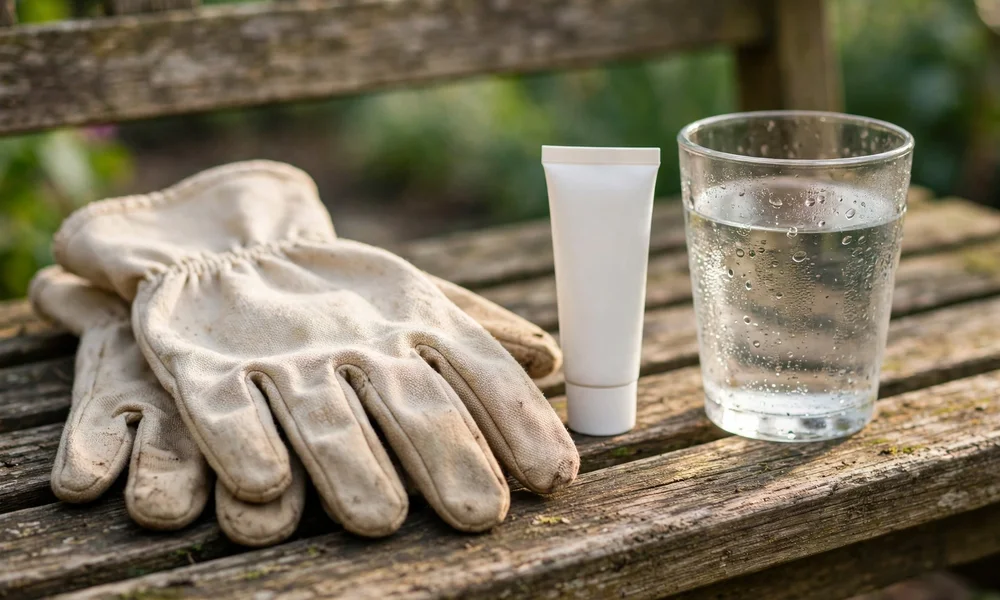
Gloves that fit well are the gardener's best friend. Choose a pair that fits snugly, fingers reaching the ends of your own fingers, cuff staying at the wrist. Thin cotton gloves suit light work like potting and weeding, while tougher leather gloves suit digging and pruning.
Gloves protect the hands from thorns, rough bark and dry soil, and they keep the worst of the dirt off. But gloves are not magic: sweaty hands inside a glove can still grow sore, so take them off now and then and let the hands breathe. The same simple kit idea runs through water for dry hands in winter.

Washing Gently After Gardening
Washing gently after gardening is the most important habit in this guide. Come inside, run lukewarm water, and rinse the hands slowly, letting the water carry the soil away. Use a soft brush for the nails, and a little plain soap only where needed. Most days, plain lukewarm water is enough.
Avoid hot water, however tempting it feels after a cool morning outside. Hot water strips the natural oils from the skin and leaves the hands tighter and drier. Keep the wash short and the water lukewarm, and let the hands feel clean without feeling scrubbed raw.
Drying Softly, Creaming Gently
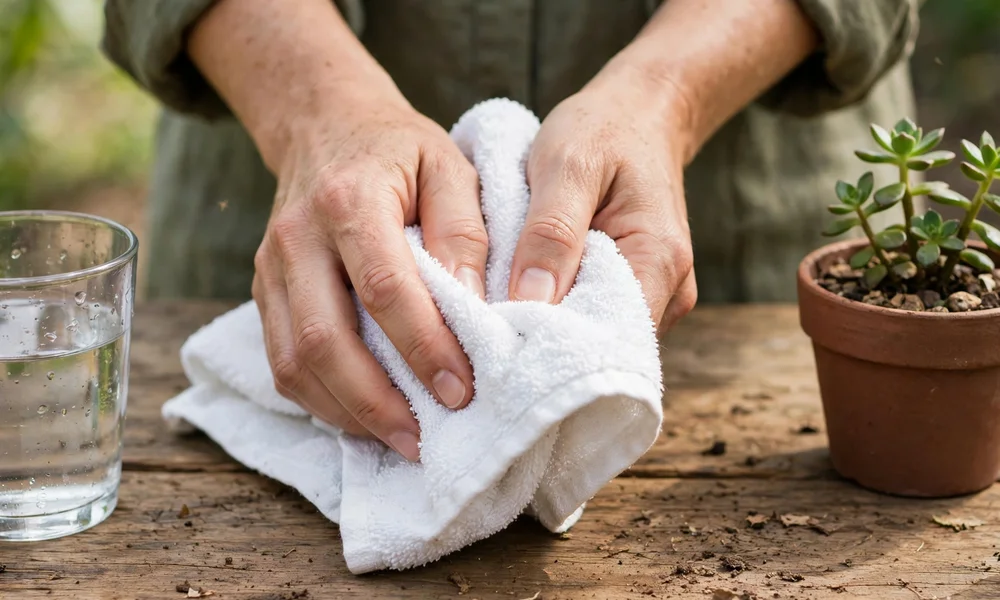
How the hands are dried matters as much as how they are washed. A rough towel can scratch hands that are already dry, so pat instead: press a soft towel against the hands, lift it, and move on. The hands should feel damp and calm, never red or sore.
Then comes the cream. While the hands are still a little damp, smooth on a little plain, fragrance-free moisturiser, and rub it in slowly, including the knuckles and around the nails. Damp skin holds moisture better than dry skin, so this one small habit does more for gardening hands than any long routine.
Water Through the Gardening Day
Water through the gardening day supports the hands from the inside. Drink plain water slowly, in small sips, while you work, rather than waiting until you are thirsty. Keep a bottle in the shade by the garden bed, and sip when you pass it, so hydration becomes a habit.
Plain water is enough: no special drink is needed, and no drink can soften the hands on its own. The water you drink and the water you wash with are two halves of one gentle habit. A stone among the plants can mark the same slow pace, as in moss agate green calm for plant lovers.
Nails, Cuticles and Small Cuts
Nails, cuticles and small cuts need a little extra care after gardening. Clean under the nails with a soft brush, and smooth the cuticles back with a little cream rather than cutting them. Keep the nails short and smooth, and file any rough edge before it catches and tears.
Small cuts are part of gardening, and most need very little: rinse with clean lukewarm water, pat dry, and cover with a clean plaster until it closes. If a cut is deep, will not stop bleeding, or looks red and swollen, see a doctor rather than waiting. Do not garden with an open cut, and wear gloves over a plastered finger.
When to See a Doctor
Gentle care has limits. If the hands are cracked, bleeding, blistered or weeping, or if redness, itching or pain lasts more than a couple of weeks, see a doctor or dermatologist. The same applies to spreading rashes, swelling, or any skin change that worries you.
This guide is general information only, not medical advice, and it cannot diagnose or treat any skin condition. A doctor can tell dry garden hands from something that needs treatment, and asking early is better than waiting.
What Water Will Not Do
Be honest about what water can and cannot do. Water will not cure eczema, dermatitis or any skin disease, and no amount of drinking or washing will heal sore hands overnight. Water is comfort and care, not a treatment, and its value is the gentle routine around it, as in water and the skin barrier as a gentle repair guide.
The same honesty applies to creams and gloves: a plain cream can seal in moisture, and gloves can keep dirt off, but neither can heal a medical condition. If gentle care is not enough after a few weeks, the answer is a professional, not a stronger soap.
| Garden habit | Water use | Hand care |
|---|---|---|
| Wash before gardening | Lukewarm rinse only | Cream on damp skin |
| Gloves that fit well | Sip water slowly | Pat dry softly |
| Brush nails clean | Short wash after | Plain cream only |
| Rest hands nightly | Glass by bed | Soft cotton gloves |
Your Soft Hands Gardening Checklist
- Wash hands with lukewarm water and a little plain soap before gardening.
- Wear gloves that fit well, and let hands breathe when gloves are wet.
- Rinse gently after gardening, with lukewarm water, never hot.
- Pat hands dry with a soft towel, never rub them hard.
- Smooth plain fragrance-free cream onto damp hands each morning and night.
- See a doctor or dermatologist if redness, itching or pain lasts more than two weeks.
Frequently Asked Questions
Why do my hands feel dry after gardening?
Soil draws moisture out of the skin, and sun and wind carry more away while you work. The skin of the hands is thin and has little oil of its own, so an hour of digging can leave the hands feeling tight and papery.
Should I wash my hands with hot water after gardening?
No. Hot water strips the natural oils from the skin and leaves the hands tighter and drier. Lukewarm water and a short wash are kinder, and the hands should be patted dry afterwards.
Do I need gloves for light gardening?
Gloves help even for light work: they keep the worst of the soil off and protect against thorns and rough stems. Choose thin cotton gloves that fit snugly for potting and weeding, and take them off now and then so the hands can breathe.
When should I put cream on my hands?
Put plain, fragrance-free cream on your hands while they are still slightly damp, after washing and before gardening, and again each evening. Damp skin holds moisture better, so cream on damp hands does more.
What should I do about a small cut from gardening?
Rinse the cut with clean lukewarm water, pat it dry, and cover it with a clean plaster until it closes. If a cut is deep, will not stop bleeding, or looks red and swollen, see a doctor.
When should I see a doctor about my hands?
See a doctor or dermatologist if the hands are cracked, bleeding, blistered or weeping, or if redness, itching or pain lasts more than a couple of weeks. Spreading rashes, swelling, or any skin change that worries you deserve professional care.
The Bottom Line
Gardening hands work hard in the soil, and plain lukewarm water, used gently, keeps them soft.
Wash softly tonight, cream gently, and let your hands rest for tomorrow.
A Note for Soft Garden Hands
Keep it lukewarm, keep it plain, keep it gentle. The garden will still be there in the morning.