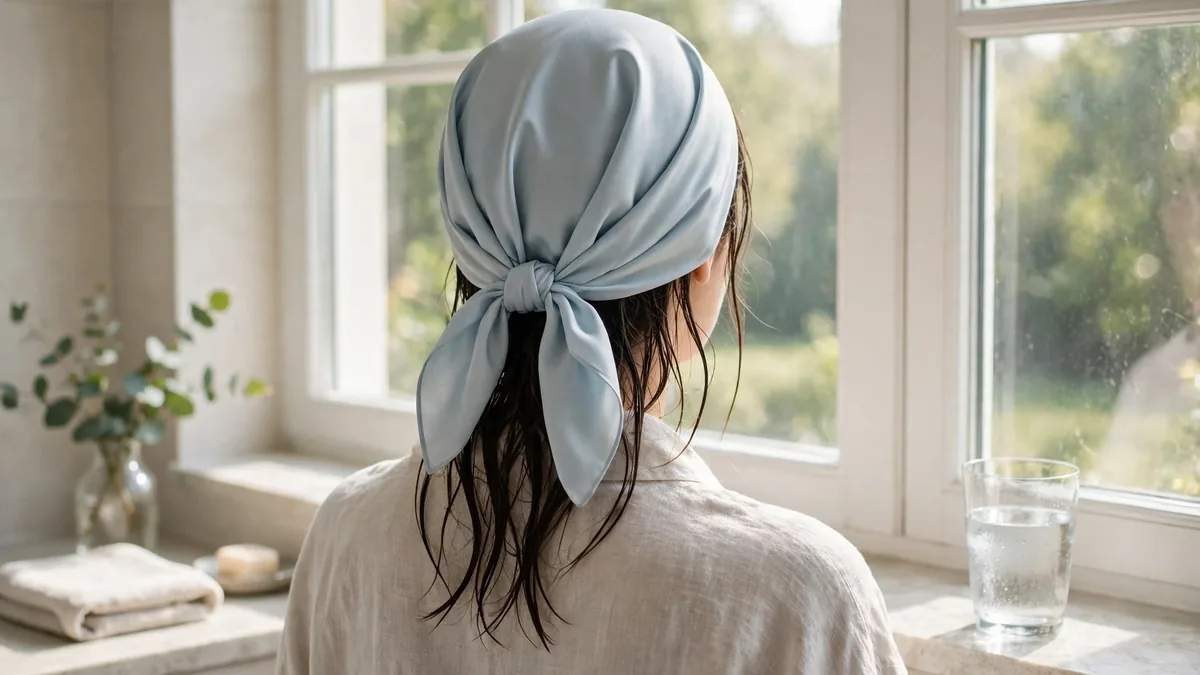
Some mornings the hair has other plans. It dries in odd directions, the fringe will not lie flat, and a full wash feels like too much work for a Tuesday. The simplest answer is already folded in a drawer: a soft square of silk or cotton, smoothed over damp hair and tied in one neat knot.
A headscarf is not a disguise. It is a small piece of cloth that turns damp, unfinished hair into a finished look in less than a minute, with water, cloth and two hands. The scarf styles while the hair dries underneath.
This guide walks through the look: what it is, how water-damp hair and cloth work together, how to choose between silk and cotton, three simple ways to tie a scarf, and how to look after the scarves and the hair beneath them. All of this is gentle general information, not advice for any one person. If your hair or scalp gives you trouble, ask a doctor.
Key Takeaways
- A headscarf turns water-damp hair into a neat look in under a minute.
- Damp the hair lightly with plain water before you tie the scarf on.
- Silk slides smoothly and suits bright days; cotton grips gently and suits busy ones.
- Three simple ties — low knot, side bow and full cover — suit most days.
- Patch-test new cloth and new products, and see a doctor for scalp worries.
What a Headscarf Look Is
A headscarf look is hair covered, not hidden away. A square of cloth sits over the crown, frames the face, and gathers at the back or the side in a knot or a bow. The hair beneath dries slowly under the cloth, and by the time the scarf comes off it has settled into a soft, smooth shape.
The look suits almost any length. Short hair disappears neatly under the cloth, and long hair gathers into a low twist first. It is a look for ordinary days: the school run, the market, the garden, a slow morning at home.
Why Water and a Headscarf Suit Fresh Days
Water is what makes the look work. Hair that is lightly damp is softer and easier to guide than hair that is fully dry, and it holds the shape of the scarf as it dries. A few palms of plain water smoothed over the lengths is enough; the hair should feel cool and damp, never dripping wet.
The scarf then does two quiet jobs at once: it keeps damp hair out of the face, and it shields it from sun and wind while it dries. By midday the hair has dried in a calm, even shape.
Picking a Headscarf
A good first scarf is a square of about ninety centimetres, big enough to cover the crown and tie at the back with room to spare. Smaller squares suit a narrow band, but a full cover needs the bigger size, so start large and fold down.
Silk is the smooth choice. It slides over damp hair without catching, feels cool, and catches the light in a soft sheen for bright days. It needs a gentle hand wash and a snug knot, as it slips easily.
Cotton is the steady choice. It grips the hair gently, stays where you put it, and washes easily in the machine. It suits a windy day or a busy morning, and it softens with every wash.
Damp Hair Under a Scarf
Start with hair that is clean and only just damp. Wash as usual, or smooth plain water over the lengths with wet palms, then press gently with a soft towel until no drops fall.
Smooth the hair back with your fingers, and gather long lengths into a low twist at the nape. Do not brush hard; damp hair is at its most fragile, and a gentle finger-comb is kinder than a brush.
Lay the scarf over the crown with its centre at the forehead, bring the ends around to the back, and tie once, firmly but not tightly. The scarf should feel secure without pulling at the hairline.

Three Simple Tying Styles
The low knot is the easiest place to begin. Fold the square into a triangle, set the long edge across the forehead, bring the ends to the nape and tie them once, then tuck the tail underneath. It sits flat and stays put.
The side bow is the cheerful one. Gather the ends at one side, just above the ear, and tie a small bow with short tails. It lifts a plain outfit and suits a bright afternoon or a market trip.
The full cover is the neatest. Use the whole square unfolded, smooth it over the crown, cross the ends beneath the chin and tie them at the back of the neck. It covers every strand. Practice each tie once, and the hands will remember it.
Headscarves at a Glance
| Silk or cotton | Damp, not wet | Tie once, snug |
|---|---|---|
| Low knot first | Smooth hair back | Patch-test new cloth |
| Bright day silk | Garden day cotton | See a doctor |
| One clean scarf | Water beside it | Wash scarves gently |

Headscarves and the Hair-Care Guides
The hair guides on this site teach washing and care, and this look builds on them. Curly hair care walks through lukewarm water, gentle rinsing and patting dry for soft separate spirals, and a scarf over freshly washed curls keeps that shape safe while it dries. Wavy hair care does the same for soft S-shaped waves, which frizz if brushed while dry; a loose scarf holds them calmly instead.
Coily hair winds in tight springs and needs extra moisture, and a cotton scarf over damp coils protects that moisture through the morning. Damaged hair is dry and rough, and a scarf shields it from sun and wind while it dries. Textured hair wakes up with water, and the scarf is a way to wear that shape out of the house. Those guides are about washing hair well; this one is about what to wear over it afterwards.
Headscarves and Masks, Sprays and Serums
A scarf also pairs well with the lighter steps in a hair routine. Hair masks are a thick cream smoothed through the lengths once a week, and a scarf worn afterwards keeps the freshly masked hair tidy while it dries. Hair spray here is plain water in a spray bottle, misted lightly to soften the hair, and a few mists are the quickest way to dampen it before the scarf goes on.
A water hair serum is a light serum used on damp hair after washing, a few drops to help it look smooth, and it sits happily under a silk scarf. None of these steps is a treatment: the mask feeds the weekly pause, and the scarf carries the finished look.
Headscarves Beside Buns, Ponytails, Haircuts and Blow Dries
A scarf is not the only way to wear hair up, and it gets on well with the others. A low bun tucked under a scarf is the neatest combination: the bun holds the lengths, the scarf holds the bun, and nothing slips by midday. A ponytail worn beside a scarf works too, with the scarf tied as a band across the crown and the tail left free behind it.
A fresh haircut changes what the scarf must cover — short layers need only a small square — and a blow dry shapes the hair before the scarf goes on. Buns, ponytails, haircuts and blow dries are queued as later topics here, not live guides yet. The headscarf stands apart as the covered-hair look itself: cloth over damp hair, tied neatly, worn out into the day.
Where a Headscarf Fits in the Day
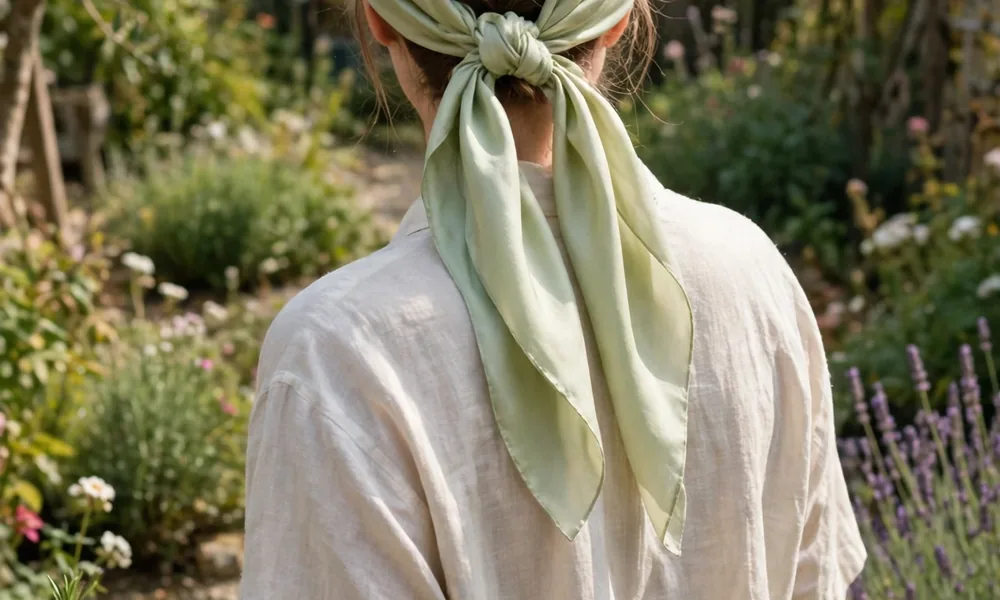
A headscarf fits anywhere a hat would. It suits the school run, the market, the garden and the bus, and a slow morning at home when the hair is drying. Pale blue silk suits a bright day out; cream cotton suits the garden and the kitchen.
Looking After Scarves and Damp Hair
Wash silk scarves by hand in cool water with a drop of mild soap, and lay them flat to dry away from sun. Wash cotton in the machine on a gentle cycle, and keep scarves folded in their own drawer.
Care for the hair underneath the same way. Never tie a scarf over sopping wet hair, and never pull the knot tight enough to tug at the hairline. Let the hair dry fully, and loosen the scarf if the scalp feels warm or itchy.
Patch-test any new cloth on the inside of your wrist before a full day of wear, and patch-test any new hair product the same way. If your hair or scalp troubles you and it does not settle, see a doctor or dermatologist.
Your Fresh Look Checklist
- Dampen the hair lightly with plain water, then press it gently dry.
- Smooth the hair back and gather long lengths into a low twist.
- Choose silk for a bright day and cotton for a busy one.
- Tie once, snug but never tight, and check the hairline feels easy.
- Let the hair dry fully under the scarf before the day ends.
- If the scalp stays sore or itchy, see a doctor; scarves fix nothing.

Frequently Asked Questions
What is a headscarf look?
A headscarf look is hair covered with a square of silk or cotton cloth, tied neatly at the back or the side, with the hair drying quietly underneath.
Should hair be wet or damp under a scarf?
Damp, never dripping wet. Smooth plain water over the lengths, press gently with a soft towel, and tie the scarf on while the hair still feels cool.
Is silk or cotton better for a headscarf?
Silk slides smoothly, feels cool and suits bright days, but it slips and needs a snug knot. Cotton grips gently and washes easily, so it suits busy days.
Can I wear a headscarf over curly or wavy hair?
Yes. Tie the scarf loosely over freshly washed curls or waves, and it holds their shape calmly while they dry underneath without frizz.
How do I keep a headscarf from slipping?
Choose cotton for grip, tie the knot snugly at the nape, and start with hair that is damp rather than wet. Slipping often means the hair beneath was too wet.
How do I wash a silk headscarf?
Wash it by hand in cool water with a drop of mild soap, and lay it flat to dry away from direct sun. Never wring silk hard or tumble dry it.
The Bottom Line
Water and headscarves make a simple fresh look: damp hair, one clean square of silk or cotton, and a neat knot.
A Note for Fresh Days
Let the hair dry slowly and the scarf sit easy.


