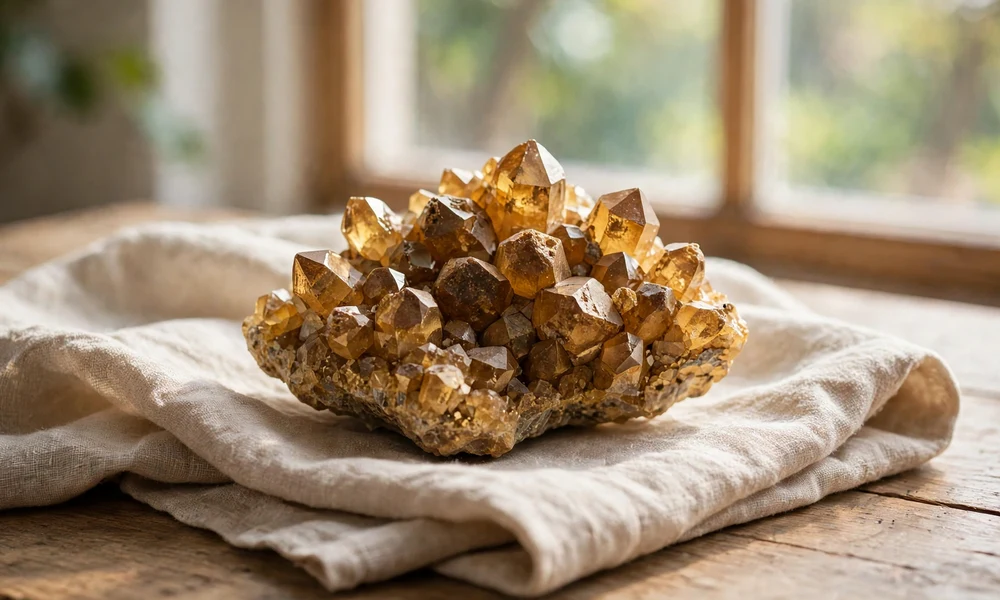
Hold a piece of sphalerite up to a bright window and the first thing you notice is the glow. It is not the hard shine of polished metal or the cold sparkle of glass; it is a warm, honeyed light that seems to sit inside the stone, as if late-afternoon sun had been folded into it.
A bright day suits such a stone. When the light is clear, a small golden mineral on a tray can warm the whole corner where it rests. In exchange it needs almost nothing: dry air, a little room, and one unbreakable habit about water.
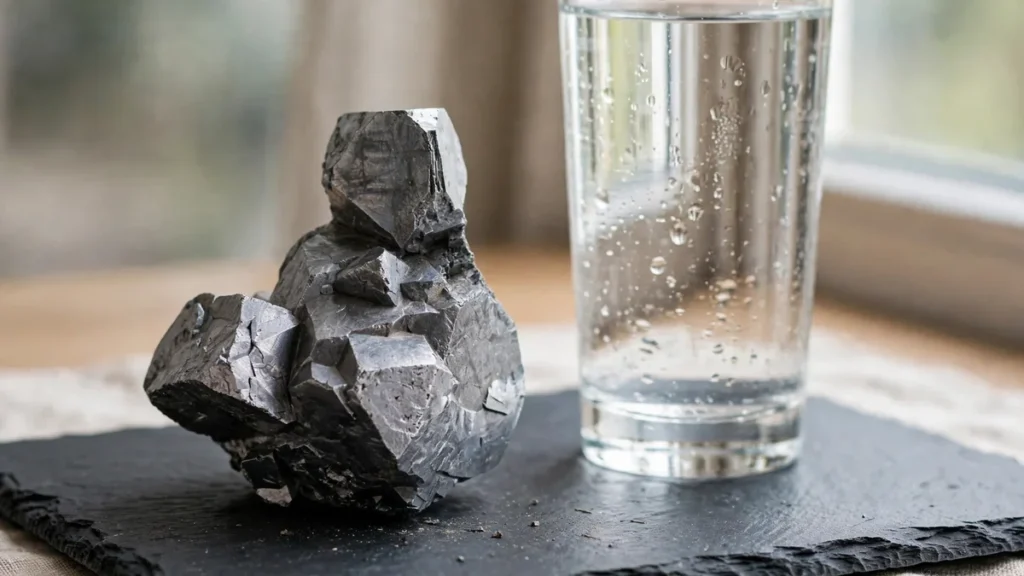
Water stays out of the picture from the start. Sphalerite is a zinc sulfide, a mineral for looking at, not for drinking from — the glass stands next to the stone, and the stone never enters it. Once that is settled, this guide can get on with the pleasant parts: the mineral itself, the golden stones it is often confused with, what to look for when buying, and the best corner of the house for it.
Key Takeaways
- Sphalerite is a honey-gold zinc sulfide, grown in small tetrahedral crystals.
- Its warm, resinous glow suits bright days, clear light and open windows.
- Sphalerite is for display only: it never goes into water or near a drink.
- Keep it dry, handle it gently, and wash your hands after touching it.
- Keep the piece dry on its tray, with the glass standing well apart from it.
What Sphalerite Is
Sphalerite is zinc sulfide, a mineral built from zinc and sulfur, and it grows in small crystals shaped like tiny pyramids with four triangular faces. Its colour runs from pale honey yellow to deep amber brown.
The mineral is the main ore from which the world gets its zinc, so most of it ends up in metalworks, and only the finest pieces reach a collector's tray. Miners once called the dark variety "black jack" and the red-brown kind "ruby blende", names that came from the way the stone tricked them: it looked rich, yet it held no lead or silver. A small piece is enough: it catches sunlight from across a room and warms a plain corner.
Why Warm Gold Suits Bright Days
Gold has a pull that few colours can match. A brass lamp or a gilt frame catches the eye without trying. A golden stone belongs in that bright mood more than any pale or grey one.
Sphalerite brings that warmth in a softer form than polished metal. Its faces are resinous rather than mirror-bright, its gold is deepened by honey and amber tones, and it looks like something pulled from the earth rather than shaped in a workshop. That quiet glow is the whole appeal.
Sphalerite and Chalcopyrite: Honey Gold, Brassy Gold
Chalcopyrite warm gold for bright days follows a brassy gold mineral that is the world's main copper ore, its faces flashing purple, blue and green where the surface has tarnished. It is a rough, metallic stone, and its gold is the gold of an old brass kettle.
Sphalerite glows quite differently. Its gold is honeyed and resinous, not metallic, and light sinks into it rather than bouncing off. Chalcopyrite is a copper iron sulfide, sphalerite a zinc sulfide, and chalcopyrite's crystals grow rough and massive where sphalerite's grow as neat little pyramids. Both are ores first and ornaments second, and both stay dry beside their glasses, yet on the tray they could hardly look more different: one a brass kettle, the other a jar of honey held up to the sun.
Choosing a Sphalerite Piece
Look at sphalerite in plain daylight, away from shop lamps. A good piece shows crystals of one even honey gold, with clean edges and a soft resinous shine, and no crumbling corners or grey powdery patches. The base beneath should be firm and dark, holding the crystals upright without wobbling.
Pick a piece about the size of a walnut, and check the crystals with your eyes, not your fingers — a careless touch can chip an edge. Ask where the piece was dug, and leave the shop if the seller starts promising better health. An honest answer about the mine matters more than any bold claim.
A Bright Morning with Sphalerite
Begin the morning by giving the stone its place before the day fills up. Lay a folded linen cloth over the side table, set the sphalerite where its brightest faces meet the window, and stand a tall glass of water at the far edge.
Drink the water slowly while the light moves across the gold, then leave the stone to rest there until evening.
Sphalerite Beside Water
A glass of water and a sphalerite piece can share a tray, provided each keeps strictly to its own side. Set the glass down first, then the stone a hand's width away, with bare wood or folded cloth in between, so no drop ever reaches the crystals. It must stay clear of every water vessel — glasses, jugs and baths alike — and never go under a tap, because a sulfide belongs nowhere near a drink. Once a week, blow the dust gently from the crystals; that is all the cleaning it will ever need.
Sphalerite at a Glance
| Honey-gold zinc sulfide | Tray, shelf, desk | Dry hands only |
|---|---|---|
| Tetrahedral honey crystals | Bright days, clear light | Glass kept apart |
| Resinous glow, amber tones | One small cluster | Wash hands after |
| Walnut-sized piece | Wood, cloth, sunlight | Keep it dry |
Sphalerite and Marcasite: Honey Gold, Pale Gold
Marcasite warm gold for steady days follows a pale gold iron sulfide that grows in flat faces and crowded points, its colour sitting between pale bronze and full gold. It is a fragile stone, and damp air can tarnish it and turn a neglected piece to powder.
Sphalerite shares the sulfide family but little else. Its gold is deeper and warmer, honey rather than pale bronze, and its crystals are neat pyramids where marcasite's are flat. Marcasite is iron sulfide, sphalerite is zinc sulfide, and the two part ways on care as well: marcasite fears damp air most, while sphalerite fears a dunking most. Both belong on a dry tray, far from any glass.
Sphalerite and Pyrite: Honey Gold, Brass Gold
Pyrite shine bold beauty follows an iron sulfide that grows in neat cubes and takes a bright polish, pale brassy gold, often set in rings and pendants because it keeps its shine and its edges.
Sphalerite stands at the far end from that bold cube. It is a zinc sulfide, not an iron sulfide, and its gold is honeyed and resinous, with no hard metallic flash. Pyrite is hard enough for jewellery; sphalerite is softer, so it suits a tray far better than a ring. One is a stone for wearing; the other is a specimen to admire from a short distance, in daylight, beside a glass that never touches it.
Sphalerite Among the Other Stones in This Batch
This batch holds four more minerals beside sphalerite, each wearing a colour far from honey gold. Goethite is warm brown and earthy. Orthoceras is deep black, an ancient sea creature turned to stone. Bornite shifts between purple and blue, and galena is soft grey, heavy and metallic.
The nearest water articles are water and a hammock, water and a fire pit, water and an umbrella, water and wellies, and water and a wool scarf. Sphalerite holds the warm gold corner of the batch, the one honeyed note among browns, blacks, shifting blues and greys.
Where Sphalerite Rests at Home
A good home for sphalerite is a spot the family sees every day yet seldom bumps into: the quiet end of a sideboard, the top of a tall bookcase, a ledge above the sink's splash zone. Stay clear of steam from kettles, curious small hands and pets. Lift the piece by its base now and then to see that every crystal still sits firm, and when it travels, cushion it in tissue in a box of its own.

Stones That Must Stay Away from Water
Not every mineral is equally forgiving around water, so here is the short list to remember. The green bands of malachite are rich in copper, and copper should never come near anything you drink from, so keep that stone far from jugs and tumblers. Wet hematite can rust and leave marks on skin and cloth, so it never goes into drinking water either. A soak crumbles apatite and clouds angelite, which is why both live on dry shelves. Lithium sits in lepidolite's pale flakes, so keep every cup and glass away from it. Amber, being ancient tree resin, goes milky in a soak instead of clearer. Damp pyrite tarnishes and stains. Sphalerite deserves at least the same caution: tray kept dry, glass kept separate, hands rinsed after handling.
Your Bright Days Checklist
- Lay the sphalerite on a dry cloth, with the glass a good hand's width from it.
- Drink the water in slow, small sips while the morning light is strong.
- Turn the piece and watch the honey glow move as the sun shifts.
- Put the piece back on its tray, then rinse your hands with soap and water.
- Choose a seller who answers plainly when asked where the stone was dug.
- For any health worry, speak to a doctor — no golden stone can settle it.
That is the whole morning: tray, glass, cloth, one small honeyed stone.

Frequently Asked Questions
What is sphalerite, in plain words?
Sphalerite is a honey-gold zinc sulfide mineral, grown as small pyramid-shaped crystals on dark rock, and it is the main ore from which the world gets its zinc.
Why is sphalerite kept out of water?
Keep sphalerite away from drinking water, soaks and baths alike, and if it ever drops into a glass, tip the water away and scrub the glass clean.
How can I tell sphalerite from chalcopyrite?
Chalcopyrite is brassy and metallic, flashing purple, blue and green where it has tarnished, while sphalerite glows honey gold, its light sitting inside the stone.
How do I pick a good sphalerite piece?
Look for crystals of one even honey gold in daylight, with clean edges and no crumbling corners, on a firm dark base.
Is it all right to hold sphalerite for a short while?
Most adults can pick up a small dry piece by its base for a quick look, then put it back and rinse their hands with soap and water.
Where should sphalerite live at home?
Choose a bright, dry spot up high, well away from sinks, steam and little fingers.

The Bottom Line
A small honey-gold cluster kept dry, and a glass of water that stays a glass of water: that is enough for any bright day.
A Note for Bright Days
Honey light on a dry tray, clear water in its glass, sunlight drifting across the room — nothing more is needed.