Some mornings the air has a bite to it. The window is cold to the touch, and the walk to the door feels longer than it did yesterday. The simplest answer is already folded in a drawer: a long length of soft wool, looped once around the neck, that turns a cold morning into a comfortable one.
A wool scarf is not a fashion statement first. It is warmth you can carry, a piece of cloth that keeps the wind off the neck and the chill out of the coat. With a glass of water beside it and a few quiet minutes, it becomes a small morning ritual rather than a rush.
This guide walks through the whole thing: what a wool scarf is, when it earns its place, how to choose a soft one, how to wear it through a cold day, and how to look after the wool so it stays fresh. Everything here is general information for a cold morning, not guidance for any one person. If your skin or health troubles you, a doctor is the one to ask.
Key Takeaways
- A wool scarf is a long knitted length worn around the neck for warmth.
- Wear it when the air bites: cold mornings, wind, frost and long walks.
- Soft, medium-weight wool suits most days; scratchy wool suits no one.
- Keep the scarf dry, air it often, and wash it gently by hand.
- Patch-test new wool against your skin, and see a doctor for skin worries.
What a Wool Scarf Is
A wool scarf is a long, narrow piece of knitted wool, usually between a metre and two metres long, made to loop around the neck and tuck into a coat. It is woven or knitted from sheep's wool, lambswool, merino or a wool blend, and its job is simple: trap warm air close to the skin and keep the wind out.
The best ones feel soft the moment they touch the neck. Merino is the softest of the common wools, fine and smooth, while lambswool is warm and springy. A scarf that prickles on the first wear will not grow kinder with time, so softness is the first test, before colour or pattern.
When to Wear a Wool Scarf
Wear a wool scarf whenever the cold reaches your neck. That means frosty mornings, windy afternoons, long walks, waiting at a bus stop, and any day when the coat collar alone is not enough. If the air feels sharp on your face, the neck will feel it next, and a scarf closes that gap.
Leave it folded when the day turns mild. Wool traps heat, so a warm afternoon with a scarf on will leave you overheated and damp at the neck. The rule is simple: cold air, scarf on; mild air, scarf off and folded away.
Choosing a Wool Scarf
Start with softness. Hold the scarf against the inside of your wrist, where the skin is thin, and wait a few seconds. If it prickles there, it will prickle at your neck all day, so put it back and try another. Merino and fine lambswool pass this test most often.
Next, check the weight. A medium-weight knit suits most cold days: thick enough to block the wind, light enough to fold away when the sun comes out. Very chunky knits are cosy but bulky, and very fine ones are elegant but thin, so the middle weight is the safest first buy. Pick a plain colour that goes with your coat, and check the ends are finished neatly.
A Cold Morning with a Wool Scarf
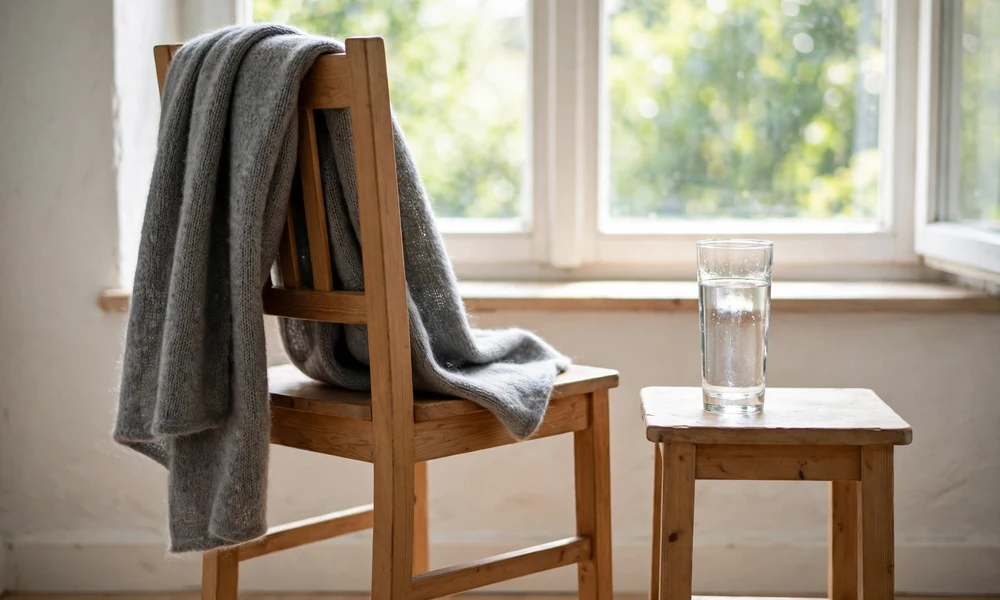
Begin the morning by laying out the day's clothes before the rush starts. Fold the scarf over the chair back, set a tall glass of water on the side table, and drink it slowly while the house warms up.
Loop the scarf once around your neck, tuck the ends into your coat, and step out. The walk feels shorter when the neck is warm, and the rest of the morning follows more easily.
A Wool Scarf and a Headscarf: Neck Warmth, Hair Cover
Water and headscarves simple fresh look follows a silk or cotton square laid over damp hair and knotted once at the back, a look that turns unfinished hair into a finished one in under a minute. A headscarf sits on the head and frames the face; it is about hair, not warmth.
A wool scarf could hardly work more differently. It is a long knitted length worn around the neck, and its job is warmth, not hair. The two are both scarves, yet one covers the hair and the other warms the neck, one is silk or cotton and the other is wool, and they belong to different parts of the day entirely.
A Wool Scarf Beside Water
A glass of water and a wool scarf can share a morning, provided each keeps to its own place. Set the glass down first, then lay the scarf a hand's width away on a dry cloth, so no drop ever reaches the wool. A wet scarf dries slowly and smells damp, so keep it clear of every glass, jug and tap.
Once the glass is drained, fold the scarf over the chair back and let it air while you get ready. That is all the morning care it needs.
A Wool Scarf at a Glance
| Long knitted wool | Neck, coat, cold | Dry hands only |
|---|---|---|
| Merino, lambswool, blends | Frost, wind, walks | Glass kept apart |
| Soft, medium-weight knit | One loop, ends tucked | Air it daily |
| Plain colour, neat ends | Chair, basket, hook | Wash by hand |
Knitting Your Own Wool Scarf
Water knitting evening simple calm ritual follows a quiet evening with yarn and needles, a slow craft that turns a ball of wool into something warm and handmade. Knitting a scarf is the simplest first project: straight rows, no shaping, and a finished piece you can wear the next morning.
If you knit your own, choose a soft merino yarn and a simple stitch, and knit it a little longer than you think you need, since a scarf that is too short will not loop properly.
A Wool Scarf on Frosty Mornings
Water frosty mornings simple fresh ritual follows a cold, bright morning when the grass is white and the air is sharp, and the day starts slowly with warm water and warm clothes. A frosty morning is exactly when a wool scarf earns its keep.
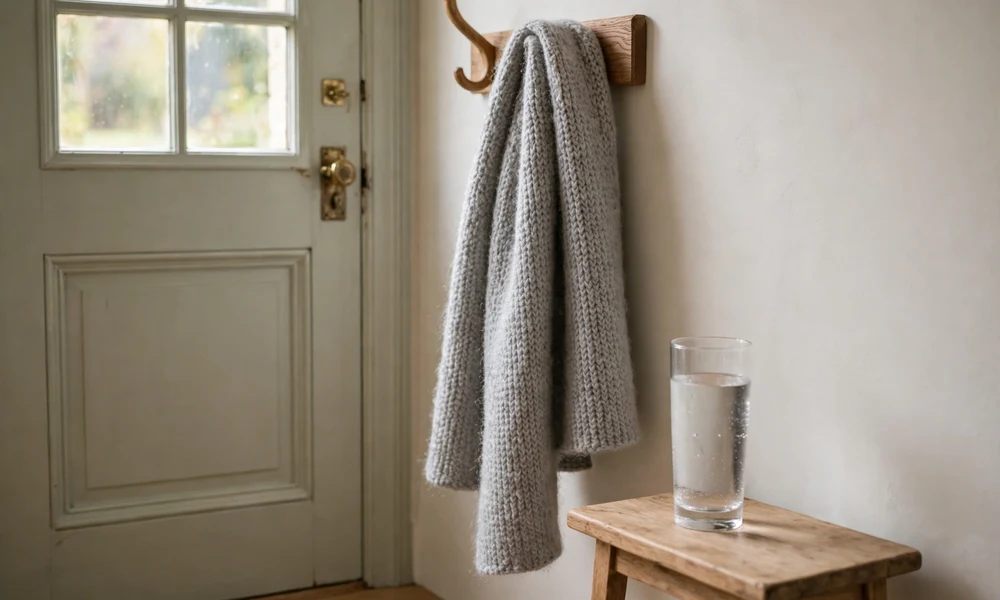
On such a morning, loop the scarf twice around the neck and tuck both ends deep into the coat, so no gap lets the cold in. Keep the scarf dry even in the frost: a damp scarf in freezing air turns stiff and cold. When you come back inside, hang it on its hook and let it air before folding it away.
A Wool Scarf Among the Other Pieces in This Batch
This batch holds four more water pieces beside the wool scarf, each about a different part of an outdoor day. Water and a hammock is about resting outdoors, water and a fire pit is about warmth under the sky, water and an umbrella is about staying dry in the rain, and water and wellies is about keeping feet dry on wet ground.
The batch's stone pieces are goethite, orthoceras, bornite, galena and sphalerite, each a mineral for a dry tray. The wool scarf holds the warm-neck corner of the batch, the one piece of clothing among hammocks, fire pits, umbrellas and wellies.
Where a Wool Scarf Rests at Home
Give the scarf a hook by the door, a basket by the stairs, or a drawer of its own — somewhere you can reach it without thinking on a cold morning, and somewhere it can air between wears.
Fold it loosely rather than stuffing it into a tight ball, and keep it away from damp towels and wet coats. A scarf that airs daily stays fresh far longer than one left crumpled in a pocket.

Keeping Wool Dry and Clean
Wool likes air and dislikes soaking. Shake the scarf out after each wear, hang it over a chair back for an hour, and let the fibres breathe before folding it away. A scarf aired this way needs washing far less often than one that goes straight into a drawer.
When it does need a wash, use cool water and a gentle wool wash, press the water out without wringing, and lay it flat to dry away from direct heat. Never use hot water, never tumble dry it, and never hang a wet scarf by one end, or it will stretch. Rainwater is not for drinking or for skin, and a scarf caught in the rain should be dried flat indoors, not worn wet.
Your Cold Days Checklist
- Lay the scarf out the night before, folded over the chair back.
- Drink a tall glass of water slowly while the house warms up.
- Loop the scarf once around your neck and tuck the ends into your coat.
- Keep the scarf dry all day, away from glasses, taps and rain.
- Air it on its hook when you come home, before folding it away.
- If your skin reacts to new wool, stop wearing it and ask a doctor.
Tray, glass, scarf and one quiet morning — nothing else is needed.
Frequently Asked Questions
When should I wear a wool scarf?
Wear one whenever the cold reaches your neck: frosty mornings, windy afternoons, long walks and days when the coat collar alone is not enough.
How do I choose a soft wool scarf?
Hold it against the inside of your wrist for a few seconds. If it prickles there, it will prickle at your neck, so try a finer merino or lambswool instead.
Can a wool scarf get wet in the rain?
It can take a light shower, but a soaked scarf dries slowly and smells damp, so keep it under an umbrella and dry it flat indoors if it does get wet.
How do I wash a wool scarf?
Wash it gently by hand in cool water with a mild wool wash, press the water out without wringing, and lay it flat to dry away from direct heat.
How is a wool scarf different from a headscarf?
A wool scarf is a long knitted length worn around the neck for warmth, while a headscarf is a square of silk or cotton tied over the hair for a neat look.
Where should I keep my wool scarf?
Give it a hook by the door or a basket by the stairs, somewhere it can air between wears and be reached without thinking on a cold morning.

The Bottom Line
One soft wool scarf kept dry, and a glass of water to start the morning: that is all a cold day asks.
A Note for Cold Days
A warm neck, a glass of water standing clear, and the morning moving slowly into the day — that is the whole of it.