
A doormat is the first thing your shoes meet on coming home, and the last they touch before you leave. It takes the mud of the street and the dust of the path, and it asks for almost nothing: a good shake, a brush now and then, and a dry place to rest.
Water belongs in the routine around a doormat, not poured over it. A glass drunk slowly while you work keeps the job calm, and a bucket of plain water nearby is for the brush and the cloth, never for soaking the mat.
This guide shows when to shake a doormat out, how to brush it clean, and how to keep it fresh. It is gentle general information only, and a clean mat is a small comfort at the door, not a cure — it will not heal anything.
Key Takeaways
- A doormat is a flat mat that lies on the step or just inside the door for wiping shoes.
- Shake it out over the step once or twice a week, and brush it on both sides.
- Keep the mat dry: never soak coir, and let woven mats dry in the sun.
- A doormat is not a doorstep: the mat moves and shakes, the step stays put.
- A fresh mat is a comfort at the door, not a cure; it will not heal anything.
What a Doormat Is
A doormat is a flat mat laid on the step or just inside the front door, made for wiping shoes before they cross into the house. Most are woven coir, rough coconut fibre that grips dirt, or a tight cotton weave that catches dust. The best ones lie flat without curling at the corners.
The mat works by friction: rough fibres scrape mud and grit from a sole in a few wipes. A good mat is thick enough to hold the dirt it collects, yet light enough to lift with one hand. It lives outside the door or just inside it, and it keeps the floors cleaner.
Why Water Sits Beside a Doormat
Water earns its place beside a doormat in two ways: the glass you drink while you work, and the bucket for the brush. The glass comes first: fill it, set it on a stool away from the mat, and drink slowly. When the glass is empty, the shaking can begin.
The bucket holds plain water for rinsing the brush, and for wringing out the cloth that wipes the step beneath the mat. Never pour the bucket over the mat: a soaked coir mat takes days to dry and may smell before it does. The water stays beside the mat, and the mat stays dry.
Choosing a Doormat That Lasts
Choose by fibre and weight before pattern. Coir is the classic choice: rough, springy, and hard to wear out. A tight cotton weave suits a sheltered porch, and a rubber-backed mat stays put on smooth stone.
Pick the mat up before you buy it: a good one feels heavy for its size and lies flat when set down. Check the edges, which should be bound tightly so the fibres do not shed. Measure the door first: a mat wider than the doorway curls, and a narrower one lets mud walk straight past.
Shaking Out a Doormat
Shake a doormat over the garden step, not over the clean floor behind you. Lift it with both hands, carry it outside, and snap it hard two or three times. Turn it over and shake the other side.
How often depends on the weather: once a week in dry weeks, and twice in wet weeks, so mud does not pack into the fibres. After rain, let the mat dry in the sun first, because wet dust clings and dry dust falls free. A mat shaken often stays light.

A Quiet Morning with Water and a Doormat
Begin with the glass, not the mat: fill a tumbler, set it on the stool beside the door, and drink half of it slowly. Then lift the mat, carry it to the garden edge, and shake it until the dust stops.
Brush the mat on both sides with a stiff brush, end to end. Wipe the step beneath it with a damp cloth from the bucket, and leave the mat in the sun while the step dries. When the glass is empty, lay the mat back down and step inside.
Water and a Doormat at a Glance
| Shake it out | Brush it clean | Keep it dry |
|---|---|---|
| Once each week | Stiff brush both sides | Sun dries it |
| Twice when wet | Step wiped too | Never soak coir |
| Dust falls free | Glass stands apart | Mat lies flat |
Water and a Tote Bag
For the open-top bag that leaves with you each morning, see the tote bag guide.
That guide loads a tote for the day ahead: heavy things low, a bottle standing upright, and a glass of water finished before the door. The bag goes out full in the morning and comes back full at night.
This guide stays at the door instead: the mat waits where the tote bag leaves and takes the mud off the shoes of the person carrying it. The bag carries the day out, and the mat cleans the shoes that come back in.
Water and a Backpack
For days when both hands must be free, see the backpack guide.
That guide hangs a backpack on its hook by the door, packed with two straps for a long heavy walk, the bottle in its own pocket where it cannot leak. A backpack suits days when the load is heavy and the walk is long.
A doormat suits every day the same way, tote or backpack, because every walk ends at the same door. The bag changes with the day, and the mat waits in the same place.
Water and a Handbag
For a small bag with a clasp, see the handbag guide.
That guide empties a small closed bag, wipes it with a barely damp cloth, and lets the lining air before anything goes back inside. The clasp keeps the contents shut while the bag travels.
A doormat does the opposite work: open to the weather, it takes the dirt of every arrival, so the job here is shaking and brushing. One guards what leaves the house, and the other cleans what comes back through the door.
A Doormat and a Doorstep: Not the Same Thing
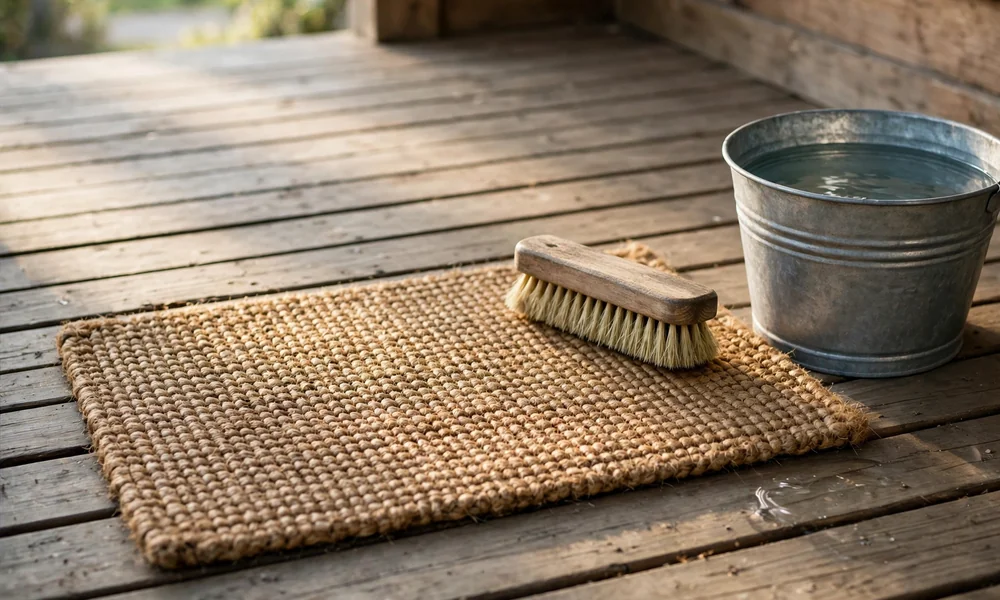
A doormat is a mat. It lies on the step. Shoes wipe on it. It moves. It shakes. It dries in the sun. It wears out. It is replaced.
A doorstep is a step. It is stone or wood. It is part of the door. It stays put. It does not shake. It does not dry on a wall. It is swept. It is washed. It lasts for years.
The mat sits on the step. The step holds the mat. One is a thing. The other is a place. A companion guide in this batch looks at the doorstep itself, and this guide looks only at the mat.
Nine Neighbours in This Batch
In this batch, the doormat keeps company with nine neighbours. A compass points the way home. Brochantite rests in fresh green for calm days. A torch lights dark evenings. A geode opens to clear light. A fireplace warms the room. Piemontite softens tender days in pink. A doorstep waits under every foot. A meteorite keeps quiet grey from far away. Realgar burns warm red for bold days. The doormat alone takes the mud off shoes.
Stones That Must Never Touch Water
A doormat sometimes catches a stone dropped from a pocket, so the water rules matter at the door. Apatite goes soft in water, then flakes and falls apart, while lepidolite hides lithium inside its pale layers, and lithium must stay far from anything you drink.
Pyrite is a brighter risk at the door: damp air dulls its gold and leaves rust-coloured marks behind, and a stone left wet can mark a floor for good, while angelite goes cloudy the first time it gets wet and stays cloudy, and amber — tree resin that hardened long ago — goes milky in a soak. Stones stay out of drinking water altogether, and none ever goes into a glass.
Your Doormat Checklist
- Lift the mat and shake it hard over the garden step, both sides.
- Brush it with a stiff brush from one end to the other.
- Wipe the step beneath the mat with a damp cloth, rinsed in the bucket.
- Leave the mat in the sun until it is dry right through.
- Drink a glass of water before you start, set well away from the mat.
- If a rash appears where you handle the mat, or a cough lingers after shaking out old dust, ease off and ask a doctor; a mat is not a cure.

Frequently Asked Questions
How often should I shake out a doormat?
Shake it out once a week in dry weather and twice a week when it rains, because wet mud packs into the fibres. A mat shaken often stays light.
Can a coir doormat get wet in the rain?
Yes, and it dries well if aired at once in the sun. Shake it out when the rain stops, stand it upright against a wall, and never fold it damp away.
Is it safe to wash a doormat with soap and water?
A woven mat can be rinsed with plain water and a stiff brush, but a coir mat should be brushed dry and never soaked. Strong soap strips the fibres, so plain water and sun do the work best.
Where is the best place to keep a doormat?
Lay it flat on the step outside the door, or just inside where shoes stop. Keep it in the same place every day, dry and flat, so it is ready.
How do I stop a doormat from sliding on a stone step?
Choose a rubber-backed mat, or lay a thin rubber grip underneath it. A mat that slides is a mat that trips, so fix the grip before the wet season.
Can a doormat help me feel calmer on a busy day?
A doormat shaken slowly in the morning can make the day feel steadier, because the doorway is tidy. A mat cannot fix health troubles, and when low feelings stay for weeks, the right person to ask is a doctor.
The Bottom Line
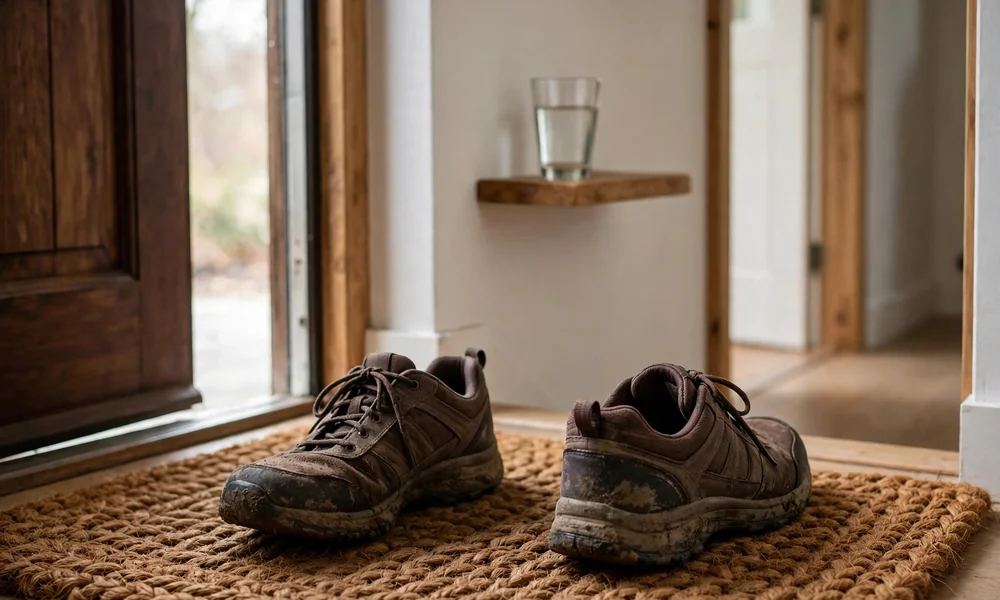
A doormat stays fresh when shaken often: lift it, snap it over the step, brush both sides, and let the sun dry it.
A Note for Fresh Steps
A glass of water, a mat shaken slowly, and a step wiped clean — that is all a fresh doorway needs.


