A tote bag is the simplest carrier most of us own. Two handles, one open top, and room for the day: a book, a bottle, a wallet, a folded cloth. It folds flat and hangs on a hook by the door.
Water belongs in the routine around a tote bag, not loose inside it. A glass before you leave sets the pace, and a bottle with a lid that truly closes rides upright in the side pocket.
This guide shows how to choose a tote bag, pack it light, and look after it at home. It is gentle general information only, and a well-packed bag is a small comfort, not a cure — it will not heal anything.
Key Takeaways
- A tote bag is an open-top carry bag with two handles, made for daily things.
- Pack heavy things at the bottom and keep the bottle upright in its pocket.
- Drink water before leaving, and check the bottle lid.
- A tote bag is not a handbag: a handbag closes, a tote stays open.
- A tidy bag is a comfort, not a cure; it will not heal anything.
What a Tote Bag Is
A tote bag is an open-top carry bag for daily things, carried by two handles over one shoulder or in the hand. Most are canvas or heavy cotton, with a flat base so the bag stands while you fill it. No clasp, no zip, no flap: you reach in and take what you need.
A tote bag is not a handbag, and the difference matters. A handbag closes with a clasp, a zip or a flap, and it is smaller, built to guard a few precious things. A tote bag stays open and is larger, built to carry a whole day. One guards, the other carries.
Why Water Sits Beside a Tote Bag
Water earns its place beside a tote bag in two ways: the glass before you leave, and the bottle you carry. The glass comes first: fill it, set it away from the bag, and drink slowly while you pack. When the glass is empty, the bag is ready.
The bottle needs more care: inside a tote bag it must have a lid that seals, because an open top invites leaks. Test the lid each morning over the sink, and leave the bottle home if a drop escapes.
Choosing a Tote Bag That Lasts
Choose by cloth and handles before colour. Heavy canvas holds its shape and stands upright, while thin cotton sags and spills at the first bump. Hold the bag by one handle: good handles are sewn through the body, not tacked to the surface.
Look inside before you buy: a flat base keeps the bag standing, and one inside pocket is worth more than three outside ones. Try the handles on your shoulder: short ones suit the hand, longer ones ride under the arm.
Packing a Tote Bag for the Day
Pack from the bottom up, heaviest first: books and the bottle at the base, lighter things on top. A bag packed this way stands upright instead of tipping sideways.
Give the bottle its own place: the side pocket, upright, lid up, cap checked before the bag leaves the table. With no side pocket, stand the bottle against one wall with a folded cloth beside it, so it cannot roll. Never lay a bottle flat across your books.
Keep small things in one pouch. Keys and coins loose in a tote bag sink to the bottom and hide. One small zipped pouch holds them all, and it lives in the inside pocket where your hand can find it.
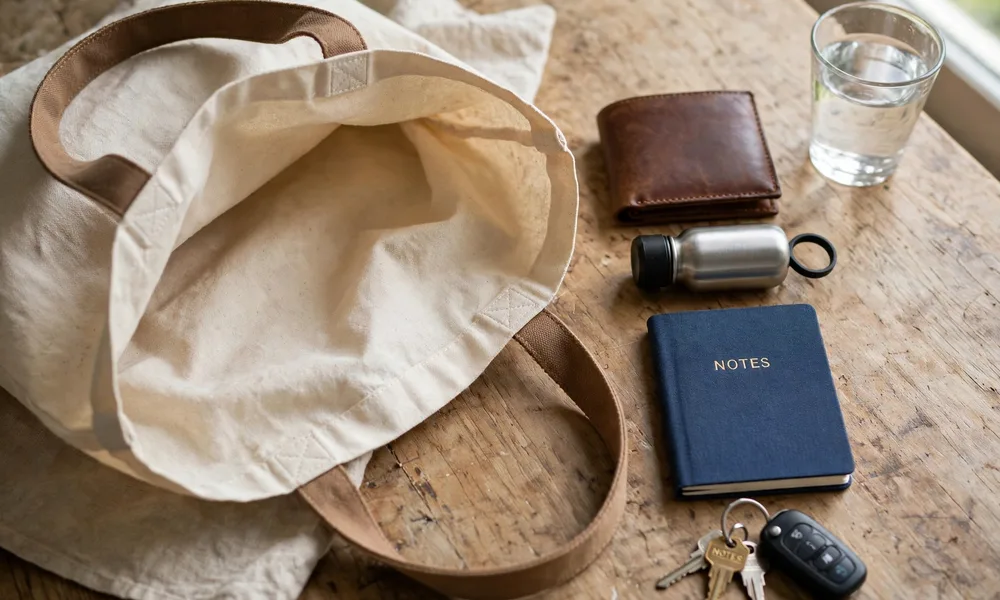
A Quiet Morning with Water and a Tote Bag
Begin with the glass, not the bag: fill a tumbler, set it on the far side of the table, and lay the empty tote bag flat beside you. Drink half the glass slowly before you start packing.
Pack in the order you will need things: book first, then the bottle upright in its pocket, then the notebook and the pouch with the keys. Fold the cloth last across the top.
When the glass is empty, hang the bag on the hook by the door until you leave.
Water and a Tote Bag at a Glance
| Pack it light | Bottle upright | Glass apart |
|---|---|---|
| Heavy things low | Lid checked twice | Sip before leaving |
| Keys in pouch | Notebook lies flat | Hook by door |
| Fold cloth last | Bottle never flat | Bag stays dry |
Water and a Handbag
For a bag that closes and guards a few precious things, see the handbag guide.
That guide answers when a handbag needs cleaning: emptying it fully, wiping it with a barely damp cloth, and letting the lining air out. A handbag closes, so its lining can be shaken out and its pockets checked one by one.
This guide is about the opposite habit: a tote bag stays open and carries more, so the work is packing it light and keeping the bottle upright. The handbag guide cleans one small closed bag; this guide carries a whole open day.
Water and Water Bottles
For the bottle itself, in more depth, see the water bottles guide.
That guide finds the bottle a single steady home — a side pocket, or a small pouch kept by the door — and a habit of testing the lid before you leave. A bottle with a home is carried daily; one without is forgotten or leaks.
This guide picks up where the bottle guide stops: once the bottle has its home, here is how the rest of the bag is packed around it.
Water and a Memory Box
For keepsakes that stay at home, see the memory box guide.
That guide gathers letters, photographs and flat keepsakes into one lidded wooden box, opened only a few times a year for a slow look. The box never leaves the shelf, and the water stays in a glass beside it.
A tote bag does the opposite job: it leaves the house every day, while the memory box guards what stays behind. One is for going out, the other for staying in.

A Tote Bag and a Backpack: Not the Same Thing
Carried on one shoulder, a tote bag swings open at the top and lets a hand dip in for keys or a book without stopping; slung on two straps, a backpack sits tight against the back and leaves both hands free for a railing, a child, or a heavy door.
The two bags trade strengths: a tote bag is quicker to open and easier to set down, while a backpack spreads weight across both shoulders and keeps its contents shut. For a short walk, the tote bag wins; for a long heavy walk, the backpack wins.
Neither bag replaces the other: the tote bag by the door for the daily round, the backpack on its hook for days when both hands must be free. Each carries well when used for the load it was made for.
Nine Neighbours in This Batch
In this batch, the tote bag travels with nine companions. A backpack waits on its hook for days when two straps beat one, a suitcase stands packed for longer journeys, and a passport rests ready for the morning a trip begins.
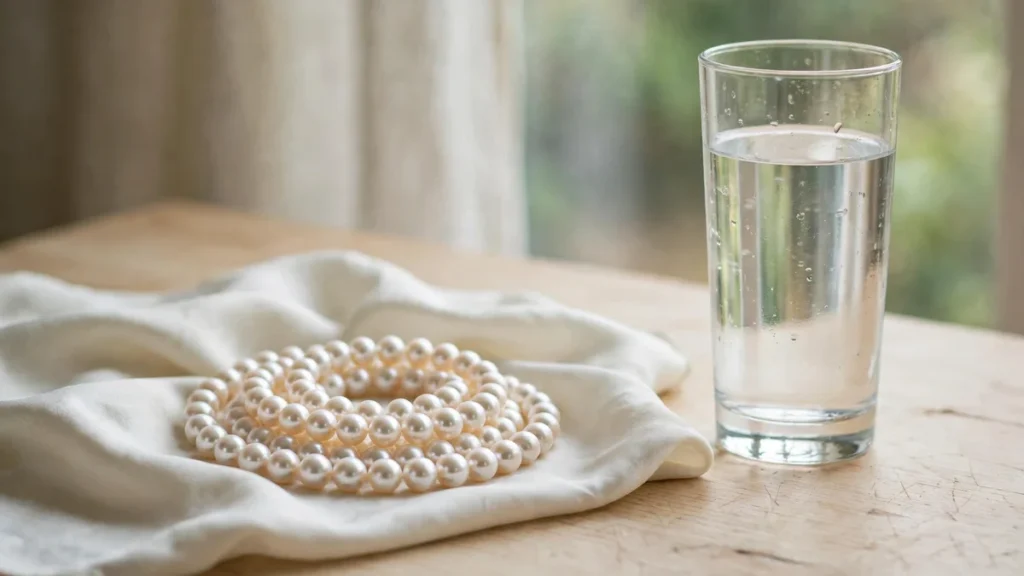
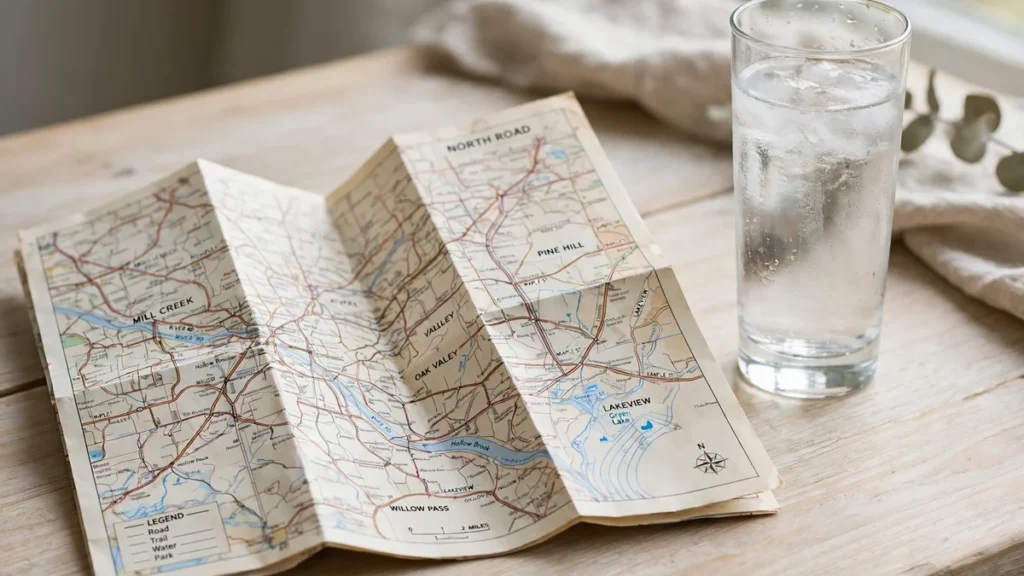
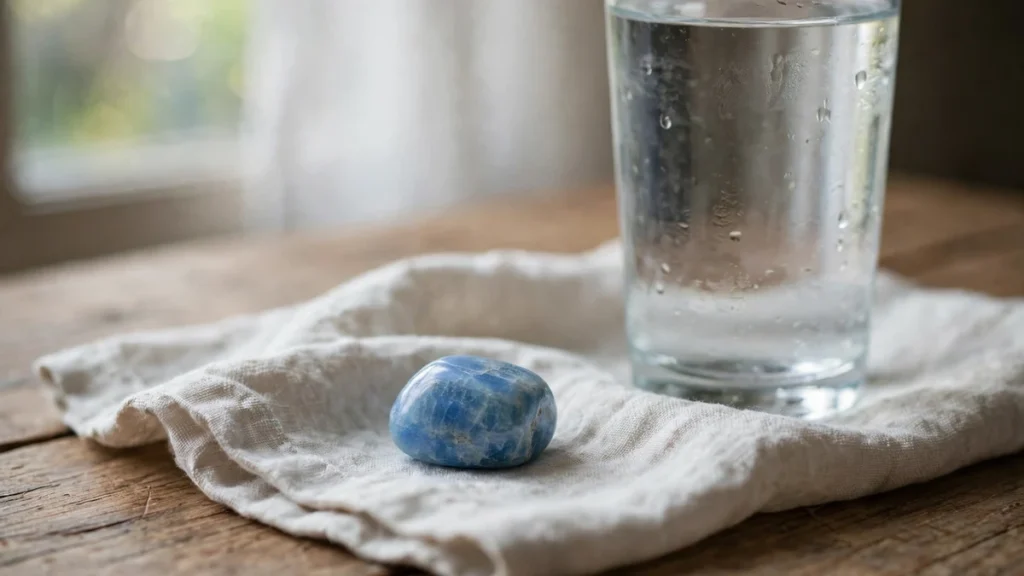
Among the stones, warm bronze pyrrhotite suits steady days, deep black tenorite waits on its tray, soft blue lazulite keeps a gentle colour, and plancheite brings a deeper blue. A folded map shows the way home, and a clear white akoya pearl glows at the end. Around all nine, the tote bag alone carries the day out of the door.
Stones That Must Never Touch Water
A tote bag sometimes carries a stone in its pouch, so the water rules matter here too. Apatite softens when wet, then flakes and crumbles in the hand. Lepidolite looks gentle in its pale flakes, yet it holds lithium, and lithium has no business near a drink.
Pyrite is a brighter risk: damp air steals its gold and leaves rusty marks on pale cloth, and a wet stone can stain a lining for good. Angelite clouds over once wet and never clears again, while amber, old tree resin grown hard, turns milky after a soak. Keep every stone out of drinking water, and never drop one into a glass.
Your Tote Bag Checklist
- Lay out the day's things and pack the heaviest at the bottom.
- Stand the bottle upright and check the lid before leaving.
- Keep keys, coins and small things together in one zipped pouch.
- Drink a glass of water before you go, far from the bag.
- Hang the empty bag on its hook each evening and shake it out.
- If carrying the bag leaves your shoulder sore for days, or a rash appears where the strap rests, ease off and ask a doctor; a bag is a carrier, not a cure.

Frequently Asked Questions
How do I keep a tote bag from getting heavy?
Pack only what the day truly needs, heaviest at the bottom, and leave the rest at home. A finished book or last week's papers can stay behind.
Can a tote bag get wet in the rain?
Yes, and canvas dries well if aired at once. Shake it out when you come in, hang it open in a breeze away from heat, and never fold it damp into a cupboard.
Is it safe to carry a water bottle in a tote bag?
Yes, when the bottle has a lid that seals and rides upright in the side pocket. Check the lid each morning over the sink, and replace any bottle whose seal has worn thin.
How do I wash a canvas tote bag?
Turn it inside out, shake out the crumbs, and wash it gently by hand in cool water with a little mild soap. Rinse well, press out the water without wringing, and hang it open to dry.
Where is the best place to keep a tote bag at home?
Hang it on a hook by the door, or fold it flat on a shelf near the books. Keep it in the same place every day, dry and empty, so it is ready when you reach for it.
Can a tote bag help me feel calmer on a busy day?
A tote bag packed slowly in the morning can make the day feel steadier, because everything you need is in one place. It cannot mend health, and when low feelings linger week after week, a doctor is the person to ask.
The Bottom Line
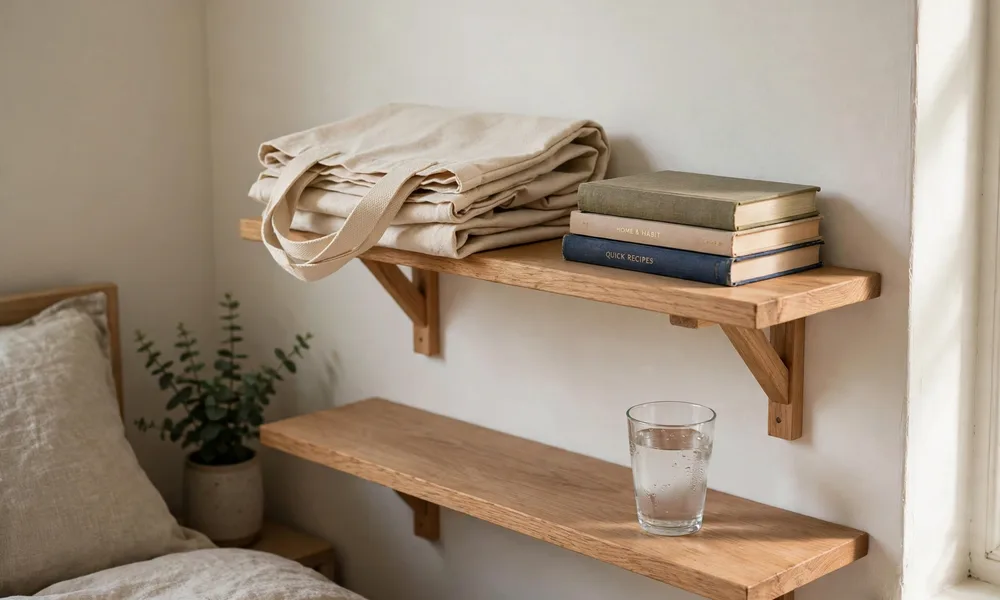
A tote bag carries well when packed light: heavy things low, a bottle upright, a glass of water drunk before the door.
A Note for Easy Carrying
A glass of water, a bag packed slowly, and a hook by the door — that is all a good day out needs.