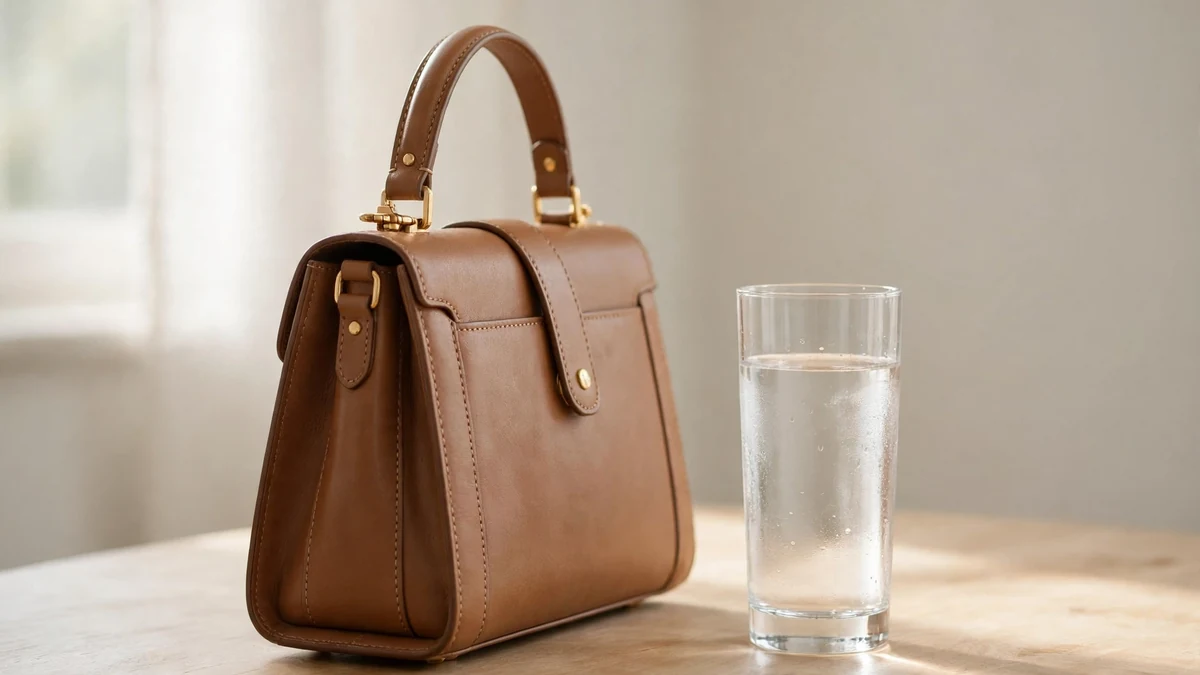
A handbag goes everywhere its owner goes. It rides on a shoulder through rain and dust, rests on café floors and car seats, and gathers the small marks of every week. Keys scratch the lining, crumbs settle in the corners, and one day the bag looks tired even though nothing about it is broken.
Water is the gentlest help a handbag can get, and the easiest to misuse. A cloth barely damp with plain water lifts dust and light marks from leather, fabric and vinyl alike, while a soak ruins all three.
This guide answers a simple question: when should a handbag be cleaned, and how? It covers the signs, the emptying, the wipe, the lining, the drying and the shelf afterwards. It is gentle general information only, and a tidy bag is housekeeping, not health care: cleaning a bag will not heal anything.
Key Takeaways
- A handbag needs cleaning when it looks dull, smells stale, or feels sticky inside.
- Empty the bag first, then work from the outside in, one panel at a time.
- A cloth barely damp with plain water is enough for most marks; never soak a bag.
- Always test in a hidden spot, and let the bag dry in the air, away from heat.
- Cleaning a bag is housekeeping, not health care: a tidy bag will not heal anything.
What a Handbag Carries
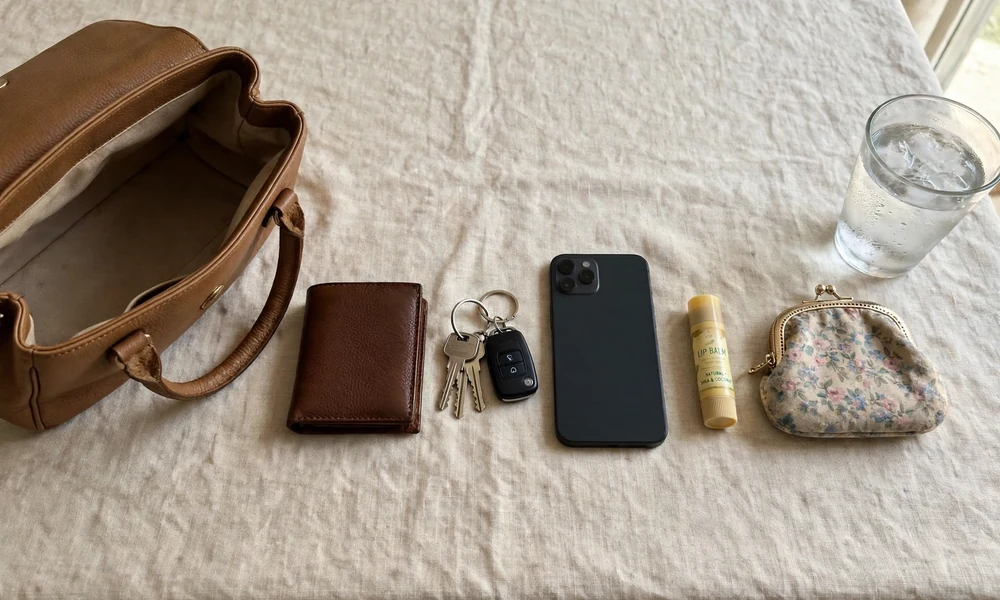
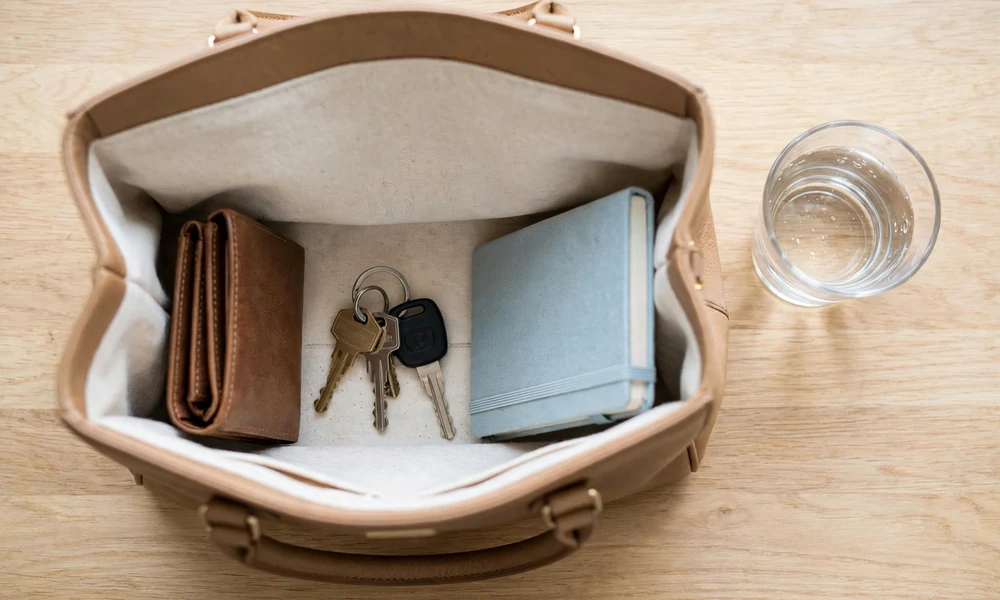
A handbag carries a day in miniature. Wallet, keys, phone, a notebook, a lip balm, perhaps a small coin purse: each of these leaves something behind. Coins dust the lining grey, keys catch threads, and a wrapper forgotten at the bottom turns sticky in summer heat.
The outside takes its own wear. Handles darken where hands hold them, corners pale against walls, and the base picks up whatever the floor offered. None of this means the bag is finished: used things need a wash now and then.
When a Handbag Needs Cleaning
A bag tells you when it is time, if you look. The handles feel tacky, the lining smells faintly of old food, a pale mark has appeared near the clasp, or the colour looks flat in bright light. Any one of these is reason to set aside ten minutes.
The calendar gives a second clue. A bag carried every day earns a quick wipe once a month, and a full clean with the lining turned out every season. A bag caught in heavy rain needs attention the same evening, before damp settles in and the smell follows.
What Water Does to a Handbag
Water helps a handbag in small amounts and harms it in large ones. A barely damp cloth lifts surface dust without wetting the fibres beneath, so leather keeps its oils and fabric keeps its colour. The cloth should feel cool, never dripping.
A soak does the opposite. Leather loses its oils and stiffens as it dries, fabric linings can shrink or spot, and suede goes patchy and never quite recovers. Water left standing in a pocket can smell musty within a day, and metal fittings can spot where water sat against them.
Emptying the Bag First
Start with everything out. Open every zip and pocket, tip the bag upside down over a bin, and shake it gently so crumbs fall away. Lay the contents in a row on a clean cloth, so nothing gets lost.
Check each pocket with your fingers, because eyes miss the corners. A coin hides in a seam, a grip hides in a side pocket, and a pen cap hides where the lining meets the base. Take them all out first.
The Damp-Cloth Wipe, Step by Step
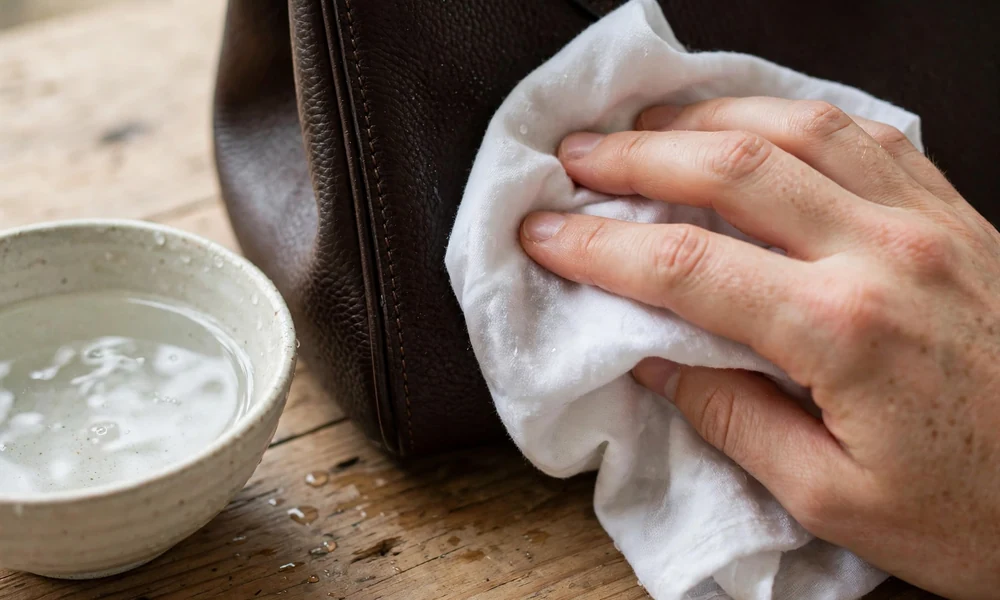
With the bag empty, the wipe itself is short. Dampen a clean white cotton cloth with plain water, wring it until only just moist, and test it on a hidden spot, such as the inside of a strap. Wait five minutes: if the colour holds, carry on.
Wipe the outside one panel at a time, in small circles, letting the cloth do the work. Do not press hard on a mark, because pressing grinds dirt into the grain. Then wipe the handles, strap and fittings, and leave the bag open in the air, away from heat and sunlight, until dry all through.
Water and a Handbag at a Glance
| Empty the bag | Wipe one panel | Dry in air |
|---|---|---|
| Test hidden spot | Lining shakes out | Hooks hold shape |
| Smells fade slowly | Pockets checked twice | Dust bag on top |
Water and Leather Care
For leather alone, in more depth, see the leather care guide.
That guide is a ritual for smooth leather only: a damp cloth, a hidden-spot test, air drying, and conditioner rubbed in afterwards. It suits bags, belts and wallets, and it ends with conditioning, which this guide never does.
This guide is wider and simpler. It covers handbags of any material, asks when cleaning is due rather than how leather is fed, and spends its time on emptying, linings, straps and storage. The leather guide conditions one material; this guide keeps a whole bag fresh.
Water and Crystal Jewellery
For jewellery worn or carried with a bag, see the crystal jewellery cleaning guide.
Many handbags carry a crystal charm on the strap or a small stone in a pocket, and those pieces have their own rules. That guide explains how to clean crystal jewellery without damage, with water used gently and stones kept from anything hard enough to scratch them.
Here the bag comes first and the charm second. Take charms off the strap before the damp wipe, clean them separately, and put them back only when the bag is fully dry.
Water and Water Bottles
For the bottle that usually rides inside the bag, see the water bottles guide.
A bottle is the commonest cause of a wet handbag. A lid left loose or a seal worn thin can soak a lining in minutes, and a damp lining left shut soon smells musty. That guide gives the bottle one fixed home, a side pocket or a small pouch, and a habit of checking the lid before leaving the house.
This guide picks up where the bottle guide stops: once a leak has happened, here is how to empty the bag, dry the lining, and air it until the smell fades.
A Handbag and a Tote Bag: Not the Same Thing
A handbag and a tote bag both carry a day's things, and that is where the likeness ends. Stated plainly: a handbag closes, usually with a clasp, a zip or a flap, while a tote bag stays open at the top and is carried by two handles over the shoulder.
The closed top changes how a handbag is cleaned. Its lining can be shaken out and wiped in sections, its pockets checked one by one, and its clasp given a dry wipe of its own. A tote bag, open and soft, is usually turned inside out and brushed.
Nine Neighbours in This Batch
Grouped by what they guard, the nine companions of this bag are easy to tell apart. A keepsake waits in its box for a quiet day, a piggy bank holds coins for a slow saving habit, a jewellery box keeps its tidy rows in order, and a trinket tray gathers small things that would otherwise wander.
Among the stones, herderite offers soft green for quiet days, chalcocite brings deep grey for steady ones, and rosasite shows soft teal to anyone who looks closely, with warm gold South Sea pearl brightening the group and soft white alabaster waiting at the end. Around all nine, the handbag alone goes out into the rain and comes home needing a wipe.
Stones That Must Never Touch Water
A handbag often carries a crystal charm on its strap, so the water rules for stones matter here too. Pyrite turns dull and leaves rusty marks on pale lining when damp, so it comes off the strap before any wipe. Angelite clouds over and never clears again once wet, so it rides in a dry pocket, far from the damp cloth. Amber is hardened tree resin, and a soak takes its shine, so it stays on a dry shelf while the bag is cleaned.
Malachite, turquoise and opal should also stay dry, and selenite, being gypsum, softens in water and must never meet a damp cloth. A pearl charm fears water too, since soaking dulls its surface. None of these belong in drinking water, and no stone should ever be dropped into a glass.
Your Handbag Checklist
- Empty the bag fully, shake the lining over a bin, and brush out crumbs.
- Test a damp cloth on a hidden corner, then wait five minutes.
- Wipe the outside one panel at a time with a barely damp white cloth.
- Wipe the handles, straps and metal fittings, then leave the bag open to air.
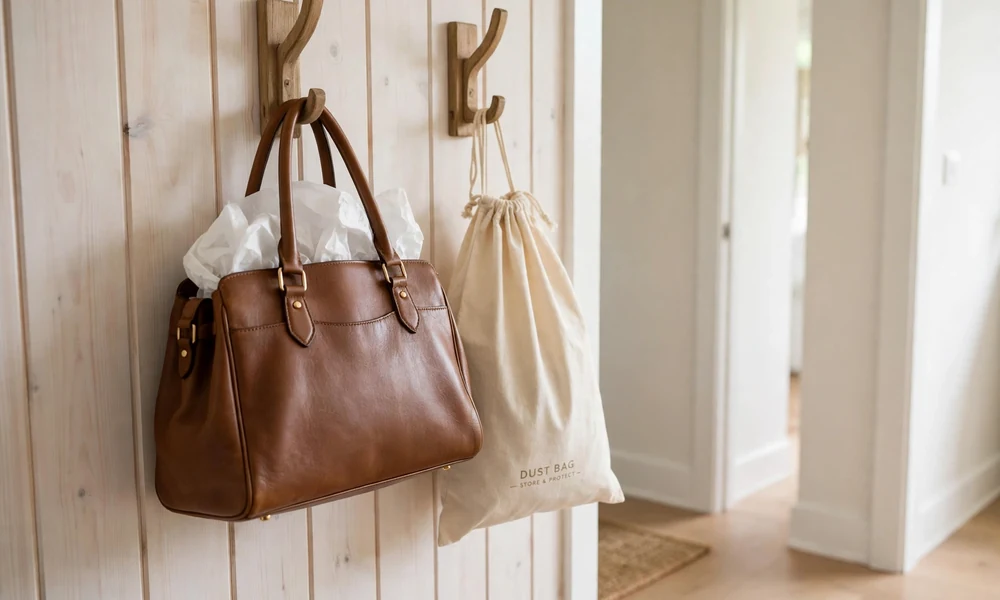
- Stuff the clean bag loosely with paper and hang it on a hook.
- If your hands feel sore or a rash appears after cleaning, stop and ask a doctor; a handbag is not a treatment.
Frequently Asked Questions
How often should I clean my handbag?
Wipe a daily bag once a month, and give it a full clean, lining included, every season. A bag caught in rain needs a wipe the same evening.
Can I wash a handbag under the tap?
No, never hold a handbag under a tap or dunk it in a basin. A soak strips leather of its oils and spots fabric linings. Use a barely damp cloth.
What should I do if my handbag gets soaked in the rain?
Empty it at once, blot outside and lining gently with a dry cloth, pack it loosely with fresh paper, and leave it somewhere airy, away from heat, until fully dry.
How do I clean the lining of my handbag?
Turn the lining out if it pulls free, shake it over a bin, and brush it with a dry soft brush. For a mark, dab it with a barely damp cloth and let it air-dry.
Can I use soap on a leather handbag?
Plain water is safer. Soap dries stiff in the grain and can leave pale patches. If a mark will not lift, ask a leather repairer.
Where is the best place to keep a handbag at home?
Hang it on a hook or set it on a shelf in a cool, dry place, stuffed loosely with paper so it keeps its shape, inside a cotton dust bag.
The Bottom Line
A handbag stays pleasant when it is cleaned little and often: empty it, wipe it with a barely damp cloth, let it dry in the air, and hang it somewhere cool and dry.
A Note for a Fresh Bag
A glass of water, a soft cloth, and ten unhurried minutes — that is all a well-loved bag asks.


