A backpack is the bag for days that move. It sits on your back while you walk to the market, climb a hill path, or cross a town on foot, and it keeps your hands empty. A good day out starts the night before, when the pack is filled slowly.
Water is the first thing to pack and the easiest to get wrong. A bottle that leaks will soak a notebook, a phone and a spare shirt before you notice, and a bottle left at home means a thirsty walk. Fresh water, carried sealed and upright, turns a long walk into a fresh day.
This guide covers the small habits that keep a backpack fresh: what to pack, how to place the bottle, and how to air the bag out afterwards. It is gentle general information only, and a well-packed bag will not heal anything on its own.
Key Takeaways
- A backpack carries the day on two straps and leaves both hands free.
- A sealed bottle of fresh water belongs upright in a side pocket.
- Pack heavy things close to your back.
- A damp cloth and fresh air keep a backpack smelling fresh.
- A backpack is a useful bag, not a cure or a treatment of any kind.
What a Backpack Carries
A backpack carries a day in layers. At the bottom go the things you will not need until later: a spare shirt, a light rain layer, a small towel. In the middle sits the weight: the water bottle, a book, a lunch box. On top go the things you reach for often: keys, a phone, a snack.
The front pockets hold the small things that would vanish in the main compartment. A ticket, a coin purse, a lip balm, a folded map: each has its own pocket, so nothing has to be hunted for at a gate. A bag with a place for everything never needs emptying in a hurry.
Why Water Travels with a Backpack
Water travels best in a bottle that seals tight and stands upright. A screw cap that clicks shut or a flip lid that locks will do, as long as the bottle can lie on its side for an hour without a drop escaping. Test it over the sink before you trust it with your notebook.
The side pocket is the bottle's home. It holds the bottle upright, keeps it within reach, and lets you drink without taking the pack off your back. A bottle loose in the main compartment will roll and one day work its cap loose. Give it a pocket of its own and it stays put.
Drink little and often as you walk, rather than waiting until you are very thirsty. Refill the bottle at a tap whenever you get the chance, and wash it out at home before the next trip.
Choosing a Backpack for Fresh Days
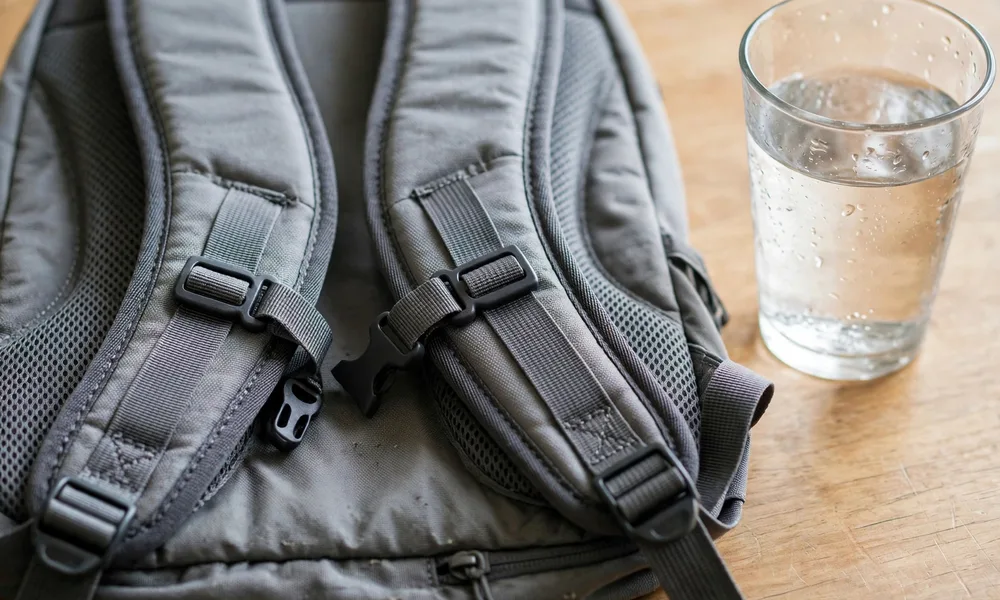
Choose a pack that fits your back, not only your eye. The straps should sit flat on your shoulders without pinching, the back panel should rest against you without digging in, and the waist strap, if there is one, should take some of the weight. Walk around the shop with it on before you buy.
Look for a side pocket deep enough for your bottle, a water-resistant fabric, and zips that run smoothly without catching. Padded straps matter more than extra pockets, and a plain, sturdy pack will outlast a fancy one with weak seams.
Try the bottle in the pocket before you leave the shop. If it slides in and out easily with one hand, the pocket is right. If you have to fight it, the bottle will stay at home.
Packing Light, in Order
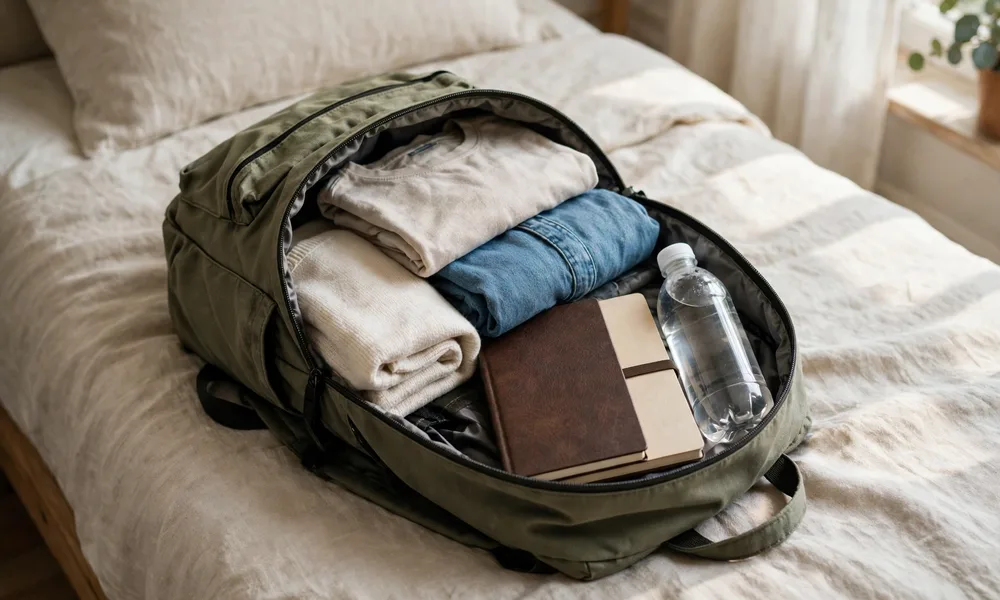
Pack on the bed the night before, with everything laid out in a row. Start with the heaviest things against the back panel, where they sit closest to your spine. Then add the middle layer, then the light things on top, so nothing heavy presses down on a sandwich.
Roll clothes instead of folding them flat, and they take less room and crease less. Put small things in pouches, so a charger cable cannot tangle around a pen.
Zip the pack, lift it, and walk around the room. If it pulls you backwards, move something heavy closer to your back. A pack that feels right at home will feel right five miles later.
A Fresh Morning with Water and a Backpack
Fill the bottle the night before and set it in the fridge, so the morning starts cold and unhurried. In the morning, pour a glass of water and drink it by the window while the pack waits by the door. The glass is for you; the bottle is for the walk.
Lift the pack onto both shoulders and adjust the straps until the weight sits even. Step outside, take a sip from the bottle at the first corner, and settle into your pace.
When you stop for a rest, set the pack down upright against a wall or a bench, not flat on wet grass. Drink, eat something small, and look around before moving on.
Water and a Backpack at a Glance
| Bottle sealed tight | Heavy things low | Straps sit even |
|---|---|---|
| Side pocket holds it | Light things on top | Drink little, often |
| Pack light, walk far | Air it out after | Hands stay free |
Water and a Handbag
Start with the handbag guide for a bag that rides on one shoulder and closes at the top.
That guide wipes a handbag clean with a barely damp cloth and dries its lining in the air. This guide packs a different bag: a two-strap pack for walking, where the water rides sealed in a side pocket.
Water and a Diary
A diary is a plain book that takes the day's clutter — a changed plan, a worry, a sentence worth keeping — and holds it until you want it again. The diary guide shows how to start one from nothing, with five minutes and a pen.
A backpack does the opposite job: it carries the day outwards and comes home dusty. The diary never leaves the house; the backpack is made for leaving it.
Water and a Photo Album
A photo album gives printed photos a home in clear sleeves, in order, ready to open and look through. The photo album guide gathers five gentle ways to keep that home fresh.
A backpack works the other way round: it takes things out into the weather and brings them home dusty. The album guards memories; the pack carries the day.

A Backpack and a Tote Bag: Not the Same Thing
A backpack rides on two straps. A tote hangs from one shoulder. A backpack leaves both hands free. A tote needs one hand to hold it. A backpack closes with a zip. A tote stays open at the top. A backpack spreads weight across the back. A tote loads one shoulder. A backpack suits long walks. A tote suits a quick trip to the shops.
The two bags ask for different care. A backpack is emptied pocket by pocket and aired upside down, while a tote is turned inside out and brushed. A bottle rides upright in a backpack side pocket, while a tote holds its bottle loose. Keep the habits apart and both bags stay pleasant.
Nine Neighbours in This Batch
This backpack walks among nine companions. A suitcase packs for longer journeys, a passport waits for a border, and a map folds away when the road is known. A tote bag carries the shopping home on one shoulder, while warm bronze pyrrhotite, deep black tenorite, deep blue plancheite and soft blue lazulite rest on their shelves, and an akoya pearl glows at the end. Around all nine, the backpack alone rides on two straps with a bottle in its pocket.
Stones That Must Never Touch Water
Some stones lose their beauty the moment water reaches them, and a few should never come near a drink. Pyrite is one: leave it damp and its bright gold turns dark, with rusty marks that do not wash out. Angelite is another: water creeps in and splits it along fine lines until a piece falls apart. Amber is hardened tree resin, so a soak clouds its shine into a milkiness that stays. Apatite dulls after time in the wet, and the pale flakes of lepidolite carry lithium, which belongs nowhere near anything you might drink. Keep every stone on a dry shelf, and never drop one into a bottle or a glass.
Your Backpack Checklist
- Fill a sealed bottle the night before and chill it in the fridge.
- Pack heavy things against the back panel and light things on top.
- Slip the bottle upright into its side pocket before you zip up.
- Adjust both straps until the weight sits even on your shoulders.
- Air the empty pack upside down when you get home, and brush out crumbs.
- If a strap rubs your skin raw, or a sore shoulder keeps aching for days, rest it and ask a doctor; a bag is a tool, never a remedy.
Frequently Asked Questions
How much water should I carry in my backpack?
A litre is enough for a short walk, and two litres suits a long day with no taps. Carry the smaller bottle if a refill is certain.
Can I put a glass bottle in my backpack?
You can, if it sits upright in a deep side pocket and cannot knock against anything hard. A steel bottle is safer on rough paths, where glass might crack.
How do I stop my backpack smelling musty?
Empty it fully after every trip, turn it upside down, and leave it open in fresh air for a day. A dry pack stored on a hook stays fresh far longer than one shut in a cupboard.
What should I do if my water bottle leaks inside the pack?
Take everything out at once, blot the lining with a dry cloth, and hang the pack open until it is dry all through. Test the bottle over the sink before you trust it again.
How do I carry a backpack without sore shoulders?
Keep the weight close to your back, tighten both straps evenly, and use a waist strap if your pack has one. Take the pack off every hour, and never carry far more than you need.
Can a backpack help me feel better on a hard day?
A walk with a light pack and fresh water can lift the mood. It cannot cure anything, and if low feelings linger for weeks, a doctor is the person to ask.
The Bottom Line
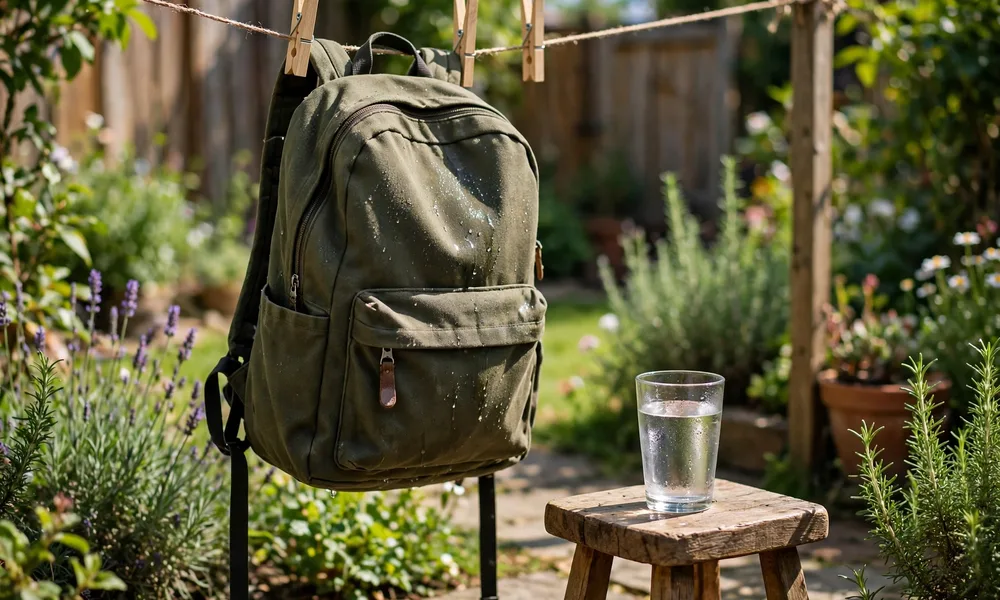
A sealed bottle in the side pocket, heavy things close to the back, straps even on both shoulders: that is the whole trick of a fresh day with a backpack.
A Note for Fresh Days
A cold bottle, a light pack, and a road that starts at your own front door — that is all a fresh day asks for.