
Coily hair has a shape of its own, and water is what wakes that shape up. A coil does not fall straight and does not loop loosely: it winds tightly, spring after spring, and how it is washed decides whether it dries soft and defined or rough and tangled.
A rushed wash, hot water and a hard towel can pull every coil apart before the day has even begun. A simple care guide changes that. Plain water, a mild shampoo, gentle hands and a soft towel are the whole set. No long list of products here, no special tools, and no hurry.
This guide walks through coily hair care step by step, from wetting the hair to letting it dry, with extra moisture at every step. Everything here is gentle general information only, never a treatment. If your hair or scalp troubles you and it does not settle, see a doctor or dermatologist.
Key Takeaways
- Coily hair means tight coils that wind closely, dry fast at the ends, and snap most easily.
- Coily hair is the most fragile hair type and needs the most moisture of all.
- Lukewarm water is kindest; hot water roughens coils and dries the scalp.
- Wash gently with fingertips, rinse longer than you think, and detangle wet with a wide-tooth comb.
- This is care, not a cure: it will not change your coil pattern or fix a scalp problem.
What Coily Hair Is
Coily hair grows in tight coils instead of falling straight or looping loosely. The shape comes from the follicle, the tiny pocket in the scalp each strand grows from: a flatter, curved follicle grows hair that winds as it grows. Loose curls loop gently, tighter curls wind into springs, and coils wind tighter still, into small spirals that spring back when pulled.
Each bend is a weak point where the strand can snap, and coils have the most bends of all, so coily hair is the most fragile hair. The scalp's natural oils travel slowly down a winding strand, so the ends of coily hair are often the driest part of all. That is why coily hair needs the most moisture.
Why Coily Hair Needs the Most Moisture
Coily hair needs the most moisture because its shape works against it. Every tight turn in a coil is a place where moisture escapes and where the strand can break, and the scalp's oils have the longest, windiest journey of any hair type to reach the ends.
Water is the first moisture coily hair gets, and it should be given slowly and kindly. Wet the hair fully, let the water soak in, and never rush this step. A coil that is wet through is a coil that can be washed without snapping.
Wetting and Washing Coily Hair
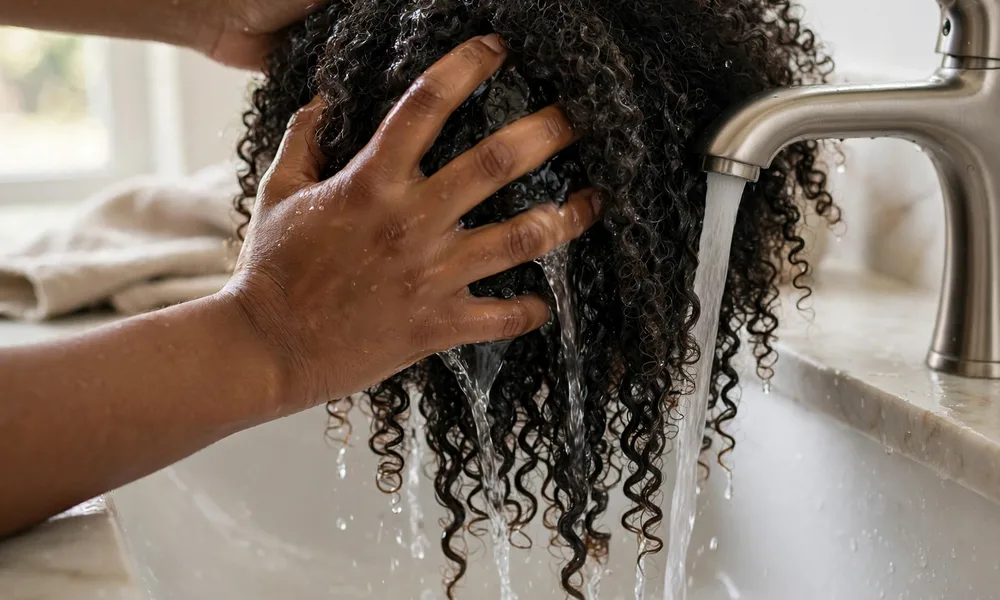
Start by wetting coily hair fully with lukewarm water, from the roots to the ends, and give it time. Let every coil soak through before you touch any shampoo. Dry coils that are only half wet will tangle the moment you start to wash.
Use a small amount of mild shampoo, spread it between your hands first, and wash the scalp only, with soft fingertips in small circles. Let the rinse carry the shampoo down the coils; never pile the hair up and scrub it, because that knots the coils together.
Rinsing Coily Hair Well
Rinsing matters more for coily hair than for any other hair, because shampoo hides easily inside tight coils. Rinse longer than you think, with lukewarm water, until the coils feel clean and slippery, not coated or sticky.
Finish with a cooler rinse, so the hair dries smoother and the coils settle into their shape. A good rinse is slow, patient work, and it is worth every extra minute.
Coily Hair at a Glance
| Tight coils | Most moisture | Gentlest care |
|---|---|---|
| Wind closely | Wet fully first | Fingertips only |
| Fragile bends | Rinse long, cool | Wide-tooth comb |
| Dry ends | Press, never rub | Air-dry when you can |

Detangling Coily Hair While Wet
Detangle coily hair only while it is wet, and only with a wide-tooth comb, never a brush and never when the hair is dry. Start at the ends, work upward in short sections, and hold each section so the comb pulls on the hair, not on the scalp.
Work slowly, one small section at a time, and stop if you meet a knot. Wet the knot again, smooth it apart with your fingers, and then comb through. A gentle detangle keeps the coils whole.
Drying Coily Hair Softly
Dry coily hair softly: press it with a towel, never rub it, and never wring it. Lay a soft cotton towel over the coils and press gently, lifting and pressing again, so the towel takes the water without pulling the coils apart.
Air-dry when you can, and let the coils set in their own shape as they dry. If you must use heat, keep it low and brief. Coils that dry slowly keep their spring; coils that dry roughly lose it.
Moisture After the Wash
Coily hair needs moisture after the wash as well as during it. While the hair is still damp, smooth a small amount of plain moisturising cream through the coils, from the middle to the ends, where the hair is driest. Use less than you think.
Patch-test every new product first, on a small patch of skin, and wait a day before using it on your hair. If a product stings, itches or leaves redness, stop using it and rinse the hair well with plain water.
Coily Hair and Curls
Coily hair and curls are close cousins, but they are not the same hair. Curls loop in wider spirals that spring open as they dry and hold their shape with less help. Coils wind tighter, dry faster at the ends and snap more easily.
Water and curls keeps a simple wash day for wider curls; this guide keeps a slower, wetter routine for tight coils — same gentle water, more moisture, more patience.
Coily Hair and Textured Hair
Coily hair and textured hair are not the same thing, even though coily hair is one kind of textured hair. Textured hair is the whole family: waves, curls and coils together, from loose waves that bend gently to tight coils that wind closely.
Water textured hair is a simple care guide for the whole family, and it keeps everything general. This guide is only for the tightest member of the family: coily hair, the most fragile kind, which needs the most moisture and the gentlest hands.
Coily Hair and Thick Hair
Coily hair and thick hair are different ideas, and they are often mixed up. Thick hair means there is a lot of it: many strands, or wide strands, and a wash takes more water and more time. Thick hair can be straight, wavy or coily.
Coily hair means tight coils, whether the hair is thick or not. Water and thick hair keeps a simple wash guide for heavy hair that is slow to wet; this guide keeps a gentle routine for tight coils that are quick to dry and easy to snap.

Coily Hair and Straight, Fine and Wavy Hair
Coily hair is the opposite of straight hair and very different from fine hair. Straight hair grows in a smooth, flat line from root to tip, with no curl or wave to bend the light, and it shines when each strand lies flat. Fine hair means thin, light strands that are easily weighed down by heavy products and look flat by midday.
Coily hair bends at every turn, so it never lies flat and never shines in one long line, and it needs rich moisture that would weigh fine hair down. Straight hair needs a cooler rinse to lie flat; fine hair needs a light wash; coily hair needs a slow, wet wash with the most moisture.
Wavy hair sits at the opposite end of the textured family from coils: it bends gently in loose waves, with long, soft curves that fall easily and dry without much fuss. There is no live wavy hair post on the site yet — the wavy guide is queued, not published — but the difference is clear: wavy hair bends, coily hair coils, and coils need far more moisture and far gentler hands.
Your Simple Care Checklist
- Wet coily hair fully with lukewarm water before any shampoo.
- Wash the scalp only, with soft fingertips, and let the rinse carry shampoo down.
- Rinse longer than you think, and finish with a cooler rinse.
- Detangle wet only, with a wide-tooth comb, from the ends upward.
- Press dry with a soft towel, never rub, and air-dry when you can.
- Patch-test every new product, and see a doctor for scalp problems.

Frequently Asked Questions
How often should I wash coily hair?
Wash coily hair when it feels dirty or the scalp feels itchy, not on a fixed daily schedule. Many people wash once a week or less, with plain water rinses between washes.
Is hot water bad for coily hair?
Yes, hot water is unkind to coily hair. It roughens the coils, strips the oils the hair needs, and dries the scalp. Lukewarm water washes gently, and a cooler rinse helps the coils settle.
Can I brush coily hair when it is dry?
No, never brush coily hair when it is dry. A brush pulls the coils apart and snaps them. Detangle only while the hair is wet, with a wide-tooth comb, from the ends upward.
Why do the ends of coily hair feel so dry?
The scalp's oils travel slowly down a winding coil, so they rarely reach the ends. That is why coily hair needs the most moisture, and why cream goes on the ends while the hair is still damp.
Will this routine change my coil pattern?
No. This routine will not change your coil pattern, and it will not fix a scalp problem. It is gentle care, not a cure, and real hair or scalp problems belong with a doctor or dermatologist.
What should I do if my scalp itches or hurts?
Stop using new products, wash gently with plain water and mild shampoo, and see a doctor or dermatologist if the itching or pain does not settle. Do not scratch hard.
The Bottom Line
Coily hair needs water, patience and the most moisture: wet it fully, wash it gently, rinse it long, detangle it wet, and press it dry. Keep it soft, keep it slow, and let the coils set in their own shape.
A Note for Coily Hair
Keep it wet, keep it gentle, keep it patient. Tight coils ask for the most care, and a slow wash with soft hands gives them exactly that.


