
A colander is the quiet tool of the kitchen, the one that stands between a pot of boiling water and a plate of dinner. It does a single job, and when it does that job well, nobody notices it at all. When it does the job badly, the sink fills and the pasta sticks.
The trick is not force or speed. A good drain comes from a colander that fits the sink, holes that let water out without letting food through, and a pour that is steady rather than rushed.
This guide follows the water from pot to sink: picking a colander that drains well, emptying pasta without a flood, rinsing greens and berries, and keeping the tool clean. It is gentle general information about kitchen habits.
Key Takeaways
- A wide base and small holes drain best.
- Set the colander in the sink before the pot leaves the stove.
- Pour slowly, in the middle, and let the steam rise away from your hands.
- Rinse greens and berries gently; never rub them.
- Dry the colander fully before it goes back on its hook.
What a Colander Does in the Kitchen
A colander holds food still while water leaves. The holes are the whole design: water falls through them, and the food stays behind. The size and spread of the holes decide whether the drain is quick and clean or slow and splashing.
Holes too large let small pasta, rice and berries slip through into the sink. Holes too few hold a puddle at the bottom, and the food sits in warm water instead of draining. The best ones spread many small holes evenly, so the water leaves from everywhere at once.
Choosing a Colander That Drains Well
Start with the sink, not the shelf. A colander should sit inside the sink with room to spare on every side, so water can run away around it. One that wedges tight traps water underneath, and the food at the bottom stays wet.
Pick it up and feel the weight: a light steel colander is easy to lift when full of hot pasta, and it will not bend under the load. Look for a flat, steady base, so it stands without rocking, and handles that stay cool enough to hold.
Metal, Plastic or Silicone?
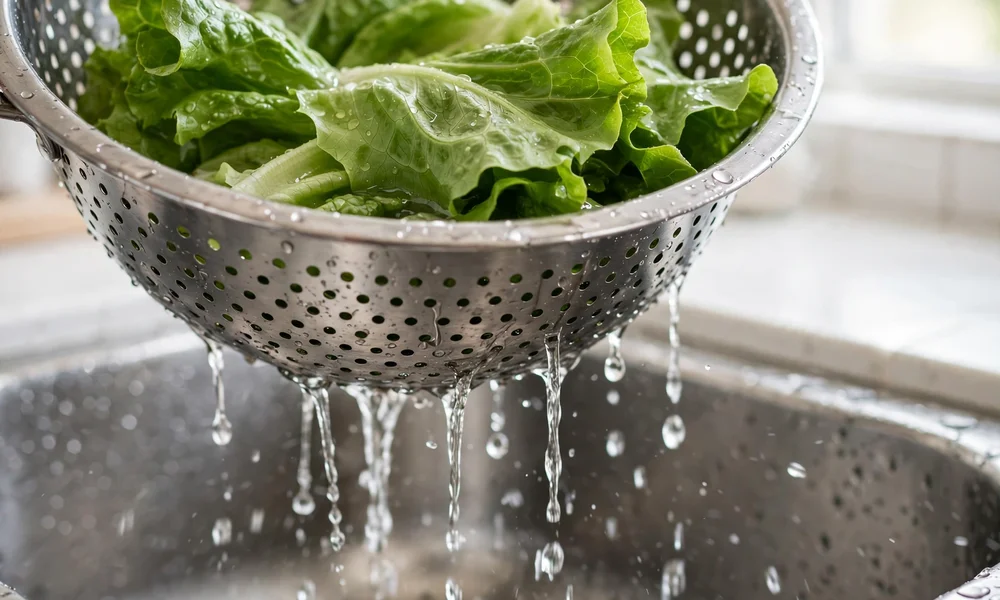
Steel is the workhorse. It takes boiling water without warping, it does not hold smells, and it can last for years. Its only weakness is weight when full, and the way it can mark a delicate sink if dropped.
Plastic is lighter and kinder to sinks, and it comes in bright colours that are easy to spot in a drawer. It can stain from tomato sauce and warp if boiling water sits in it too long, so it suits cold rinsing better than hot pasta. Silicone folds flat for a small kitchen, a gift in a crowded drawer, but a folding colander needs a firm hand, because it can wobble when full of hot water.
Draining Pasta Without a Mess
The mess usually starts before the pour. Put the colander in the sink first, with the tap out of the way, and keep a mug of the starchy pasta water aside, because a splash of it loosens a sauce later. Lift the pot with both hands.
Pour into the centre of the colander, not at the edge, and pour slowly enough that the water has time to leave. The pasta will settle in the middle and the water will run clear through the holes. Tip the colander once, gently, to shake the last drops free, then tip the pasta straight into the pan or the serving bowl. Never rinse pasta under the tap unless a recipe asks for it: the starch on the strands is what holds the sauce.

Rinsing Greens and Berries
Greens want a soft rinse, not a scrub. Put the leaves in the colander, run cool water over them, and lift them with your fingers so every side meets the stream. A gentle shake lets the water fall away, and a second shake takes the last of it. Wet leaves wilt a salad, so give them time to drip.
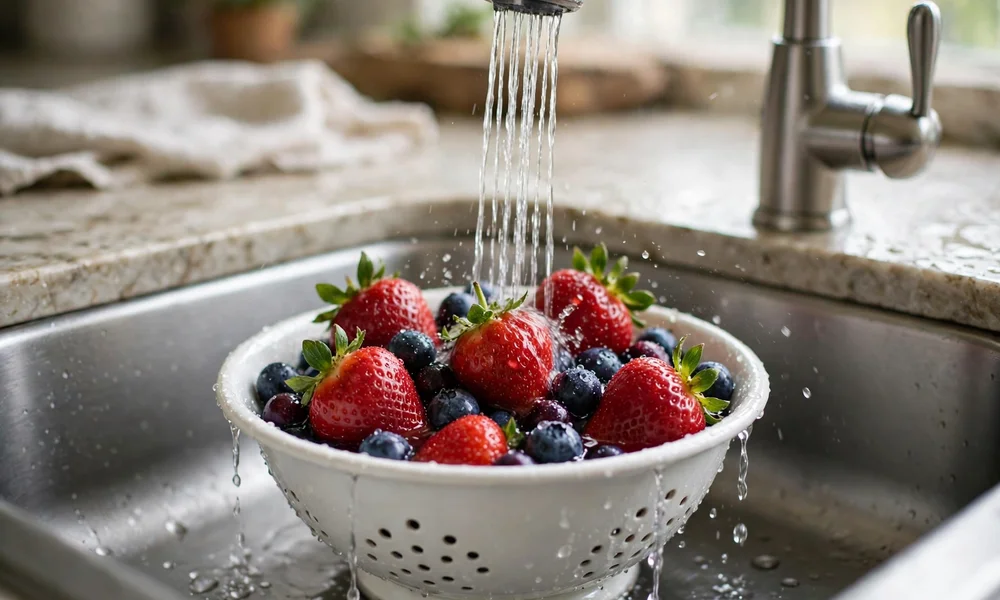
Berries need the lightest touch of all. A raspberry crushes under a finger, so the tap stays low and nothing presses the fruit. Blueberries are sturdier, standing up to a firmer rinse and a soft shake. Leave the colander over the sink briefly, then move the fruit onto a dry tea towel and dab it with a second one. Fruit that goes into a jug still wet turns the water cloudy.
A Morning Rinse, Step by Step
Morning is a good time for the colander, when the kitchen is still cool and the day's first food is being washed. Set the colander inside the sink. Take the greens from the fridge, pick out any tired leaves, and lay the rest in the colander.
Run the tap gently, turning the colander slowly so the water reaches every leaf. Lift the colander out and let it drip over the sink while the kettle boils. By the time the water is ready, the leaves are dry enough for the plate.
Colander Care at a Glance
| Rinse after use | Dry it fully | Hang it up |
|---|---|---|
| Small even holes | Wide steady base | Cool safe handles |
| Pour in centre | Shake once gently | Never overfill it |
| Soft water rinse | Pat berries dry | Store it dry |
Water and Berry Water
Water and berry water, a simple fresh ritual fills a jug with cool water and fresh berries, and the colander appears there for a single job: the berries are tipped into it and rinsed under cool running water, turned gently so every berry meets the stream. Then the colander is lifted out and the berries are patted dry on a cloth.
That guide is about the jug, and the colander is only a guest in it. This guide turns the camera around: here the colander is the subject, and the berries are one of many things that pass through it.
Water and the Salad Bowl
A water salad bowl with a simple fresh ritual sets washed greens in a bowl with cool water, a calm table setting where the salad is the centre of the meal. The washing happens before the bowl is filled, and the guide never stops to explain the tool.
This guide fills that gap. The salad bowl shows the finished greens; the colander guide shows the rinse, the shake, and the drip that gets them dry enough to eat.
Water and the Soup Pot
Water and the soup pot with a simple fresh ritual keeps a pot of soup simmering, water and vegetables together, with nothing drained away at all. The soup pot holds everything in until the soup is served.
The colander does the opposite job with the same water. Where the soup pot keeps the liquid, the colander lets it go, and that difference is the point: a soup is built by keeping, a drained dish by letting go.
Nine Neighbours in This Batch
This batch holds ten guides, and the colander sits among nine neighbours that could not be more different. The anatase guide asks whether a deep blue stone is worth keeping for bright days, the basalt guide walks through a deep black stone, and the tagua guide shows how to enjoy a soft cream seed for quiet days. Cowrie opens a complete guide to shell days, and the teacup guide pours calm mornings, one cup at a time.
The water guides in this batch scatter across the house and garden: a cold frame that shelters plants, a seedling guide with seven ways to help it grow, and a salad spinner that dries greens in a whirl. Amblygonite closes the set with a soft yellow stone to know before buying.
Stones That Must Never Touch Water
A kitchen sink holds water for food, and that water should hold nothing else, so here is a firm rule: stones belong on dry shelves, never in a glass, a jug, or a sink. Some stones are spoiled by a soak, and a few are unsafe anywhere near a drink. Apatite is one of the fragile ones: leave it in water and its polish turns flat, and the shine does not return when it dries. Lepidolite is the one to watch most closely, because its flakes carry lithium, so it stays far from every cup and tap.
Pyrite goes dark and rusty in dampness, angelite swells and turns dull, and amber is tree resin, not stone, so a soak turns it milky. A colander can be rinsed under the tap as often as you like; these five never can.
Your Colander Checklist
- Set the colander in the sink before the pot leaves the stove.
- Pour into the centre, slowly, and let the water run clear.
- Rinse greens gently and pat berries dry on a clean cloth.
- Shake the colander once, then tip the food straight into the pan or bowl.
- Wash it with warm soapy water and dry it fully before it goes back on its hook.
- If a new soap leaves your hands sore, patch-test it on a small spot first and ask a doctor — this guide is general information only.
Frequently Asked Questions
How do I drain pasta without making a mess?
Set the colander in the sink before you lift the pot, pour into the centre slowly, and tip the colander once to shake the last drops free.
Should I rinse pasta after draining it?
Usually not: the starch on the strands helps the sauce cling, so rinsing makes the pasta slippery. Rinse only when a recipe asks for cold pasta, such as a pasta salad.
Can I wash berries in a colander?
Yes, and it is the gentlest way: tip the berries in, run cool water softly over them, and let them drain for a minute. Raspberries bruise easily, so never rub them.
What size colander should I buy?
One that sits inside your sink with room to spare on every side, and holds a full pot of pasta without overflowing. A medium steel colander suits most kitchens.
How do I keep a steel colander from smelling?
Rinse it right after use, wash it with warm soapy water, and dry it fully before storing it. Food left in the holes dries hard and holds smells.
Can a colander go in the dishwasher?
Most steel and sturdy plastic colanders can, on the top rack, but hand washing is gentler and faster. Dry it fully after either wash.

The Bottom Line
Water and a colander drain well when the colander fits the sink, the holes are small and even, the pour is slow and central, and the tool is dried before it is put away.
A Note for Drained Days
A colander that fits, a slow pour, a gentle rinse, and a dry hook at the end — that is the whole of it.


