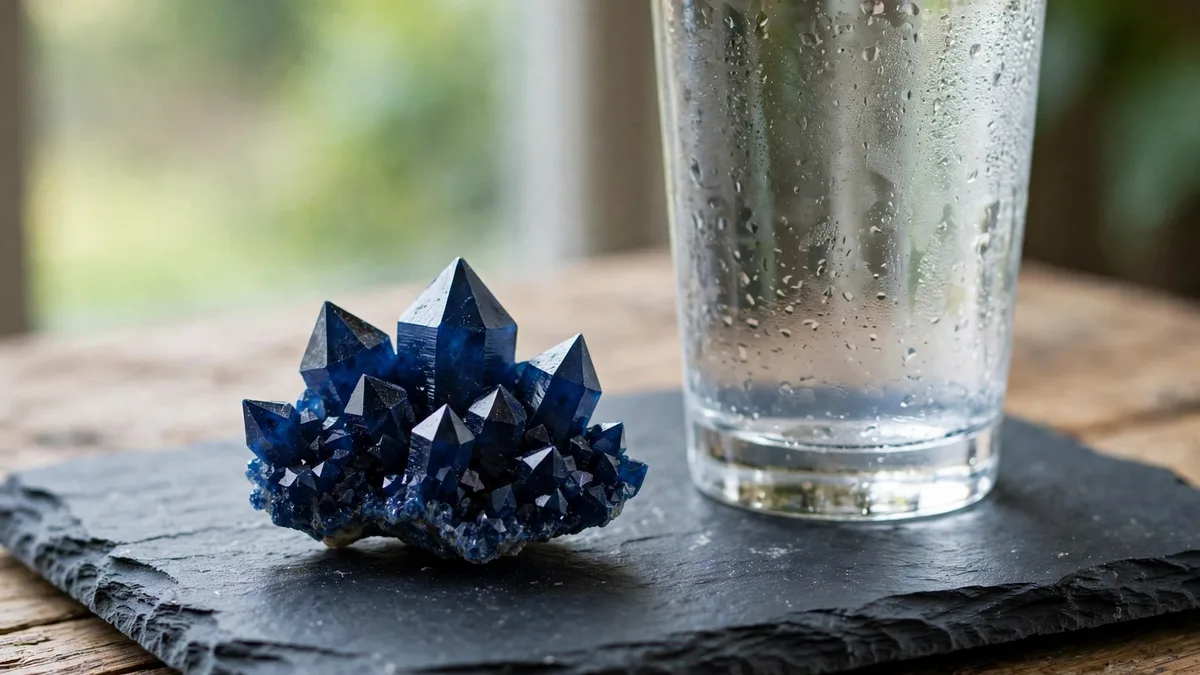
Anatase is a small blue stone that most people have never heard of, and that is half its charm. It grows as sharp little pyramids, deep blue where the light catches them, and it sits quietly on a desk while bigger stones take the attention. On a bright day, those small points light up like cut glass.
Whether it is worth buying depends on what you want from a stone. Anatase is a collector's stone, not a showpiece: small crystals, a deep colour, and a shape that rewards a close look rather than a glance from across the room.
This guide looks at anatase plainly: what it is, where it comes from, how it differs from its golden cousin rutile, and how to tell a genuine piece from a dyed imitation. It is general information, and it promises nothing for health.
Key Takeaways
- Anatase is titanium dioxide, the same mineral as rutile, in sharp blue pyramids.
- Its colour runs from deep blue to brown-black, and the blue pieces are the sought-after ones.
- Rutile grows as golden needles, anatase as pointed double pyramids.
- Keep anatase dry beside a glass of water, never inside it.
- Buy the piece you can see and hold, and walk away from sellers promising health benefits.
What Anatase Is
Anatase is titanium dioxide, the same chemistry as rutile, grown into a different shape. Where rutile stretches into fine golden needles, anatase builds sharp little pyramids, two points joined at the base. The crystals are usually small, often no bigger than a fingernail, and they catch the light on flat, bright faces.
The colour is what draws people in. Fine anatase is a deep, inky blue, darker at the base and brighter toward the points, though many pieces run brown, honey or near-black instead. Blue pieces are the ones collectors ask for, and the rarest, so a good blue crystal costs more than a brown one of the same size. Its points chip if it is knocked against a hard surface.

Where Anatase Comes From
Anatase grows in cracks and pockets inside rock, where hot water once moved through and left minerals behind. The best-known pieces come from the Alps, where collectors find small blue pyramids tucked into high clefts, and other good pieces come from Brazil, Norway and the United States. Each place gives the crystals a slightly different shade.
The crystals grow slowly, one face at a time, which is why they are so small and so sharp. A pocket that took thousands of years to fill may hold only a handful of good crystals. Ask the seller where a piece was found, because a named source is a sign of an honest dealer.
Anatase and Rutile
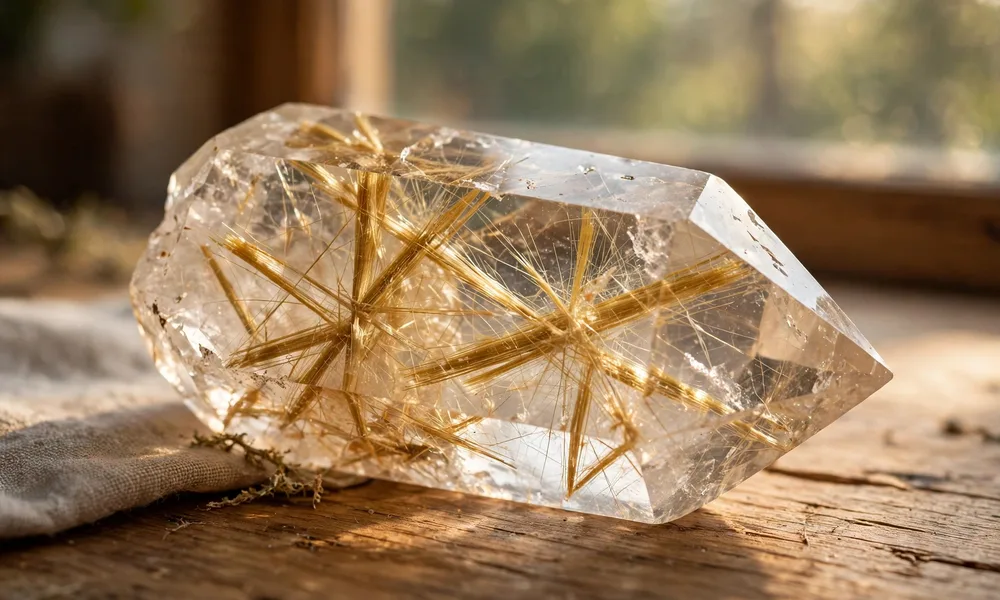
The complete guide to rutile describes a mineral of fine golden needles, titanium dioxide in its natural form, growing in thin threads that catch the light like warm straw. Most people first meet rutile sealed inside clear quartz, where the needles shine through the glass.
Anatase is rutile's twin in chemistry and its opposite in shape: rutile grows long and golden, while anatase grows short, sharp and blue. Rutile is the gold you find when you look into a stone; anatase is the blue point you hold between your fingers.
Anatase and Rutilated Quartz
Rutilated quartz golden threads for focused days keeps a clear quartz on the desk, golden rutile needles running through it, for a brief pause before the working day starts. The stone there is quartz first, and the rutile is the guest living inside it.
Anatase never plays that guest role. It grows on its own, as free-standing pyramids on a small base of rock, with no quartz around it and nothing to look through. A rutilated quartz is a window with gold inside it; an anatase crystal is the whole view in one small blue point.
Anatase and Cymophane
Why cymophane suits quiet days describes a honey-gold stone with a moving band of light, the cat's-eye variety of chrysoberyl, whose fine rutile needles gather the light into a single bright line. Its beauty is the band that slides across its surface as it turns.
Anatase could hardly be more different: cool and blue where cymophane is warm and gold, its beauty in sharp points and flat faces, not in a moving band. Cymophane is polished smooth and set in jewellery; anatase is kept rough, as a small crystal on a tray.
How to Spot a Genuine Piece
Look at the piece in plain daylight first, at arm's length, then close to the window. A genuine crystal shows flat, bright faces meeting at sharp edges, and the colour should deepen toward the base. Turn it slowly: the blue should shift a little as the light moves, never stay one dead shade.
Feel the points with a fingertip: real anatase points are crisp and a little fragile, and the surface should be cool and smooth, not sticky or waxy. Ask the seller to show the actual piece, not a photograph of a different one, and ask where it was found. Walk away from any piece that looks dyed, any seller who will not name a source, and any seller who promises health benefits.
Anatase in Daylight
A bright day is when anatase earns its keep. Set the crystal on a pale tray by the window, where the morning sun comes in sideways, and the flat faces catch the light one by one as you turn the tray. The deep blue glows from inside.
The stone needs no spotlight or special lamp: plain daylight is enough, and too much direct sun can wash the colour out to the eye. Late morning light, soft and clear, shows it best. Sit with it for a minute, turn it once, and put it back on the tray.
Keeping Anatase at Home
Anatase asks for very little keeping. Give it a tray of its own, away from harder stones that could chip its points, and dust it with a dry, soft cloth once a week. No water touches the stone at all: a damp cloth leaves marks on the bright faces.
Keep the tray out of the bathroom, where steam settles on everything, and out of direct afternoon sun. A desk by the window, a shelf in a dry room, or a cloth-lined box all suit it. The stone will not change if it is left alone: a good crystal needs keeping, not fussing.
A Bright Morning with Anatase, Step by Step
Anatase looks its best in the morning, while the light is still clear and the house is quiet. Put a white ceramic tray on the desk near the window, the crystal in the middle with its longest point turned toward the light, and a folded linen cloth at one corner. The glass of water goes on the far side of the desk, well away from the tray, so stone and water stay apart.
Fill the glass, sip it slowly, and glance at the crystal between sips as the morning settles. Give the tray one turn so another face catches the sun. Once the glass is empty, the stone stays where it is, and the day can begin.
Anatase at a Glance
| Deep blue points | Dry tray, window | Never in water |
|---|---|---|
| Sharp double pyramids | Pale tray, daylight | Dust dry weekly |
| Small, slow grown | Named source best | Hold, then look |
| Blue costs more | Cool, dry shelf | No health claims |
Nine Neighbours in This Batch of Guides
Nine other guides share this batch with anatase, each keeping its own corner of the same quiet world. Amblygonite is a soft yellow stone to know before buying, basalt is a deep black stone, cowrie is a smooth shell for quiet days, and tagua is a pale nut for the same calm hours — four stone companions, each one dry beside water.
The five water guides work the wet side of the house: a salad spinner dries washed leaves for lunch, a colander drains pasta and vegetables, a teacup holds a calm morning drink, a seedling is a young plant just starting out, and a cold frame is the shelter that guards it from wind. Anatase sits on its tray while the water guides do their wet work.
Stones That Must Never Touch Water
Some stones are ruined by water, and a few are unsafe anywhere near a drink, so the rule here is simple: stones stay on dry trays, and water stays in its own glass. Amber, tree resin rather than true stone, turns milky after a soak and never clears again, while angelite swells in dampness and loses its face.
Pyrite darkens when it stays wet, apatite loses the polish that made it worth keeping, and lepidolite holds lithium in its flakes, which keeps it far from every cup and tap. Anatase itself is kept dry too, dusted with a soft cloth and never rinsed.
Your Bright-Days Checklist
- Choose a crystal with sharp points and flat, bright faces in daylight.
- Ask where the piece was found and to see the actual stone.
- Keep it on a tray of its own, away from harder stones that could chip it.
- Dust it with a dry, soft cloth once a week; never rinse or soak it.
- Keep the glass of water well away from the tray, so stone and water never meet.
- If a seller promises health benefits, walk away — no stone heals anything.

Frequently Asked Questions
Is anatase really the same mineral as rutile?
Yes, both are titanium dioxide, but they grow differently: rutile forms fine golden needles, anatase sharp blue double pyramids.
Why are blue anatase crystals more expensive?
Blue pieces are rarer than brown or black ones, and collectors ask for them first, so a small blue crystal costs more than a brown piece of the same size.
Can I put anatase in water?
No, keep it dry beside the glass, never inside it, and dust it with a dry, soft cloth.
How can I tell dyed anatase from the real thing?
Dyed pieces show one flat, even colour with no depth, while genuine anatase deepens toward the base and shifts as the light moves.
Where should I keep anatase at home?
On a tray of its own in a dry room, away from harder stones and bathroom steam. A desk by the window or a shelf lined with cloth suits it well.
Is anatase a good first stone to collect?
It is a good small start if you like sharp crystals and deep blue colour. Buy the piece you can see and hold, and start small.

The Bottom Line
Anatase is worth it for bright days when you want a small, sharp blue crystal to look at in daylight, from a seller who names its source.
A Note for Bright Days
A small blue point, a pale tray, a window of morning light — that is the whole of it.


