Amblygonite is easy to walk past. It is not bright like citrine and not bold like topaz, and its pale yellow can look plain in a shop full of stronger colours. Yet collectors keep coming back to it, because the softness of the colour is the point.
The stone is a phosphate mineral, and it carries lithium inside it, which is one reason it needs gentle handling and a dry home. It is softer than quartz, so it chips if knocked, and it should never be soaked. Knowing those facts before you buy saves the disappointment of a stone that looked perfect in the shop and dull at home.
This guide covers what amblygonite is, how its colour should look, how to pick a good piece, and how to keep it safe on a shelf. It is general information about a stone.
Key Takeaways
- Amblygonite is a pale yellow phosphate stone that contains lithium.
- Its colour should be soft and even, never dyed or patchy.
- It is softer than quartz, so handle it gently and keep it dry.
- It stays beside water, never in it.
- Check for cracks and chips before you pay, and buy from a seller you trust.
What Amblygonite Is
Amblygonite is a phosphate mineral, made of lithium, aluminium, phosphate and fluorine. It grows in granite pegmatites, the coarse-grained rocks where large crystals form slowly, and it is found in places such as Brazil and Myanmar. Most pieces sold today are small: tumbled stones and rough chunks, with the occasional faceted gem.
The stone is not rare, but good pieces are not common either. Much of what is sold as amblygonite is pale and cloudy, and only a little of it is clear enough to cut. A tumbled piece is the usual way to meet it, smooth and warm in the hand, with a soft glow rather than a sparkle.
The Soft Yellow Colour
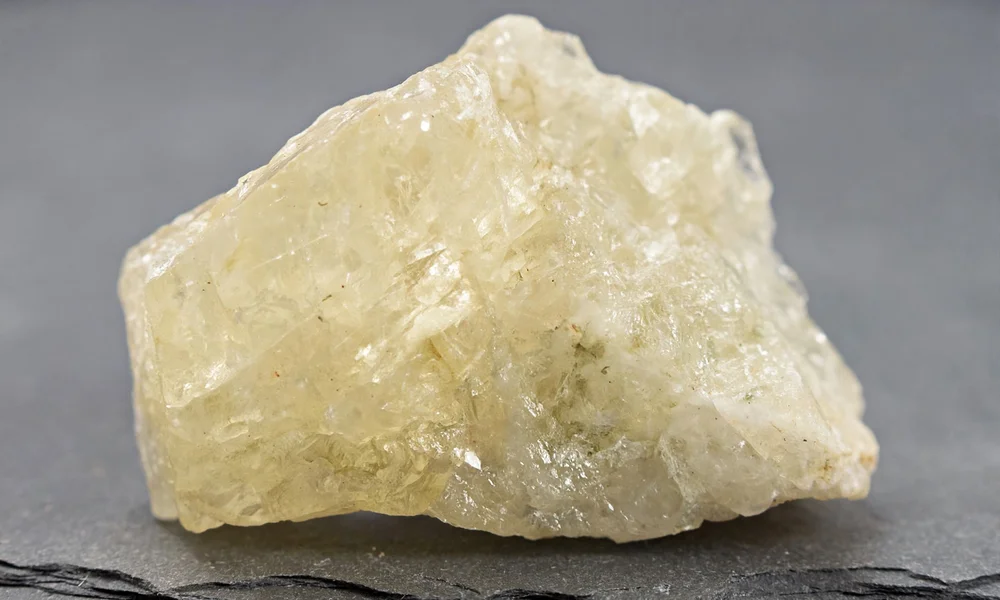
The colour is the first thing to judge. Good amblygonite is a pale, creamy yellow, sometimes with a greenish tint and sometimes almost white. The best pieces hold one even tone all the way through, without dark patches or cloudy streaks.
Beware of yellow that looks too strong. A bright, even, almost lemon yellow is often a dyed stone, and dye fades with time and light. Hold the piece under a lamp and turn it slowly: natural amblygonite shows gentle shifts in tone, not a flat painted surface.
Choosing a Piece Before You Buy
Take your time in the shop. Pick the stone up and feel its weight: a real piece feels cool and solid, not light like glass or plastic. Look at it in daylight if you can, because shop lamps can hide flaws and flatter the colour.
Check the edges and corners for chips, and run a finger over the surface for cracks you can feel but not see. A small chip on a tumbled stone is not a disaster, but it should lower the price, and a crack that runs through the stone will only grow. Ask the seller where the stone came from: a seller who knows the answer is worth more than a low price.
Tumbled, Raw or Faceted?
A tumbled stone is the simplest buy. It is smooth, rounded, and easy to hold, and it shows the colour without fuss. Tumbled pieces are also the cheapest way to own the stone.
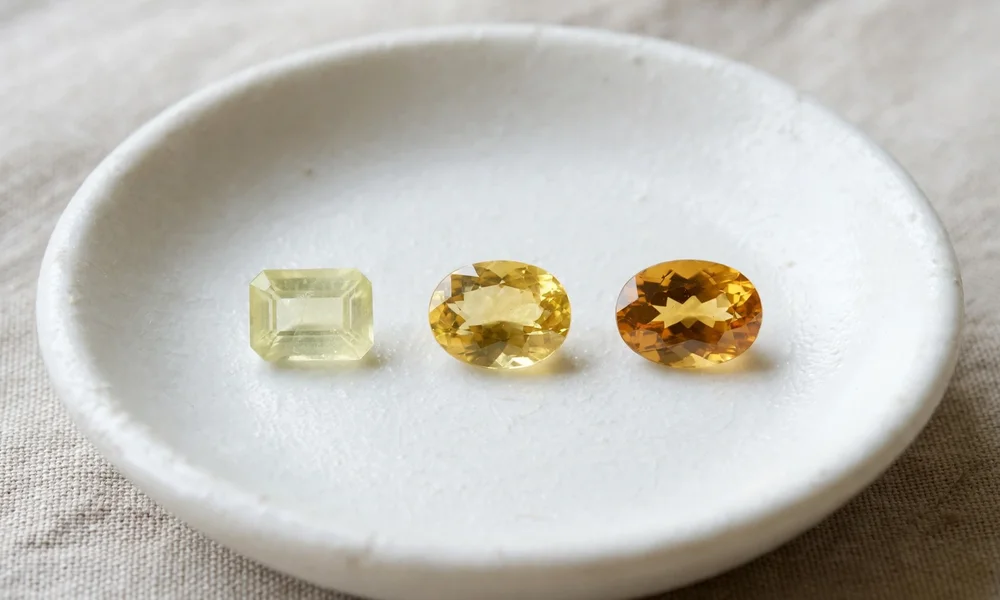
A raw chunk shows the stone as it came from the ground, with flat faces and a rougher feel. It suits a display, where its shape can be seen, but its edges can chip if moved often. A faceted gem is the rarest form: cut like a jewel, it catches the light, but it costs far more, and it is better kept in a box than carried in a pocket.
Amblygonite and Lepidolite
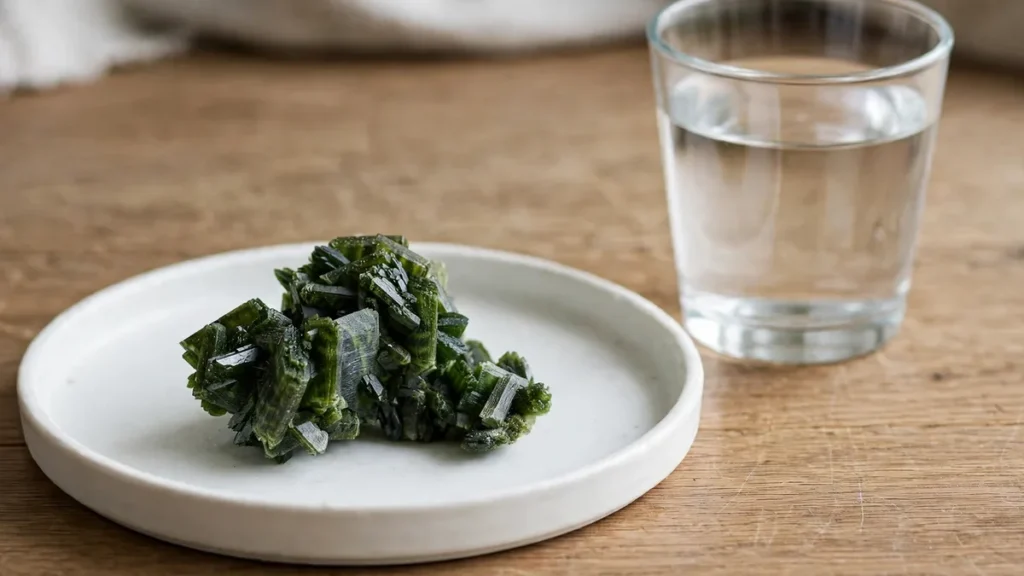
Lepidolite calm stones for anxious evenings sets out a brief evening habit centred on a lilac stone, with a glass of fresh water placed next to it and a short stretch of unhurried time in a still room. The stone is lepidolite, a lilac mica, and the guide puts one rule first: the lithium inside it means the stone is for holding only, and water is out of the question.
Amblygonite shares that lithium, but little else. Lepidolite is a flaky lilac mica, sold for evenings; amblygonite is a pale yellow phosphate, sold as a stone to choose and keep. One guide teaches a ritual for the end of the day, and this one teaches how to buy a stone.
Lepidolite for Calm Nights
Lepidolite soft purple for calm nights places a lepidolite stone in a dish by the bed, where it serves as a small violet cue to slow the evening down. The colour is a gentle lavender, pale and calm, and tiny silver flecks glint as the stone is turned under lamplight. The guide repeats the warning that lepidolite carries lithium and must stay away from water.
The two lepidolite guides agree on the stone's character: soft, purple, flaky, and strictly beside the glass. Amblygonite stands apart in colour and in kind, a creamy yellow phosphate rather than a lilac mica.
Triphane's Warm Yellow
Triphane warm yellow for bright days describes another yellow stone, triphane, a yellow form of spodumene. Its yellow is warmer and deeper than amblygonite's, with a honeyed glow that suits bright days. Triphane is harder than amblygonite, so it takes a polish well.
Side by side, the difference is easy to see: triphane glows warm and golden, while amblygonite stays pale and creamy. A buyer who wants a bold yellow should look at triphane; a buyer who wants a quiet one should look at amblygonite.
Amblygonite at a Glance
| Pale creamy yellow | Phosphate stone | Contains lithium |
|---|---|---|
| Softer than quartz | Keep it dry | Beside water only |
| Check for cracks | Even colour best | Buy from trust |
A Quiet Corner, Step by Step
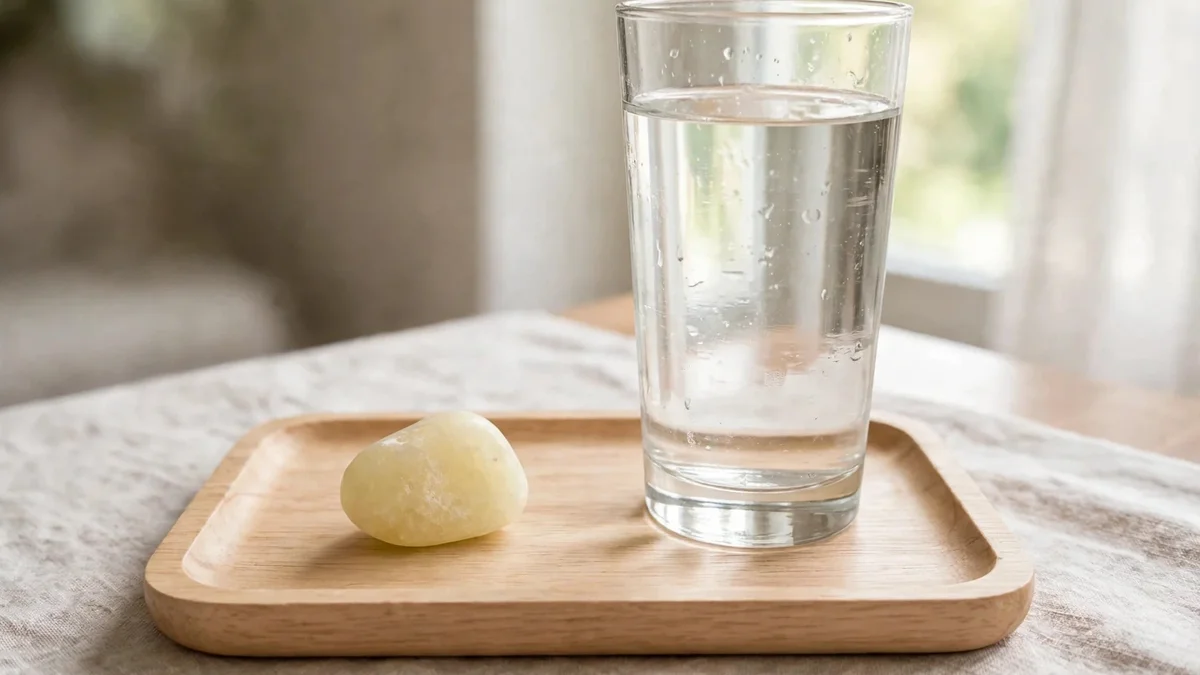
Evening is the kindest hour for a new stone. Clear a small corner of a table, lay a folded linen cloth on it, and set a wooden tray on the cloth. Pour a glass of fresh water and place it on the tray, then set the amblygonite on the cloth beside the tray.
Light a candle in a glass holder and put a closed book next to it, then sit for a few minutes with the stone in view. Look at it in the candlelight and turn it once, slowly, to see how the colour shifts. When you are done, the stone goes back on its shelf and the tray is wiped dry.
Nine Neighbours in This Batch
The colander guide in this batch drains pasta and rinses berries in the kitchen sink, and the salad spinner guide dries greens in a whirl, while the seedling guide offers seven ways to help a young plant grow. A cold frame shelters plants through the cold, and the teacup guide pours calm mornings one cup at a time.
The stone guides are just as varied. Cowrie opens a complete guide to shell days, tagua shows how to enjoy a soft cream seed for quiet days, basalt walks through a deep black stone, and anatase asks whether a deep blue stone is worth keeping for bright days.
Stones That Must Never Touch Water
Water ruins some stones in different ways, and amblygonite is one of the stones that must stay dry. As a soft phosphate it does not like a soak: the surface can go dull, and a long bath can weaken it. Keep it on a tray beside the glass.
Other stones fail faster. Lepidolite holds lithium in its flakes, so a soak is not just damage, it is unsafe near any drink, and it never belongs in water. Apatite loses its polish in a soak and never gets it back. Pyrite rusts and darkens when it stays damp, angelite swells and turns dull, and amber, which is tree resin rather than stone, turns milky.
Looking After Your Stone
A soft stone wants a soft home. Keep amblygonite in a small cloth pouch or a lined box, away from harder stones that could scratch it. Quartz and topaz are both harder, so they should never share a pouch with it. A shelf with a cloth under the stone is enough.
Clean it rarely, and gently. A dry, soft cloth takes off dust, and a barely damp cloth can follow for a fingerprint, but the stone must be dried at once, with no soaking and no soap. Sunlight is fine for a look, but do not leave the stone on a sunny windowsill for weeks.
Your Buying Checklist
- Hold the stone in daylight and look for one even, creamy yellow tone.
- Feel the edges for chips and the surface for cracks you can feel but not see.
- Ask the seller where the stone came from and what it is.
- Choose tumbled for a first piece, raw for display, faceted only if the price is fair.
- Keep it in a cloth pouch away from harder stones, and dry it at once if it gets damp.
- If a stone leaves your skin red or itchy, set it aside and speak to a doctor — nothing here is medical advice.

Frequently Asked Questions
What colour should amblygonite be?
A pale, creamy yellow, sometimes with a greenish tint and sometimes almost white. The tone should be even all the way through, without dark patches.
Is amblygonite a rare stone?
It is not rare, but good pieces are not common. Most of what is sold is pale and cloudy, and only a little is clear enough to cut.
Can amblygonite go in water?
No. It is a soft phosphate stone that should stay dry, so keep it beside a glass of water, never in it, and never in a drink.
How is amblygonite different from citrine?
Citrine is a yellow quartz, harder and brighter, while amblygonite is a softer phosphate with a paler, creamier yellow.
Does amblygonite need special care?
Yes, a little: keep it in a cloth pouch away from harder stones, clean it with a dry soft cloth, and dry it at once if it gets damp. Never soak it and never use soap on it.
How much should a piece of amblygonite cost?
A small tumbled piece is modest in price, a raw chunk costs a little more, and a faceted gem costs far more. If a price seems too low for a large clear piece, ask the seller why.

The Bottom Line
Amblygonite is worth buying when the colour is soft and even, the piece is free of cracks, the seller can say where it came from, and you are ready to keep it dry, handled gently, and beside water rather than in it.
A Note for Bright Days
A pale yellow stone, a dry shelf, a glass of water beside it, and a buyer who looked before paying — that is the whole of it.