Some mornings start grey. The kitchen is dim, the light is thin, and the day ahead looks plain before it has even begun. One small fresh habit can brighten that hour without asking much of you.
Berry water is that kind of habit: a jug of plain water with fresh raspberries and blueberries drifting in it, pink at the edges and faintly sweet in scent, ready in minutes. All it needs is a handful of berries, one jug, and a short wait while the fruit settles in the water.
Below is a plain guide to water and berry water: what the drink is, how to put it together, and how to keep it fresh and clean. It promises no cure, no detox and no health change; it is a pleasant drink and a quiet morning ritual, nothing more.
Key Takeaways
- Berry water is plain fresh water with raspberries and blueberries resting in it.
- It is a pleasant drink and a calm ritual, never a cure or a detox.
- The berries are washed well, the jug is made fresh, and the water is drunk the same day.
- One small jug in the morning is enough; make a new one tomorrow.
- For any lasting health worry, a doctor is the right person to ask.
What Berry Water Is
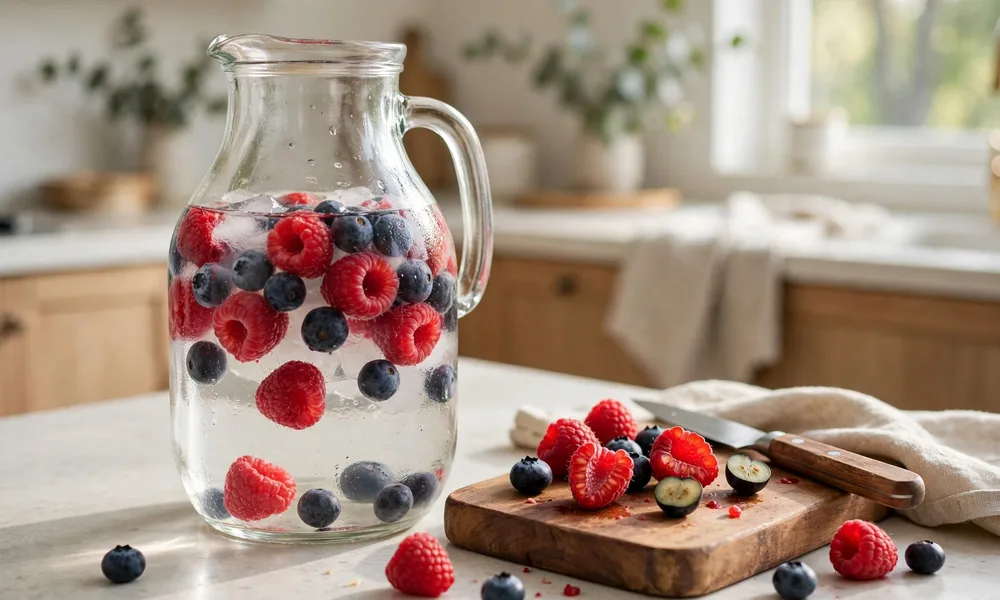
Berry water is fresh drinking water that has sat for a while with berries in it. The water picks up a little colour and scent from the raspberries and blueberries, and stays plain water at heart. Raspberries lend a soft pink blush and a gentle perfume, while blueberries sink slowly and tint the water a faint violet.
It is not juice, and it is not a sweetened drink. The berries stay whole, the water stays clear, and the flavour stays light — just enough to make a plain glass feel like a small treat. A glass of berry water looks like a celebration and drinks like plain water, which is exactly why it suits a quiet morning.
Why Berries Suit Fresh Water
Berries are small, soft and quick to share their colour, which makes them easy partners for a jug of water. A raspberry opens its scent within minutes, and a blueberry colours the water as it rests, so the jug looks ready long before an hour has passed.
Other fruit needs slicing, peeling or long soaking before it shows itself. Berries need only a rinse and a gentle drop into the jug, and the morning table gains a pink and violet jug with almost no work at all. That ease is the point: a ritual you can keep is one that takes five minutes, not fifty.
Choosing Berries for the Jug
Look for raspberries that are dry, plump and whole, with no soft dark spots and no juice leaking into the punnet. Blueberries should be firm, dusty blue and round, with no wrinkled skins and no pale green ones hiding at the bottom. A small handful of each is enough for one jug.
Buy berries you would happily eat as they are, and use them the same day if you can. Soft or sour fruit belongs in cooking, not in a jug of drinking water.

Washing the Berries Well
Tip the berries into a colander and rinse them under cool running water, turning the colander gently so every berry meets the stream. Raspberries are delicate, so keep the water soft and never rub them; blueberries can take a slightly stronger rinse and a gentle shake.
Lift the colander out and let the berries drain for a minute, then tip them onto a clean cloth and pat them dry with another. Wet berries cloud the jug, and dry berries keep the water clear.
Making a Jug of Berry Water
Fill a clean glass jug with cool fresh water, leaving a finger of space at the top. Drop in the washed raspberries and blueberries, a few at a time, and watch them settle: raspberries float near the top, blueberries drift down slowly. Give the jug one gentle stir with a long clean spoon.
Set the jug in the fridge for twenty minutes, or drink it straight away if you are thirsty. Pour into a glass, sip slowly, and enjoy the faint berry scent as you go. If the colour looks pale after twenty minutes, give the jug one more gentle stir and let it rest a little longer before pouring.
Berry Water at a Glance
| Raspberries, blueberries | One clean jug | Drink same day |
|---|---|---|
| Cool fresh water | Twenty minutes rest | Wash berries first |
| Light pink tint | Fridge, covered | Make it fresh |
| Whole fruit only | Morning, one jug | No sweetener added |

Berry Water and Orange Water
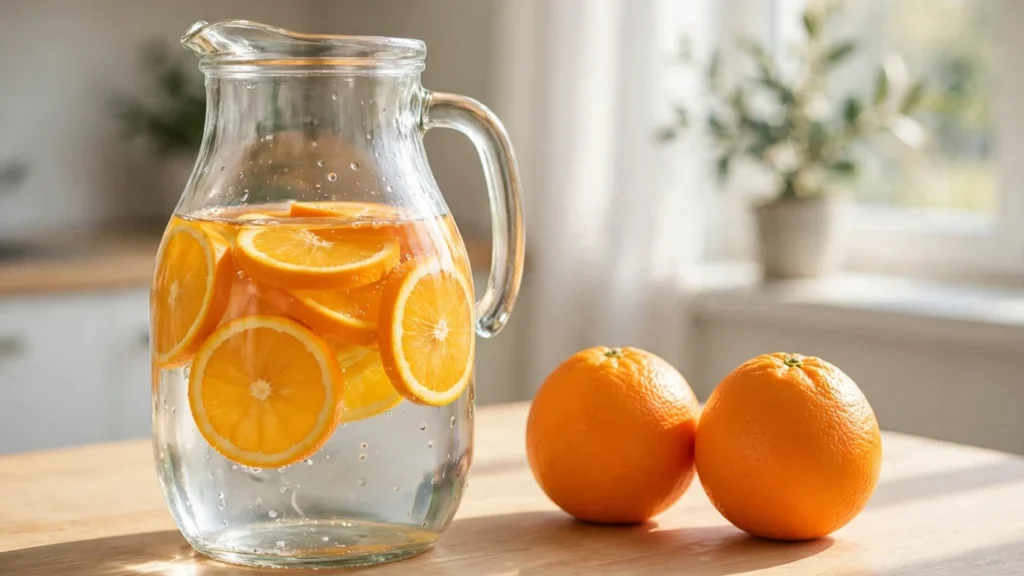
Orange water for fresh mornings is the bright cousin of this drink: a jug of plain water with fresh orange slices floating in it, warm in colour and citrus in scent. Where orange water is sunny and bold, berry water is soft and pink.
The difference is a matter of mood. Orange water suits a kitchen that wants brightness first thing, with slices that need cutting and a jug that glows amber. Berry water suits a quieter table, with fruit that needs only a rinse and a jug that blushes pink.
Berry Water and Lemon Water
Lemon water for skin safety works very differently: lemon juice is sharply acidic, and it can sting skin and irritate it, especially when sunlight follows. Berry water is a drink, not a rinse, and its berries are gentle beside lemon's sharp juice.
Keep the two apart in your mind. Lemon water belongs to careful skin routines with plenty of dilution, while berry water belongs at the breakfast table, poured into a glass and drunk slowly.
Berry Water and Cucumber Mint Water
Cucumber mint water for summer skin is the cool cousin of this drink: a jug of cold water with cucumber slices and fresh mint leaves, faintly green and lovely on hot days. Where cucumber mint water is cool and herbal, berry water is soft and fruity.
Both jugs are made the same way — fresh water, fresh produce, a short rest — yet they taste and look nothing alike. Cucumber mint suits a hot afternoon; berry water suits a fresh morning.
Berry Water and Sparkling Water
Sparkling water, the sibling numbered 781, is the fizzy cousin of this drink: plain water with bubbles, bright and lively in the glass, made for days that want a little sparkle. Where sparkling water fizzes, berry water rests quietly.
The two can meet, if you like: pour berry water over ice and top it with a splash of sparkling water for a bubbly pink glass. Keep the berries in plain water first, though, and add the sparkle only at the moment of pouring.
Keeping Berry Water Fresh and Clean
Berry water is a same-day drink, and freshness is the whole secret. Keep the jug covered in the fridge, pour what you need, and throw away whatever is left at the end of the day. Berries left overnight turn soft, and soft berries cloud the water.
Wash the jug with hot soapy water after every use, rinse it well, and let it dry upside down before the next morning. A clean jug keeps the next batch tasting fresh, and a sour jug spoils even the finest berries. Keep a spare jug on the shelf, so one can dry while the other is in use.
Take the jug outside on a warm afternoon, if you like, and set it on a garden table with a small bowl of berries beside it. Shade keeps it cool, and a tray keeps the glass steady on uneven wood.
When to Skip the Berries
Most people can enjoy berry water without a thought, yet there are days to skip it. If berries have ever made your mouth tingle, your lips swell or your skin itch, leave them out and drink plain water instead. If a berry tastes sour or smells off, throw the whole jug away.
Children should drink berry water only with an adult nearby, and anyone with a lasting health worry should ask a doctor rather than a jug. This guide is gentle general information only, and it treats nothing. If you take regular medicine or follow a special diet, check with your doctor before adding any new daily drink.
Your Fresh Ritual Checklist
- Rinse the raspberries and blueberries gently under cool water.
- Fill a clean jug with cool fresh water, then add the berries.
- Rest the jug in the fridge for twenty minutes, covered.
- Pour one glass, sip it slowly, and enjoy the morning.
- Throw away leftover berry water at the end of the day.
- For any lasting health worry, see a doctor; a drink treats nothing.

Frequently Asked Questions
What is berry water?
Berry water is plain fresh water with raspberries and blueberries resting in it. The water picks up a little colour and scent, and stays plain water at heart.
How long should berry water rest?
Twenty minutes in the fridge is enough for a light blush and scent. Longer rests deepen the colour, but the jug should still be finished the same day.
Can I use frozen berries for berry water?
Frozen berries work in a pinch, and they chill the jug as they thaw. Fresh berries look and taste brighter, so use fresh ones when you can.
Can I add sweetener to berry water?
No sweetener is needed, and this guide adds none. The berries lend a faint sweetness of their own, and plain water keeps the drink light.
Is berry water safe for children?
Children can enjoy a small glass with an adult nearby. Skip the berries entirely if a child has ever reacted to them, and offer plain water instead.
How do I keep berry water fresh?
Make it fresh each morning, keep the jug covered in the fridge, and throw away what is left at night. Wash the jug well before the next batch.
The Bottom Line
Berry water turns plain water into a small morning pleasure: one jug, a handful of raspberries and blueberries, twenty minutes of patience, and a fresh pink glass to sip slowly.
A Note for Fresh Mornings
Keep the jug clean, the berries fresh, and the ritual simple. One pink jug, one slow glass, and a quiet morning are all you need.