Some lunches ask for a stove, a pan, and half an hour of attention. A salad bowl asks for almost nothing: a wide bowl, a few crisp vegetables, cold water to wash them, and a glass of water standing beside the finished bowl.
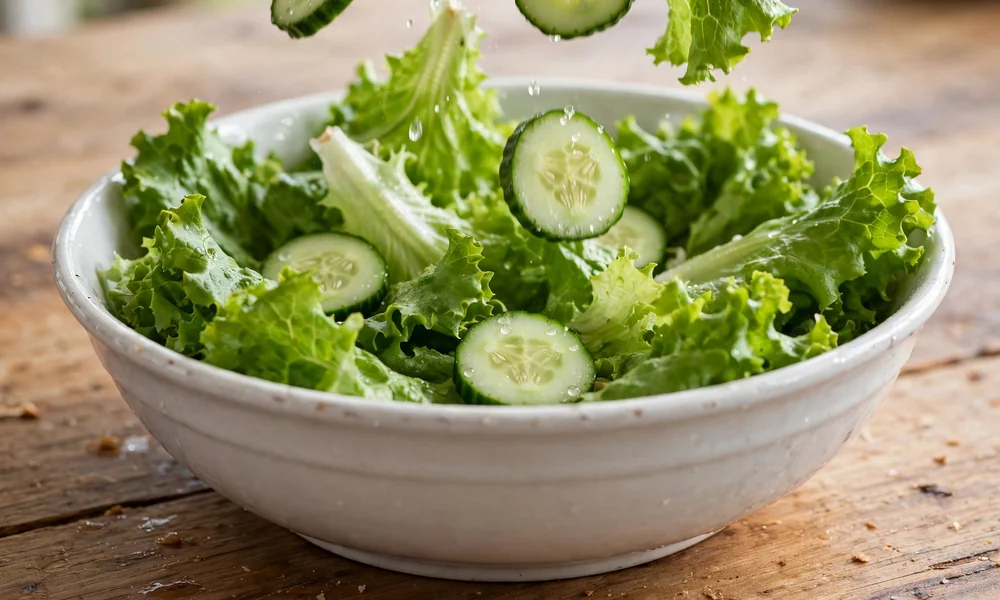
A salad bowl is the green cousin of the fruit bowl. Where a fruit bowl holds whole fruit to be eaten piece by piece through the day, a salad bowl holds cut vegetables and torn leaves, washed, tossed, and eaten at one sitting.
This guide follows that small habit: which greens to pick, how to wash and build the bowl, how to keep it fresh, and how it differs from all the other fresh mornings in this journal.
Key Takeaways
- A salad bowl is a wide bowl of washed, cut vegetables and torn green leaves.
- A tall glass of cool water sits beside the bowl, and together they form one fresh ritual.
- The vegetables get washed, cut, and tossed, then eaten in one sitting.
- Choose a few greens you like, keep the bowl small, and build it just before eating.
- This stays a pleasant home habit, never a treatment, and health worries belong with your doctor.
What the Salad Bowl Ritual Is
A salad bowl ritual is a short, calm way to make lunch. You take a wide, shallow bowl, wash a handful of leaves and a few vegetables under cold running water, shake them dry, tear the leaves, slice the rest, and toss everything together with a little oil or lemon. A glass of water goes on the table beside the bowl, and that is the whole ceremony.
The ritual works because it is small. The bowl is built in the minutes before lunch, eaten slowly at the table, and washed up straight after.
Choosing Your Bowl and Greens
Choose a bowl that is wide rather than deep, so the leaves have room to breathe and you can reach the bottom without digging. Ceramic and glass both suit the job; a heavy bowl stays put on the table, while a light one is easier to carry. Keep one bowl for salads.
For greens, start with what you like and what is fresh that week. Lettuce, cucumber, and cherry tomatoes make a plain, reliable base. Buy small amounts and use them the same day, because salad leaves lose their crispness quickly once they are cut.
Building the Bowl, Step by Step
Building a salad bowl takes about ten minutes, and the order matters more than speed. First, wash everything under cold running water, leaf by leaf, and shake the water off over the sink. Second, tear the lettuce into bite-sized pieces with your hands, since a knife bruises the edges. Third, slice the cucumber and halve the tomatoes, and drop them over the leaves.
Fourth, add a pinch of salt and a spoon of oil, or a squeeze of lemon if you prefer it plain. Fifth, toss the bowl gently with two spoons, lifting from the bottom so the dressing reaches every leaf. Then sit down and eat while the leaves are still crisp.
Water Beside the Bowl
Water does two jobs in this ritual, and both of them are simple. Cold running water washes the leaves and vegetables before they are cut, carrying away soil and dust. A glass of cool water on the table keeps the meal company, sipped slowly between mouthfuls.
Keep the two waters apart in your mind. Washing water runs over the leaves and down the drain; drinking water stays in its own clean glass. One glass, one bowl, one quiet lunch — that is the whole of it.
A Salad Bowl at a Glance
| Wide shallow bowl | Crisp green leaves | Wash leaves first |
|---|---|---|
| Cut vegetables, torn | Lunch, one sitting | Glass kept apart |
| Lettuce, cucumber, tomato | Small bowl, fresh | Toss just before |
| Ten minutes, plain | Bright kitchen light | Eat while crisp |
| One bowl, one glass | Tidy table, calm | Wash up straight |

A Salad Bowl and a Fruit Bowl
Water and a fruit bowl is the closest cousin this ritual has. A fruit bowl sits on the table all day, filled with whole fruit, and you take a piece whenever you like.
A salad bowl is built differently and eaten differently. Its vegetables are cut and torn, tossed with a little oil or lemon, and eaten at one sitting, at lunch. A fruit bowl holds whole fruit for grazing; a salad bowl holds cut greens for a meal. The fruit bowl stays out all day, while the salad bowl is built, eaten, and washed up within the hour.
A Salad Bowl and a Citrus Morning
Water and a citrus morning begins the day with sliced citrus and water, bright and sharp, before breakfast has even started. It is a morning habit, quick and waking, and the citrus is the whole point of it.
A salad bowl belongs to the middle of the day. It is green and calm where a citrus morning is bright and sharp, and it is a meal where the citrus morning is a drink beside one. Both use water and fresh produce, but they live in different hours.
A Salad Bowl and Dinner Parties
Water and dinner parties is about feeding a table full of guests: shared dishes in the middle, roast vegetables and bread, a salad set down among them, and slow talk between courses. Salad appears there as one dish among many, passed from hand to hand.
A salad bowl on an ordinary day is the opposite of a party. It is one bowl for one person, or one bowl shared by two, with no guests and no courses. The party salad is a side dish in a crowd; the salad bowl ritual is the meal itself, quiet and complete.
A Salad Bowl and the Other Fresh Mornings
Fresh mornings take many shapes in this journal, and the salad bowl has its own corner among them. A sunny afternoon lunch pairs a bowl of green salad with sliced fruit and a glass of cool water, yet that salad is a passing mention in a wider afternoon, not a ritual of its own. A garden party, a reunion, a festival meal, and an Easter lunch all mention salad as party food, never as the subject. Here the bowl is the subject: chosen, washed, built, and eaten as one small ritual.
A Salad Bowl and the Other Water Rituals in This Batch
Four other water rituals sit beside the salad bowl here, each holding a different quiet hour of the day. Golden milk is a warm evening drink, milk and spice in a cup, where the salad bowl is cold greens at lunch. A lake day is an outdoor day by still water, all sky and shoreline, while the salad bowl stays in the kitchen. A river walk is a walk beside moving water, boots and fresh air, and the salad bowl waits at home for the walker to return. A smoothie glass blends fruit into a drink. Among the five, the salad bowl is the only one that is a meal.
Keeping the Bowl Fresh
A salad bowl is at its best in the hour it is built, so timing is everything. Wash the leaves only when you are ready to eat, because wet leaves wilt in the fridge. Keep unwashed greens in a dry bag in the coldest part of the fridge, and use them within a day or two. If anything looks soft, slimy, or smells off, throw it away without tasting it. Wash the bowl with hot soapy water after every use and dry it upside down, so it is ready for the next lunch. A clean bowl, dry leaves, and a fresh start each day are all the freshness this ritual needs.

A Gentle Word on Safety
This is a food habit, not a treatment, so the safety notes are plain kitchen sense. Wash every leaf and vegetable under cold running water before you cut it, and wash your hands before you start and after handling anything raw. Use a clean board and a clean knife, and keep them away from raw meat. If a vegetable looks mouldy or smells wrong, throw it away.
Patch-test any new dressing first if you are sensitive, and if you have a food allergy or a health worry, follow your doctor's direction. This guide offers gentle general information only, and it claims no benefit beyond a pleasant, fresh lunch.
Your Fresh Days Checklist
- Pick a wide bowl and wash the greens under cold water.
- Tear the leaves by hand and slice the rest just before eating.
- Toss gently, set the bowl down, and pour a glass of water.
- Eat slowly at the table, while the leaves are still crisp.
- Wash the bowl straight after, and dry it upside down.
- If a food worry or allergy troubles you, ask your doctor — a journal cannot answer that.

Frequently Asked Questions
What is a salad bowl ritual?
A salad bowl ritual is a short lunch habit: wash crisp vegetables and green leaves, tear and slice them into a wide bowl, toss, and eat with a glass of water beside it.
How is a salad bowl different from a fruit bowl?
A fruit bowl holds whole fruit on the table all day for grazing. A salad bowl holds cut vegetables and torn leaves, tossed and eaten at one sitting, at lunch.
Which vegetables suit a salad bowl best?
Lettuce, cucumber, and cherry tomatoes make a plain, reliable base, with radish, grated carrot, or fresh herbs added when you like them.
How long does a salad bowl take to build?
About ten minutes, from washing the leaves to setting the bowl on the table, with no cooking and no recipe card needed.
How do I keep salad leaves crisp?
Wash them only just before eating, shake them dry, keep unwashed leaves in a dry bag in the fridge, and throw away anything soft or smelling off.
Where should I keep my salad bowl?
Keep one wide ceramic or glass bowl in a kitchen cupboard, washed and dried upside down, so it is ready whenever lunch comes around.
The Bottom Line
A salad bowl fits calm days: crisp greens in a wide bowl, a glass of water beside it, and a quiet lunch eaten while the leaves are fresh.
A Note for Fresh Days
One wide bowl, a handful of green leaves, a cold glass — a fresh day asks for nothing more.