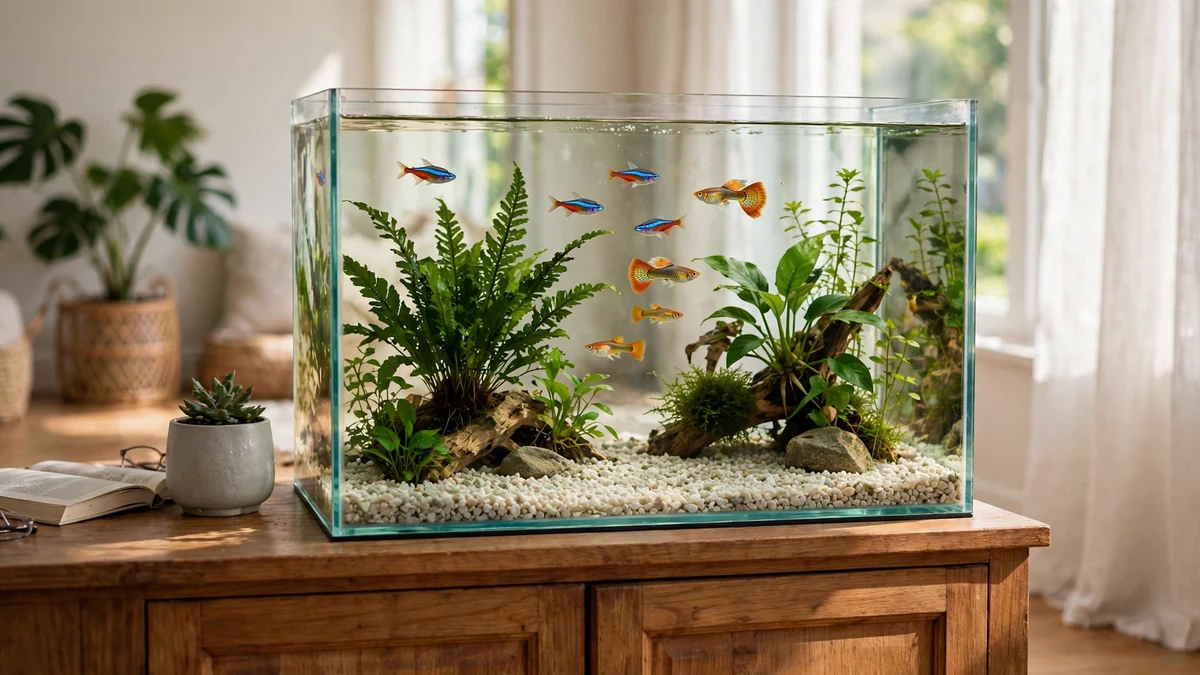
An aquarium is a small piece of water that lives in your house. Behind one pane of glass, green plants sway and a few small fish drift from end to end. For a beginner, that is the appeal. You need a sturdy cabinet, a tank that holds water, and the patience to let the water settle before any fish go in.
The first week is the slowest part. A new tank is not ready the day you fill it. The water needs time to clear, the filter needs time to start working, and the plants need a few days to take hold. Beginners who wait through that quiet week end up with healthy fish.
This guide walks through a first aquarium in plain words: what a tank is, how to pick one, how to set it up step by step, what to feed, and how it stands apart from the other water guides you may already know. Take it as gentle general information only: it will not heal anything, and a health question that lingers belongs with a doctor.
Key Takeaways
- An aquarium is a glass tank of water with fish and plants, kept indoors.
- Start small, with a tank of twenty litres or more and a few hardy fish.
- Let the water settle for a week before any fish go in.
- Feed a little once a day, and change a small part of the water weekly.
- Watch the fish daily, and wash your hands after working in the tank.
What an Aquarium Is
An aquarium is a glass box that holds water, with a small water world built inside on purpose. The bottom is covered with gravel or sand, plants are pushed into it, and a filter hums quietly at one end. A small lamp above the glass gives the plants the light they need to grow.
The fish are the last thing to arrive, not the first. A tank with only plants and gravel is already an aquarium, and it needs a week running empty so the water can settle. When the water runs clear, the tank is ready for its first few fish.
Why an Aquarium Suits a Beginner
A first aquarium suits a beginner because the whole hobby fits on one cabinet and runs on a short daily habit: look at the fish, sprinkle in a pinch of food, and check that the filter is humming. That sameness teaches patience without demanding much time.
The plants grow a little each week and the water clears as the filter settles in, so a beginner can see progress without any special skill. Start with a small tank and a few hardy fish, and the hobby grows at your pace, not faster.
Choosing Your First Tank
Look for a tank that holds twenty litres or more, because a bigger body of water changes temperature slowly and forgives a beginner's mistakes. A long low tank is easier to reach into than a tall one, and a snug lid keeps dust out and stops jumpy fish landing on the floor.
Set the tank on a cabinet built to carry water, never on a wobbly table or a bookshelf. Keep it away from radiators and hard sun, or the water will warm up and green algae will bloom across the glass.
Setting the Tank Up, Step by Step
First, rinse the gravel in a bucket until the water runs clear, then spread it across the bottom. Next, push the plants into the gravel, tall ones at the back and short ones at the front, and fill the tank slowly with room-temperature water poured over a plate.
Then clip the filter and heater into place, switch them on, and leave the tank running with no fish for a full week. Test the water with strips during that week, and write the results in a notebook.
Plants, Gravel and Hiding Places
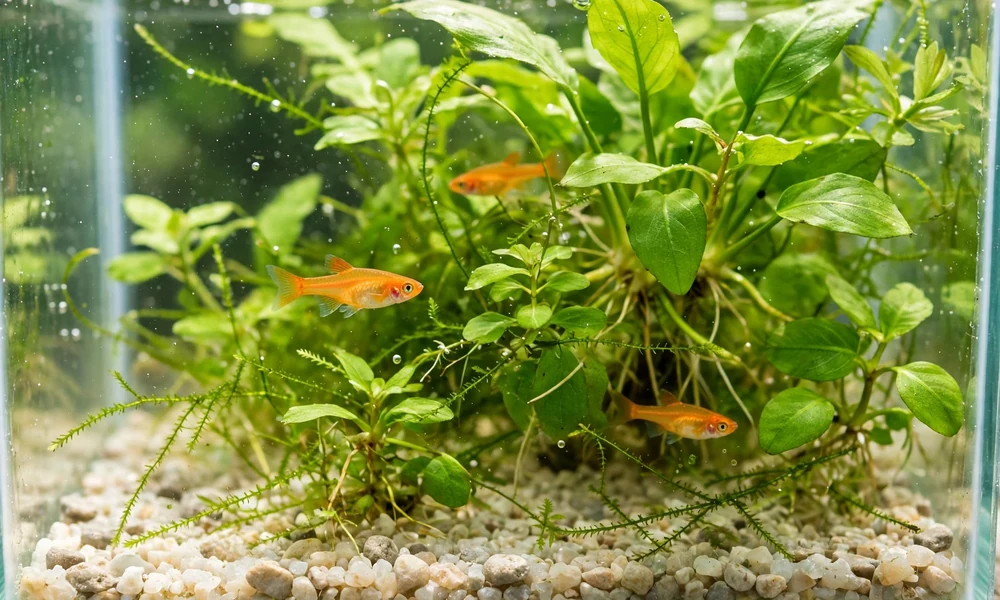
Plants do more than decorate a tank: they drink up fish waste, give off oxygen, and give shy fish somewhere to hide. Java fern and anubias are good first plants: they grow slowly, need little light, and can be tied to wood instead of buried.
Gravel should be smooth and small, about the size of a pea, so waste falls between the stones. Add one hollow log or a clay pot on its side, giving fish a dark corner to rest in.
An Aquarium at a Glance
| Glass tank, indoors | Cabinet, no sun | Feed once daily |
|---|---|---|
| Fish, plants, filter | Twenty litres plus | Change water weekly |
| Settle one week | Gravel, hiding places | Wash hands after |
| Watch fish daily | Lamp, heater, test | Never overfeed fish |
Water and a Lake Day: Tank Beside Still Water
Water and a lake day: a simple fresh ritual describes spending a full day on the shore of a big, calm lake, drinking only the water you brought in your own bottle, resting in a shaded spot, and leaving the lake water alone.
A lake day is outdoors, lasts a day, and ends when you go home, while an aquarium lives indoors, runs all year, and is looked after every single day. The lake is scenery you sit beside; the tank is a small world you keep alive. One is a day out, and the other is a habit at home.
Water and a River Walk: Tank Beside Moving Water
Water and a river walk: a simple fresh ritual describes a slow stroll beside a river, a bottle of plain water in hand, walking at looking speed with nowhere to reach.
A river walk follows water that flows past you and never comes back, while an aquarium holds the same water in one place, circling it through a filter again and again. The walk needs only a bottle; the tank needs a cabinet, a heater, a lamp and a weekly water change. One is water you walk beside, and the other is water you keep.
Water and a Pond Visit: Tank Beside a Small Pond
Water and a pond visit: a simple fresh ritual describes a short afternoon outing to a small still pond nearby, a bottle of plain drinking water in hand, sitting on a bench while ducks cross the water.
A pond visit is brief, close to home, and asks nothing of you but a bottle and a bench, while an aquarium asks for feeding, testing and weekly care, and it never ends at the bottom of a bottle. The pond belongs to the park; the tank belongs to your living room, and its fish depend on you.
An Aquarium and the Other Water Guides in This Batch
Nine guides share this batch with an aquarium. A swimming pool is a large body of treated water you climb into and swim in, while an aquarium is a glass box you look into and never enter. A rain barrel stands outside and catches rain from the roof for the garden. A watering can carries water to plants and a soup pot simmers water on the stove, and a faden quartz is a clear crystal threaded with a fine white line, an enhydro quartz holds tiny pockets of water inside, a beryllonite is a clear white stone for bright days, an afghanite is a soft blue mineral for calm days, and a vivianite is a deep blue-green iron phosphate that fades in bright light and must be kept dry, the very opposite of a tank full of water.
Feeding, Watching and Daily Care
Feed once a day, only as much as the fish finish in two minutes. A pinch of flakes or a few tiny pellets is enough, and food left floating after two minutes should be lifted out with a small net, since uneaten food clouds the water. Skip one day a week: healthy fish do fine without food for a day.
Watch the fish while they eat. Healthy fish swim evenly, fins open and colours bright, while a fish that hides in a corner, gasps at the surface or loses colour is telling you the water needs checking. Write what you see in the notebook, and the pattern will show itself over the weeks.
Keeping the Water Clear
Clear water comes from three habits, not from chemicals. First, change about a fifth of the water every week, using water that has stood overnight at room temperature, and pour it in slowly. Second, rinse the filter sponge in the bucket of old tank water, never under a tap.
Third, keep the lamp on for about eight hours a day, since extra light grows algae on the glass. If the glass goes green, wipe it with a sponge kept only for the tank.

Your Beginner's Checklist
- Pick a tank of twenty litres or more, on a cabinet built to carry water.
- Rinse the gravel, plant the tank, and let the water settle for a week.
- Add a few hardy fish first, and feed only what they finish in two minutes.
- Change a fifth of the water weekly, and test it with strips each time.
- Write the test numbers in a small notebook.
- If a rash appears after tank water touches your skin, or a health worry lingers, ask a doctor — a fish tank cannot answer that.

Frequently Asked Questions
How big should my first aquarium be?
A first tank should hold twenty litres or more, because a bigger body of water stays steady and forgives small mistakes.
When can fish go into a new tank?
Fish can go in after the tank has run empty for a full week and the water runs clear, with only a few hardy fish added at first.
How often should I feed the fish?
Feed the fish once a day, only as much as they finish in two minutes, and skip feeding one day each week.
Why is my aquarium water cloudy?
Cloudy water usually means too much food, a tank that has not settled, or a filter needing a rinse, so feed less and change a fifth of the water.
Is aquarium water safe to touch?
Aquarium water is fine to touch briefly while you work in the tank, but wash your hands with soap afterwards, and keep any cut covered.
Where is the best place for a tank?
The best place is a sturdy cabinet in a room you sit in often, away from radiators and hard sun.

The Bottom Line
A steady tank, a little food, and a few minutes of watching each day: that is all a first aquarium needs, and the fish do the rest.
A Note for Beginners
One glass tank, green plants, a few small fish and clear water: a first aquarium asks for patience in the first week, and gives back a quiet corner to watch for years.


