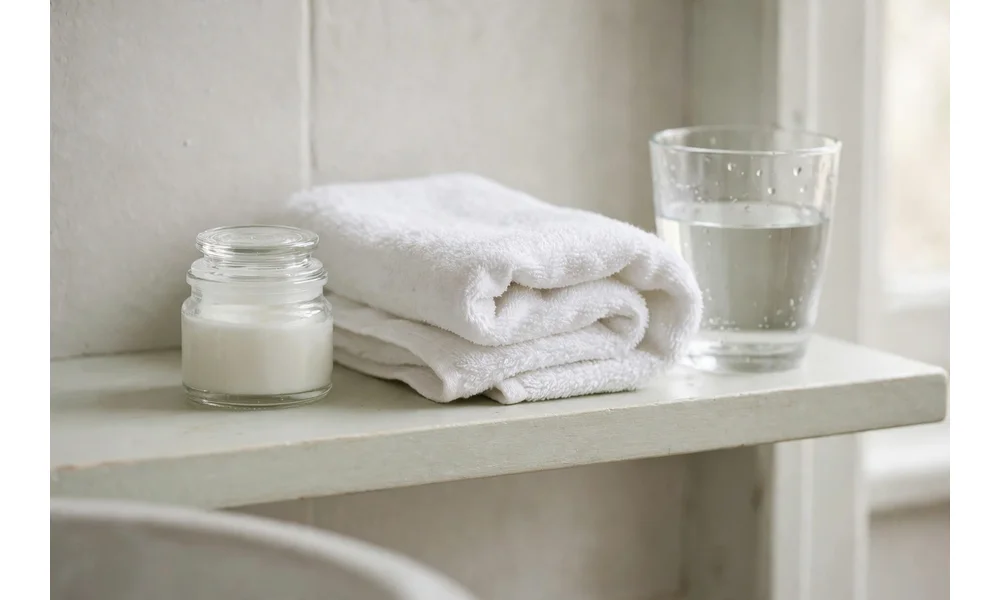
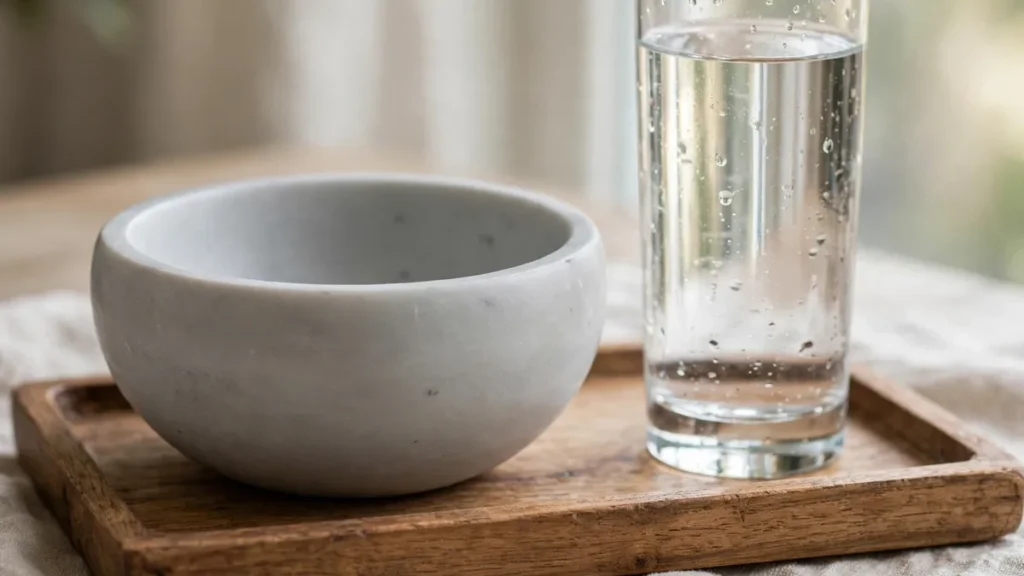
There is a small, old-fashioned pleasure in leaning over a bowl of warm water with a towel over your head. The steam rises, soft and warm, and the room seems to fall away for a few minutes. It needs no machine, no bottle, and no appointment: simply warm water, turned into steam, making the face feel warm, damp, and relaxed.
A steam and water facial is exactly that: hot water in a bowl, a towel tented over your head, and a few short minutes of warm steam on your face, finished with a cool rinse and a little moisturiser. The whole ritual takes about fifteen minutes, most of it sitting still, which is part of the point.
This article explains how to do a steam facial safely at home, what it can and cannot do, and how to fit it into a simple routine. It is general care only, not a treatment for any skin condition. One rule comes first: steam is hot, so keep your distance, keep sessions short, and stop the moment anything feels uncomfortable.
Key Takeaways
- A steam and water facial is a bowl of warm water, a towel tent, and a few minutes of steam, finished with a cool rinse.
- Keep your face well above the bowl and each session short, five to ten minutes at most.
- Steam softens the skin's feel and relaxes you; it does not cleanse deeply, open pores, or treat any skin condition.
- Stop at once if you feel dizzy, too hot, or uncomfortable, and never steam over broken, sunburnt, or irritated skin.
- Finish with cool water and a light moisturiser, and keep the ritual to once a week or less.
What a Steam and Water Facial Is
A steam facial is one of the simplest skin rituals there is. In a salon, a machine blows a fine mist of warm steam toward the face; at home, a bowl of hot water does the same job, more gently and slowly. The towel over your head simply holds the steam near your face.
The ritual has three parts. First, the warm-up: hot water poured into a sturdy bowl, left a moment to settle. Second, the steam itself: a few minutes sitting comfortably above the bowl. Third, the finish: a cool rinse, a soft pat dry, and a light moisturiser on slightly damp skin.
Nothing else is required: no oils, herbs, or anything else in the water. Plain warm water is the whole recipe, and the safest version of it. Anything added to steaming water can irritate skin or eyes, and adds nothing the steam itself does not offer.
Why Warm Steam Feels So Good
Warm steam feels good for the same reason a warm shower does: warmth relaxes the body, and damp warmth relaxes it more. When steam reaches your face, the skin feels softer and warmer, and the tight, dry feeling of a long day loosens. It asks nothing of you except sitting still.
Part of the pleasure is the pause: a steam facial cannot be rushed, and a few minutes of stillness in a busy day is a small gift.
What You Need Before You Begin
You need very little, and you almost certainly own it all: a heatproof bowl, a kettle, a large clean towel, a flannel, plain water, and a light moisturiser. The bowl should be wide enough for good steam but small enough to sit steadily.
Choose your spot before you boil the water: a table at a comfortable sitting height, with a chair you can sit on without hunching. Put a folded towel or mat under the bowl so it sits steadily. Tie long hair back, remove glasses, and wash your hands and face with lukewarm water first. Set a timer for five minutes: the easiest way to keep the session short, and short is the whole point of doing this safely.
How to Do a Steam Facial, Step by Step
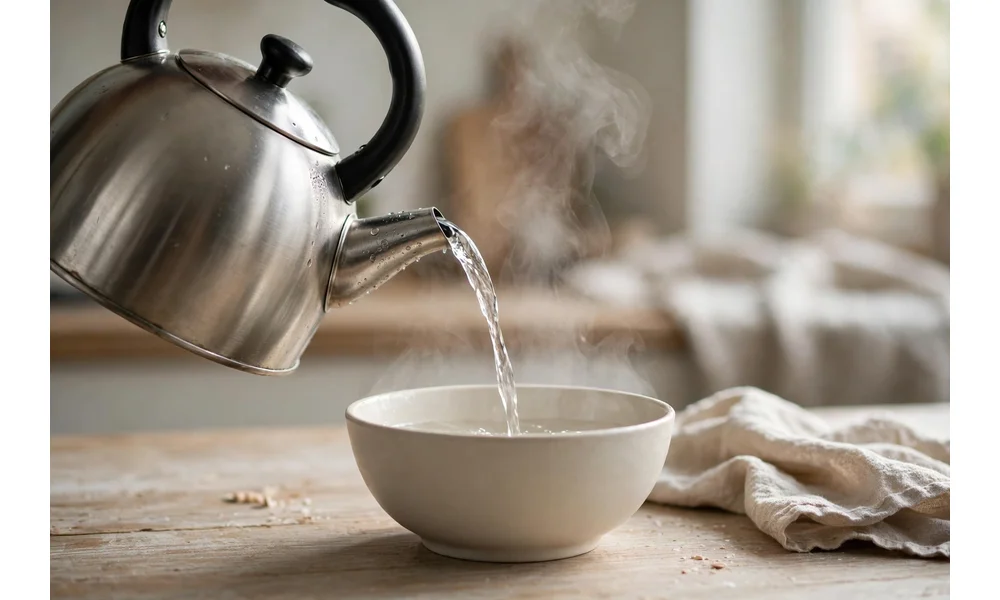
Boil the kettle and let it stand a minute, so the water is hot but no longer boiling. Fill the bowl two-thirds full and set it on its mat. Wait another minute: the steam should rise in a soft, steady column, not a fierce cloud. If it looks fierce, wait longer.
Sit comfortably and lean forward slowly, face at least thirty centimetres above the water, about a forearm's length. Drape the towel over the back of your head so it falls around the bowl, making a loose tent: warm and close, never stifling. If it feels too hot, lift the towel edge and let in cool air, or sit up higher.
Stay five minutes, breathing normally, eyes closed. Do not lean closer: more heat is not more benefit, only more risk. If your face feels too hot, your breathing feels uncomfortable, or you feel dizzy or unwell, sit up at once, remove the towel, and drink cool water.
When the timer sounds, lift the towel, sit up slowly, and let your face cool for a minute. Then rinse with cool, plain water, a few gentle handfuls over the face, and pat dry. A cool rinse is the natural partner of a steam facial, and a quick cold water splash for tired skin explains that short habit in detail.
The Cool Rinse and What Comes After
The cool rinse matters more than it seems. After several minutes of warmth, cool water feels wonderful and helps the skin settle back to its normal temperature. Use plain cool tap water, not icy water, and splash gently rather than scrubbing. Two or three handfuls are enough.
Pat dry with a clean, soft towel, pressing lightly instead of rubbing. Then, while your skin is still slightly damp, smooth on a pea-sized amount of plain moisturiser: damp skin holds moisture best. Afterwards, keep the evening simple and skip strong scrubs and peels, as warm skin is more sensitive than usual. For mornings, a calm guide to washing your face well walks through that gentle routine step by step.

How Often, and When to Skip It
Once a week is plenty for most people, and once every two weeks is fine too. A steam facial is a small weekly ritual, not a daily habit: done too often, the repeated warmth can leave skin dry or reactive.
There are days to skip it entirely. Do not steam if your skin is sunburnt, broken, cut, or irritated, or if you have an active rash or flare-up. Do not steam if you feel unwell, feverish, or dizzy, or if a cold makes breathing uncomfortable.
Some people should be more careful. If your skin is very sensitive, flushes easily, or has a condition such as rosacea or eczema, keep sessions very short or skip steaming and talk to a dermatologist first. If you are pregnant, or have a condition affected by heat, check with your doctor first.
What Steam Will Not Do
Say plainly what steam will not do: it will not open your pores, because pores do not open and close like doors. It will not squeeze out blackheads, clear acne, erase fine lines, fade dark spots, or detox anything. It will not cure dryness, redness, or any skin condition, and it will not replace a cleanser, a moisturiser, or sun protection.
Steam softens the skin's surface for a little while, and it feels relaxing. That is the whole honest promise. If a skin concern is persistent, changing, painful, or worrying, please speak to a dermatologist. A bowl of warm water is a comfort, not a diagnosis.

Making It Your Own Weekly Ritual
A steam facial works best as a small ritual you look forward to, not a chore you rush through. Pick a regular time, perhaps a quiet evening once a week, and keep the steps the same each time. Light a candle if you like, put your phone away, and let the five minutes of steam be five minutes of nothing else.
Pair the steam with other gentle habits: a green-tea rinse on other mornings gives the week a different freshness, and green tea water for a fresher morning face explains that simple rinse, brewed, cooled, and used as a morning wash.
| Step | Time | Water |
|---|---|---|
| Warm up | One minute | Hot, not boiling |
| Steam | Five minutes | Warm steam only |
| Cool rinse | One minute | Cool tap water |
| Moisturise | One minute | Damp skin, light cream |
Your Steam Facial Checklist
- Wash your hands and face with lukewarm water before you begin.
- Set the bowl on a steady mat; keep your face well above the water.
- Set a timer for five minutes, and keep the session short.
- Stop at once if you feel too hot, dizzy, or uncomfortable.
- Rinse with cool water, pat dry, and moisturise on damp skin.
- Skip strong scrubs and peels afterwards, and steam once a week at most.
Frequently Asked Questions
How hot should the water be? Hot, but not boiling. Boil the kettle, let it stand for a minute, then pour. The steam should rise softly and steadily; if it blasts upward, wait longer.
How close should my face be to the bowl? At least thirty centimetres above the water, about a forearm's length. Never lean close enough to feel the heat sharply; if it feels too hot, lift the towel edge or sit up higher.
How long should a steam facial last? Five minutes is enough, and ten is the most you should ever do. Set a timer; short sessions are safer and just as pleasant as long ones.
Can I add anything to the water? Plain water is best and safest. Oils, herbs, and other additions can irritate skin and eyes in steam, and they add nothing the steam itself does not offer.
How often can I do a steam facial? Once a week is plenty for most people; daily steaming can leave skin dry or reactive. If your skin feels tight or flushed the next day, leave a longer gap.
Can I steam if my skin is sensitive or sunburnt? No, not on sunburnt, broken, cut, or irritated skin, and be very cautious if your skin is sensitive or flushes easily. With a condition such as rosacea or eczema, talk to a qualified health professional or dermatologist first.
The Bottom Line
A steam and water facial is warm water, a towel, and five quiet minutes. It softens the skin, relaxes the evening, and asks only for a steady bowl, a safe distance, and a short timer. Keep your face well above the water, stop if anything feels uncomfortable, and finish with a cool rinse and a little moisturiser.
Try it once this week, on a quiet evening, and see how your skin feels the next morning. If it feels soft and calm, you have found a ritual worth keeping.
A Note for Slow Evenings
Keep it warm, keep it short, keep it simple. A bowl of water, a clean towel, and five minutes of stillness carry further than any crowded shelf.