There is a particular kind of tired that shows up on the face first. A late night, a long day indoors, or a morning that started too early can leave skin looking flat and grey. The mirror shows the same face, only a little duller, a little slower.
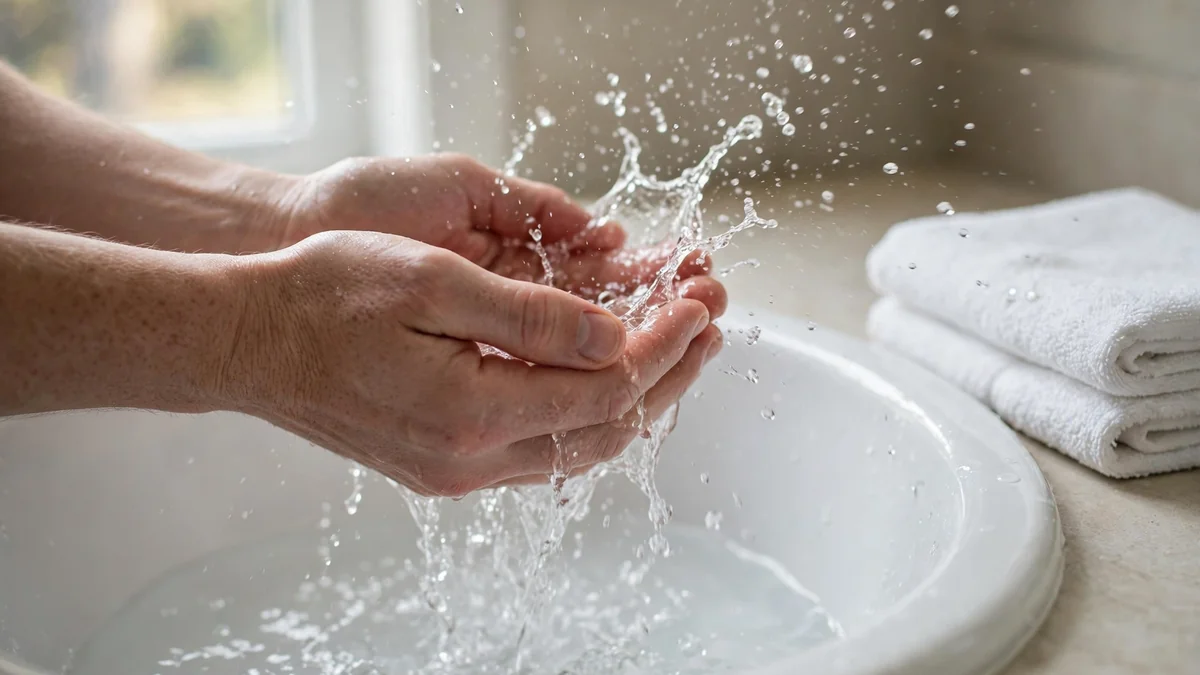
A cold water splash is the simplest answer to that feeling. It needs no product, no device, and no preparation. You turn on the cold tap, cup your hands, and splash your face a few times. The cold is a small shock, and that shock is the whole point.
This article explains what a cold water splash does and does not do, how to do it well, and when it helps most. It is a short habit for tired skin, and it takes less than a minute.
Key Takeaways
- A cold water splash for tired skin is a quick, free way to feel more awake, using plain cold water and your hands.
- Keep the water cold, not icy, and keep the splash brief: a few gentle splashes are enough.
- A cold splash refreshes the surface of the skin; it does not cleanse, moisturise, or treat any skin condition.
- Splash first, then cleanse with lukewarm water if you use a cleanser, and finish with moisturiser.
- A stone can sit beside the basin as a calm reminder, but it never goes into the water you splash or drink.
What a Cold Water Splash Actually Is
A cold water splash is exactly what it sounds like: cold water from the tap, splashed onto the face with cupped hands. There is no technique to learn and no product to buy. The water should feel properly cold, the kind of cold that makes you blink, but not so cold that it hurts or makes your face ache.
Cold here means cooler than your skin, not freezing. In winter the tap runs colder than in summer, and that is fine. If the water is painfully cold, let it run a moment or mix in a little warm water until it is cold but comfortable.
Why Tired Skin Notices Cold Water First
Tired skin is usually skin that has had a long, dry stretch. Hours indoors, heated air, air conditioning, and too little sleep all pull moisture from the surface, and the result is a flat, dull look. The skin is not damaged. It is asking for a little water and a pause.
Cold water answers that request directly. The coolness on the surface makes the skin feel tighter and more awake, and the water itself adds a brief layer of moisture. It is the same reason a walk in cool morning air feels refreshing: the change in temperature is what your senses notice.
The Splash, Step by Step
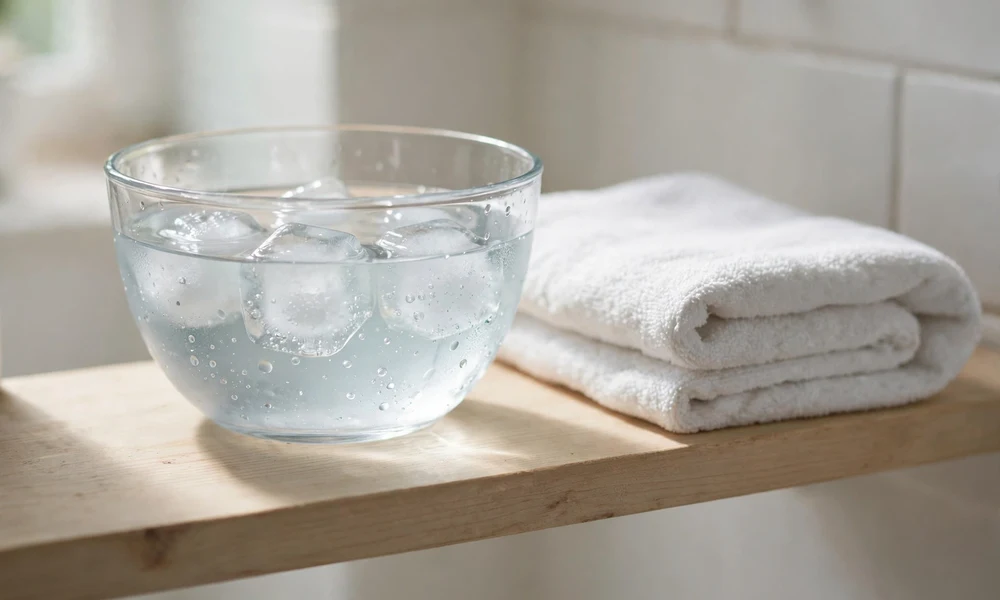
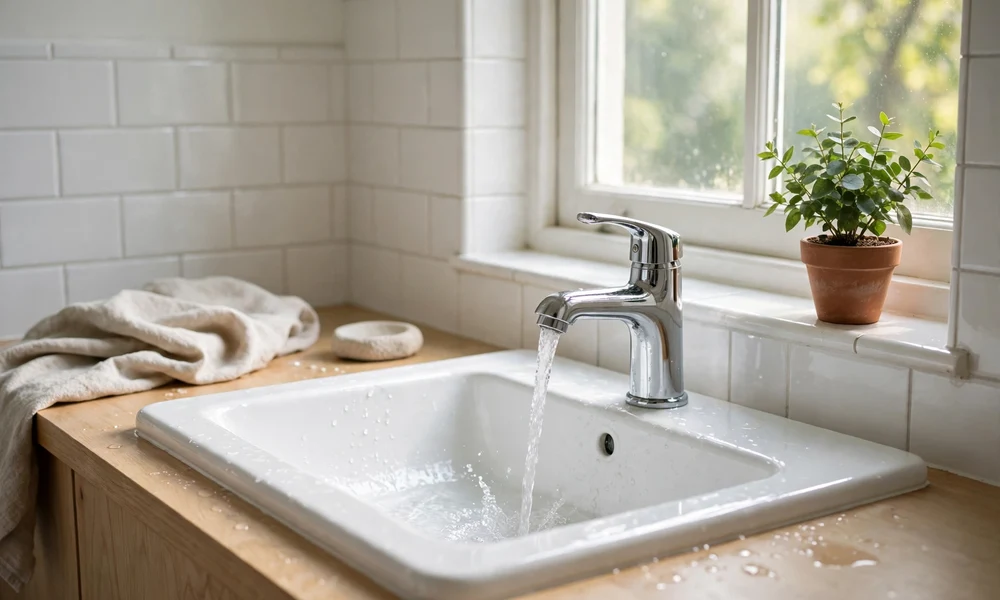
A good splash takes less than a minute. Begin by washing your hands with soap and lukewarm water, so you are not moving the day's dirt onto your face. Then turn the tap to cold and let it run until the water feels properly cold on your wrist.
Cup your hands under the running water, lift the water to your face, and splash gently, letting the water run over your forehead, cheeks, and chin. Repeat three or four times, taking your time. There is no need to rub or press; the water does the work.
| Stage | Time | What to do |
|---|---|---|
| Hands | 20 seconds | Wash hands with soap and lukewarm water |
| Run the tap | 10 seconds | Let the cold tap run until the water feels properly cold |
| Splash | 20 seconds | Splash the face three or four times with cupped hands |
| Pat dry | 10 seconds | Pat gently with a clean, soft towel, never rub |
| Finish | 30 seconds | Apply moisturiser while skin is still slightly damp |
Pat your face dry with a clean, soft towel, pressing lightly instead of rubbing. Then, if you use moisturiser, apply it while the skin is still slightly damp, so the moisture from the splash is held in rather than lost to the air.
Cold Water and Your Cleanser
A cold splash is not a wash, and it does not replace a cleanser. Cold water alone will not lift away sunscreen, makeup, or the oil that builds up through the day. If your face needs cleaning, use a gentle cleanser and lukewarm water, which rinses cleanly without a shock.
Morning, Midday, and Evening: When a Splash Helps Most
A cold splash helps most when tiredness is fresh. In the morning, it is the fastest way to feel awake before breakfast, and it sets a calm tone for the day. A splash after a long afternoon indoors can do the same, lifting the flat feeling that builds up under office lights and dry air.
On a morning when your skin feels calm and you have nothing to wash off, a cold splash on its own can be enough. A simple routine, built on cleansing, moisturising, and sun protection, is a practical foundation, and a skin routine with room to breathe is easier to keep than a long shelf of products.
In the evening, a cold splash is a different kind of help. After a long day, it marks the end of the working hours and the start of the evening.
There are times to skip it. If your skin is feeling very sensitive or irritated, keep the water cool rather than cold, or skip the splash and wash gently with lukewarm water instead.
A Stone Beside the Basin, Never in the Water
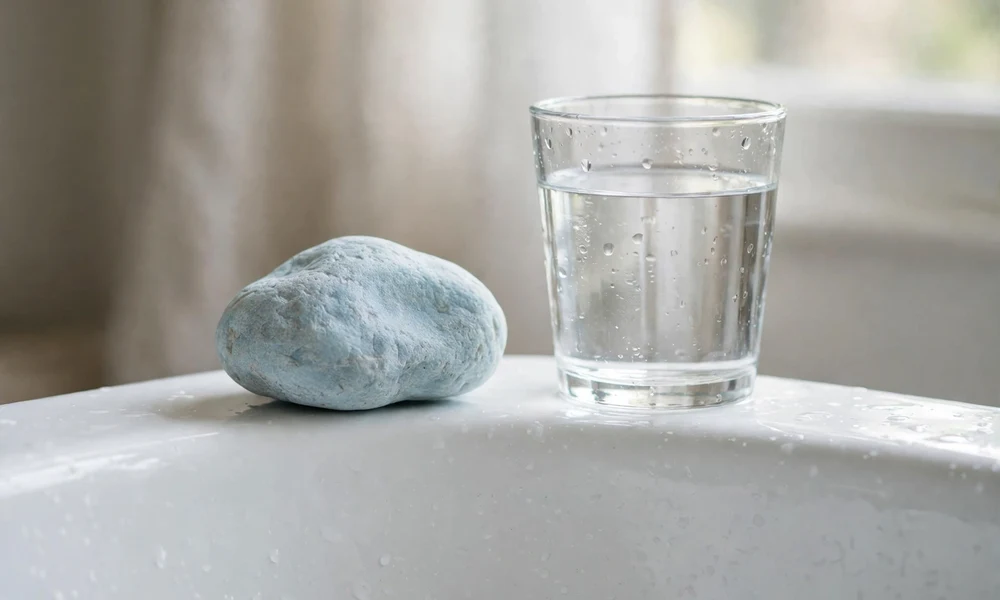
A stone can belong in this habit, but only in the right place. A pale blue stone resting on the edge of the basin is a calm thing to see first thing in the morning. It turns an ordinary sink into a corner you have chosen, and that small choice makes the splash feel like a ritual rather than a chore.
Keep the stone beside the water, never in it. Stones should not sit in the water you splash on your face or drink, and a stone in a glass of water is not a beauty treatment. The stone is there for its colour and stillness, not for anything it might do to the water.
Choose a small, smooth piece you enjoy looking at, and keep it dry. If you want a calmer morning overall, a few quiet minutes of clear thinking can help too, and five minutes of clearer thinking is a gentle place to start.
What a Cold Splash Will Not Do
Say plainly what a cold splash will not do. It will not shrink your pores, erase fine lines, or give you glowing skin on its own. It will not cure acne, redness, dryness, or any skin condition, and it will not replace a cleanser, a moisturiser, or sun protection.
What it can do is simpler. It can make tired skin feel more awake and give you a small, calm pause in the day. That modest promise holds up every time, because it asks so little of you.
If a skin concern is persistent, changing, or worrying you, please speak to a qualified health professional or dermatologist. A cold splash can support healthy skin, but it cannot replace care.
Building the Habit Without Overdoing It
A splash is easy to keep because it is so small, and the danger is doing too much of it. Three or four splashes are enough; ten splashes will not wake you up twice as much. Very cold water used too often can leave skin feeling tight, so keep the water cold but comfortable.
Tie the splash to something you already do. Splash after brushing your teeth in the morning, or when you come home in the evening. A habit attached to an existing moment is easier to remember than one floating free in the day.
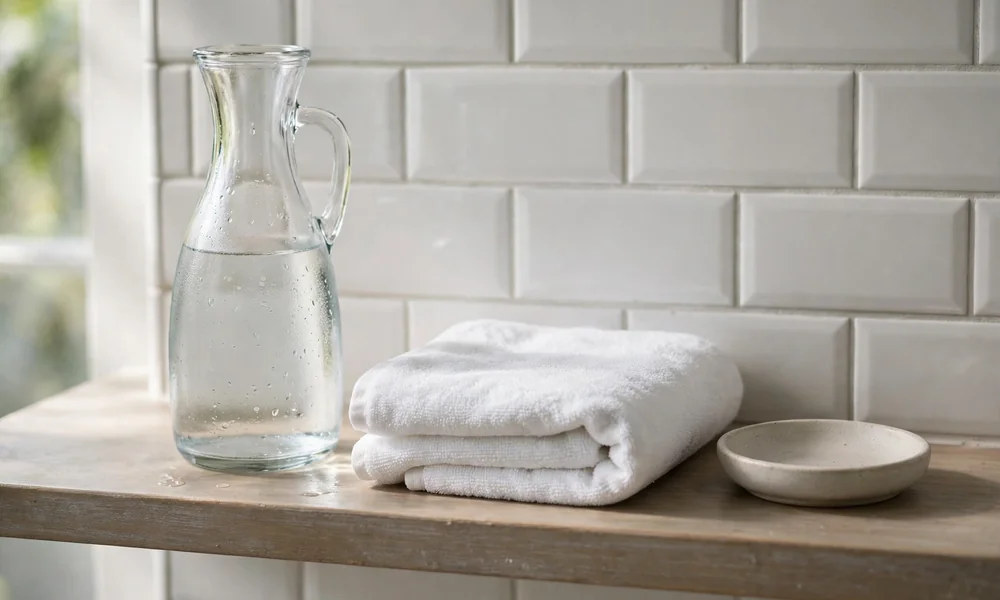
Drinking water is a separate habit from splashing with it. A glass of fresh water beside your breakfast, drunk slowly, is a calm way to begin the day, and a gentle approach to staying hydrated through the day is one of the easiest small habits to keep.
Your Cold Water Checklist
- Wash your hands first, then turn the tap to cold and let it run until the water feels properly cold.
- Splash your face three or four times with cupped hands, gently, without rubbing.
- Keep the water cold, not icy; if it hurts, mix in a little warm water.
- Pat dry gently with a clean, soft towel, never rub.
- Apply moisturiser while skin is still slightly damp, then sun protection in the morning.
- Keep any stone beside the basin, never in the water you splash or drink.
Frequently Asked Questions
How cold should the water be for a cold water splash? Cold enough to feel properly cool on your wrist and to make you blink, but not so cold that it hurts. If the tap runs painfully cold in winter, mix in a little warm water.
Can I splash cold water on my face every day? Yes, for most people a brief cold splash once or twice a day is fine. Keep it to a few splashes, and use cooler rather than cold water if your skin feels sensitive or irritated.
Does a cold water splash clean my face? No. A splash refreshes the surface but does not lift away sunscreen, makeup, or built-up oil. Use a gentle cleanser with lukewarm water when your face needs cleaning.
Will cold water shrink my pores? No. Cold water can make skin feel temporarily tighter, but it does not change the size of your pores. The refreshed feeling is real; the pore claim is not.
Should I splash with cold water before or after moisturiser? Before. Splash, pat dry gently, then apply moisturiser while the skin is still slightly damp, so the moisture from the splash is held in.
Can I put a crystal in the water I splash with? No. Keep stones beside the basin, never in the water you splash on your face or drink. The stone is there for its colour and stillness, not for the water.
The Bottom Line
A cold water splash works for tired skin because it asks almost nothing and gives back a small, honest refresh: a few seconds of cold water, a pause, and a face that feels more awake. It costs nothing, needs no product, and takes less than a minute.
Begin tomorrow morning with whatever you already have: a tap, a towel, and a few unhurried seconds. Turn the water cold, splash gently, pat dry, and step into the day feeling a little more awake than before.
A Note for Bright Mornings
Keep it simple, keep it gentle, and keep it yours. The best mornings are rarely the most elaborate. They are the ones where a small, refreshing habit repeats itself, day after day, until it becomes part of how you live. Stay curious. Stay clear. Splash well.



