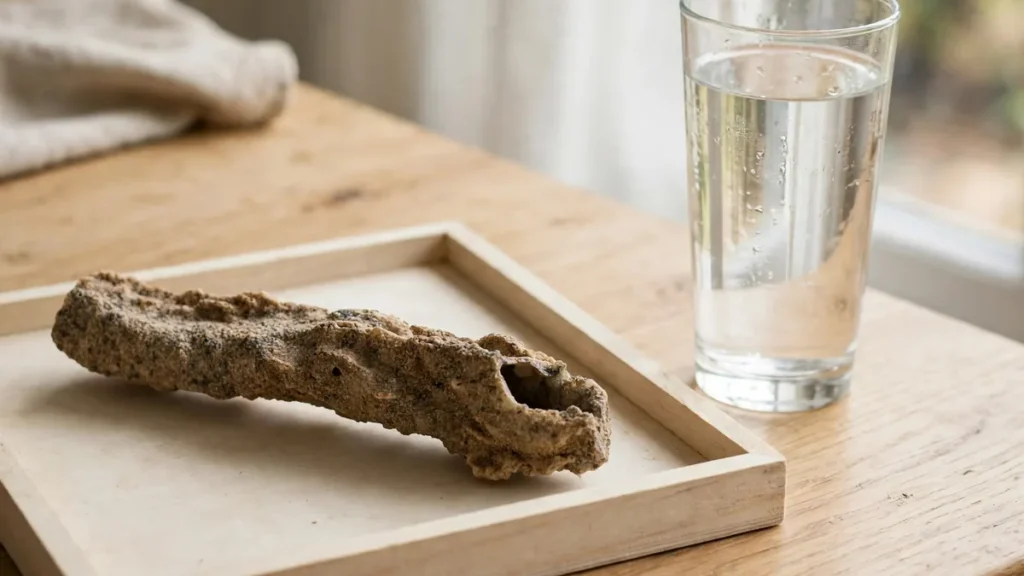
Soapstone is the softest stone most of us will ever hold: a smooth grey rock that feels almost like soap under the thumb, cool at first, warming slowly in the hand. It carries no bright colour, only a quiet grey with faint pale veins.
A quiet day suits it because the stone asks for nothing at all. Rest a piece on its tray, pour a glass to stand alongside, and take a seat where the daylight falls; the slow hours then look after themselves, and looking is the whole activity.
This guide explains what soapstone is, the shapes it comes in, and the best ways to spend a quiet day with it. Take it as gentle general information, nothing more: a soft grey stone is a pleasant object for slow hours, it cannot heal or cure anything, and if handling any stone leaves your skin red or itchy, set it down, wash your hands, and ask a doctor.
Key Takeaways
- Soapstone is a soft grey rock, mostly talc, smooth and cool in the hand.
- Its quiet grey suits slow hours and unhurried days.
- Choose a piece with even grey and a smooth, soapy feel.
- Keep soapstone beside a glass of water, never in it, and never soak it.
- Soapstone is for holding and looking at; it cannot heal anything.
What Soapstone Is
Soapstone is a metamorphic rock made mostly of talc, the soft mineral that gives talcum powder its slip, mixed with smaller amounts of chlorite and magnesite. It formed deep underground, where heat and pressure changed older rock into something smooth, dense and easy to carve.
Pick one up and the stone feels cool and almost greasy under the fingers, like a bar of soap that never lathers. The grey is soft rather than flat, with faint pale veins running through it, and a polished piece takes a gentle waxy shine instead of a hard glassy gleam. Carvers have shaped it for centuries into bowls, tiles, beads and small figures, and it has also lined stoves and hearths.
Why Soft Grey Suits Quiet Days
Grey is a colour that steps back. Where a bright stone shouts for the eye, a grey one waits quietly, and on a slow day that quiet is the point: nothing to chase, nothing to solve, only an hour that passes at its own pace.
Fill the hours with little things instead — a glass of water poured slowly, a window open to the air, a stone that grows warm in the hand — and the day feels full without ever feeling busy.
Choosing a Soapstone Piece
Look at pieces in daylight, with the stone held close to a window, and give yourself time. The grey should read even and clean, without brown patches or chalky streaks, and the surface should feel smooth and soapy under the thumb rather than gritty. A piece should feel cool and a little weighty, with edges whole rather than crumbly.
Pick the piece up and turn it over, checking the base as well as the face, since a good carver finishes every side. Ask the seller plainly what it is. One good piece is enough to start, and a vague answer, or any claim that the stone will make you healthier, means walking away.
Soapstone Shapes for Quiet Days
Soapstone reaches a shop in four shapes, and each suits a different kind of quiet day. A palm stone is a smooth rounded piece that fits the hand, cool at first and warming slowly as you hold it.
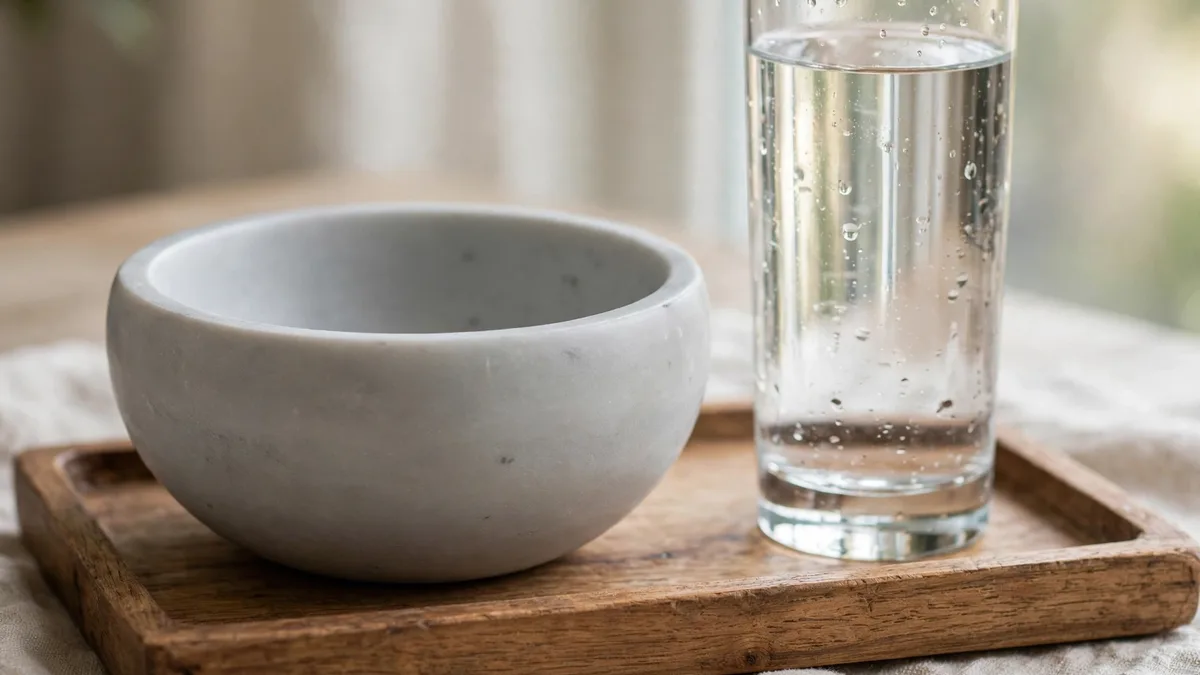
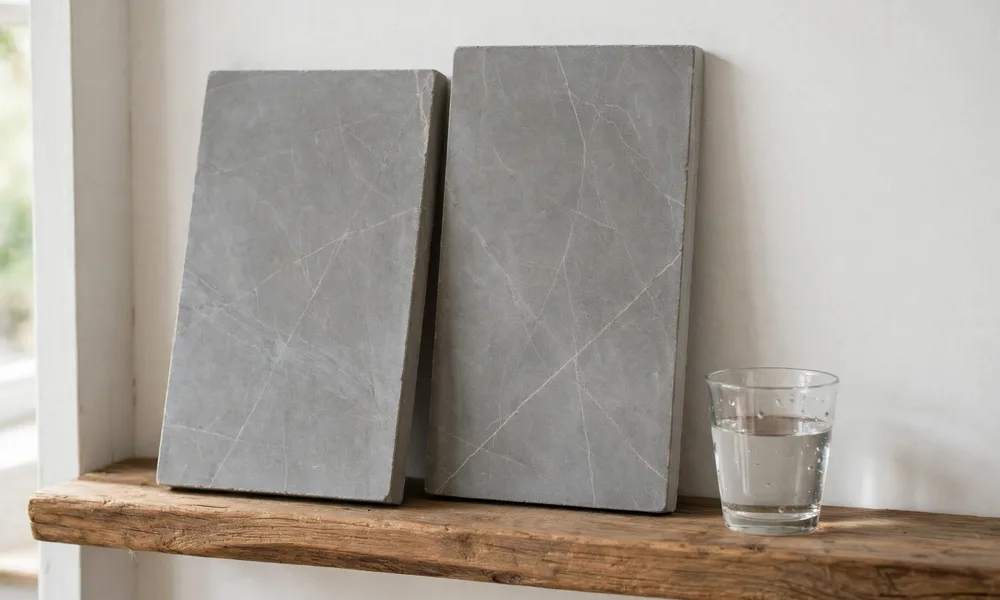
A bowl is the shape for looking at: a shallow grey dish that sits on a tray, holding nothing but the light. Tiles are flat rectangles, lovely leaned against a wall on a shelf, their faint veins showing best in daylight. Carvings are the most personal shape, small birds and animals cut from the soft rock. Choose the shape that matches how you want to spend the hour.
A Quiet Day with Soapstone and Water
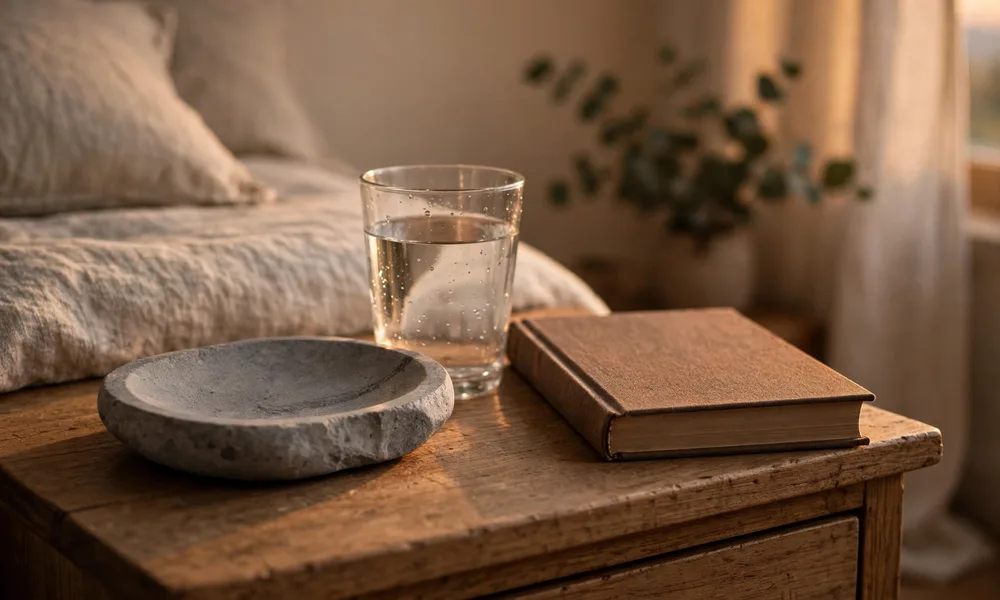
After breakfast, carry a tray to the brightest corner of the room. Lay the soapstone down, pour the glass, and let both sit in the light while you settle into the chair beside them. Lift the stone now and then, feel its cool weight, watch the pale veins catch the sun as you turn it — that slow looking is the day's work. When the light fades, carry the tray back to its shelf.

Soapstone at a Glance
| Soft grey rock | Palm, bowl, tile | Tray, dry shelf |
|---|---|---|
| Mostly talc | Smooth, cool | Glass beside it |
| Even grey | No sharp edges | Never soak |
Soapstone and Zebra Marble
For bold black and white bands, see the zebra marble guide.
That guide is about a marble that wears two colours at once: black bands and white ground, laid down when limestone was pressed and warmed deep below, made for bright mornings when much is at stake. It is loud where soapstone is quiet.
Soapstone is a different stone that only shares the word marble in conversation. Where zebra marble is a limestone changed by heat, with bands that run like ink, soapstone is a talc rock, soft grey from rim to rim, with only faint veins. Marble is the louder stone, soapstone the gentler one: handle soapstone more softly, and keep it dry beside its glass.
Soapstone and Muscovite
For silver mica on quiet days, see the muscovite guide.
That guide is about a silver mica, a mineral built from paper-thin layers that shine like small mirrors as they catch the light. A fingernail can lift one sheet away from the next.
Soapstone differs in build, in colour, and in feel. Muscovite is silver and layered, a stack of sheets; soapstone is grey and solid, a single carved rock. One shimmers as it turns, the other stays matte grey. Both suit quiet days and both stay dry.
Soapstone and Dolomite
For soft pink with cream bands, see the dolomite guide.
That guide explains a pink calcium-magnesium carbonate, a single mineral with pale cream bands and a sugary sparkle, a little harder than calcite and softer than quartz. It is pink, sparkling and banded.
Soapstone is its quiet cousin in grey. Where dolomite shows pink and cream, soapstone shows only grey and fainter veins; where dolomite sparkles, soapstone stays smooth and matte. Dolomite is one mineral, soapstone a rock of many.
Soapstone and Talc: A Softness Note
Talc is the mineral that makes soapstone soft, and it is worth knowing where the two names meet. In this journal, talc appears only as the softest point of the Mohs hardness scale, the number one against diamond's ten: the amber guide names it when it places amber at two to two and a half, and the delicate-stones guide names it when it explains hardness.
Neither guide is about talc itself, and neither one holds a piece of it. Soapstone is the stone that carries talc into the hand: a rock made mostly of talc, smooth and soapy, shaped into bowls and palm stones for quiet days. The scale gives talc a number; this guide gives it a shape and a use.
Nine Neighbours in This Batch
In the hallway, the hallway guide keeps the passage fresh and the air moving. On a quiet shelf, wurtzite waits in deep brown for steady days. On the staircase, the staircase guide climbs step by step toward calmer mornings. In a dark corner, pyrolusite gleams black and keeps its own counsel.
Under the roof, the attic guide airs out a dusty room. On the boldest shelf, cinnabar burns deep red behind glass. In the kitchen, the freezer guide keeps food frozen and its shelves wiped. Beside the stove, the oven guide wipes down after cooking. At the end of the batch, fulgurite glows warm brown, a stone made by lightning. Soapstone alone among them is soft grey, made for quiet days.
Stones That Must Never Touch Water
Soapstone stays dry beside its glass, and other stones are stricter still. Apatite, for one, loses its polish the moment it soaks, and the dullness never lifts.
Lepidolite is the one to watch most: lithium sits inside its lilac flakes, so it must never meet a drink. Pyrite turns dull and rusty when it stays wet, angelite swells and clouds after a single wetting, and amber, which is old tree resin rather than a true stone, goes milky in water and never clears.
None of these belongs in a glass, a jug, or a soaking bowl, and soapstone stays beside the glass as well, never inside it.
Your Soapstone Checklist
- Pick a palm-sized piece in even grey, smooth and soapy to the touch.
- Rest the stone on a tray, with a glass of water standing close, never touching it.
- Keep it somewhere dry and bright, far from steam and splashes.
- Hold it for a slow hour, then carry it back to its tray.
- A dry soft cloth is the only cleaning it ever needs.
- If a stone ever leaves your skin red or itchy, set it down, wash your hands, and ask a doctor — soapstone is a quiet object, not a cure.

Frequently Asked Questions
What exactly is soapstone made of?
Soapstone is a metamorphic rock made mostly of talc, mixed with smaller amounts of chlorite and magnesite. The talc is what makes it feel smooth and soapy under the thumb.
Can soapstone go in water?
No. A soak can dull its soft face and leave marks behind, so keep it out of every bowl and basin. A dry tray and a glass standing next to it is the right arrangement; a dry cloth is all the cleaning it needs.
How is soapstone different from marble?
Marble is a limestone changed by heat and pressure, banded and veined, while soapstone is a talc rock, soft grey and matte. Marble suits bold days with its strong lines; soapstone suits quiet days with its gentle grey.
Is soapstone safe to hold every day?
For most people, yes: a dry piece in the hand is harmless, and a smooth palm stone is the best shape for daily use. Rinse your hands once you set it down, and leave it alone if your skin turns red or sore.
Where should I keep my soapstone stone?
A dry spot in daylight suits it: a shelf, a windowsill, a bedside table, with a small tray beneath it so it cannot roll or knock. Steamy rooms and sinks are the wrong home for it.
Will soapstone help me feel calmer?
No. The stone itself calms nothing and heals nothing; whatever ease you feel belongs to the unhurried hour you took. When low feelings hang around for weeks on end, talk to a doctor instead.
The Bottom Line
A soft grey stone, a dry tray, and a glass of water standing close: that is the whole of a quiet day with soapstone.
A Note for Quiet Days
Grey stone, dry tray, slow hours — a quiet day asks for nothing more.