Mornings leave their mark on the face. You wake, you wash, and the mirror shows the night: sleep lines, a little puffiness, skin that looks tired before the day has begun. A morning wash should do more than clean. It should feel like a fresh start.
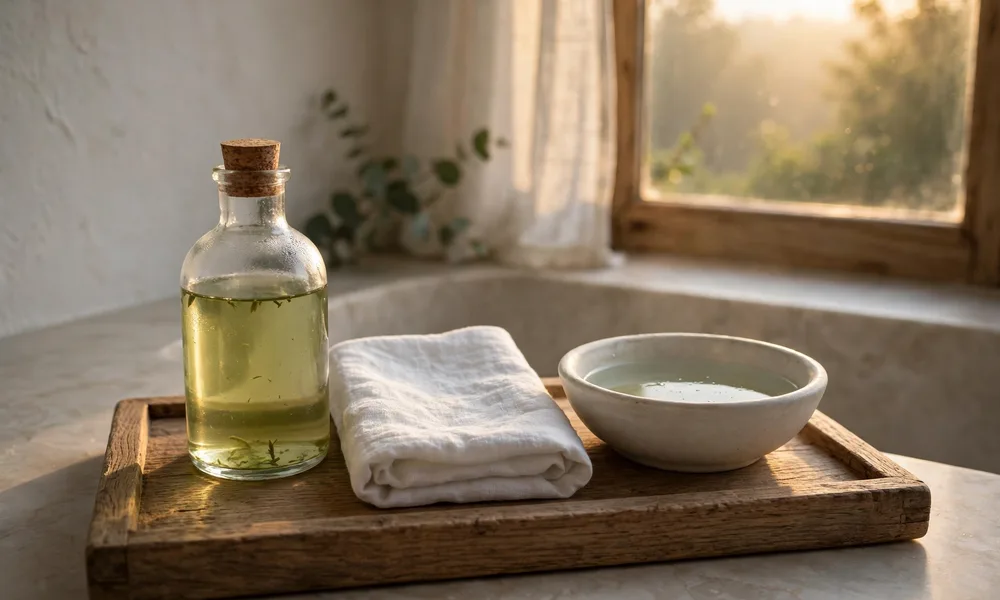
Green tea water is a simple way to give the morning wash that feeling. It is ordinary green tea, brewed, cooled, and used as a face rinse. The pale green liquid smells faintly grassy and fresh, and the cool rinse feels gently waking on the skin. There is nothing complicated about it, and nothing to buy beyond tea you may already own.
This article explains how to brew green tea water, how to use it as a morning face rinse, and how to keep the habit fresh and skin-friendly. One rule matters most: green tea water is a face rinse only, and it is never a drink claim and never stone water. Stones never go in water you drink.
Key Takeaways
- Green tea water is brewed green tea, cooled and used as a face rinse.
- It is a rinse only, never a drink claim, and never water with stones in it.
- Brew it fresh, let it cool fully, and use it within a day.
- A cool rinse feels waking and fresh, and suits a simple morning routine.
- Patch test first, and stop if your skin feels irritated.
What Green Tea Water Is
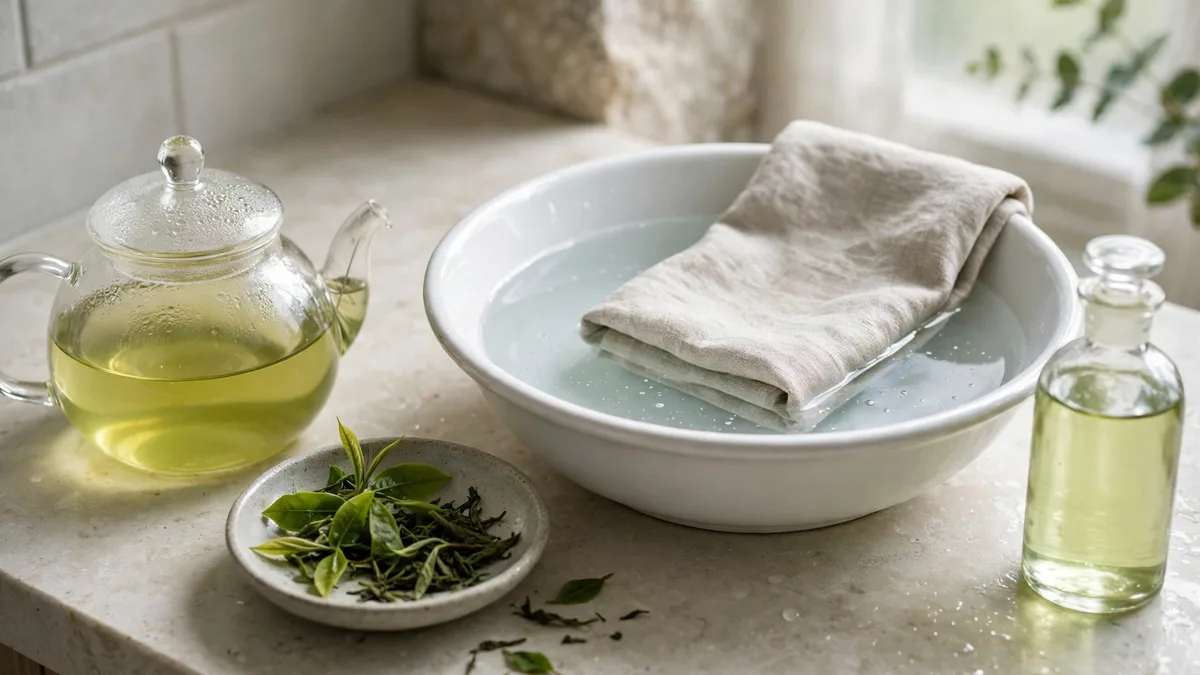
Green tea water is exactly what it sounds like: water that has had green tea brewed in it, then cooled to a comfortable temperature. It is not a product, a tonic, or a treatment. It is a cup of tea that, instead of being drunk, is poured over the face as a rinse or patted on with a soft cloth.
Green tea has a long history as a drink, and its fresh, grassy scent is familiar in kitchens everywhere. Used on the skin, it feels light and clean, without the slipperiness of an oil or the tightness of a harsh wash. The rinse is at its best when it is simple: tea, clean water, and nothing else.
Keep the idea small: it is a pleasant addition to a morning wash, not a replacement for cleansing, moisturising, or sun protection, and never a cure for any skin condition.
Why Mornings Suit a Fresh Rinse
Mornings suit a fresh rinse because the face has spent the night doing nothing but resting. Skin wakes slowly, and a cool, gentle rinse matches that pace better than a hot wash or a long routine. The coolness feels waking without being a shock, and the faint scent of green tea makes the moment feel deliberate rather than rushed.
A calm first act of care before the phone and the news sets the tone for the morning.
The rinse fits a simple routine rather than competing with it. A practical foundation of cleansing, moisturising, and sun protection is enough for most mornings, and a skin routine with room to breathe leaves space for one pleasant extra like this. Green tea water is that kind of extra: small, cheap, and easy to keep.
Brewing Your Green Tea Water
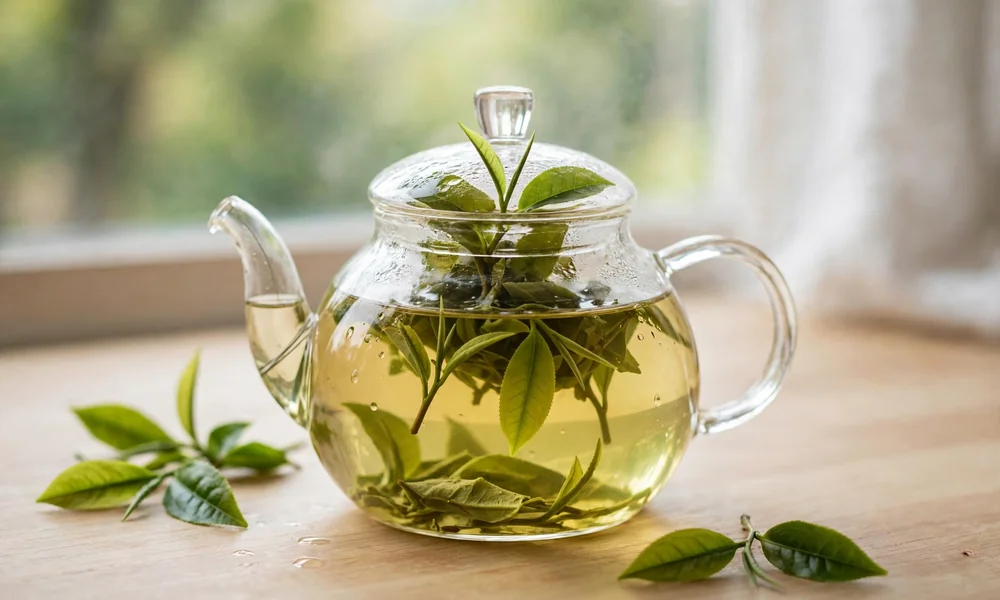
Brewing green tea water takes about ten minutes, most of it waiting for the tea to cool. Start with clean drinking water and one green tea bag or one teaspoon of loose leaves. Bring the water to a boil, pour it over the tea, and let it steep for three to five minutes. Longer steeping makes a stronger tea, but it can also make the rinse feel astringent, so three minutes is a good place to begin.
Remove the tea bag or strain out the leaves, then let the tea cool completely to room temperature or cooler. Never use it hot, and never use it while it is still warm enough to feel warm on your wrist. You can speed the cooling by placing the cup in a bowl of cool water, or by brewing it the evening before and keeping it covered in the fridge overnight.
Use the rinse within a day, and make a fresh batch when you need more. Old tea water can grow stale and collect bacteria, and a fresh brew costs almost nothing. Keep the cup covered while it cools, and use clean hands and a clean cloth every time.
| Step | Time | What to do |
|---|---|---|
| Boil | 2 minutes | Boil clean drinking water |
| Steep | 3–5 minutes | Steep one tea bag or one teaspoon of leaves |
| Strain | 30 seconds | Remove the bag or strain out the leaves |
| Cool | 10 minutes | Let the tea cool fully to room temperature |
| Rinse | 2 minutes | Rinse the face or pat on with a soft cloth |
The Morning Rinse, Step by Step
Begin by washing your hands with soap and lukewarm water. Then wash your face as you normally would, with a gentle cleanser if you use one, and rinse with lukewarm water. Green tea water is a finishing rinse, not a replacement for washing, so it comes after the face is already clean.
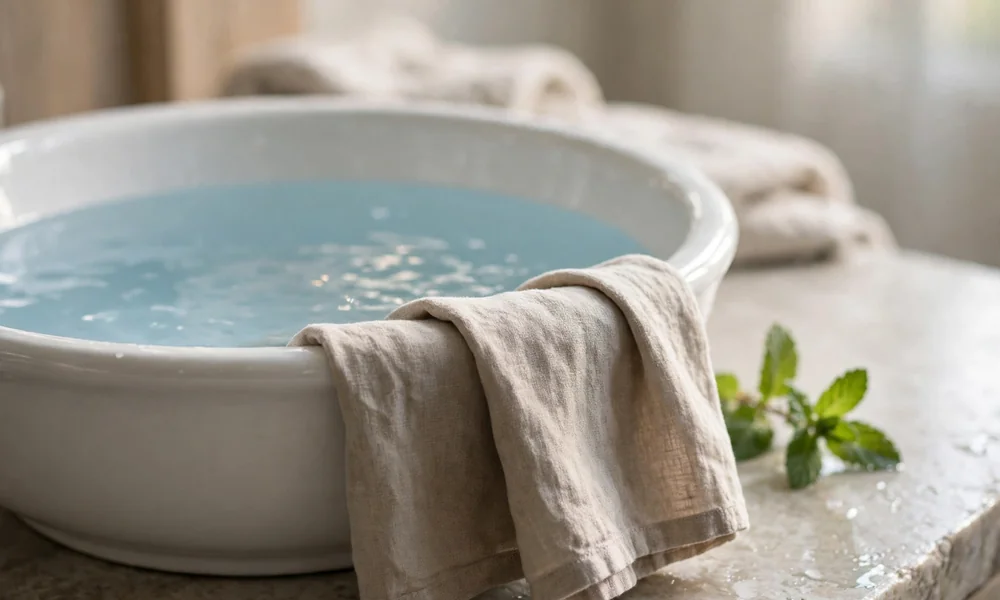
Pour a little of the cooled tea into a clean cup or your cupped hands, and splash it gently over your face, or pat it on with a soft, clean cloth. Keep it away from your eyes, and do not scrub. Let the skin air-dry for a moment, or pat it very lightly, then apply moisturiser while the skin is still slightly damp.
The rinse takes about two minutes, inside a five-minute wash. Notice how your skin feels an hour later: the goal is a face that feels fresh and comfortable through the morning.
Green Tea Water and the Rest of Your Routine
Green tea water works best when the rest of the morning is equally gentle. After the rinse, moisturise while the skin is still slightly damp, and follow with sun protection. A broad-spectrum sunscreen is the most useful single step in a morning routine, and no rinse replaces it. If a formula feels uncomfortable, try a different one rather than skipping sun protection.
Drinking water in the morning is a separate habit from rinsing with tea water, and it deserves its own place. A glass of fresh water beside your breakfast, drunk slowly, is a calm way to begin the day, and a gentle approach to staying hydrated through the morning is one of the easiest small habits to keep. The tea rinse is for your face; the glass of water is for you.
Mornings suit small rituals like citrine morning water: short, pleasant, and easy to repeat. Keep the stone beside the glass, never inside it, and keep the tea rinse and the drinking water entirely separate.
Keeping It Fresh and Skin-Friendly
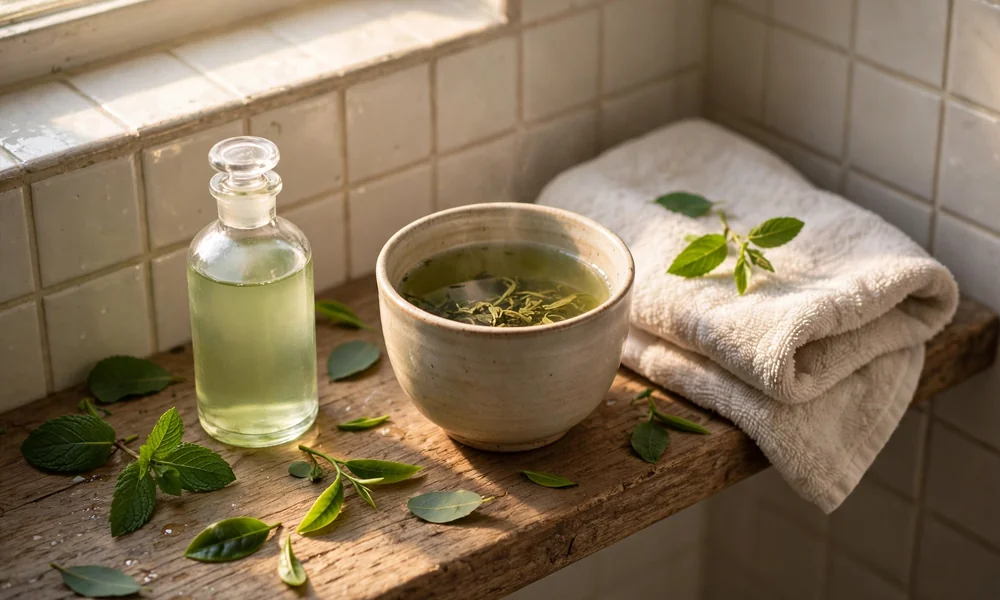
Freshness is the whole of green tea water. Brew it the morning you use it, or the evening before, and use it within a day. Store it covered, in a clean cup or bottle, in the fridge if you brewed it ahead. If it smells sour or looks cloudy, pour it away and brew a fresh batch. Tea water is cheap, and stale tea water is not worth the risk.
Patch test before the first full rinse. Dab a little cooled tea water on the inside of your wrist or behind your ear, and wait a day. If the skin feels calm, use the rinse as described. If you notice redness, itching, or irritation, stop using it. Sensitive skin deserves a shorter test and a weaker brew, and a rinse that stings is a rinse to stop.
Keep the cup, the cloth, and your hands clean, and replace the cloth every couple of days.
What Green Tea Water Will Not Do
Say plainly what green tea water will not do. It will not shrink pores, erase fine lines, or give you glowing skin on its own. It will not cure acne, redness, or any skin condition, and it will not replace a cleanser, a moisturiser, or sun protection. A rinse is a rinse, and its effects are gentle and short-lived.
It is also not a drink, and it is never stone water. Do not drink the rinse, do not add stones to it, and do not let anyone tell you that water with stones in it is safe to drink. Stones stay beside drinking water, never inside it. That rule protects your water, your skin, and your health.
If a skin concern is persistent, changing, or worrying you, please speak to a qualified health professional or dermatologist. A fresh morning rinse can support healthy skin, but it cannot replace care.
Your Morning Checklist
- Brew one cup of green tea and let it cool fully to room temperature.
- Wash your hands, then wash your face with a gentle cleanser.
- Splash or pat the cooled tea water over your face, keeping it out of your eyes.
- Let the skin air-dry briefly, then moisturise while it is still slightly damp.
- Apply sun protection before you leave the house.
- Use the tea water within a day, and brew a fresh batch tomorrow.
Frequently Asked Questions
Can I drink the green tea water? It is prepared as a face rinse, so use it only on your skin. Keep drinking water separate, and never add stones to any water you drink.
How often can I use a green tea rinse? Once a day, in the morning, is plenty for most people. If your skin feels dry or sensitive, use it every other day, or skip it on days when your skin needs a rest.
Should the tea water be cold or room temperature? Room temperature or cool is best. Never use it hot or warm enough to feel warm on your wrist, and let it cool fully after brewing.
Can I make a big batch for the week? No. Brew it fresh each morning, or the evening before, and use it within a day. Old tea water can grow stale, and a fresh brew costs almost nothing.
Is green tea water safe for sensitive skin? Many people with sensitive skin enjoy it, but patch test first on your wrist or behind your ear and wait a day. If you notice redness or itching, stop using it.
Will it replace my cleanser or moisturiser? No. Green tea water is a finishing rinse after washing, not a replacement for cleansing, moisturising, or sun protection.
The Bottom Line
Green tea water gives the morning face a fresher start because it is simple, cool, and pleasant: brewed tea, cooled fully, splashed gently over clean skin. Brew it fresh, use it within a day, keep it out of your eyes, and never mix it with stones or drinking water. It costs almost nothing and takes two minutes. It is simply a fresher way to begin the morning.
Begin tomorrow with whatever you already have: tea, clean water, and a few unhurried minutes. Brew, cool, rinse gently, moisturise, and step into the day.
A Note for Fresher Mornings
Keep it simple, keep it gentle, and keep it yours. The best mornings are rarely the most elaborate. They are the ones where a small, fresh habit repeats itself, day after day, until it becomes part of how you live. Stay curious. Stay clear. Rinse well.



