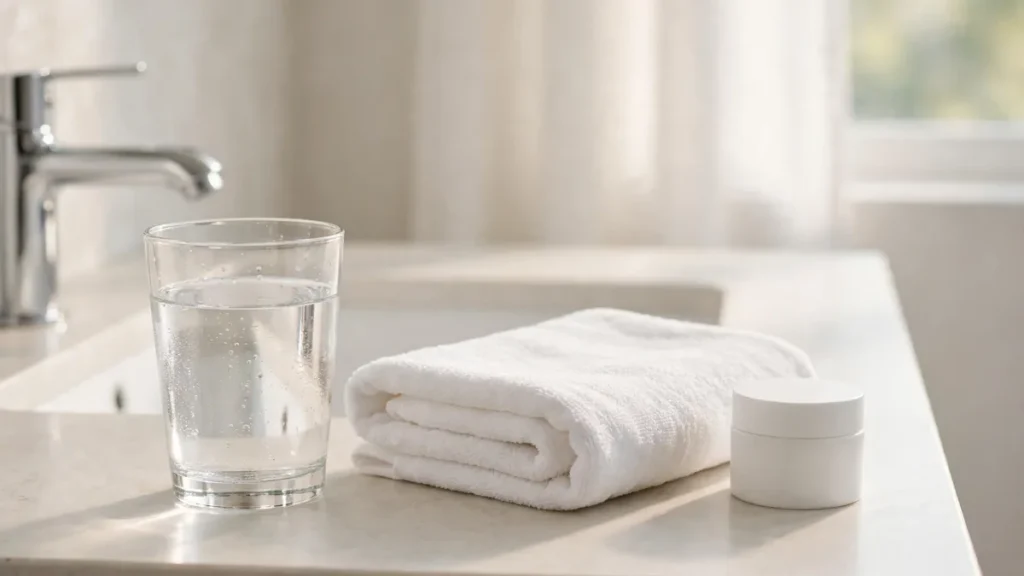
Washing your face is the smallest act of care most of us do every day, and the one we rush the most. We splash, scrub, and rinse, done in twenty seconds, often with water too hot and hands pressing too hard. The face does not complain loudly. It simply looks a little duller and feels a little tighter.
Washing your face well is not complicated: clean hands, comfortable water, a little cleanser if you use one, a gentle rinse, and a soft pat dry. Done slowly, it takes about two minutes. Done well, it leaves skin feeling clean and comfortable, not tight or stripped.
This guide walks through the whole wash, explains the choices that matter, and names the mistakes that make washing harder than it needs to be. It is for ordinary days, ordinary skin, and ordinary bathrooms. No special products are required.

Key Takeaways
- Washing your face well means clean hands, lukewarm water, gentle pressure, and a soft pat dry.
- Lukewarm water rinses cleanly; very hot water can leave skin feeling dry and tight.
- A small amount of gentle cleanser is enough, rinsed away fully.
- Pat dry with a clean towel, never rub, and moisturise while skin is still slightly damp.
- A stone can sit beside the sink as a calm reminder, but it never goes into the water.
What Washing Your Face Well Means
Washing your face well means removing the day without removing the comfort from it. Through the day, skin collects dust, sweat, oil, and makeup. A good wash lifts those away, leaving skin clean, calm, and ready for moisturiser. A bad wash does the same job with too much force, and the skin pays for it with tightness, dryness, and irritation.
The difference is not the product. It is the touch. Gentle hands, comfortable water, and a towel that pats rather than rubs will do more than the most expensive cleanser used roughly. The face is not a surface to be scrubbed. It is skin.
Washing well also means washing completely. A rinse that leaves cleanser behind is not finished, and one that skips the hairline and jaw is not finished either. Slow down, cover the whole face, and rinse until the skin feels clean, not slippery.
Why a Calm Wash Matters
Skin is at its best when left alone to do its work. It holds moisture in and repairs itself quietly overnight. A harsh wash interrupts that work: hot water, rough cloths, and hard scrubbing strip away the natural oils that keep skin comfortable, leaving skin tight, dull, and easily irritated.
A calm wash protects that quiet work. Lukewarm water and gentle hands clean without stripping, and skin keeps its moisture and calm. Over days and weeks, gently washed skin looks more settled and feels softer.
There is a second reason to wash calmly, and it has nothing to do with skin: the wash is a pause. Two unhurried minutes at the sink, with warm water and no screen, is a rare quiet moment in a busy day. Treat it as a small ritual, and it will give back more than clean skin.

The Wash, Step by Step
A good wash takes about two minutes, in the same order every time. Begin by washing your hands with soap and lukewarm water: hands carry the day's dirt, and washing your face with unwashed hands moves that dirt onto your skin.
Next, wet your face with lukewarm water, cupping your hands rather than putting it under the tap. If you use a cleanser, put a little in your palm, add water, and work it into a soft lather between your hands first.
Apply the cleanser with your fingertips, in small, gentle circles over the forehead, cheeks, nose, chin, and jaw. Keep the pressure light, as though touching something delicate. Spend a few seconds on each area, including the hairline and ears.
Rinse with lukewarm water, cupping your hands again, until the water runs clear and skin feels clean. Pat dry with a clean towel, pressing lightly, then moisturise while the skin is still slightly damp.
| Stage | Time | What to do |
|---|---|---|
| Hands | 20 seconds | Wash hands with soap and water |
| Wet the face | 10 seconds | Cup water onto the face |
| Cleanse | 45 seconds | Apply a little cleanser with gentle circles |
| Rinse | 20 seconds | Rinse with lukewarm water until skin feels clean |
| Pat dry | 15 seconds | Pat gently with a clean towel, never rub |
| Moisturise | 10 seconds | Moisturise while skin is still slightly damp |
Choosing Water Temperature
Water temperature shapes the whole wash. Lukewarm water, close to the temperature of your own skin, is the safest and most comfortable choice. It rinses cleanser away cleanly and leaves the face feeling calm rather than tight.
Very hot water feels pleasant for a moment and unkind afterwards. It strips away the natural oils that keep skin comfortable, and a face washed in hot water often feels dry and tight within minutes. Very cold water is less damaging, but it does not rinse cleanser away as well.
Test the water on your wrist first. If you have to decide whether it is warm or cold, it is probably lukewarm, and that is exactly right. For the full reasoning, why lukewarm water works better for morning skin explains it in detail.
Choosing a Cleanser
A cleanser should be gentle and easy to rinse away. Look for one that leaves skin feeling clean and comfortable, not tight or squeaky. A gel or a soft cream both work well.
Use a small amount, about the size of a pea. More cleanser does not mean cleaner skin; it means more rinsing and more residue left behind. If your face feels slippery after rinsing, you have used too much. Rinse again, and use less next time.
You do not need a cleanser for every wash. In the morning, plain lukewarm water is often enough. Save the cleanser for the evening.
Morning and Evening Washes
Morning and evening washes are not the same job. The morning wash is a wake-up: the face has rested overnight and needs little more than lukewarm water, a gentle touch, and moisturiser. Keep it short, calm, and the same each day.
The evening wash is the real clean. It removes sunscreen, makeup, dust, and oil built up through the day, and it deserves the full two minutes, with cleanser, a careful rinse, and moisturiser. If you wear makeup or sunscreen, remove it first, so the cleanser works on the skin.
Twice a day is enough. Washing more often, or scrubbing harder to make up for a missed wash, will not help. If your face feels oily in the afternoon, a splash of lukewarm water is kinder than another full wash with cleanser.

A Stone Beside the Sink
A stone can belong in this habit, but only in the right place. A smooth, pale stone on the edge of the basin turns an ordinary wash into a small ritual. It reminds you to slow down and treat the two minutes as a pause rather than a chore.
Keep the stone beside the water, never in it. Stones should not sit in washing or drinking water. The stone is there for its colour and stillness, not for anything it might do to the water. Choose a small, smooth piece you enjoy looking at, and keep it dry.
A simple routine is easier to hold than a long shelf of products, and a skin routine with room to breathe is a good place to build from.

Common Mistakes That Make Washing Harder
The most common mistake is water that is too hot. It feels good for a moment and leaves skin dry and tight for hours. Turn it down until it feels comfortable on your wrist.
The second mistake is scrubbing. Rough cloths and hard pressure do not clean better; they irritate more. Fingertips, light pressure, and small circles are enough. If your face feels sore or red afterwards, you are pressing too hard.
The third mistake is skipping the rinse. Cleanser left on the skin can leave a film that makes skin feel tight and look dull. Rinse until the water runs clear.
The fourth mistake is rubbing dry. A towel dragged across the face undoes the gentleness of the wash. Pat and press lightly instead. The fifth mistake is washing too often: more washes do not mean cleaner skin. Two calm washes a day are enough for most people.
Drinking water is a separate habit from washing with it. A glass of fresh water with breakfast, drunk slowly, is a calm way to begin the day, and staying hydrated through the day is one of the easiest small habits to keep.
Your Face-Washing Checklist
- Wash your hands first, with soap and water, before touching your face.
- Wet your face with lukewarm water.
- Use a little gentle cleanser, applied with light fingertips.
- Rinse fully until the skin feels clean, not slippery.
- Pat dry gently with a clean towel, never rub.
- Moisturise while skin is still slightly damp, and keep any stone beside the sink.

Frequently Asked Questions
How many times a day should I wash my face? Twice a day is enough: morning and evening. Washing more often can leave skin feeling dry and tight.
Should I use hot or cold water to wash my face? Neither. Lukewarm water, close to your own skin temperature, is the kindest choice. It rinses cleanser away cleanly.
Do I need a cleanser every time I wash? No. In the morning, plain lukewarm water is often enough. Save the cleanser for the evening.
How much cleanser should I use? A small amount, about the size of a pea. More cleanser does not mean cleaner skin, and it means more rinsing.
Should I rub my face dry with a towel? No. Pat dry gently with a clean, soft towel, pressing lightly instead of rubbing. Rubbing pulls at the skin.
Can I put a crystal in the water I wash with? No. Keep stones beside the sink, never in washing or drinking water. The stone is there for its colour and stillness.
The Bottom Line
Washing your face well is not a skill to master or a product to buy. It is a short, calm sequence: clean hands, lukewarm water, a little cleanser, a full rinse, and a soft pat dry. It takes two minutes, costs nothing, and leaves skin feeling clean and comfortable instead of tight and stripped.
Begin tonight with whatever you already have: a tap, a towel, and two unhurried minutes. Wash your hands first, use gentle pressure, rinse fully, and pat dry. The face in the mirror will be the same face, only cleaner, calmer, and better cared for.
A Note for Calm Evenings
Keep it gentle, keep it slow, and keep it yours. The best routines are rarely the most elaborate. They are the ones where a small, caring habit repeats itself until it becomes part of how you live. Wash well.