Some skincare pairings arrive with a fanfare and fade within a season. Rose water and glycerin is not one of them. It has sat on dressing tables for generations, in a small bottle shaken before use.
The pairing works because the two parts do different jobs. Rose water is light, fragrant water that refreshes the skin. Glycerin is thick, clear, and almost odourless, and it holds water at the surface of the skin.
This article explains the classic pairing: what each ingredient is, the ratio for the face and the hands, how to mix a small batch, and how to use it on damp skin. It is a cosmetic habit for comfort, not a treatment, and it will not cure any skin condition.
Key Takeaways
- Rose water and glycerin is a classic pairing: light rose water carries the mixture, and glycerin holds moisture at the skin surface.
- The face ratio is one part glycerin to three parts rose water; hands and feet can take a richer one to two mix.
- Always dilute glycerin, apply to damp skin, and seal with moisturiser in dry air.
- Patch test every new bottle on the inner forearm and wait 24 hours before using it on the face.
- Mix small batches, shake before each use, and keep the bottle cool, dark, and clean.
What Rose Water Is
Rose water is water that carries the scent and water-soluble parts of the rose. True rose water, also called a hydrosol, is made when rose petals are steam-distilled, and the water that condenses carries a soft rose fragrance.
Not every bottle labelled rose water is the same. A good bottle lists rose water, or Rosa damascena water, as the first ingredient, with nothing else or only a mild preservative. Choose a plain bottle with no added alcohol and no added fragrance.
What Glycerin Does
Glycerin, also spelled glycerine, is a clear, thick liquid made from vegetable oils or animal fats. In skincare it is a humectant, which means it attracts water and holds it.
Put glycerin on damp skin, and it draws water toward the top layer of the skin and keeps it there for a while. The skin feels softer and less tight. Put pure glycerin on dry skin in very dry air, and it can do the opposite, leaving the skin tight and sticky. Buy pharmacy glycerin, often labelled glycerin BP or vegetable glycerin, and check that it is colourless and odourless before you use it.
The Classic Ratio
The ratio is where most people go wrong, and it is also the easiest part to get right. For the face, use one part glycerin to three parts rose water. For hands, feet, and elbows, use a richer one to two mix.
| Mixture | Ratio | Best for |
|---|---|---|
| Face mix | One to three | Daily face use |
| Hands mix | One to two | Hands, feet, elbows |
| Light mist | One to three | Midday refresh |
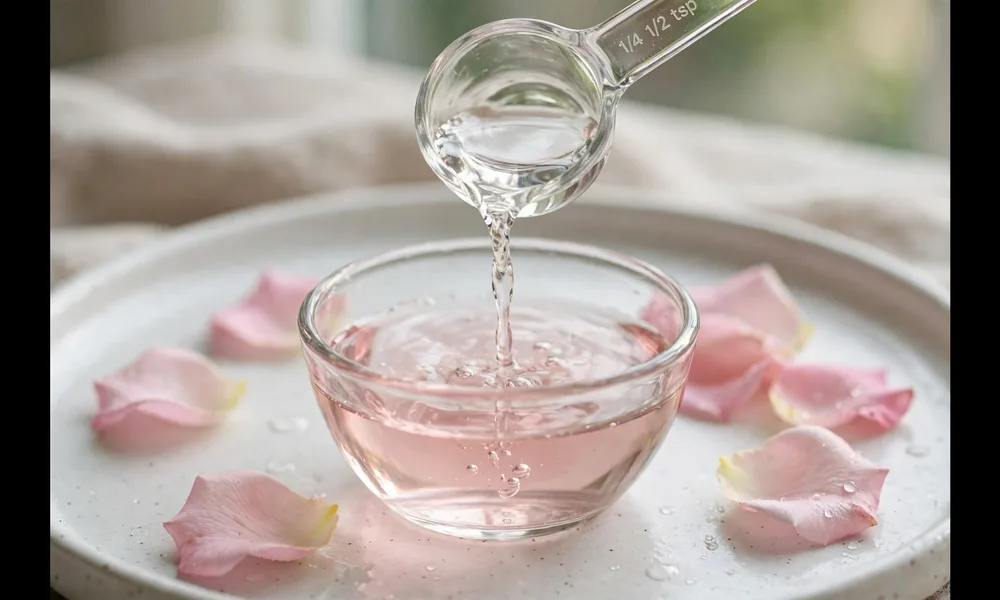
For the face mix, pour 20 millilitres of glycerin into a clean 100 millilitre bottle, then add 60 millilitres of rose water. That makes 80 millilitres, enough for three to four weeks. Measure, do not guess, and shake for twenty seconds before each use.
How to Mix a Small Batch
Start with clean hands and a clean bottle. Wash the bottle and its cap in hot soapy water, rinse well, and let it dry completely. A small glass bottle with a dropper or a pump is ideal.
Pour the glycerin in first, then the rose water, then cap the bottle and shake it for twenty seconds. Label the bottle with the date and the ratio. Keep the batch small, since a mixture with no strong preservative is best used within three to four weeks.
The Patch Test
Every new bottle deserves a patch test, even when you have used rose water or glycerin before. Put a drop of the finished mixture on the inner forearm or behind the ear. Leave it for a day, and look for redness, itching, bumps, or swelling.
If the skin stays calm for 24 hours, try a small amount on the face. If your skin flushes and stings with most products, or you live with rosacea, skip the rose water version. Keep the mixture away from the eyes, and never use it on broken skin.
How to Use It, Morning and Night
Use the mixture on damp skin, within a minute of washing. Wash your face with lukewarm water, pat once with a soft towel, and press four or five drops into the skin with clean fingertips. Press, do not rub.
Wait about thirty seconds, then follow with a thin layer of your ordinary moisturiser. The moisturiser seals the glycerin and the water underneath it, which matters most in dry or heated rooms. At night, the same steps work well, and the mixture has hours to sit undisturbed. For hands, rub half a teaspoon of the richer mix into wet hands after every wash.

Damp Skin, and Sealing It In
Damp skin is the part people skip, and it is the part that matters most. Glycerin needs water to hold, and the easiest water to give it is the water already on your skin after washing. Damp is enough: the skin should feel cool and slightly moist, not dripping.
Sealing matters just as much. In a dry, heated room, a humectant on its own can lose the water it gathered to the dry air. A thin layer of moisturiser slows that loss and keeps the soft feeling for hours. Think of the mixture as the water step and the moisturiser as the lid.
A Gentler Cousin: The Salt and Rose Reset
Rose water appears in several routines on this site, and they are easy to confuse. The sea salt and rose water reset is a short evening reset, not a daily moisturising step: a little sea salt dissolved in warm water, followed by rose water as a light mist or splash.
It is occasional, once or twice a week, and it contains no glycerin. In the reset, rose water is the soft finish after a salt rinse. Here, rose water is the carrier that lets glycerin spread thinly and evenly. Keep them separate, and do not mix salt into the glycerin bottle.
Tender Days, and a Pink Stone Beside the Water
On tender days, when the skin feels sensitive after a long week or a change in weather, less is more. Lukewarm water, a gentle cleanser if needed, a little rose water, and moisturiser is enough.
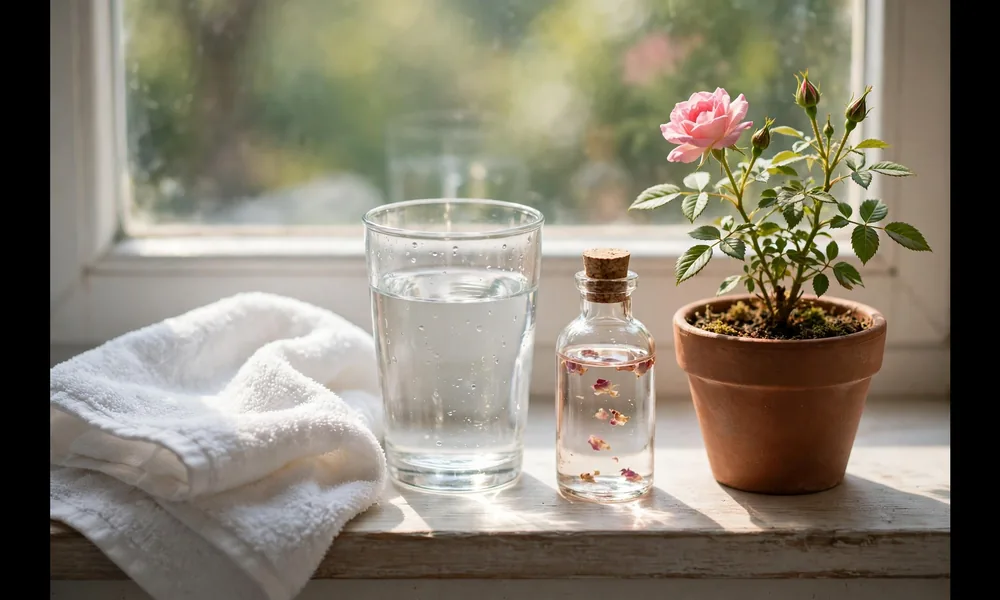
The rhodonite and rose water guide for tender skin follows that shape, with a soft pink rhodonite stone kept beside the water, never in the water or the bottle. On a tender day, skip the glycerin mixture and use plain rose water alone. A stone will not treat any skin condition, and neither will this mixture.
Choosing Good Bottles, and Storing Them Well
Buy small and buy plain. A small bottle of pharmacy glycerin and a small bottle of plain rose water will stay fresher than a large bottle. The glycerin should be clear, colourless, and odourless, and rose water should be the first ingredient on its label.
Store both bottles, and the finished mixture, in a cool, dark place, away from the window and the radiator. Keep the caps closed, and throw the mixture away if it smells sharp or looks cloudy. The flower water blends guide explains how rose, orange blossom, lavender, and chamomile waters differ; patch test any blend first.
Your Rose Water and Glycerin Checklist
- Patch test the finished mixture on the inner forearm and wait 24 hours.
- Mix one part glycerin to three parts rose water for the face, one to two for hands.
- Measure with a spoon, shake for twenty seconds, and label the bottle with the date.
- Apply four or five drops to damp skin, pressed in with clean fingertips, never rubbed.
- Seal with a thin layer of moisturiser, especially in dry or heated rooms.
- Mix small batches, keep the bottle cool and dark, and make a fresh batch every few weeks.
Frequently Asked Questions
What is the best ratio of rose water to glycerin for the face?
One part glycerin to three parts rose water is the classic face ratio. For a small batch, that is 20 millilitres of glycerin and 60 millilitres of rose water.
Should I apply the mixture to wet or dry skin?
Apply it to damp skin, within a minute of washing, when the skin still feels cool and slightly moist. Glycerin is a humectant, so it needs water to hold, and damp skin gives it that water.
Can I use rose water and glycerin every day?
Most people can use the face mixture once or twice a day, morning and night, once the patch test is clear. Start once a day for a week, and add a second use only if the skin stays calm.
Is undiluted glycerin safe on the skin?
No, undiluted glycerin should not be used on the face. It is thick and sticky, it can feel tight in dry air, and it wastes product. Always dilute it with rose water or plain water.
How long does a mixed bottle last?
A small batch is best used within three to four weeks. Keep the bottle cool, dark, and clean, shake it before each use, and throw it away if it smells sharp or looks cloudy.
Can I use this mixture if my skin is sensitive?
Patch test first, on the inner forearm, and wait 24 hours. If your skin flushes and stings with most products, or you live with rosacea, skip the rose water version and try glycerin diluted with plain cooled boiled water.
The Bottom Line
Rose water and glycerin is a classic pairing because it is simple and it respects the skin. One part glycerin to three parts rose water, applied to damp skin, sealed with moisturiser, and patch tested first, is all there is to it. Mix a small batch this week, use a few drops a day, and let the habit earn its place over the next few weeks.
A Note for Soft Skin Days
Keep it small, keep it damp, keep it gentle. A plain bottle, a careful ratio, and a few unhurried minutes will do more for soft skin than a crowded shelf.