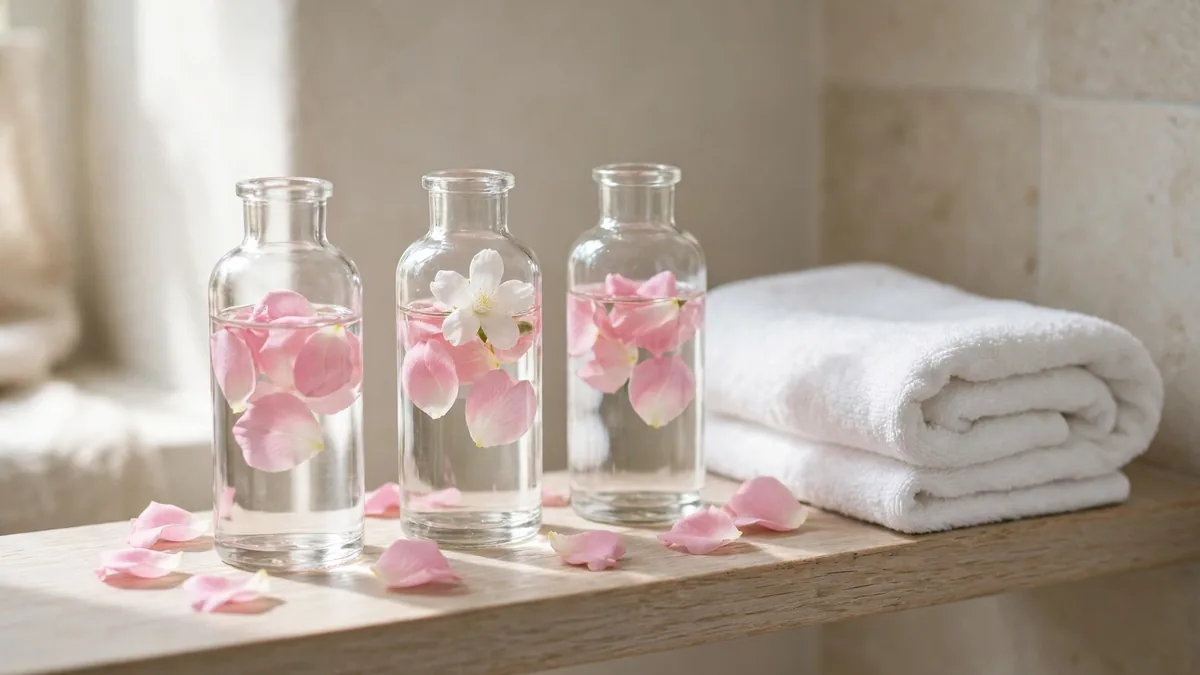
A softer skin routine does not need more products. It needs gentler ones, used in a calmer way. Flower water is one of the gentlest things you can put on your face: clear water carrying the scent and water-soluble compounds of a flower through steam.
Most of us know one flower water, rose water, and use it on its own. But flowers blend beautifully: rose water softens, orange blossom water brightens, lavender water calms, and chamomile water soothes.
This article explains what flower water really is, how to tell a true hydrosol from a scented copy, and how to blend flower waters for a softer morning and evening routine. No stone is involved anywhere here: flower water comes from flowers.
Key Takeaways
- Flower water, or hydrosol, is the water phase from steam distillation, with only a trace of essential oil.
- True hydrosols are mildly acidic, pH 3.5 to 5.5, and list the flower's Latin name first.
- Rose, orange blossom, lavender, and chamomile are the four most useful flower waters.
- Blend two flower waters at a time, in equal parts, and patch-test every new blend on your wrist first.
- Flower water does not treat, cure, or prevent any skin condition; it is a gentle habit, not a treatment.
What Flower Water Is
Flower water is the water left over when flowers are steam-distilled to make essential oil. Steam passes through fresh or dried petals in a still, carrying away oil-soluble and water-soluble compounds. The vapour is cooled, and the liquid separates into two parts: a thin layer of essential oil on top, and a much larger amount of aromatic water underneath. That water is the hydrosol, the true flower water.
A true hydrosol is not a diluted essential oil. It contains water-soluble molecules, organic acids, and only a very small amount of essential oil, roughly 0.02 to 0.05 percent. That is why it is gentle enough to use directly on skin, while an essential oil must always be diluted first. Most hydrosols are mildly acidic, pH 3.5 to 5.5, and rose water sits around pH 4.5 to 5, close to the skin's own slightly acidic surface. Much of what is sold as flower water is not a true hydrosol: many bottles are simply water with synthetic fragrance. A true hydrosol lists the Latin name first.
Why Skin Likes It Soft
Skin likes flower water because it is light, clean, and refreshing, and it asks nothing of the skin. Flower water is almost entirely water, so it adds moisture without adding oil, and it dries quickly, leaving no film and no sticky feeling. It is mildly acidic, which suits the skin's surface.
It is also a gentle choice in a routine that may otherwise be too much. Strong toners and acids, used every day, can leave skin feeling tight and reactive. Flower water is the opposite: a way of doing less, and doing it kindly. A splash or a mist after washing, followed by a simple moisturiser, is often all the skin needs on a calm day. If your skin is very sensitive, patch-test on your wrist first, and wait a day before using a new blend on your face.
The Five Flower Waters
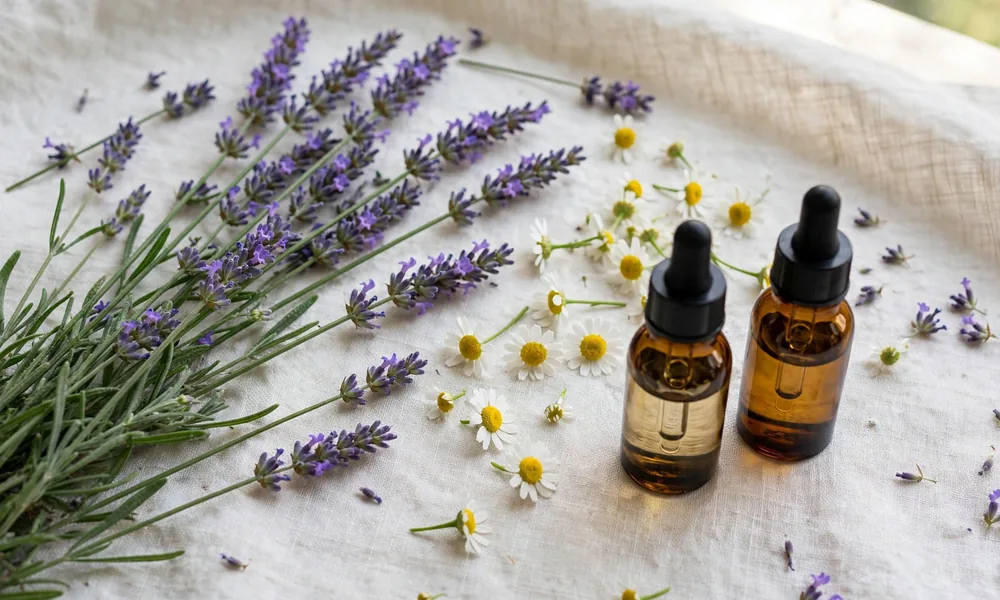
Five flower waters cover almost every need a softer routine has. Rose water, from Rosa damascena, is the classic: sweet, floral, and suited to dry, sensitive, and mature skin, used in beauty rituals for thousands of years. Orange blossom water, also called neroli water, is citrus-floral and bright, for dull or tired skin. Lavender water is clean and herbal, for skin that feels reactive or overworked. Chamomile water is the softest of all, for skin that is easily irritated. Jasmine water is the richest and sweetest, for dry skin and evening routines. Rose sits around pH 4.5 to 5, neroli around 5 to 6.
| Flower water | Character | Best for |
|---|---|---|
| Rose (Rosa damascena) | Sweet, floral, classic | Dry, sensitive, mature skin |
| Orange blossom (neroli) | Citrus-floral, bright | Dull or tired skin |
| Lavender | Clean, herbal, calm | Reactive or overworked skin |
| Chamomile | Soft, apple-like, gentle | Easily irritated skin |
| Jasmine | Rich, sweet, warm | Dry skin, evening routines |

Blending Your First Flower Water
Blending flower water is simple, and it is best kept simple. Start with two flower waters, not five. Equal parts is the easiest blend: half rose water and half orange blossom water, or half lavender water and half chamomile water. Pour both into a small, clean glass bottle, close it, and shake it gently once. That is the whole recipe. Use it within a week, kept in the fridge.
Three blends are good places to start. For a soft morning, try rose and orange blossom in equal parts: the rose softens, the orange blossom brightens. For a calm evening, try lavender and chamomile. For tired skin, try rose and lavender. Do not add essential oils, glycerine, or sugar: a true hydrosol already contains a trace of essential oil. If a blend smells sour or musty, or looks cloudy, throw it away.
A Softer Morning Routine
A softer morning starts with water and ends with flower water. Wash your face with lukewarm water and a gentle cleanser, or with lukewarm water alone if your skin feels calm. Pat dry with a clean, soft towel, pressing lightly instead of rubbing. Then pour a little of your blend into your palm, press it gently over your face, and let it dry for a few seconds. Apply moisturiser while the skin is still slightly damp, then sun protection.
If you prefer a mist, pour the blend into a small, clean spray bottle instead. Hold it twenty centimetres from your face, close your eyes, and mist once or twice. If you like mists in general, a moonstone-inspired mist is a cooler cousin: how moonstone hydration mists refresh tired skin is a good next read. And if your skin prefers the simplest rinse of all, an old beauty habit made simple is a useful comparison.
A Gentle Evening Routine
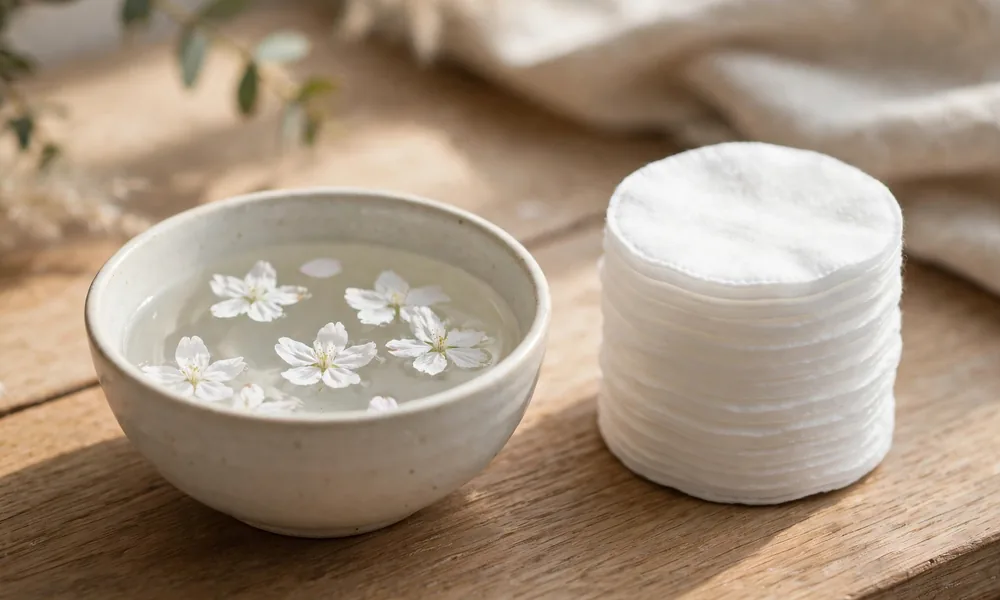
In the evening, flower water is a quieter pleasure. After cleansing away the day — sunscreen, makeup, dust, and oil — pour a little of your evening blend onto a clean cotton pad, and sweep it gently over your face, avoiding the eyes. Follow with moisturiser, and let the scent of lavender or chamomile be the last thing the day gives you.
The evening is also the best time for a flower water compress, a small luxury that costs nothing. Soak a clean, soft cloth in cool flower water, wring it out gently, and lay it over your face for two or three minutes while you lie still. If your skin feels stale after a long week, a reset can help: a fresh skin reset with sea salt and rose water explains how. But a reset is a sometimes thing. The everyday habit is the gentle one.
Storing and Keeping Flower Water Fresh
Flower water is a natural product with no preservatives, and it needs care. Keep every bottle in the fridge once opened, and use it within six to twelve months. A true hydrosol kept cool will last that long; a bottle left warm on a sunny shelf will turn in weeks. Make small blends, use them within a week, and never top up an old bottle with a fresh blend.
Watch for the signs that flower water has turned. Fresh flower water is clear, or very faintly coloured, and it smells light and floral. Flower water that has turned smells sour, sharp, or musty, and it may look cloudy or feel slimy. If you see any of these signs, throw it away. Buy flower water in small bottles, in amber or dark glass. Check the label: the first ingredient should be the flower water itself, with its Latin name.
What It Will Not Do
Say plainly what flower water will not do. It will not erase fine lines, shrink pores, clear acne, fade dark spots, or give you glowing skin on its own. It will not cure dryness, redness, eczema, or any skin condition, and it will not replace a cleanser, a moisturiser, or sun protection.
What it can do is simpler: it can make skin feel fresh, cool, and lightly cared for, and it can make a routine feel softer and more enjoyable. If a skin concern is persistent, changing, or worrying you, please speak to a qualified health professional or dermatologist.
Your Flower Water Checklist
- Buy true hydrosols: the Latin name first on the label, a short ingredient list.
- Start with two flower waters in equal parts: rose and orange blossom for mornings, lavender and chamomile for evenings.
- Patch-test every new blend on your wrist, and wait a day before using it on your face.
- Use flower water after washing, pressed in with your palms or misted lightly, then moisturise.
- Keep bottles in the fridge, make small weekly blends, and wash each bottle first.
- Throw away any flower water that smells sour or musty, or looks cloudy.
Frequently Asked Questions
What is the difference between flower water and essential oil? Flower water is the water phase from steam distillation, with only a trace of essential oil, about 0.02 to 0.05 percent. Essential oil must always be diluted first. Flower water can be used directly.
Can I use flower water every day? Yes, most people can use it morning and evening. If your skin feels irritated, stop for a few days, then patch-test again.
Which flower water is best for sensitive skin? Chamomile water is the softest, and rose water is a close second. Start with one of these, patch-test on your wrist, and blend only after your skin is happy with each alone.
Can I mix flower water with other skincare? Yes. Use flower water first, on clean skin, then apply moisturiser while the skin is still slightly damp.
How long does flower water keep? A true hydrosol keeps for six to twelve months in the fridge once opened. A homemade blend should be used within a week.
Can I put a crystal in my flower water? No. Flower water comes from flowers, and no stone belongs in it, or in any water you put on your skin. Keep stones on a shelf or in a dish.
The Bottom Line
Flower water blends are a softer way to care for skin: two true hydrosols, mixed in equal parts, pressed into clean skin morning and evening, and kept fresh in the fridge.
Begin tomorrow with one bottle of rose water and one of orange blossom. Mix them in equal parts, press a little into clean skin, and see how the softness feels.
A Note for Softer Days
Keep it soft, keep it fresh, keep it yours. The best beauty habits are rarely the most elaborate: a cool splash, a light scent, and a few unhurried minutes, repeated until they become part of how you live.



