Some weeks your skin feels stale. It is not one problem you can point to, just a general tiredness: a little congestion here, a little dryness there, and a routine on autopilot. What you want is not another product. You want a reset.
For that reset, sea salt rose water makes a gentle pair. Sea salt, dissolved in warm water, gives a simple cleansing soak or rinse. Rose water follows with a soft scent and a light finish. Together they turn an ordinary wash into a small ritual that feels fresh.
This article walks through the reset step by step: what each ingredient brings, how to choose ones you can trust, and the order of the evening itself, with a lighter version and advice for sensitive skin. Take what fits.
Key Takeaways
- A skin reset means a short, gentle pause from a crowded routine, not a harsh treatment.
- Sea salt is for a diluted soak or rinse only, never scrubbed dry onto skin.
- Rose water follows as a light mist or splash, never as a replacement for moisturiser.
- The whole reset takes fifteen to twenty minutes, and a five-minute version still counts.
- Patch-test anything new, and stop if your skin feels irritated.
What a Skin Reset Really Means
A reset is not a purge, a peel, or a punishment. It is a short break from doing too much. When a routine grows crowded, it becomes hard to tell what helps and what irritates. A reset strips it back to a few gentle steps, done slowly.
It helps to think of it as a tidy-up rather than a treatment. You wash with warm water and a little dissolved sea salt, rinse well, mist or splash with rose water, and moisturise. That is the whole reset. Nothing stings, nothing peels, and nothing promises a transformation overnight.
Timing matters. An evening reset works best, when the day is over and there is no rush. Once or twice a week is plenty; done daily, a reset stops being a reset and becomes just another chore. Keep it occasional, keep it gentle, and keep it yours.
Sea Salt Rose Water: What Each One Brings
Sea salt brings the cleansing part of the reset. Dissolved in warm water, it makes a mild saline soak that feels clean and refreshing. It is not a scrub: undissolved crystals are rough and can scratch, so the salt must be fully dissolved before the water touches your face. A small pinch in a bowl of warm water is enough.
Rose water brings the softness. It is water lightly scented with rose, used for centuries as a refreshing splash and a gentle mist. It feels cool on the skin, smells calm and floral, and leaves no residue. It does not moisturise on its own, so it is a middle step, not a final one.
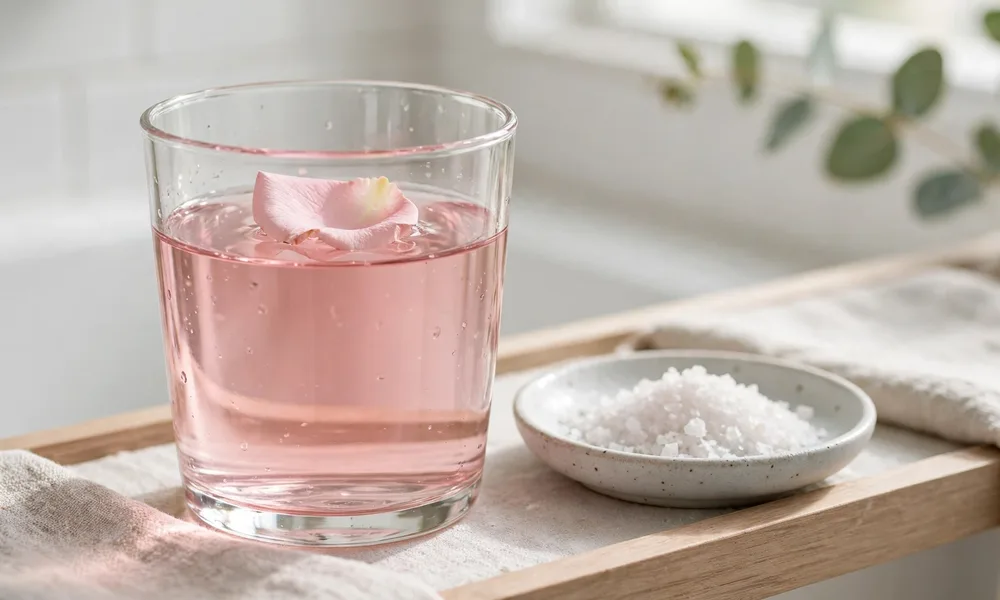
Together, the two balance each other nicely. Salt water cleanses and refreshes; rose water softens the finish and adds a pleasant scent. Water itself has a visual language worth noticing: the way salt dissolves, the pale pink of rose water in a glass, the light on a wet bowl.
Choosing Salt and Rose Water You Can Trust
Choose a fine, plain sea salt with no added fragrance, colour, or anti-caking agents. Fine grains dissolve quickly and evenly. Coarse flakes work too, but need longer in warm water and a good stir. Avoid coloured bath salts and anything labelled as a scrub.
For rose water, read the label and look for a short ingredient list, ideally rose water or rose distillate with little else added. Avoid heavy fragrance, added alcohol high on the list, or bright artificial colour. A good rose water smells gently of roses, not of perfume.
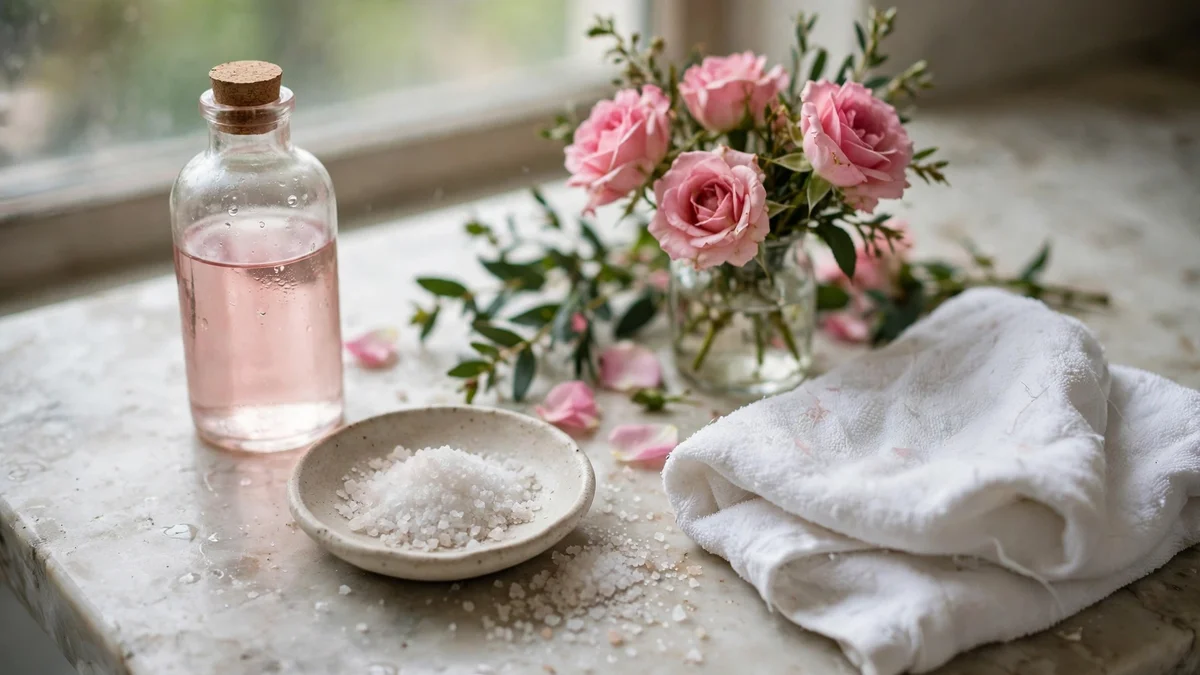
Buy small bottles at first. Rose water keeps best in a cool, dark place, and a small bottle gets used before it ages. Keep salt in a dry jar, and both on a clean shelf away from direct sunlight. A home that catches the light is a lovely place for a reset, but your bottles prefer the shade.
The Fresh Skin Reset, Step by Step
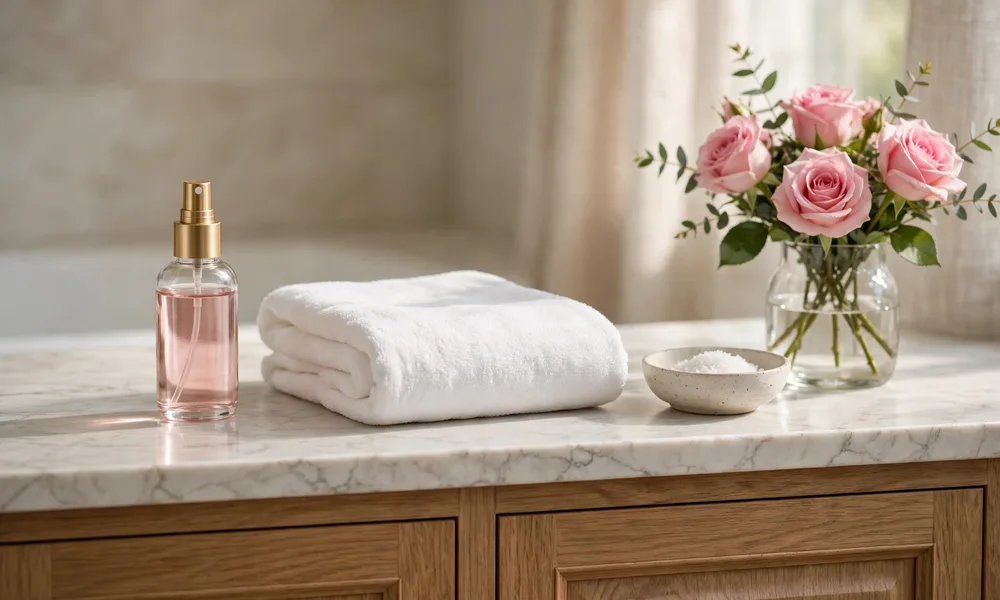
Begin in the evening, when you have twenty unhurried minutes. Tie your hair back, wash your hands, and lay out what you need: a clean bowl, warm water, a pinch of sea salt, rose water, a soft towel, and your usual moisturiser.
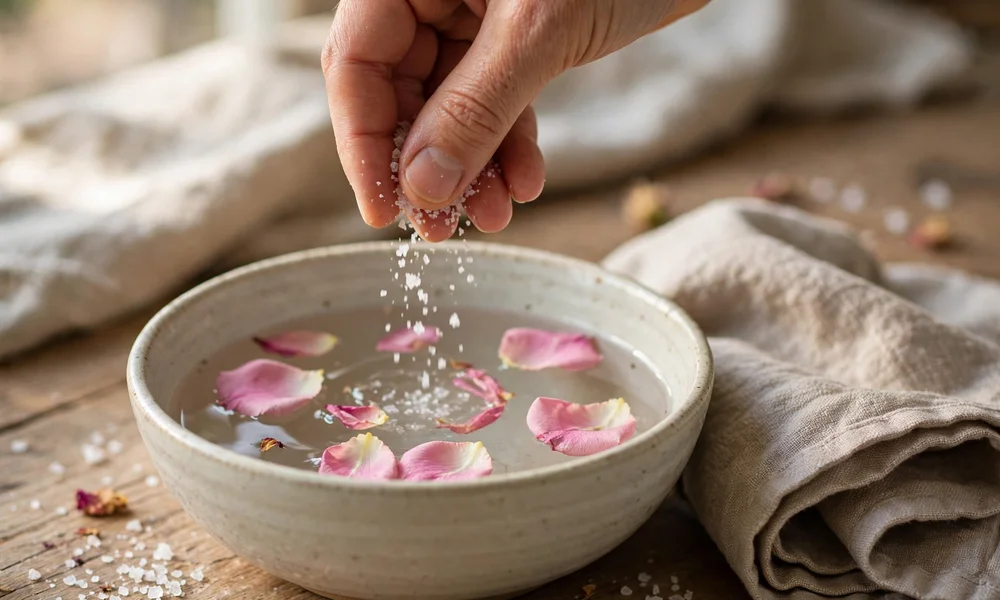
Fill the bowl with warm water, not hot. Add a small pinch of fine sea salt and stir until it has fully dissolved. Test it on the inside of your wrist: it should feel comfortably warm. Splash your face with the salt water, or press a soft cloth soaked in it gently against your skin. Do not scrub.
Rinse with plain lukewarm water, then pat your face dry. Now the rose water: mist it lightly over your face, or splash a little on with clean hands. Let it settle, then apply your usual moisturiser while the skin is still slightly damp.
The table below is a timing guide, not a schedule. Adjust it to fit your evening.
| Stage | Time | What to do |
|---|---|---|
| Prepare | 3 minutes | Lay out the bowl, salt, rose water, towel |
| Dissolve | 2 minutes | Stir a pinch of salt into warm water until clear |
| Cleanse | 5 minutes | Splash or press the salt water gently on skin |
| Rinse | 3 minutes | Rinse with plain lukewarm water, pat dry |
| Refresh | 2 minutes | Mist or splash rose water, then moisturise |
| Close | 2 minutes | Rinse the bowl, put everything away, dim the light |
When you finish, rinse the bowl and put everything away. Your skin should feel clean and calm, not tight or tingling. If it feels tight, use less salt or cooler water next time.
A Lighter Version for Busy Mornings
Not every reset needs a bowl and twenty minutes. On a busy morning, a lighter version takes about five minutes: wash your face with lukewarm water as usual, mist rose water lightly over your skin, and moisturise while it is still damp. Skip the salt step on rushed days.
You can also keep a small spray bottle of rose water in your bag or on your desk. A light mist over makeup is refreshing, though it will not set makeup or replace a proper wash. Think of it as a small pleasure, not a treatment.
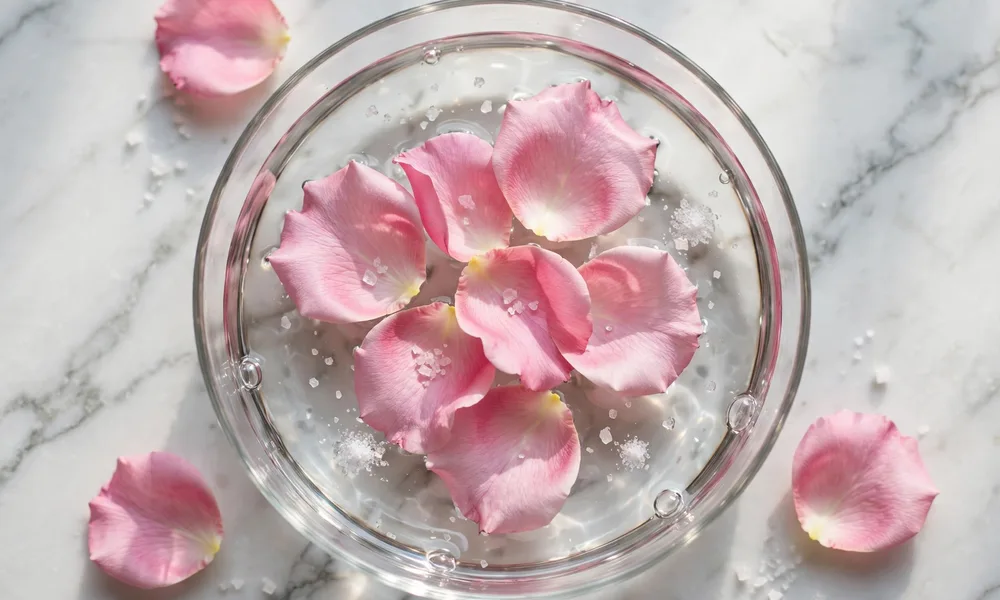
For a weekend version, stretch the ritual out. Add a few fresh rose petals to the bowl of warm water and let them float while you sit quietly. The petals are decoration, not an ingredient. Remove them before you splash.
Keeping the Reset Gentle
Always patch-test first: try the salt water on a small area, such as the inside of your wrist, and wait a day before using it on your face. Do the same with any new rose water. If either one stings, itches, or leaves redness, stop using it.
Do not use salt water on broken, cut, or freshly exfoliated skin, and do not use it if your skin is sunburned. Salt on broken skin stings, and a reset should never hurt. If your skin is sensitive, use even less salt, or skip the salt step and enjoy a rose water rinse on its own.
Keep the reset occasional: once or twice a week is enough. If your skin feels dry afterwards, use a little more moisturiser next time, or shorten the salt step. Wellbeing without the overwhelm starts with exactly this kind of listening: small steps, noticed carefully.
Caring for Your Bottles, Bowls, and Blends
Wash the bowl after every reset with warm water and a little dish soap, rinse well, and let it dry upside down. A clean bowl matters more than a pretty one.
Keep rose water in a cool, dark place with the cap on, and use it within the date on the bottle. If it smells sharp, cloudy, or different from when you opened it, replace it. Keep sea salt in a dry jar with a tight lid, away from steam, so it does not clump.
Make only what you need for one reset. Do not store mixed salt water. Fresh each time is safer and takes only a minute.
What This Reset Will Not Do
Honesty is part of a fresh start, so say plainly what this reset will not do. It will not cure acne, eczema, or any skin condition. It will not detox your skin, shrink pores, or erase lines. Salt water and rose water are gentle, simple things, and their effects are gentle and simple too.
What it can do is real, if modest: it gives you a reason to slow down, wash carefully, and enjoy a few quiet minutes with a pleasant scent.
If you are worried about your skin, or a problem persists, please speak to a dermatologist. A reset can support a healthy routine, but it cannot replace care.
Your Reset Checklist
- Tie your hair back and wash your hands.
- Stir a small pinch of fine sea salt into warm water until fully dissolved.
- Splash or press the salt water gently on your skin, never scrubbing.
- Rinse with plain lukewarm water and pat dry with a soft towel.
- Mist or splash rose water, then moisturise while skin is slightly damp.
- Rinse the bowl, put everything away, and note how your skin feels.
Frequently Asked Questions
How much sea salt should I use? A small pinch in a bowl of warm water is enough, and the salt must be fully dissolved before it touches your face.
Can I use table salt instead of sea salt? Plain fine sea salt is the better choice, with no added fragrance or colour. Table salt often contains anti-caking agents, so prefer a simple sea salt.
Is rose water safe for sensitive skin? Many people with sensitive skin enjoy rose water, but always patch-test first on the inside of your wrist and wait a day. If it stings or leaves redness, stop using it.
How often should I do this reset? Once or twice a week is plenty. Done daily, a reset stops being a reset.
Can I use the salt water on my body too? Yes. A diluted salt water rinse can be refreshing on the body, especially after a warm day. Rinse with plain water afterwards and moisturise as usual.
Should I use the reset before or after other skincare? Use it as your evening wash, then moisturise. Do not layer strong treatments on top; the point is a short, gentle pause.
The Bottom Line
Sea salt and rose water, as a reset, is a small thing done well: warm water, a pinch of salt fully dissolved, a soft rose water finish, and a few unhurried minutes. It asks only that you slow down and wash carefully.
Begin this week with whatever you already have: a bowl, warm water, a pinch of salt, and a bottle of rose water. Stir, splash, rinse, and refresh.
A Note Before You Begin Again
Keep it simple, keep it occasional, and keep it yours. The freshest skin routines are rarely the most elaborate. They are the ones where a small, familiar pleasure repeats itself, week after week, until it becomes part of how you live. Stay curious. Stay clear. Reset gently.