Some days, skin asks for less. It feels tender after a long week, a change in weather, or too many products tried too quickly. It does not want a new treatment. It wants a quiet morning, lukewarm water, and one gentle product used slowly.
Rhodonite and rose water suit those days well. Rose water is a light, fragrant face product that refreshes without scrubbing. Rhodonite is a soft pink stone with dark markings, and it belongs beside the water, on the shelf, as a calm thing to look at.
This guide explains how to use rose water gently on tender skin days, how rhodonite fits into the routine, and what to skip when your skin is asking for rest. Nothing here promises a cure.

Key Takeaways
- On tender skin days, use less: lukewarm water, a gentle cleanser if needed, rose water, and moisturiser.
- Rose water is a face product to mist or pat on gently; test it first, and stop if it stings or irritates.
- Rhodonite stays beside the water and the glass, never in the water, the rose water bottle, or drinking water.
- Keep the routine short and the water lukewarm, never hot, cold, or icy on tender skin.
- A stone will not treat, heal, or cure any skin condition; it is there for colour, calm, and comfort.
What Rhodonite and Rose Water Are
Rhodonite is a pink stone, often with dark brown or black markings running through it. The pink is soft rather than bright, and the stone is usually sold as a smooth, polished piece that fits in the hand. People are drawn to it because the colour feels gentle.
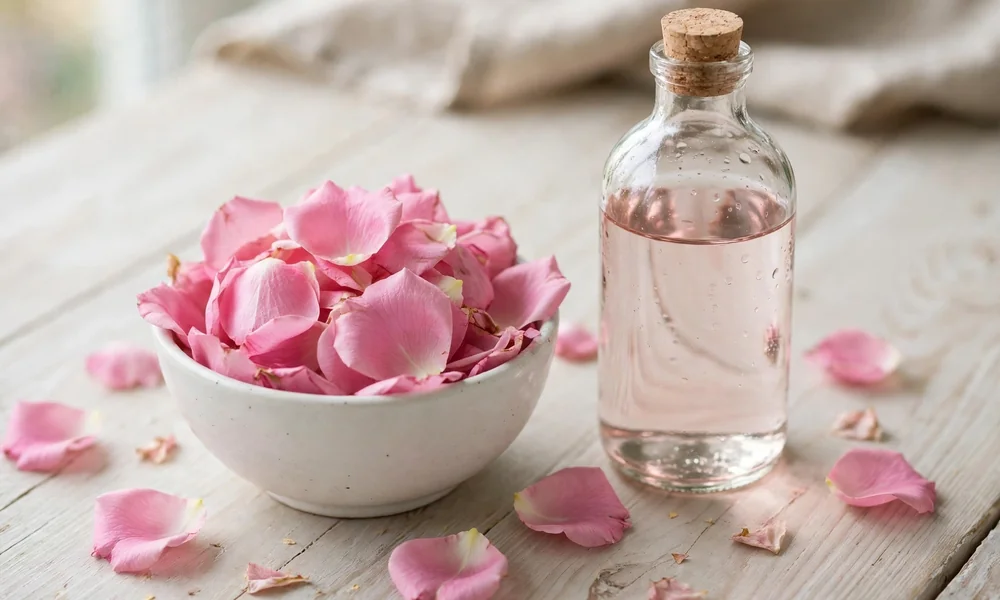
Rose water is water scented with rose, made for use on the skin. It is usually sold in a small bottle, as a spray or a liquid to apply with clean hands. It feels light and cool, and it is often used after cleansing and before moisturiser.
The two belong together because they share a mood: soft, pink, and unhurried. The rose water does the work, and the rhodonite sits beside it, a quiet reminder to slow down.
Why Tender Skin Days Need a Simpler Routine
Tender skin feels sensitive, tight, or easily irritated. It may look a little red, feel dry in places, or sting when a product is applied. It often follows a change: new weather, a new product, too much sun, or poor sleep. The skin is not broken; it asks for a pause.
A simpler routine helps because every product is a small test for tender skin. Each new ingredient is something the skin must tolerate, and on a tender day it may tolerate very little. Fewer products give the skin fewer things to react to.
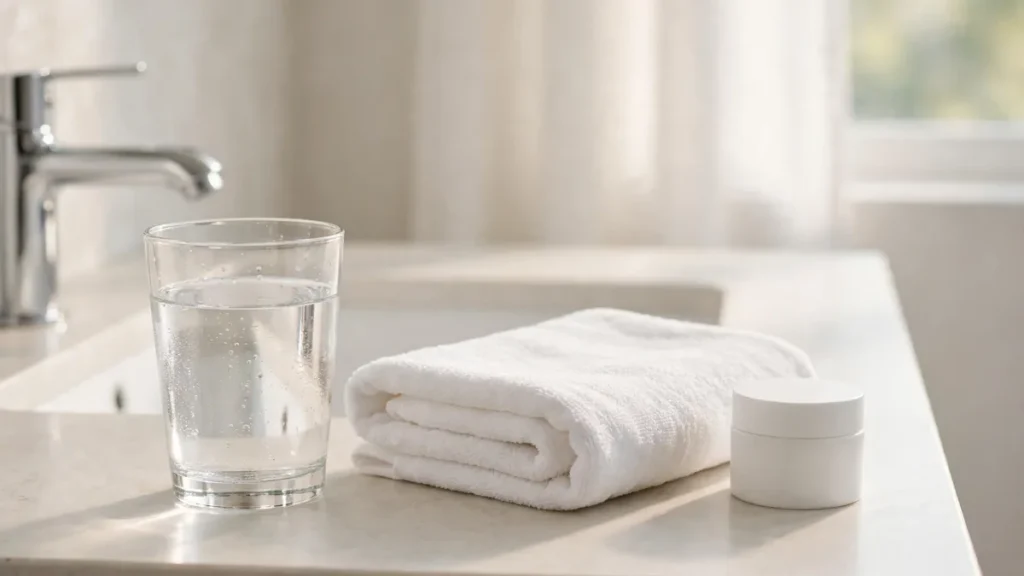
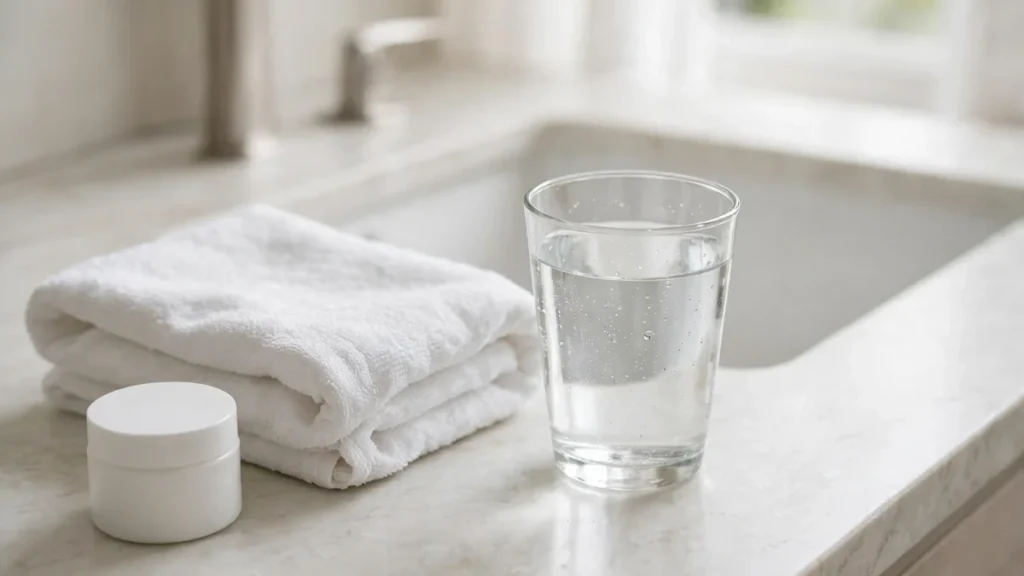
Lukewarm water is the foundation of that simpler routine. Hot water can strip the skin and leave it feeling tighter, while very cold water can be a shock on a tender day. Lukewarm water, about skin temperature, cleans gently without either extreme.
The Gentle Routine, Step by Step
Begin by washing your hands with soap and lukewarm water. Then splash your face with lukewarm water, or wash gently with a mild cleanser if your skin needs cleaning. Use your fingertips, not a cloth or brush, and do not scrub.
Pat your face dry with a clean, soft towel, pressing lightly instead of rubbing. Then apply the rose water: mist lightly from arm's length if it is a spray, or pat a little onto your cheeks and forehead with clean hands if it is a liquid. Do not rub.
| Step | Time | What to do |
|---|---|---|
| Hands | 20 seconds | Wash hands with soap and lukewarm water |
| Wash | 1 minute | Splash with lukewarm water, or cleanse gently with fingertips |
| Pat dry | 20 seconds | Pat gently with a clean, soft towel, never rub |
| Rose water | 30 seconds | Mist lightly, or pat on with clean hands |
| Moisturise | 30 seconds | Apply moisturiser while skin is still slightly damp |
Finish with moisturiser while the skin is still slightly damp, so the moisture is held in rather than lost to the air. A plain, fragrance-free moisturiser is usually the kindest choice on a tender day. In the morning, add sun protection, and keep the routine under five minutes.
Choosing a Rose Water You Can Trust
Not all rose water is the same, and on a tender day the label matters. Look for a short ingredient list, with rose water or rose distillate near the top, and as few added fragrances as possible. A product with a long list of perfumes or alcohols is more likely to sting.
Test any new rose water before using it on your whole face. Apply a little to the inside of your wrist, and wait a day. If there is no redness, stinging, or itching, try it on your face. If it stings, stop and rinse.
Store the bottle upright, with the lid closed, away from heat and sunlight. A small bottle is better if you use rose water only occasionally, because it stays fresher. If the liquid smells sour or looks cloudy, throw it away.
Rhodonite Beside the Water, Never in It
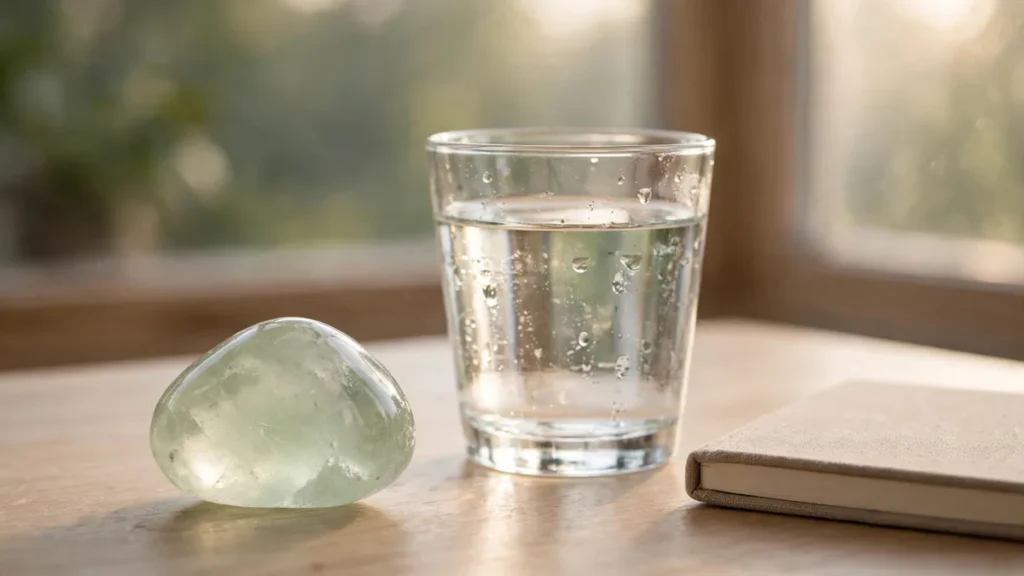
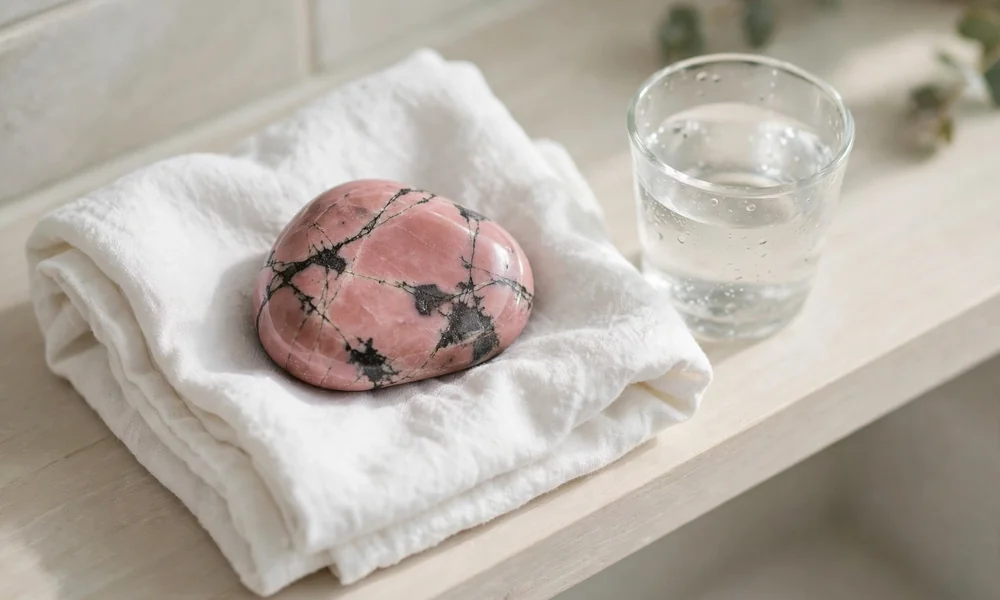
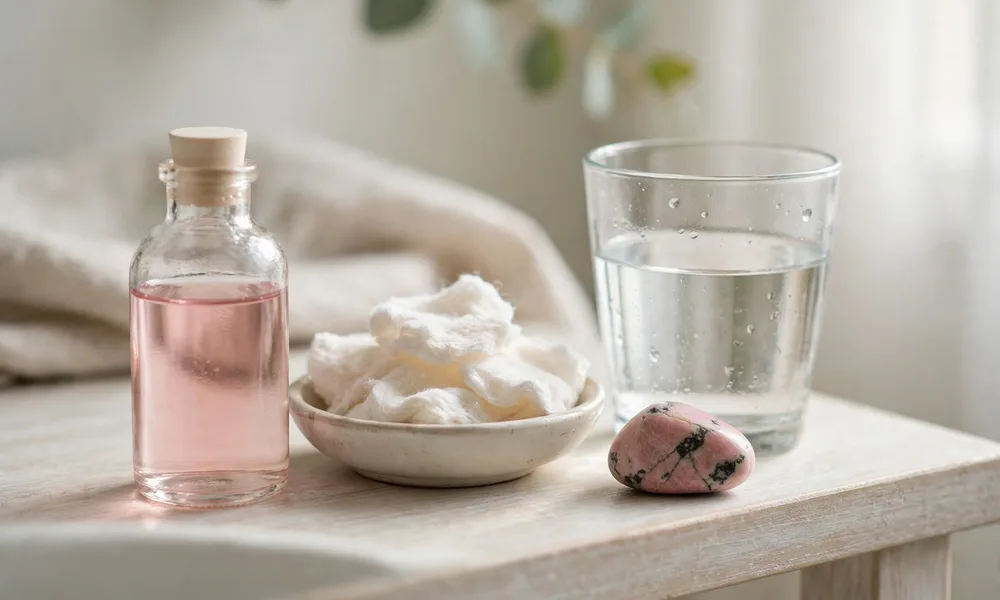
Rhodonite belongs in this routine as a companion, not as an ingredient. Place it on the shelf beside the rose water bottle, or on a folded cloth beside a glass of clean water. It is there to look at while you take your time.
Keep the stone out of the water at all times. Rhodonite should never sit in the rose water bottle, in a glass of water, or in any water you drink or put on your skin. Stones can carry dust and germs, and some can release substances into water that are not safe. The indirect method — stone beside the water, never in it — is the only safe way to include a stone.
Choose a small, smooth piece you like, and keep it dry. If you want a calmer bath on a tender day, a stone beside the bath can set the same mood, and rose quartz bath rituals for soft skin show how a stone beside the water can make a slow soak feel more restful.
Morning and Evening on Tender Days
Mornings and evenings ask for slightly different things on a tender day. In the morning, the routine is about protection: lukewarm water, rose water, moisturiser, and sun protection before you go out. Keep it short, and let the skin wake slowly.
In the evening, the routine is about rest. Wash gently with lukewarm water, apply rose water, and moisturise, then leave the skin alone. Do not add extra products to make up for the morning.
A glass of plain water beside your bed is a separate, useful habit, and a gentle approach to staying hydrated through the day is one of the easiest habits to keep.
A Gentle Week With Rhodonite and Rose Water
One tender day is a pause; a gentle week is a pattern. For a week, keep the same short routine each morning and evening, and change nothing else. Use the same cleanser, rose water, and moisturiser, so you can see how your skin responds.
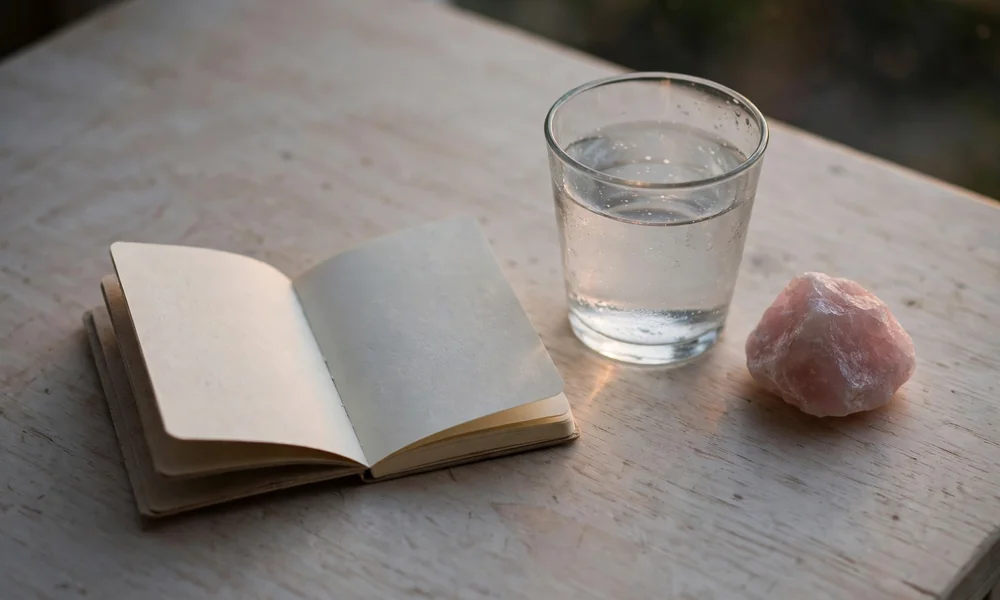
Note how your skin feels each day. A line in a notebook — calm, tight, red, comfortable — is enough. If the skin feels calmer, keep the routine. If it feels worse, stop the rose water first.
Do not add new products during that week, even if they promise faster results. A tender week is not the time for experiments. It is time for the same gentle steps, repeated patiently.
What Rhodonite and Rose Water Will Not Do
Say plainly what this routine will not do. Rhodonite will not heal, soothe, or treat your skin, and no crystal can cure acne, eczema, rosacea, redness, or any skin condition. Rose water will not repair damaged skin or erase fine lines alone. It is a light, pleasant product, not a treatment.
If your skin is very red, swollen, blistered, or painful, or if a problem keeps returning or getting worse, please speak to a dermatologist. A gentle routine can support healthy skin, but it cannot replace care.
Keep expectations modest, and the routine will not disappoint you. It offers a calm few minutes, a light refreshment, and a stone to look at while you take your time.
Your Tender Skin Days Checklist
- Wash your hands first, then use lukewarm water only — never hot, cold, or icy.
- Cleanse gently with fingertips if needed, and never scrub tender skin.
- Test new rose water on your wrist first, and stop if it stings or irritates.
- Mist or pat rose water on gently, then moisturise while skin is still slightly damp.
- Keep rhodonite dry and beside the water, never in the bottle, the glass, or drinking water.
- Keep the same simple routine for a week, and note how your skin feels each day.
Frequently Asked Questions
Can I use rose water every day on tender skin? Yes, if it does not sting or irritate. Test it first on your wrist, then use it daily, and stop if your skin feels worse.
Should rose water go on before or after moisturiser? Before. Wash with lukewarm water, apply rose water, then moisturise while the skin is still slightly damp.
Can I put rhodonite in my rose water bottle? No. Keep rhodonite beside the bottle, never in it. Stones should never sit in water you put on your skin or drink.
Is lukewarm water really better than cold water for tender skin? Yes, on tender days. Lukewarm water cleans gently without the shock of cold water or the stripping effect of hot water. A gentle morning wash with lukewarm water for morning skin is a good start.
Will rose water help redness or acne? No, it will not treat or cure redness, acne, or any skin condition. It can feel light and refreshing, but if a problem persists, please speak to a dermatologist.
How long should I keep the simple routine? Keep it for at least a week, and longer if your skin is still tender. Add products back one at a time, only when your skin feels calm again.
The Bottom Line
Tender skin days ask for less, not more: lukewarm water, a gentle touch, a little rose water, and moisturiser while the skin is still damp. Rhodonite sits beside the water, dry and still, as a reminder to slow down.
Begin tomorrow morning with whatever you already have. Wash your hands, splash with lukewarm water, pat on a little rose water, and moisturise. Give your skin a quiet week.
A Note for Tender Days
Keep it simple, keep it gentle, and keep it yours. The best skin days are rarely the most elaborate. They are the ones where a small, kind habit repeats itself, day after day. Be gentle with yourself.