Hair that looks dull and feels rough is not always a shampoo problem. Sometimes the hair simply needs a gentler wash and a longer, cooler rinse, and a small ritual can make wash day feel like care instead of a chore.
A green tea rinse is a simple water ritual for hair. It is ordinary green tea, brewed, cooled, and poured over the hair as a final rinse. The pale green liquid smells faintly grassy and fresh, and the cool rinse feels gently waking on the scalp.
This article explains how to brew a green tea rinse, how to use it on hair, and how to keep the habit fresh and safe. One rule matters most: a green tea rinse is a hair rinse only. It is never a drink, and it is never a treatment for any hair or scalp condition.
Key Takeaways
- A green tea rinse is brewed green tea, cooled and poured over hair as a final rinse.
- A green tea rinse is a rinse only, never a drink, and never a treatment for hair loss.
- Brew it fresh, let it cool fully, and use it within a day; discard any leftovers.
- Patch test first, and stop if your scalp feels irritated or itchy.
- Rinse lukewarm, wash gently, and pat hair dry with a soft towel.
What a Green Tea Rinse Is
A green tea rinse is exactly what it sounds like: water that has had green tea brewed in it, then cooled and poured over the hair after washing. It is not a product, a tonic, or a treatment. It is a cup of tea that, instead of being drunk, is used as a rinse.
Green tea has a long history as a drink, and its fresh, grassy scent is familiar in kitchens everywhere. Used on hair, it feels light and clean, without the slipperiness of an oil or the heaviness of a thick conditioner. The same gentle idea runs through green tea water for a fresher morning face, where cooled green tea water is used as a face rinse, never as a drink.
Why Hair Loves a Gentle Rinse
Hair shines when its surface is smooth. Each strand is covered in tiny overlapping scales called the cuticle, like tiles on a roof. When they lie flat, light bounces off in one clean direction, and the eye reads that as shine. When they are lifted or coated in residue, light scatters, and the hair looks dull, even when clean.
Water controls the cuticle more than anything else in your routine. Warm water opens it slightly, helping shampoo lift away oil and dirt; cool water helps it close again. A cool final rinse, green tea or plain, helps the cuticle lie flat, so hair looks smoother and feels softer after washing.
Brewing Your Green Tea Rinse
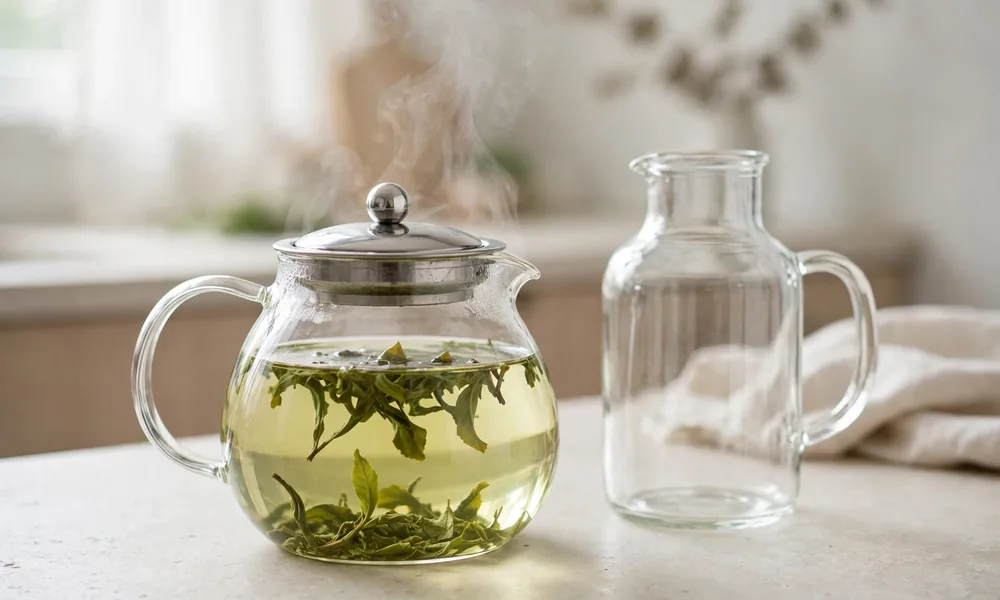
Brewing a green tea rinse takes about ten minutes, most of it waiting for the tea to cool. Start with clean drinking water and one green tea bag or one teaspoon of loose leaves. Bring the water to a boil, pour it over the tea, and let it steep for three to five minutes.
Remove the tea bag or strain out the leaves, then let the liquid cool fully to lukewarm or cool. Never pour hot tea on your hair or scalp. Test a drop on the inside of your wrist: it should feel cool and comfortable, never warm. Use the rinse the same day you brew it.
Patch Test First
Before the first full rinse, patch test the green tea water. Dab a little cooled tea on a small patch of skin behind your ear or on the inside of your arm, and wait a full day. If the skin stays calm, with no redness or itching, the rinse is likely fine for you.
If the skin turns red, itchy or sore, do not use the rinse. Wash the patch with plain water and leave the idea alone. Anyone with a persistent scalp concern should speak to a qualified dermatologist first, because a rinse cannot treat a scalp condition.
Using the Rinse Step by Step
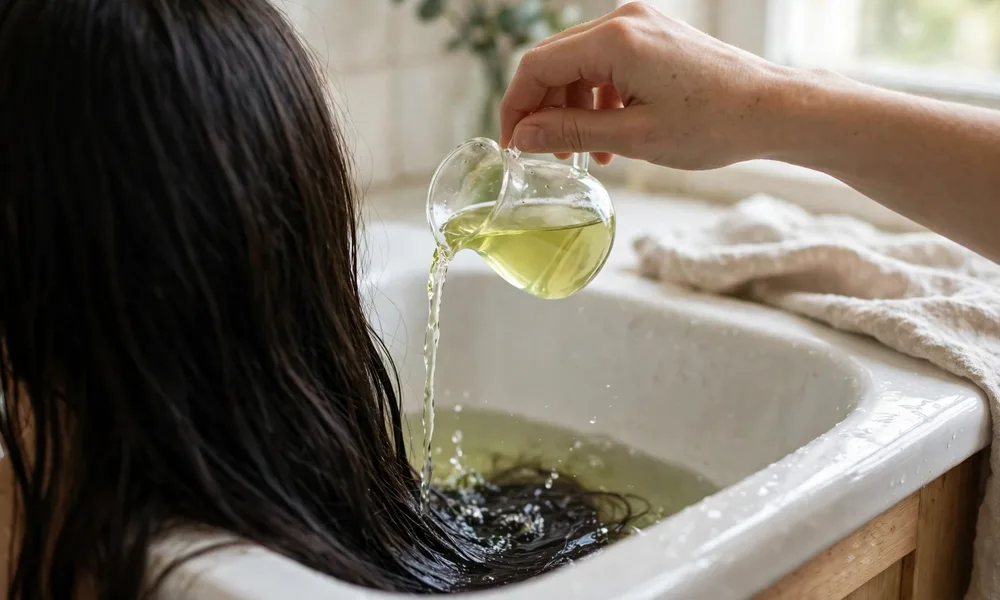
Wash your hair as usual with a gentle shampoo, and rinse it well with lukewarm water. Then take your jug of cooled green tea water and pour it slowly over your hair, from the roots to the ends, catching the flow with your other hand so it reaches every part.
Massage your scalp gently with your fingertips for a minute, letting the rinse sit on the hair. Then rinse once more with plain cool water, just enough to leave the hair feeling clean and light. Do not leave the tea in overnight, and do not use it on broken or irritated skin.
How Often to Rinse
Start slowly, once a week, and watch how your own hair responds. If your hair feels soft and looks fresh after a few weeks, you can keep the habit at once a week. If it feels dry or coated, step back to once every two weeks, or stop and return to plain water rinses.
More is not better with a rinse. Using green tea water every day can leave a light film on the hair, and the habit stops feeling special. A weekly rinse keeps the ritual gentle, and it gives you time to notice what your hair actually likes.
Green Tea Rinse and Hard Water
Hard water can leave a dull mineral film on hair, and no rinse quite fixes it on its own. If your tap water is hard, the green tea rinse may feel less fresh, because the minerals stay on the hair no matter what you pour over it. The rinse is a pleasant extra, not a fix for hard water.
A shower filter, a longer lukewarm rinse, and a clarifying wash now and then help most with hard water, as explained in hard water hair: a practical fix guide. Use the green tea rinse on top of that simple care, and judge it by how your hair feels over a few weeks.
Drying Hair Gently
How you dry your hair matters as much as how you rinse it. After the final cool rinse, squeeze the hair gently with your hands, then pat it with a soft towel instead of rubbing. Rubbing lifts the cuticle and tangles the lengths, undoing the smooth finish the rinse gave you.
Detangle with a wide-tooth comb, starting at the ends and working up slowly. Air-dry when you can, and keep heat low when you cannot. The same gentle drying runs through a simple guide to glossy, healthy-looking hair with water, where lukewarm water and a soft towel do most of the work.
Storing Fresh Batches
Green tea water keeps only for a day. Brew a fresh jug each time you plan to rinse, and discard anything left over. Old tea water can grow stale and smell off, and stale rinse water has no place on your hair.
Keep the jug clean: wash it with hot soapy water after each use and let it dry fully before the next brew. Store dry tea bags or loose leaves in a cool, dry cupboard, away from strong smells. Fresh batches, a clean jug, and a cool rinse keep the habit simple and safe.
What a Green Tea Rinse Will Not Do
Be honest about what a rinse can and cannot do. A green tea rinse will not repair split ends, regrow hair, or cure a scalp condition. It will not make hair grow faster, stop hair loss, or change the colour of your hair. It is a pleasant rinse, and its value is the fresh feeling it leaves and the calm of the ritual around it.
The same honesty applies to the tea itself: green tea drunk as a drink is an everyday pleasure, but this rinse is not a drink at all, and it is never presented as a health drink. If a scalp problem persists week after week, the answer is advice from a professional, not a stronger rinse.
| Rinse step | Water temperature | Hair care |
|---|---|---|
| Brew fresh tea | Cool fully first | Patch test first |
| Wash hair gently | Lukewarm water wash | Fingertip scalp massage |
| Pour rinse slowly | Cool final rinse | Pat dry softly |
| Discard leftovers | Fresh batch weekly | Comb wide tooth |
Your Green Tea Rinse Checklist
- Brew one cup of green tea, strain it, and let it cool fully.
- Patch test behind your ear and wait a full day before the first rinse.
- Wash hair gently, pour the rinse slowly from roots to ends.
- Massage the scalp with fingertips, then rinse once with plain cool water.
- Pat hair dry with a soft towel and detangle with a wide-tooth comb.
- Discard leftovers the same day and brew a fresh batch next time.

Frequently Asked Questions
What is a green tea rinse for hair?
A green tea rinse is brewed green tea, cooled and poured over hair as a final rinse after washing. It is a rinse only, never a drink, and never a treatment for any hair or scalp condition.
Can I drink the green tea rinse?
No. The rinse is for hair only: brew a separate cup if you want to drink green tea. Never present rinse water as a health drink, and never drink water meant for rinsing.
How do I brew a green tea rinse?
Steep one tea bag or one teaspoon of loose leaves in boiled water for three to five minutes, then strain and cool fully. Test a drop on your wrist: it should feel cool and comfortable, never warm.
How often should I use a green tea rinse?
Start once a week and watch how your hair responds. If hair feels soft and fresh, keep it weekly; if it feels dry or coated, step back to once every two weeks or stop.
Can I leave the green tea rinse in overnight?
No. Rinse it out with plain cool water after a minute or two. Do not leave tea water in overnight, and do not use it on broken or irritated skin.
Will a green tea rinse fix hard water hair?
No. A green tea rinse is a pleasant extra, not a fix for hard water. A shower filter, a longer lukewarm rinse, and a clarifying wash now and then help most with mineral film.
The Bottom Line
A green tea rinse is brewed tea, cooled, poured over clean hair, and rinsed away with cool water.
Brew it fresh tonight, patch test first, and let wash day feel gentle.
A Note for Hair Rinse Days
Keep it fresh, keep it cool, keep it a rinse only. Your hair can enjoy the ritual without any promises.