Some rooms feel quiet the moment you walk into them. The light is soft, the surfaces are clear, and nothing in the room asks for your attention. Those are the rooms where you can sit down, breathe slowly, and let the day settle.
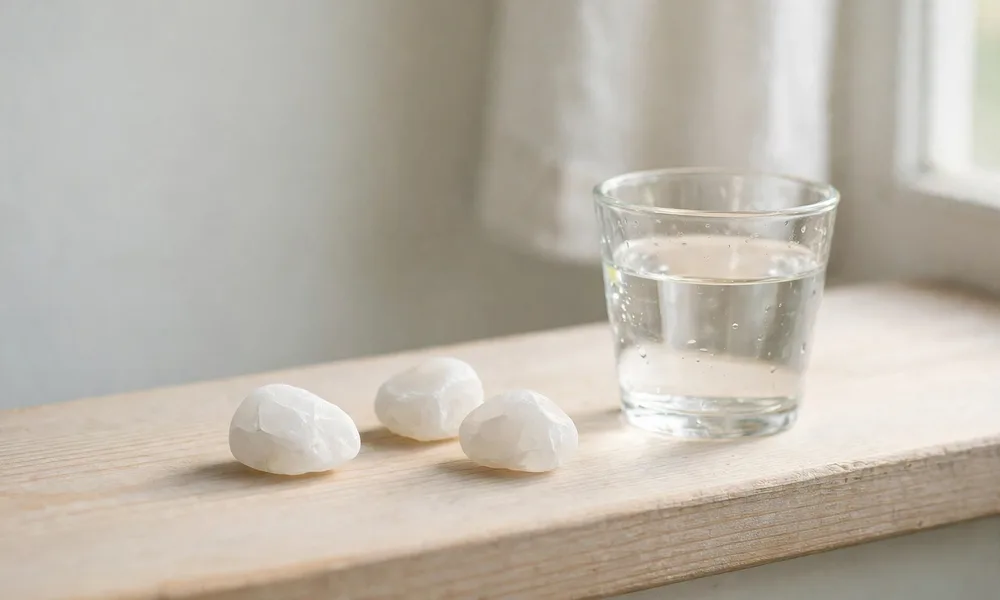
Petalite is a stone for rooms like these: a soft milky white stone, smooth and pale, with a faint pearly sheen. It looks like a small piece of still morning light, kept on a tray.
This guide is a spotlight on petalite: what it is, how to choose a piece, how to display it, and how to enjoy it through a quiet day. The stone is for display only, and it will not heal anything.
Key Takeaways
- Petalite is a soft milky white stone with a faint pearly sheen, for quiet spaces.
- Its soft white colour suits quiet rooms, soft light and slow, unhurried hours.
- Petalite differs from white topaz, goshenite, white jade, white opal, white calcite and white agate.
- Petalite is for display and handling only; it will not heal anything.
- The stone stays beside drinking water, never in it, and stays dry and dusted.
What Petalite Is
Petalite is a mineral made of lithium, aluminium and silica, and it forms in soft white, colourless and very pale pink pieces. The best pieces are a gentle milky white, with a faint pearly shine that moves across the surface as you turn the stone in the light.
Hold a polished piece in your palm and it feels cool, smooth and light, with a soft, almost silky surface rather than a bright glassy one.
Petalite is a fragile stone, because it splits cleanly along flat planes inside the crystal, so it needs gentle handling and a safe place on a tray, never a pocket full of keys. At Crystal by Ayesha, we approach petalite as a decorative object, not a medical treatment. It will not fix your mood, but it can give your attention a soft, quiet place to rest.
Choosing a Petalite Stone
Choosing a petalite stone is mostly a matter of looking closely and trusting your eye. A good piece shows a soft, even milky white colour, not a grey or yellowish tone, and it should glow gently in soft light, with a faint pearly sheen rather than a dull, chalky surface.
Look for a smooth surface with no sharp chips, and check the edges, because petalite splits easily along flat planes. A small tumbled piece is the safest first stone. If a piece feels pleasant in your hand, it is the right one. Buy from a trusted seller, never one who promises it will change your health.

A Quiet Day with Petalite
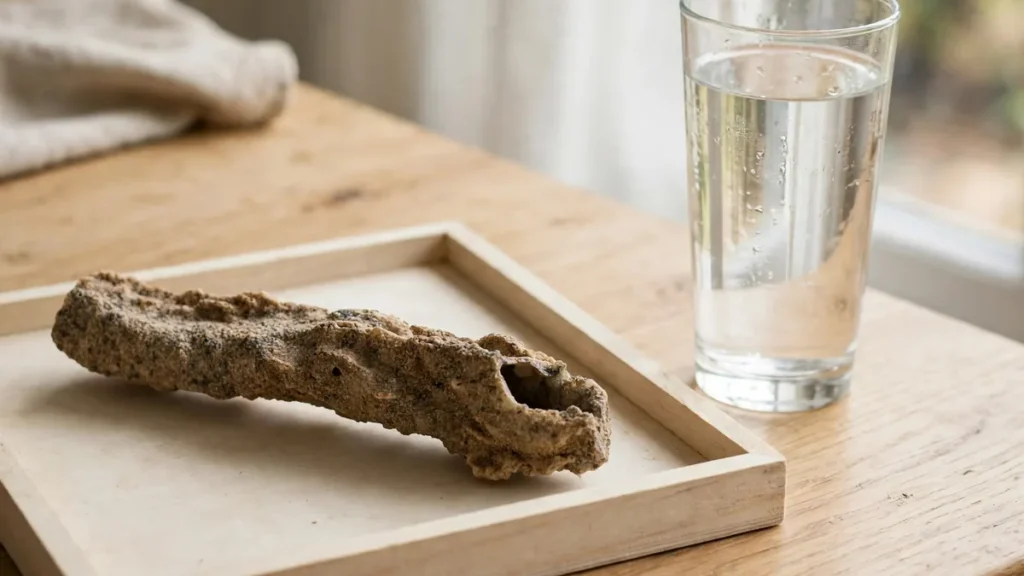
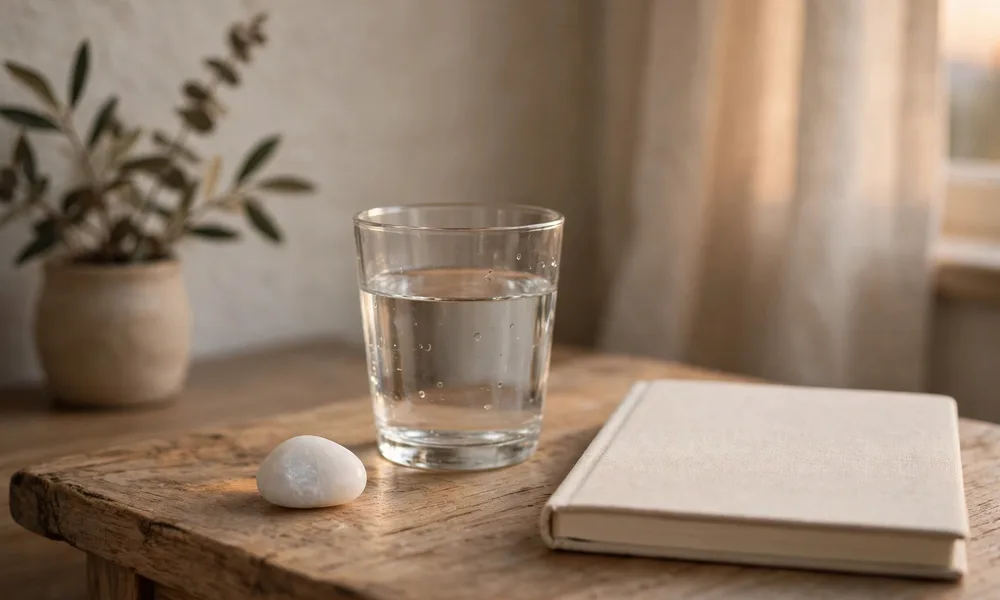
A quiet day with petalite takes only a few minutes to begin: place the stone on its tray, fill a clear glass with fresh water, and set it beside the stone. When you sit down, drink the water slowly, in small sips, and then pick up the stone and look at its soft white glow for a few breaths.
Put the stone back gently, and let the day carry on quietly, the tray near a window, where the soft light can reach the stone and the glass.
Petalite Beside Water
Water belongs beside the stone, never around it: set a clear glass of fresh drinking water next to the stone on the tray. They share a tray, not a glass. Never place the stone inside drinking water, and never soak it, because a stone has no place in a drink.
Petalite contains lithium, so the rule matters twice over: it must never go in drinking water or elixirs, and it must never be soaked. If the glass spills, lift the stone away and dry it at once. Wash your hands after handling it, and keep it away from small children and pets. Dust it weekly with a soft, dry cloth, never soap or polish.
Petalite at a Glance
| Soft white stone | Quiet spaces | Display only |
|---|---|---|
| Milky white, pearly | Soft light, slow hours | Beside water only |
| Cool, light feel | Tray, shelf, bedside | Dust with dry cloth |
| Fragile, splits easily | Water, light, pause | Never soak it |
Petalite and White Topaz
Petalite and white topaz are both pale white stones, yet they look and feel quite different. White topaz is the clear, colourless form of topaz, bright and glassy like a drop of clean water that has turned to stone, and it suits bright days and fresh mornings.
Petalite is softer and milkier, a cloudy white with a pearly sheen rather than a clear sparkle, and it suits quiet spaces rather than bright ones. White topaz for bright days keeps a clear glassy stone for bright days; this guide keeps a soft milky stone for quiet spaces.
Petalite and Goshenite
Petalite and goshenite are both quiet stones, and both suit slow hours, yet they are easy to tell apart. Goshenite is the colourless variety of beryl, plain, clear and uncoloured, like a piece of still water that has turned to stone, and it suits quiet days.
Petalite brings a soft white colour to the same quiet morning: a milky white that glows gently against the soft light, giving the eye a pale place to rest. Goshenite is clear and still; petalite is soft and white. Goshenite for quiet days keeps a clear colourless stone for quiet days; this guide keeps a milky white stone for quiet spaces.
Petalite and White Jade
Petalite and white jade are both soft white stones with a gentle shine, so they are often confused at first glance. White jade is a dense, tough jade, warm and creamy white, with a waxy shine and a solid, heavy feel in the hand, and it suits calm mornings.
Petalite is lighter and more delicate, a cool milky white with a pearly sheen, and far more fragile than tough white jade. White jade can take daily handling without worry; petalite needs a tray and a gentle touch. White jade for calm mornings keeps a creamy, heavy stone for calm mornings; this guide keeps a light, pearly stone for quiet spaces.

Petalite and White Opal
Petalite and white opal are both milky white stones, yet they play with light in different ways. White opal is a soft white opal with a gentle rainbow flash that appears in bright light, moving slowly across its milky body, and it suits bright days.
Petalite has no rainbow flash at all. Its light is quieter: a faint pearly sheen that glows softly in low light, never flashing, never changing colour. White opal wants bright sun to show its best; petalite wants soft light and a quiet room.
Petalite and White Calcite
Petalite and white calcite are both clean white stones for calm rooms, yet they are different minerals with different feels. White calcite is a clean, bright white calcite, smooth and cool, sometimes crossed with faint pale grey veins, and it suits fresh, uncluttered spaces.
Petalite is softer and milkier than white calcite, with a pearly sheen rather than a bright snowy white, and more fragile. White calcite sits happily on a bright shelf; petalite prefers a quiet corner in soft light, where its gentle glow can be seen.
Petalite and White Agate
Petalite and white agate are both plain white stones for quiet days, yet they are easy to tell apart once you hold them. White agate is a clean white chalcedony, a form of quartz, smooth and cool, sometimes with faint soft grey bands running through it, and it suits quiet desks.
Petalite is milkier and lighter than white agate, with a pearly sheen instead of bands, and it is far more fragile. White agate is a steady desk stone; petalite is a gentle tray stone, handled softly and kept safe.
Stones That Must Never Touch Water
Not every stone is safe beside water. Malachite must never go in water or in elixirs, because it can release harmful substances. Hematite must never go in drinking water, and apatite, lepidolite — which contains lithium — pyrite, angelite and amber must never go in drinking water or in soaks either.
The rule stays the same for petalite: it contains lithium, so it must never go in drinking water or in soaks. Display it on a tray, keep a glass of water beside it, and never let the two meet. Petalite is a gentle stone for display and handling, but it still stays beside water, never in it.
Your Quiet Spaces Checklist
- Set the stone on a tray beside a clear glass of water.
- Drink a glass of fresh water slowly when the day begins.
- Hold the stone gently for a few breaths and look at its soft white.
- Keep the stone beside water, never inside drinking water or soaks.
- Dust the stone dry weekly, and wash your hands after handling it.
- Remember the stone will not heal anything; see a doctor for health problems.
Frequently Asked Questions
What is petalite?
Petalite is a mineral made of lithium, aluminium and silica, most often found as a soft milky white stone with a faint pearly sheen. It is a gentle, pale stone that suits quiet spaces.
Is petalite safe beside water?
Yes, it is safe beside a glass of drinking water, on the same tray or shelf. It must never go inside drinking water or be soaked, because petalite contains lithium and the water should stay plain.
Is petalite the same as white topaz?
No. White topaz is a clear, colourless topaz, bright and glassy like clean water turned to stone. Petalite is a soft milky white stone with a pearly sheen, not clear at all.
Will petalite heal anything?
No. Petalite will not heal anything. It is a beautiful object for display and handling, and the calm comes from the pause and the quiet room, not from the stone.
How do I clean petalite?
Dust it weekly with a soft, dry cloth, never soap or polish, and never scrub it. Handle it gently, because it splits easily, and dry it at once if it gets wet.
Where should I keep my petalite?
Keep it on a small tray in a quiet room, with a clear glass of water beside it — a shelf, desk or bedside table in soft light works well.
The Bottom Line
Petalite brings soft white to quiet spaces: a milky white stone with a faint pearly sheen, held beside a glass of fresh water in soft light. Keep it beside water, never in it, and handle it gently.
A Note for Quiet Spaces
Keep it soft, keep it dry, keep it quiet. A small white stone, a glass of water, and a few slow minutes can carry a quiet day.