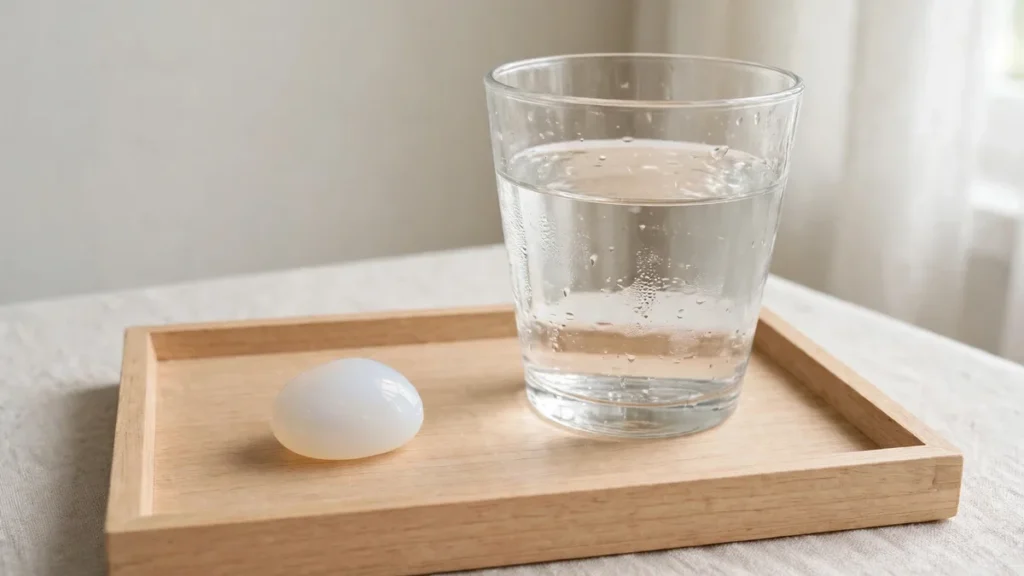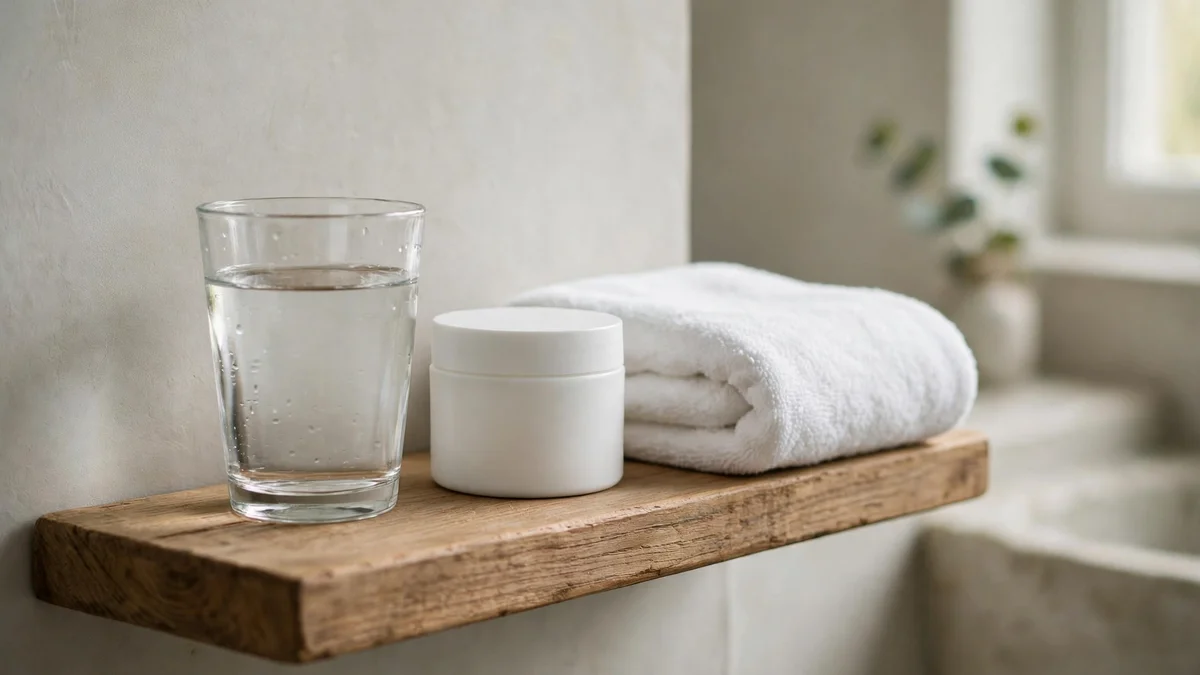
Some days the air itself feels dry. The room feels still, the skin on your hands feels a little tight by afternoon, and a glass of water on the desk is gone before you notice it. Nothing dramatic has happened, yet the air has been quietly taking water from everything it touches.
Dry air is not a season and not a single skin problem. It is the dryness in the air around you, indoors and outdoors, in winter, in summer, and on any day when the heating is on or the wind is dry. This guide is about living well with it, in simple, gentle steps.
This guide explains what dry air does to skin, how plain water should be used, and how to build a simple morning and evening routine for dry-air days. It is gentle general information only, not medical advice, and it will not cure any skin condition.
Key Takeaways
- Dry air is air that holds little moisture, and it takes water from skin.
- Lukewarm plain water, used gently, suits dry-air days better than hot water.
- A plain fragrance-free moisturiser, applied to slightly damp skin, holds moisture in.
- Drinking water slowly through the day supports general comfort on dry days.
- Patch-test any new product first, and see a doctor for persistent skin problems.
What Dry Air Means
Dry air means the air around you holds very little moisture. You cannot see it, but you can feel it: the skin feels tight, the lips feel dry, and a towel dries fast on its rail. Cold air holds little moisture, and warm air that has been heated indoors holds even less.
Dry air appears in many places. Heated rooms in winter, air-conditioned rooms in summer, dry windy days outdoors, and long flights all share the same dry air. The skin loses water to the air all day without a break, because the air is always a little thirstier than the skin.
Why Dry Air Dries Skin
Dry air dries skin because water always moves from where there is more of it to where there is less. The skin holds water; dry air holds almost none, so water leaves the surface of the skin and drifts into the air.
Think of the skin's outer layer as a soft brick wall: skin cells are the bricks, and the natural oils between them are the mortar that holds the water in. Dry air, wind, and hot water all wear that mortar thin, so water escapes more easily.
Lukewarm Water First
Every wash on a dry-air day starts with water, and the water must be lukewarm, never hot. Hot water feels lovely on a dry day, but it strips the natural oils that protect the skin, leaving it drier than before.
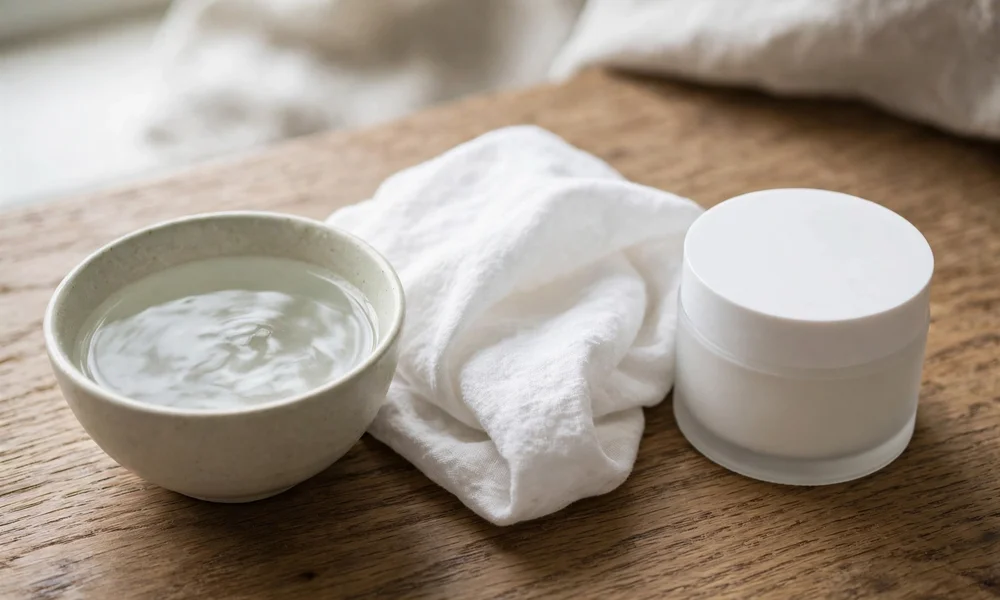
Use plain water, or a gentle fragrance-free cleanser in small amounts, rinsed away fully. Wash briefly, with soft hands, and never scrub. A short lukewarm wash leaves the skin clean and slightly damp, which is the best moment to add moisture.
Pat the skin dry with a soft towel, never rub it. Rubbing roughens the surface and takes away more moisture, while patting leaves the skin calm and slightly damp, ready for the next step.

Drinking Water Through the Day
Drinking water slowly through the day is the quiet partner of the whole routine. A glass of water when you wake, one with each meal, and small sips through the afternoon are enough for most days.
Keep a glass or a bottle where you can see it: on the desk, by the bed, or on the kitchen shelf. Seeing it reminds you to sip, and sipping slowly is kinder than drinking a large glass all at once.
Moisturiser on Damp Skin
Moisturiser works best on skin that is still slightly damp, morning and evening. After a lukewarm wash, pat the skin softly, then smooth a plain fragrance-free moisturiser over it while it is still a little damp.
The moisturiser holds the water in, like a soft lid on a glass. A thin layer is enough for most dry-air days; a second thin layer on the hands or cheeks can help when the air is very dry.
Dry Air at a Glance
| Dry indoor air | Tight, dry skin | Gentle care only |
|---|---|---|
| Lukewarm water wash | Pat dry softly | Moisturise damp skin |
| Plain water sips | Soft cloth, towel | See doctor if worse |
Dry Air and Dry Skin
Dry air and dry skin are close, but they are not the same thing. Dry skin is the skin problem: skin that has lost more water than it kept, and often feels tight or rough. Dry air is the cause: the dryness in the air that took the water away.
A dry-skin routine is about the skin itself — gentle washing, a soft touch, and a plain moisturiser applied while the skin is still slightly damp. This guide is about the air around the skin as well: the heated room, the dry wind, the long dry day, and the habits that help you live with them.
Where water and dry skin: a gentle routine keeps a gentle wash-and-moisturise routine for dry skin, this guide keeps a whole dry-air day — morning, rooms, drinking water and evening — for any day when the air turns dry.
Dry Air and Winter Skin
Dry air and winter skin are close too, but winter skin is only one part of the dry-air story. Winter skin means cold air, indoor heating, and a layered routine: thin layers, one after another, from the most watery to the richest, for cold mornings and quiet evenings.
Dry air does not wait for winter. It appears in heated rooms, in air-conditioned rooms, on dry windy days, and on long flights, in any season. This guide is not a winter routine; it is a simple guide for any dry-air day, whatever the season.
Where water and winter skin: a layered routine keeps thin layers in a calm order for cold winter days, this guide keeps one simple routine — lukewarm water, gentle drying, moisture on damp skin — for dry air in any season.
Dry Air and Cold Weather
Dry air and cold weather overlap, but they are different. Cold weather means cold air, cold wind, and low humidity, so skin loses warmth and water faster. It asks for soft layers, a scarf and gloves, and protection against the wind.
Dry air can be warm too. A heated room in winter is warm and dry, and an air-conditioned room in summer is cool and dry, and neither needs a scarf. The common thread is the dryness, not the cold.
Where water and cold weather: skin that stays warm keeps warm layers and wind protection for cold days, this guide keeps gentle water habits for dry air itself, warm or cold, indoors or out.
Dry Air and Flaky Skin
Dry air and flaky skin are easy to confuse, because dry air often causes flakes. Flaky skin means visible flakes shedding from the top layer of the skin, in small pale pieces that sit on the cheeks, forehead, arms or hands.
This guide is about the air that dries the skin, not the flakes themselves. Flaky skin needs flakes loosened softly with water and a damp cloth, never by picking. Dry-air care is broader: gentle washing, patting dry, moisture on damp skin, and water sipped slowly through the day.
If flakes appear, keep the routine gentle and do not scrub. If the skin is cracked, bleeding, very painful, or not improving after a few weeks of gentle care, please see a doctor or a dermatologist.
A Simple Morning Routine
A dry-air morning takes only a few unhurried minutes. Wash with lukewarm water, pat dry softly, and smooth moisturiser over skin that is still slightly damp. Drink a glass of water slowly while the morning begins.
Keep the morning short and the same every day. A routine that is simple is a routine that lasts, and dry-air skin settles best with the same gentle steps, done the same way each morning.
A Simple Evening Routine
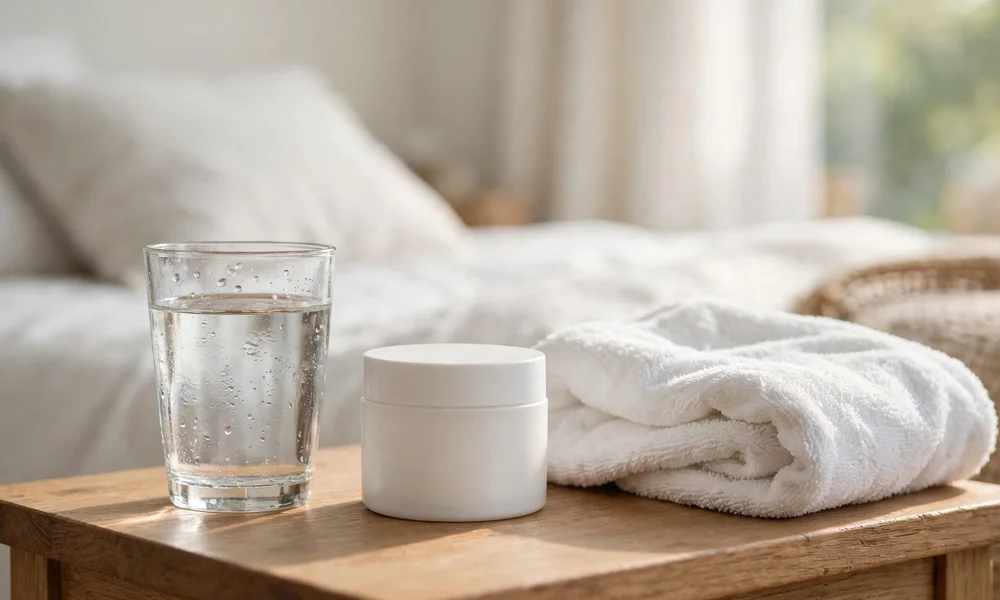
A dry-air evening is a quieter version of the morning. Wash gently with lukewarm water, pat dry, and moisturise damp skin once more. Drink a glass of water slowly before bed, and keep a glass by the bed for the night.
Keep the bedroom cool rather than hot, and let the skin rest. A soft towel, a plain cream, and a glass of water are the whole evening kit, and they fit on a bedside table.
Your Dry-Air Checklist
- Wash with lukewarm water, never hot, and pat dry softly.
- Smooth plain moisturiser over skin that is still slightly damp.
- Drink water slowly through the day, a glass at a time.
- Keep heated rooms cool, and open a window when you can.
- Patch-test any new product first, on a small area.
- See a doctor for cracked, bleeding or painful skin that does not improve.

Frequently Asked Questions
What is dry air?
Dry air is air that holds very little moisture. It appears in heated rooms, air-conditioned rooms, dry windy days and long flights, and it takes water from the skin all day.
Does drinking water fix dry skin?
Drinking water supports general comfort, but it cannot replace cream. Water from inside cannot seal the skin's surface on its own, so the glass and the moisturiser work together.
Is hot water bad for skin on dry days?
Hot water strips the natural oils that protect the skin, leaving it drier than before. Lukewarm water cleans gently without stripping, and it suits dry-air days far better.
Should I moisturise on damp or dry skin?
Moisturise on skin that is still slightly damp, morning and evening. The moisturiser holds the water in, like a soft lid on a glass, and a thin layer is enough for most days.
How can I tell if dry air is the problem?
If the skin feels tight, the lips feel dry, and a towel dries fast on its rail, the air is probably dry. Heated rooms and dry windy days are the most common causes.
When should I see a doctor about dry skin?
See a doctor or a dermatologist if the skin is cracked, bleeding, very painful, or not improving after a few weeks of gentle care. This guide is general information only, not medical advice.
The Bottom Line
Dry air takes water from skin all day, in any season. Lukewarm water, a soft pat dry, moisture on damp skin, and water sipped slowly are the whole simple answer.
A Note for Dry Days
Keep it lukewarm, keep it gentle, keep it simple. A glass of water, a soft towel, and a plain cream can carry a dry day.