
Glossy hair looks like a luxury, but most of what makes hair shine is not expensive: water. The temperature you wash with, how thoroughly you rinse, how gently you dry, and whether your tap water helps or works against you — get the water right, and ordinary hair starts to look cared for.
That is good news: water is the one hair product you already own. This guide explains how plain water, used thoughtfully, can make hair look smoother, shinier, and healthier.
It is a practical guide, not a promise. Water cannot repair split ends, regrow hair, or cure a scalp condition. What it can do is help the hair you already have look its best, one wash at a time.
Key Takeaways
- Glossy hair is smooth hair: when the cuticle, the hair's outer layer, lies flat, it reflects light.
- Lukewarm water is kindest; hot water strips oils and lifts the cuticle, and a cooler final rinse helps it lie flat.
- Hard water can leave a dull mineral film; rinsing longer and clarifying occasionally helps.
- Wash gently: lather in your palms, massage the scalp with fingertips, and let suds run down the lengths.
- Dry gently too: pat with a soft towel, detangle with a wide-tooth comb, and air-dry when you can.
Why Water Makes Hair Shine
Hair shines when its surface is smooth. Each strand is covered in tiny overlapping scales called the cuticle, like tiles on a roof. When they lie flat, light bounces off in one clean direction, and the eye reads that as shine. When they are lifted or coated in residue, light scatters, and the hair looks dull, even when clean.
Water controls the cuticle more than anything else in your routine. Warm water opens it slightly, helping shampoo lift away oil and dirt; cool water helps it close again. The scalp is mildly acidic, pH 4.5 to 5.5, which supports the skin's barrier. Very hot water strips the scalp's natural oils and can leave it tight and itchy, while lukewarm water cleans well without that cost.
Lukewarm First, Cooler Last
The single most useful water habit for glossy hair is also the simplest: wash lukewarm, rinse cooler. Lukewarm means water around body temperature, comfortable on the inside of your wrist. If it makes your skin pink, it is too hot.
Start by wetting the hair thoroughly with lukewarm water, for a full minute if it is thick. Then wash as usual, and rinse until the water runs clear and the hair feels clean but not squeaky — squeaky often means stripped. For the final rinse, turn the temperature down a notch, to cool rather than cold, and run it over the lengths for thirty seconds. You will feel the difference at once: smoother hair that tangles less. The same gentle logic applies to skin: why lukewarm water works better for morning skin explains the case for a softer start.
Washing Gently, Step by Step
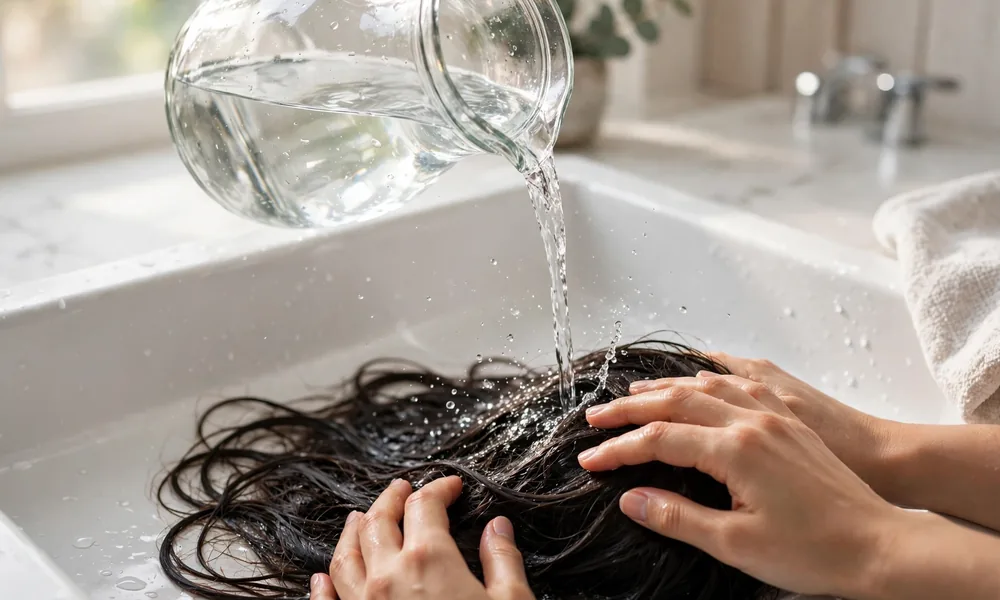
Glossy hair begins with a gentle wash: rough washing roughs up the cuticle, and no rinse can fully undo that. Begin with dry hair, detangled, working a wide-tooth comb through the lengths from the ends upward. Wet hair is weaker and stretches more easily, so detangling dry prevents much of the breakage that makes ends look frizzy.
Wet the hair fully with lukewarm water. Pour a little shampoo into your palms, make a light lather, and carry the foam to the scalp — this matters most in hard-water areas, where shampoo lathers less readily. Massage the scalp with your fingertips, not your nails, in slow circles; the lengths mostly need the suds to run down them as you rinse. Rinse thoroughly, longer than you think: leftover shampoo leaves a dulling film. If you use conditioner, apply it to the mid-lengths and ends only, leave it for two or three minutes, and rinse again, finishing cooler.
Hard Water and Dull Hair
Every wash has one ingredient that never appears on a label: the water from your tap. Hard water is rich in calcium and magnesium, and it can leave a thin mineral film on the hair over time. That film scatters light, so hair turns dull and heavy, shampoo lathers poorly, and colour fades faster.
Suspect hard water if your shampoo barely foams, your hair feels coated even when clean, or it tangles more than it used to. The fixes are practical: rinse longer, since time and water volume carry minerals away, and lather shampoo in your palms so it spreads evenly even when it foams less. Once every two to four weeks, use a gentle clarifying shampoo, then a good conditioner. An occasional diluted acid rinse — a tablespoon of apple cider vinegar in a cup of water, left for a minute before a cool rinse — can help dissolve light mineral film; use it no more than once or twice a week.
Rinses That Add Shine
Beyond plain water, a few simple rinses can add shine. They are finishing touches, not treatments, and work best on hair already washed well. The cool-water rinse comes first: thirty seconds of cooler water at the end of every wash. It costs nothing and helps every hair type.
A rice water rinse is an old habit in parts of Asia, using the cloudy water left after rinsing rice as a final rinse. It leaves a soft, fresh feeling: a rice water rinse, an old beauty habit explains how to make it and use it safely. Make small fresh batches and stop if your scalp feels itchy. A diluted vinegar rinse is a third option, useful when hair feels coated. Whichever rinse you choose, keep it simple, use it once or twice a week at most, and let the plain-water habits do the daily work.
Drying, Oils, and a Lighter Touch
How you dry your hair matters as much as how you wash it, because wet hair is at its weakest. Rough towel-drying lifts the cuticle and creates frizz. After the final rinse, press the water out gently, then wrap the hair in a soft towel or an old cotton T-shirt and press, never rub. Then let the hair air-dry when you can — the gentlest option of all.

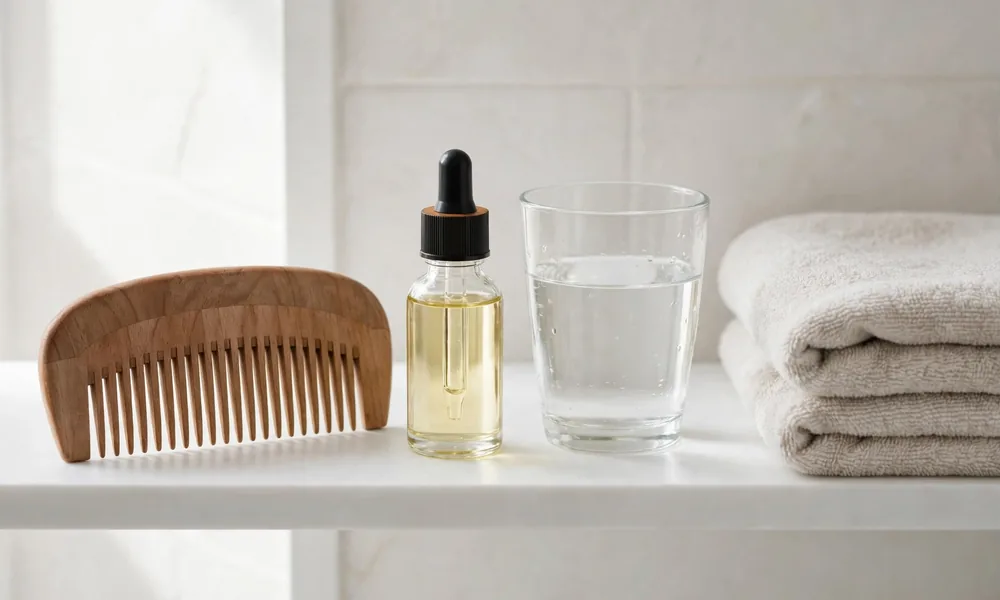
If you use a hairdryer, keep it on low or medium heat, at least fifteen centimetres away, and keep it moving, finishing with a few seconds of cool air. A wide-tooth comb is kinder than a brush on damp hair: comb from the ends upward. After drying, warm one or two drops of a light oil, such as argan or jojoba, between your palms and smooth them over the ends only, never the scalp: the ends are the oldest, driest part of the hair and show dullness first.
A Simple Weekly Hair-Water Routine
A routine is only useful if you can keep it, so here is one that fits a normal week. On wash days, two or three times a week for most people: detangle dry, wet with lukewarm water, lather in the palms, massage the scalp, rinse thoroughly, condition the ends, and finish with a cooler rinse. Dry gently.
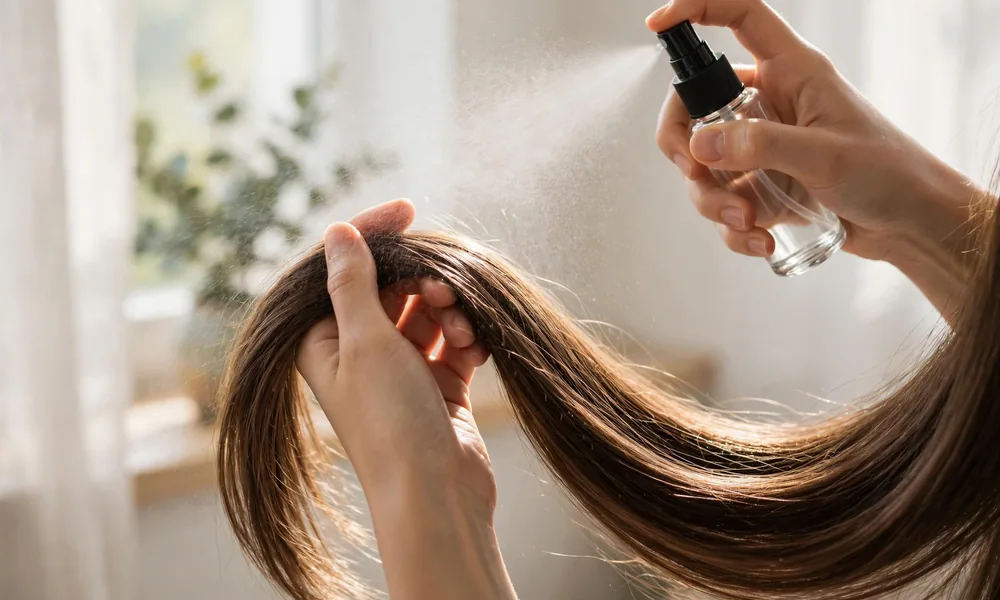
Once a week, add one extra step: a rice water rinse, a diluted vinegar rinse, or a clarifying wash — only one, not all three. On non-wash days, a light mist of plain water can refresh the lengths and calm flyaways without a full wash. Sleep matters too: a smooth cotton or satin pillowcase, or a loose braid for long hair, helps the morning's shine survive the night.
A skin routine with room to breathe helps the whole morning feel calmer: a skin routine with room to breathe is a good companion read.
What Water Will Not Do
Water will not repair split ends: once a strand has split, only a trim removes it. It will not regrow hair, thicken fine hair, or cure dandruff, hair loss, or any scalp condition, and it will not change your hair's natural texture.
What water can do is simpler: keep the cuticle smooth, carry away dirt and residue, and leave the hair you have looking clean, soft, and glossy. If hair loss, itching, flaking, or scalp pain is persistent or worrying you, please speak to a qualified health professional or dermatologist.
| Habit | What it does | How often |
|---|---|---|
| Lukewarm wash, cooler final rinse | Smooths the cuticle for shine | Every wash |
| Long, thorough rinse | Removes shampoo and mineral film | Every wash |
| Clarifying wash | Lifts stubborn buildup | Every 2–4 weeks |
| Gentle towel press, air-dry | Protects wet hair from frizz | Every wash |
Your Glossy Hair Water Checklist
- Wash with lukewarm water, never hot enough to pink the skin.
- Detangle dry hair with a wide-tooth comb before wetting it, ends first.
- Lather shampoo in your palms, massage the scalp, and rinse longer than you think.
- Finish every wash with thirty seconds of cooler water.
- Dry by pressing with a soft towel, never rubbing; air-dry when you can.
- Add one extra step a week — a rinse or a clarifying wash — and a drop of oil on the ends.
Frequently Asked Questions
Does cold water really make hair shinier? Cooler water helps the cuticle lie flat, reflecting light better. You do not need ice-cold water: a final rinse a notch cooler than your wash water is enough.
How often should I wash my hair? It depends on your scalp: an oily scalp welcomes frequent washing; a dry scalp does better with gaps. Washing does not cause hair loss: it dislodges hairs that had finished their resting phase.
Can hard water damage my hair? Hard water does not directly cause hair loss, but its minerals can leave a dull film that weakens the strand and leads to breakage. Rinsing longer and clarifying occasionally can help.
Is a vinegar rinse safe for coloured hair? A properly diluted rinse — a tablespoon of apple cider vinegar in a cup of water — is generally gentle, used no more than once or twice a week. If your colour is fresh or your scalp is irritated, skip it and ask your colourist.
Will rice water make my hair grow faster? No. Rice water can leave hair feeling soft and fresh, but it does not change how fast hair grows.
Should I brush my hair when it is wet? Better not to. Wet hair stretches and breaks more easily. Detangle with a wide-tooth comb, from the ends upward, and save brushing for dry hair.
The Bottom Line
Glossy, healthy-looking hair with water comes down to a few gentle habits: wash lukewarm, rinse longer than you think, finish cooler, and dry softly. No expensive product is required.
Begin at your next wash: turn the temperature down a notch, take an extra thirty seconds to rinse, and finish cool. That is the whole change.
A Note for Shiny Days
Keep it gentle, keep it simple, keep it yours. The best hair habits are rarely the most elaborate: cool water, a soft towel, and a few unhurried minutes. Stay curious. Stay clear. Keep it shining.



