Hair that looks dull, feels rough, and tangles too easily is not always a shampoo problem. Sometimes the water is the problem: hard tap water leaves a thin mineral film on every strand, and no conditioner quite fixes it.
Hard water is common, and it is fixable. You do not need expensive products or a new bathroom: a filter, a longer rinse, and a clarifying wash now and then can make hair feel softer and look shinier within a couple of weeks.
This guide explains hard water hair in plain terms: what hard water is, how to tell if you have it, and the practical fixes that help. Everything here is gentle, with no medical claims.
Key Takeaways
- Hard water holds dissolved minerals that leave a dull film on hair.
- The signs are dullness, roughness, tangles, soap that will not lather, and white scale on taps.
- A shower filter, a longer lukewarm rinse, and a clarifying wash help most.
- Rinse lukewarm, wash gently, and pat dry with a soft towel.
- Hard water care is maintenance, not a cure: it will not repair damage.
What Hard Water Is
Hard water is tap water that holds a lot of dissolved minerals, mostly calcium and magnesium. Rainwater passes through chalk and limestone, picks up minerals, and arrives at your tap carrying them. The water is safe to drink, but it behaves differently in the shower.
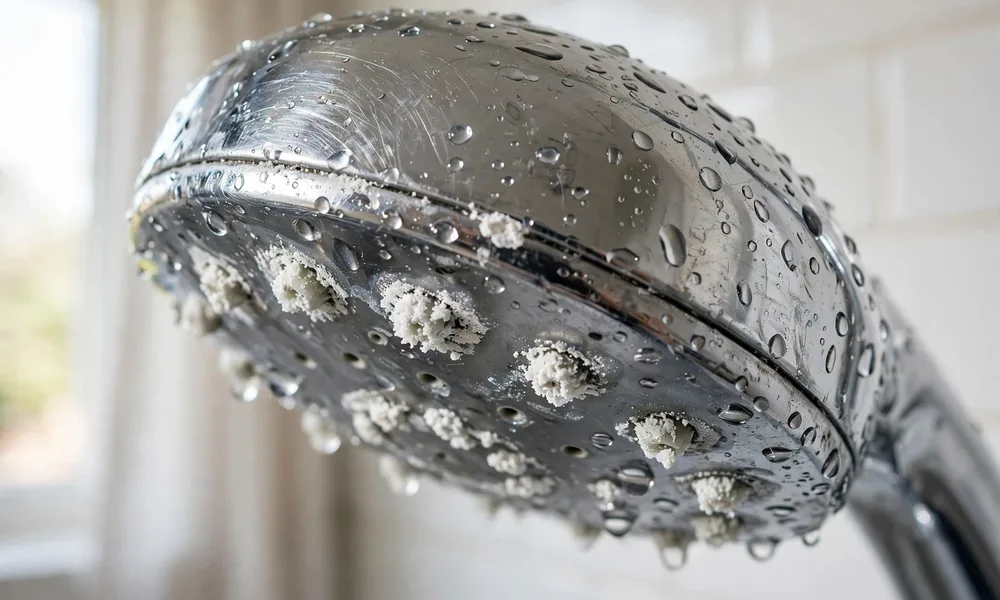
You can often see hard water before you feel it. It leaves white scale on kettles, taps, and shower heads, and it makes soap behave badly: shampoo lathers less, and a filmy residue stays behind after rinsing. Clothes washed in hard water can feel stiff.
How Hard Water Shows in Hair
Hard water shows in hair slowly, wash after wash. The minerals settle on the hair shaft as a thin film, and the film builds up over weeks. Hair that used to shine starts to look dull, because the film scatters light.
The hair also feels different: rough or coated, as if a thin layer is sitting on every strand. It tangles more easily, because the roughened surface catches on itself. Fine hair can feel limp, while thick hair can feel dry and frizzy at the ends. Shampoo lathers less too, so people use more of it, and the extra shampoo leaves more residue. The same water-first idea runs through a simple guide to glossy, healthy-looking hair with water, where temperature, rinsing, and gentle drying do most of the work.
Testing Your Water at Home
Before you buy anything, test your water. The simplest test is the bottle test: fill a clear bottle a third full with tap water, add a few drops of pure liquid soap, and shake hard. Soft water makes plenty of lasting bubbles; hard water makes few, and the water turns milky.
Your kettle and taps will tell you too: white scale, chalky marks, and a shower head that sprays unevenly are all signs of hard water. If the scale comes back within weeks of cleaning, the water is hard enough to matter.
A Shower Filter That Helps
A shower filter is the simplest hardware fix for hard water hair. It fits between the shower arm and the shower head, takes minutes to install, and needs no plumber. It catches some minerals and chlorine before the water reaches your hair.
Choose a filter made for showers, not for drinking water, and check that it fits your shower before you buy it. Most cartridges last two to three months, and a tired cartridge does very little, so mark the change date on a calendar. A filter will not make hard water soft, but it reduces the mineral load, so rinsing is easier and hair feels lighter.
Rinsing Longer and Cooler
Rinsing is the fix most people skip, and it costs nothing. In hard water, shampoo and conditioner need more time to wash away, because the minerals hold the product on the hair. Rinse for a full minute longer than you think you need, running your fingers through the hair.
Use lukewarm water, not hot: hot water strips natural oils and lifts the cuticle, the tiny scales on each strand, which makes hair look rougher and duller. Lukewarm water cleans just as well and is kinder to hair and scalp. A cooler final rinse helps the cuticle lie flat, and flat cuticles reflect light — which is what we read as shine.
The Clarifying Wash
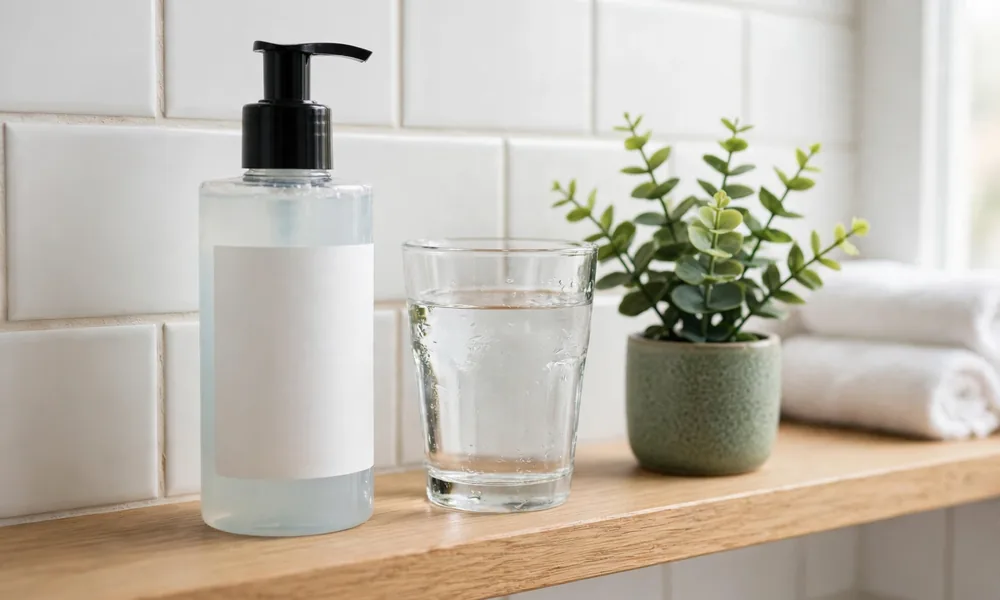
A clarifying wash is a deeper clean that removes the mineral film and product build-up ordinary shampoo leaves behind. Use a clarifying shampoo once every two to four weeks, or once a week if your water is very hard. It is stronger than daily shampoo, so use it sometimes, not every day.
Apply it like normal shampoo: lather in your palms, massage the scalp gently, and rinse for a full minute. Follow it with a light conditioner on the lengths only, and rinse again. Hair often feels lighter after the first clarifying wash. Do not overdo it: clarifying too often can leave hair dry, because it removes natural oils too.
A Gentle Weekly Reset
A weekly reset keeps hard water build-up from returning between clarifying washes. Once a week, give your hair a little extra attention: a longer rinse, a gentle scalp massage, and a light conditioner left on for two minutes. Five extra minutes keeps the film thin.
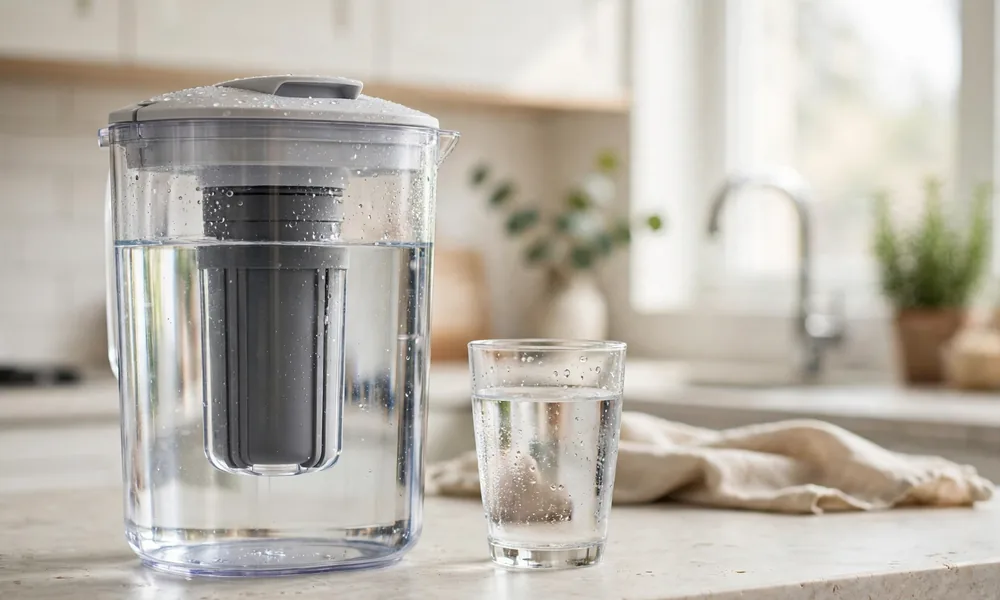
Some people finish the weekly wash with filtered water from a jug, poured slowly over the hair. It leaves less mineral behind than a final rinse under the shower. Keep the reset gentle: no harsh scrubbing, no very hot water, and no new products piled on.
Drying Without Damage
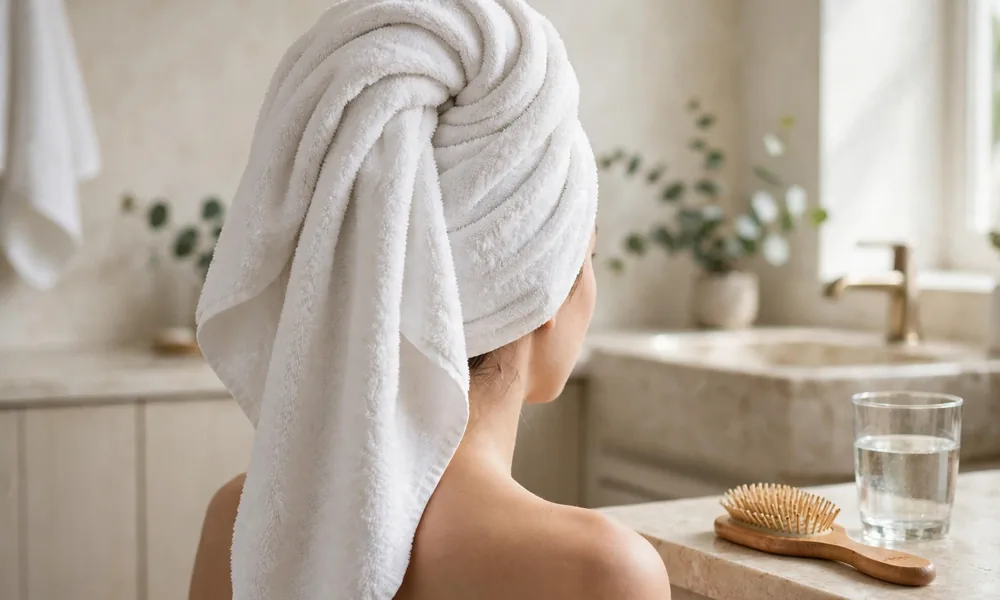
How you dry your hair matters as much as how you wash it, especially when hard water has made it rougher. Wet hair is fragile, and rough drying makes it rougher. Pat the hair gently with a soft towel instead of rubbing, and squeeze the lengths lightly.
Detangle with a wide-tooth comb, starting at the ends and working upward. A brush on wet hair pulls and snaps strands, and a fine comb catches on tangles. Work slowly. Air-dry when you can: heat from a dryer lifts the cuticle and dries hair out.
What to Skip
Some fixes sound helpful and are not. Very hot water does not clean better; it strips oils and roughens the cuticle, and it makes hard water film worse. Keep the water lukewarm from start to finish.
Skip heavy, waxy styling products while you are dealing with hard water: they add to the film, weigh fine hair down, and need more shampoo to remove. Use light products, and use less of them. Skip home remedies that promise to dissolve minerals with strong acids: they can irritate the scalp, and gentle care is safer than a dramatic home fix.
Hair, Skin, and the Same Water
Hard water touches skin as well as hair, because the same shower washes both. Skin can feel tight or dry after a hard water shower, and soap can leave a residue that makes skin feel coated. The fixes are the same: lukewarm water, a shorter shower, and a light moisturiser while the skin is still damp.
A shower filter helps skin too, for the same reason. Soft water is kinder to skin, as in soft water for kinder skin, where the routine is built around gentle water. If skin feels dry in the colder months, a fresh seasonal reset can help, as in a spring water reset for soft skin.
What Hard Water Will Not Do
Be honest about what these fixes can and cannot do. A filter, a longer rinse, and a clarifying wash will not repair split ends, regrow hair, or cure a scalp condition. They will not change your hair type. What they can do is remove the film that makes healthy hair look dull.
The same honesty applies to the water itself: hard water is not dangerous to drink, and soft water is not a health treatment. If your scalp is sore, itchy, or flaking week after week, or if hair is falling out in unusual amounts, the answer is not a filter. It is advice from a doctor or a dermatologist.
| Fix step | Water change | Hair result |
|---|---|---|
| Fit shower filter | Less mineral load | Lighter softer hair |
| Rinse one minute | Lukewarm water first | Cleaner shinier strands |
| Clarify monthly wash | Deep clean build-up | Fresh light feel |
| Pat dry gently | Soft towel only | Less frizz tangles |
Your Hard Water Hair Checklist
- Test your water with the bottle test and check taps for white scale.
- Fit a shower filter and note the cartridge change date.
- Rinse one full minute longer, lukewarm, with a cooler finish.
- Use a clarifying shampoo every two to four weeks, then light conditioner.
- Pat hair dry, detangle with a wide-tooth comb, and air-dry.
- Skip very hot water, heavy waxy products, and strong home remedies.
Frequently Asked Questions
How do I know if my water is hard?
Look for white scale on kettles, taps, and shower heads, soap that barely lathers, and hair that feels coated or dull. The bottle test helps too: few bubbles with milky water means hard water.
Will a shower filter fix hard water hair?
A shower filter helps by reducing minerals and chlorine, so hair rinses cleaner and feels lighter. It will not make hard water fully soft, so pair it with a longer rinse.
How often should I use a clarifying shampoo?
Once every two to four weeks is enough, or once a week if your water is very hard. It is stronger than daily shampoo, so using it too often can leave hair dry. Always follow it with a light conditioner.
Does hard water damage hair permanently?
Hard water leaves a mineral film that makes hair look dull and feel rough, but the film washes away with clarifying and better rinsing. Lasting hair problems deserve advice from a doctor.
Is a vinegar rinse safe for hard water hair?
Strong or undiluted acids can irritate the scalp and dry the hair, so home remedies need care. Gentle, ordinary care — a filter, a longer rinse, and a clarifying wash — is safer than a dramatic home fix.
Can I just use more shampoo instead?
More shampoo makes the problem worse in hard water, because it lathers poorly and leaves more residue. Rinse longer and clarify now and then instead of adding more product.
The Bottom Line
Hard water hair is a water problem with a water answer: a filter, a longer rinse, and a clarifying wash now and then. Nothing dramatic, nothing expensive, just steadier habits.
Try the rinse first this week.
A Note for Softer Hair Days
Keep the water lukewarm, the rinse long, and the drying gentle. The minerals can stay in the tap, not in your hair.